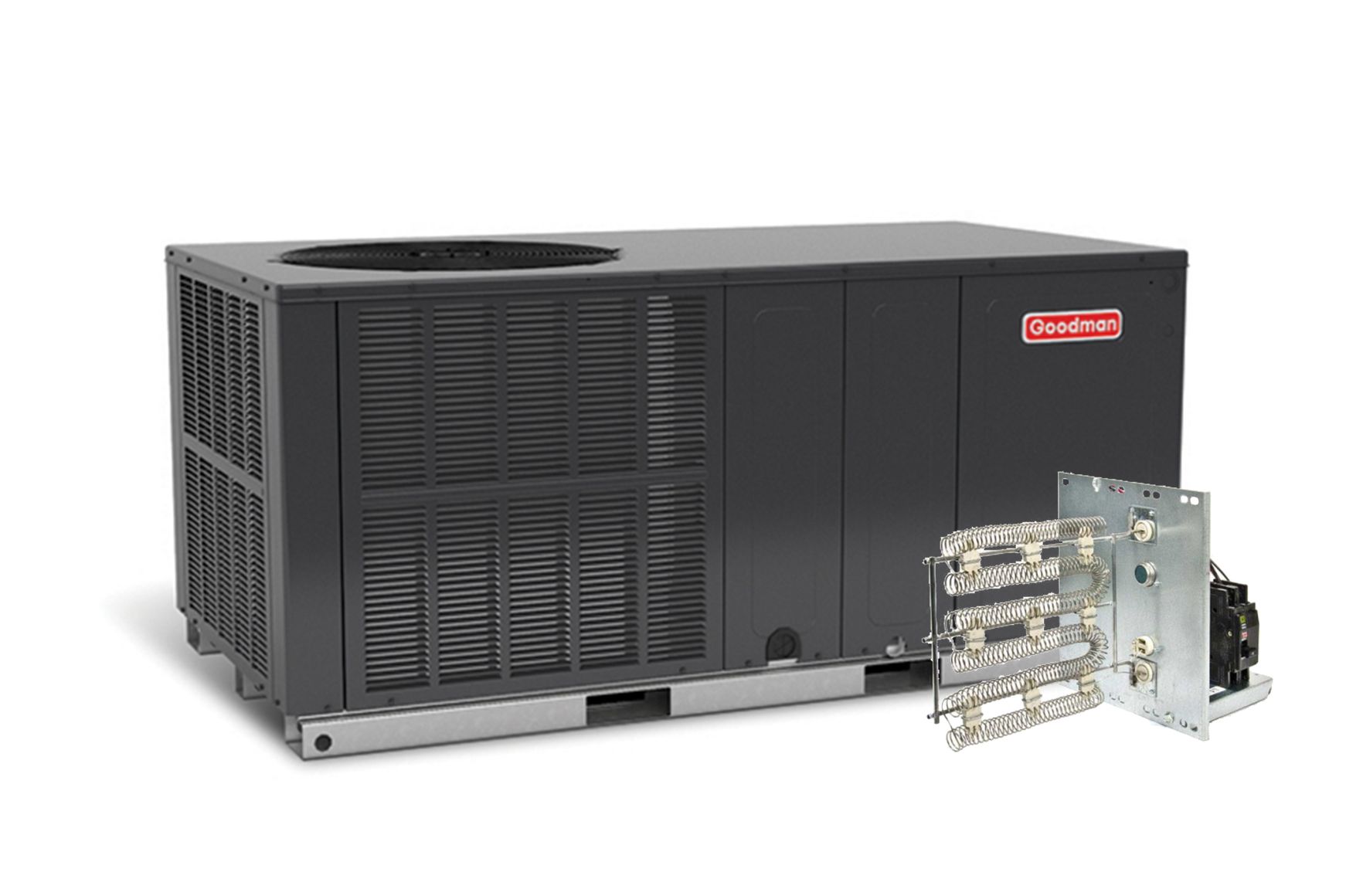
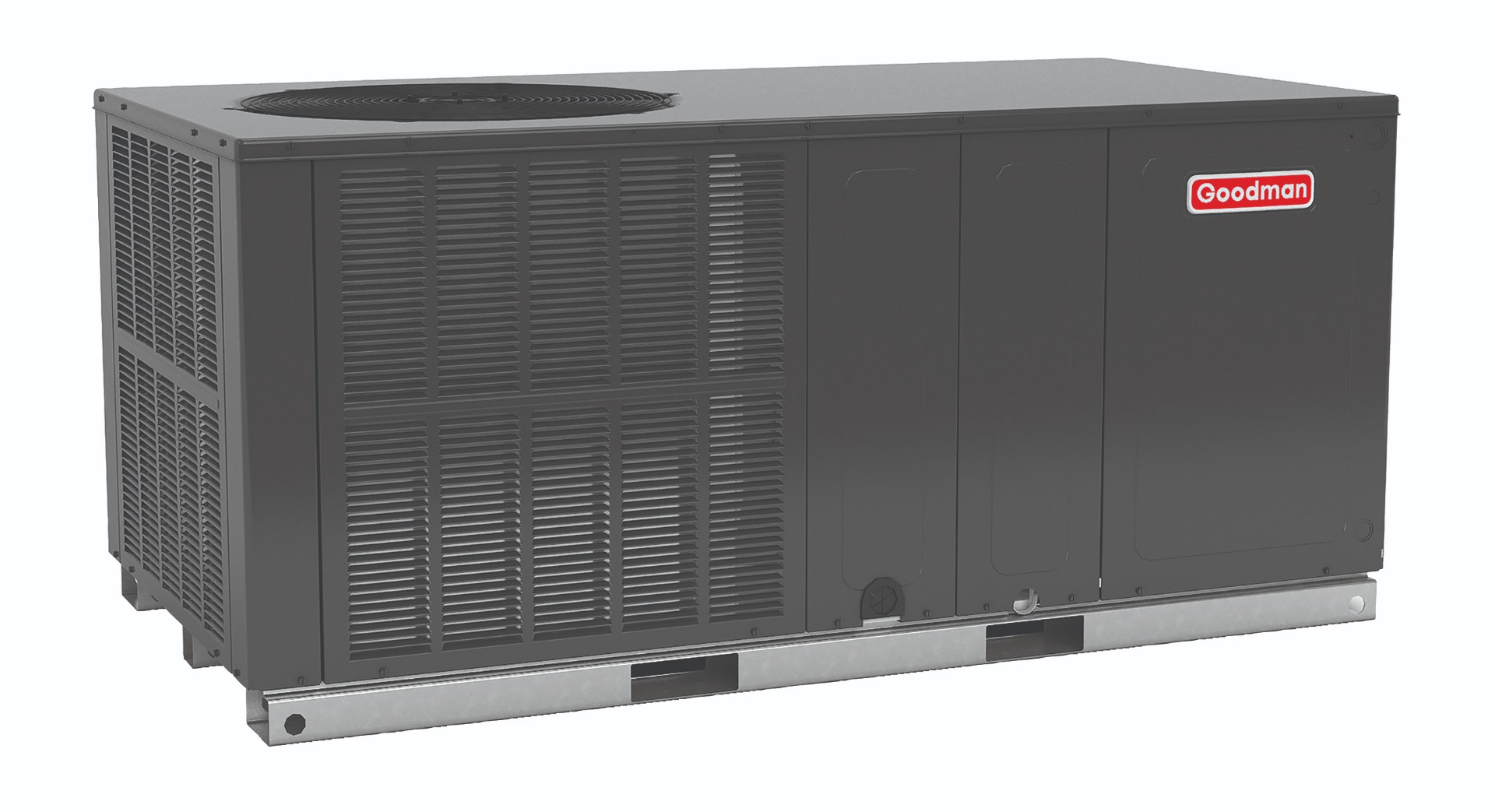
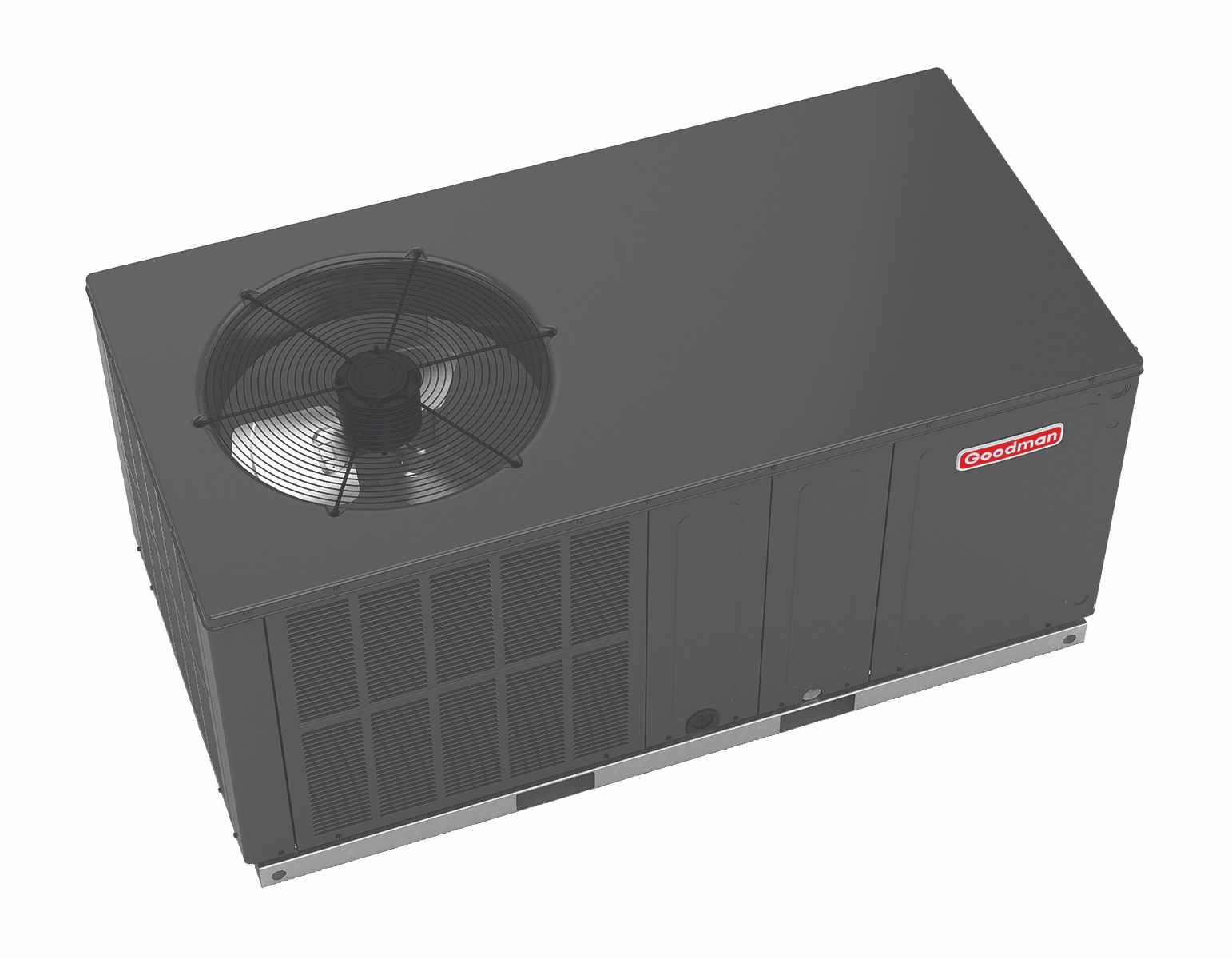
Goodman 3 Ton 13.4 SEER2 Heat Pump Package Unit Horizontal
View on AC Direct see your lowest price →Check current price on AC Direct →
Key features
- Horizontal package unit configuration suits crawl spaces, manufactured homes, and slab installations
- 3-ton capacity designed for approximately 1,200 to 1,800 square feet depending on load conditions
- 13.4 SEER2 efficiency rating meets the 2023 federal minimum efficiency standard
- Heat pump operation provides both heating and cooling from a single cabinet
- All-in-one design eliminates separate indoor air handler and refrigerant line runs
- Goodman factory warranty covers the compressor and parts (registration required for full term)
About this system
The Goodman 3 Ton 13.4 SEER2 Heat Pump Package Unit in horizontal configuration is an all-in-one system that houses the compressor, coil, and air handler in a single cabinet mounted horizontally, typically under a building on a slab or suspended in a crawl space. That self-contained design makes it a practical choice for manufactured homes, modular buildings, and properties where a split system would require running refrigerant lines through difficult spaces. At 3 tons, it is sized for roughly 1,200 to 1,800 square feet of conditioned space, depending on insulation quality, local climate, and ceiling height.
A 13.4 SEER2 rating sits at the federal minimum efficiency threshold that took effect in 2023, which means this unit meets code requirements across most of the country but offers no headroom above the baseline. Owners in mild climates with moderate cooling and heating loads will get acceptable seasonal energy bills, but those in very hot or very cold regions where the system runs hard for extended periods will see the efficiency gap compared to higher-SEER2 equipment show up in their utility costs over time. The heat pump function provides both heating and cooling from one unit, eliminating the need for a separate furnace in climates where winter lows generally stay above about 30 degrees Fahrenheit without supplemental heat.
This Goodman horizontal package unit is a straightforward, budget-accessible entry point for homeowners who need an all-in-one heat pump solution and want to keep upfront costs low. It earns its place as a value option, but buyers should understand they are getting baseline efficiency and a brand whose long-term reliability depends heavily on who installs it and whether minor components are serviced before they cascade into larger repairs. It is not the unit for someone who wants to buy once and forget it for 20 years.
Overall score is the average of the five ratings above.
What we like
- Priced 15 to 25 percent below comparable Trane, Carrier, and Lennox package units, reducing upfront cost
- Horizontal cabinet design is purpose-built for manufactured homes and crawl space applications where vertical units cannot fit
- Combined heating and cooling in one cabinet simplifies installation in spaces without room for a split system
- 13.4 SEER2 meets current federal minimums, so it is code-compliant in all U.S. regions
- Dual-run capacitor failures, the most common documented issue, are typically a low-cost repair in the $300 to $600 range
Trade-offs
- 13.4 SEER2 is minimum-code efficiency with no buffer, meaning energy costs will be higher than mid- or high-efficiency alternatives over the system's life
- Compressor lifespan averages 10 to 14 years versus 15 to 20 years for premium brands, shortening the replacement cycle
- Evaporator coil leaks appear in a meaningful share of owner reviews, and a minority of owners report refrigerant leaks within the first year
- ConsumerAffairs scores average around 2.5 out of 5, with recurring complaints about rising repair costs after roughly year 7
What homeowners and pros say about Goodman
Homeowners who have installed Goodman package units consistently point to the upfront price as the strongest argument in the brand’s favor, and Google dealer reviews average around 3.8 out of 5 across hundreds of reviews per location, with affordability cited most often as the reason for satisfaction. That goodwill tends to hold through the first several years of ownership, when the unit generally performs without major incident if it was installed correctly. HVAC technicians are candid that installation quality is the single biggest factor in how long a Goodman lasts, which means the contractor you hire matters at least as much as the equipment itself.
The picture shifts in longer ownership reviews. ConsumerAffairs scores average around 2.5 out of 5, and that channel skews toward complaint-driven feedback, where the recurring pattern is repair costs climbing after roughly year 7. The specific failure modes that show up repeatedly in owner accounts are dual-run capacitor failures, which are low-cost fixes in the $300 to $600 range but can repeat over a system’s life; evaporator coil leaks, which appear in a meaningful share of reviews and can be more disruptive to repair; and compressor lifespans that average 10 to 14 years, noticeably shorter than the 15 to 20 years more commonly associated with premium brands. A minority of owners also report refrigerant leaks within the first year, which technicians typically attribute to installation or initial charge issues rather than factory defects. Taken together, the feedback portrait is of a unit that delivers on its value promise early and requires more active maintenance attention as it ages.
Sources: ConsumerAffairs Goodman owner reviews, AHRI Directory of Certified Product Performance, U.S. DOE appliance and equipment efficiency standards, Goodman product specification sheets.
What it costs to run
At 13.4 SEER2, cooling this 3-ton system for a typical 1200-hour cooling season at the U.S. average electricity rate of $0.17/kWh works out to roughly $548 per year in cooling, about $0 less per year than a minimum-efficiency 13.4 SEER2 unit of the same size. Your real cost depends on your climate and local rate.
Method: (36,000 BTU/hr ÷ 13.4 SEER2) × 1200 hours ÷ 1000 × $0.17/kWh. Rate source: U.S. EIA average; cooling hours: moderate-climate estimate.
How it compares
| Brand | Comparable model | SEER2 | Stage | Price position |
|---|---|---|---|---|
| Goodman | 3 Ton 13.4 SEER2 Heat Pump Package Unit Horizontal | 13.4 | Single-stage | Value pick |
| Carrier | WeatherMaster 50XC Series Package Heat Pump | 14.0 | Single-stage | Typically 15 to 25 percent more than Goodman |
| Trane | Precedent Series Package Heat Pump | 14.0 | Single-stage | Typically 15 to 25 percent more than Goodman |
| Lennox | LRP14HP Series Package Heat Pump | 14.0 | Single-stage | Typically 15 to 25 percent more than Goodman |
Competitor rows are comparable single-stage units at similar efficiency; price is relative position, not a quote.
Questions about this system
Will this horizontal package unit work with my manufactured home's existing ductwork?
Most manufactured homes use horizontal package unit connections, so the cabinet orientation is compatible, but duct sizing, plenum dimensions, and supply and return configurations vary by home. You will need an HVAC technician to verify that the existing duct collar size and airflow direction match this unit before purchase.
What happens when outdoor temperatures drop below freezing? Does a heat pump at this efficiency tier keep up?
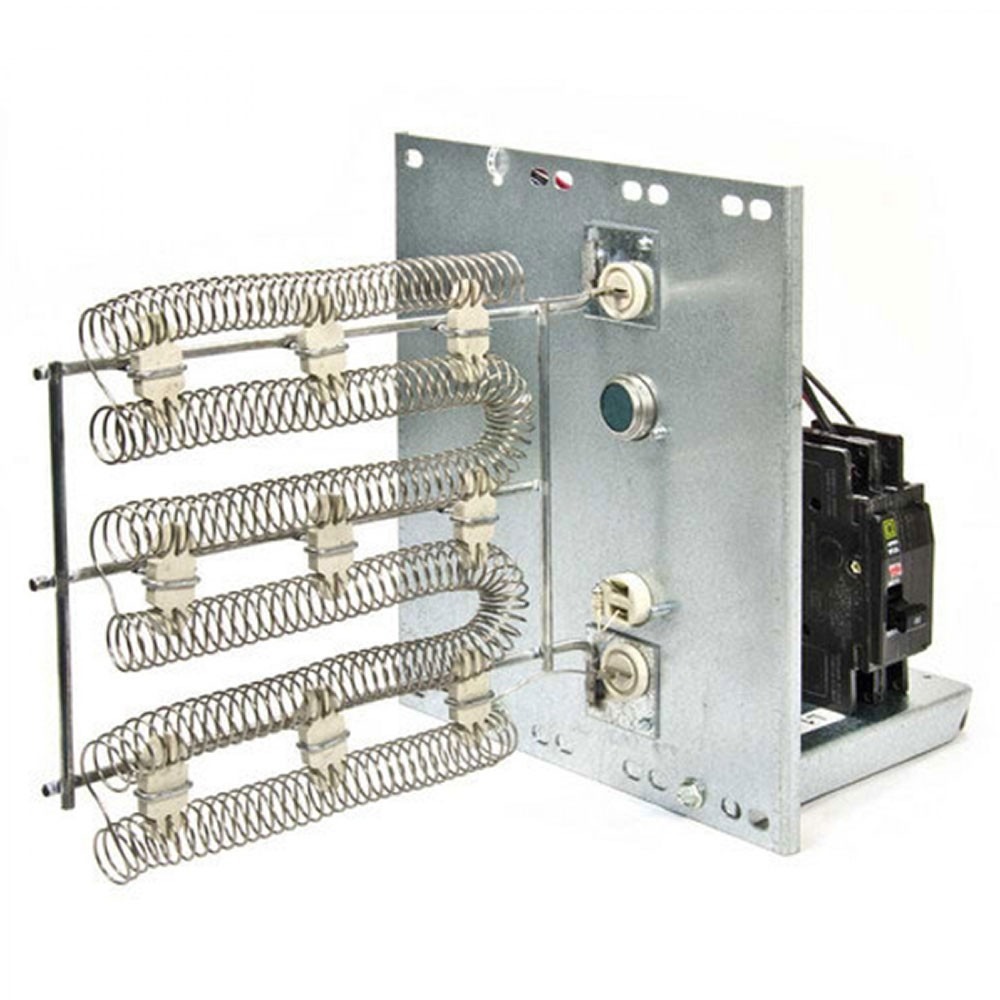
Heat pumps lose heating capacity as outdoor temperatures fall, and at 13.4 SEER2 this unit operates at the efficiency baseline with no variable-speed compressor to compensate. In climates where temperatures regularly drop below 30 to 35 degrees Fahrenheit, supplemental electric resistance heat strips are commonly added to maintain comfort, which increases operating costs during cold snaps.
How often do the dual-run capacitors actually fail, and is that something I should budget for?
Dual-run capacitor failure is the most frequently documented repair issue on Goodman equipment, and it is worth setting aside a budget for it. The good news is that it is generally a straightforward repair costing $300 to $600, and a competent technician can usually complete it in under an hour. Having capacitors checked during annual maintenance can catch degradation before a full failure.
Does Goodman's warranty require professional registration, and what does it actually cover on this unit?
Yes, Goodman requires product registration within a set window after installation to receive the full warranty term; without registration, coverage reverts to a shorter base period. The warranty covers the compressor and functional parts, but labor costs for warranty repairs are not included by Goodman and must be negotiated with your installing contractor separately.
Is the lower price compared to Carrier or Trane worth the trade-off in compressor lifespan?
That depends on your timeline and budget flexibility. Goodman compressors are documented to average 10 to 14 years, while premium brands tend to reach 15 to 20 years, so over a 20-year ownership window you may face a replacement cycle sooner. If the upfront savings allow you to fund a maintenance plan and a replacement reserve, the value proposition holds; if you want to install and largely ignore the system for two decades, a premium brand is a more realistic expectation.
Specifications
| Cooling capacity | 3 Ton |
| Efficiency | 13.4 SEER2 |
| Configuration | Horizontal |