Goodman 3 Ton Package Unit Heat Pump & AC – 15.2 SEER2, High Efficiency, Two Stage, Multi-Positional, R32
View on AC Direct see your lowest price →Check current price on AC Direct →
Key features
- 15.2 SEER2 two-stage heat pump and AC combined in a single outdoor cabinet
- R-32 refrigerant with lower global warming potential than R-410A
- Two-stage compressor for improved humidity control and quieter part-load operation
- Multi-positional cabinet supports horizontal and vertical installation orientations
- 3-ton capacity suited to approximately 1,400 to 1,800 square feet in moderate climates
- Self-contained all-in-one design eliminates the need for a separate indoor air handler or furnace
About this system
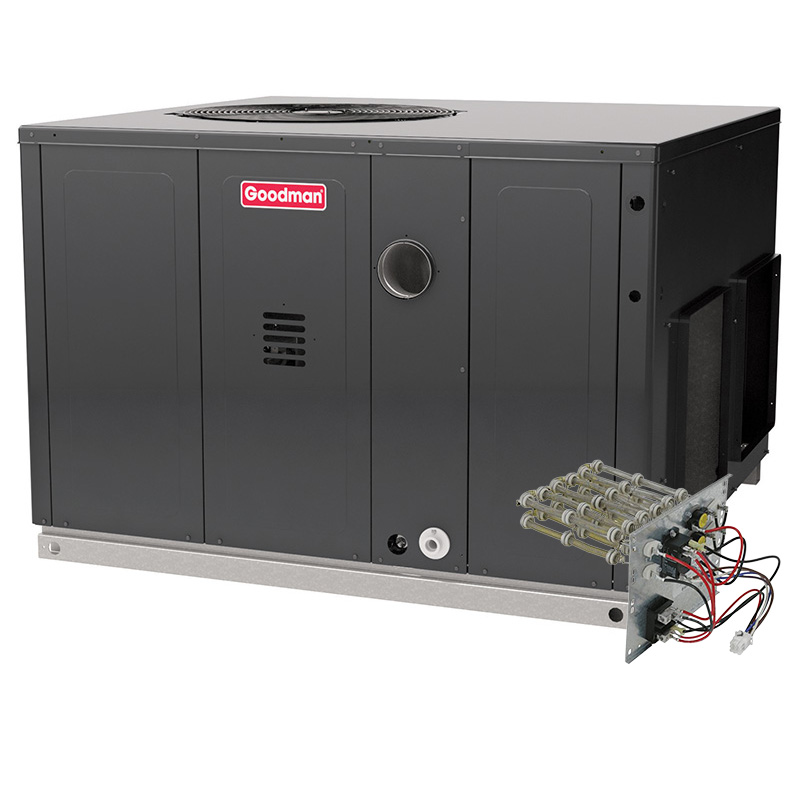
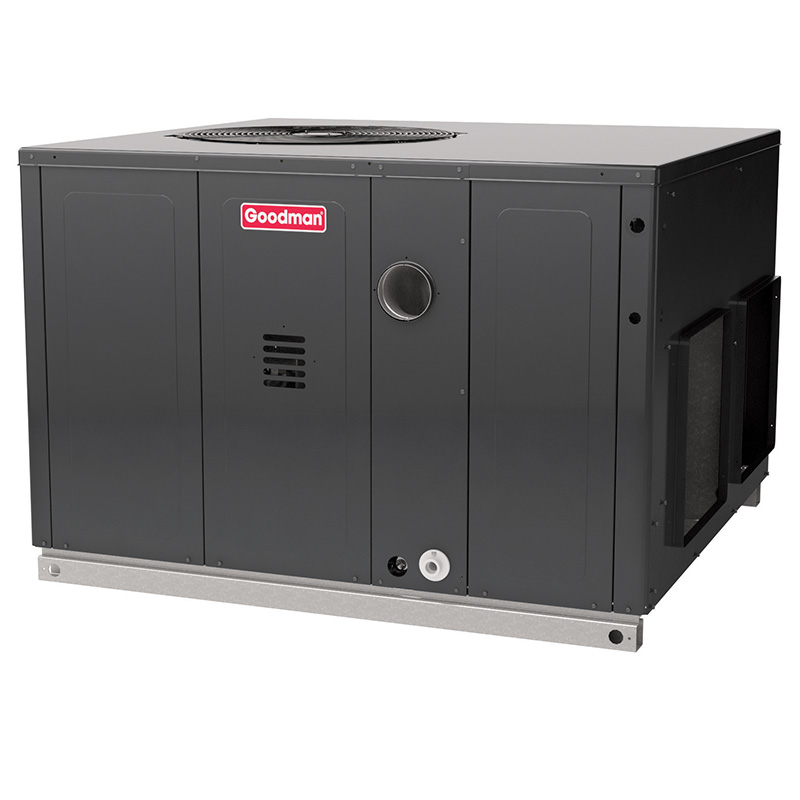
The Goodman 3-ton two-stage package unit combines a heat pump and air conditioner into a single self-contained cabinet, making it a strong candidate for homes without separate indoor air-handling space, manufactured housing, light commercial slabs, and rooftop installations. Running on R-32 refrigerant, it meets the EPA’s low-global-warming-potential direction the industry is moving toward, and it avoids the supply-chain headaches that still follow R-410A in some markets. At 15.2 SEER2, it clears the federal minimum for most U.S. climate zones and sits in the mid-efficiency tier, enough to meaningfully reduce cooling costs compared with an older 13 or 14 SEER system without paying for top-tier variable-speed equipment.
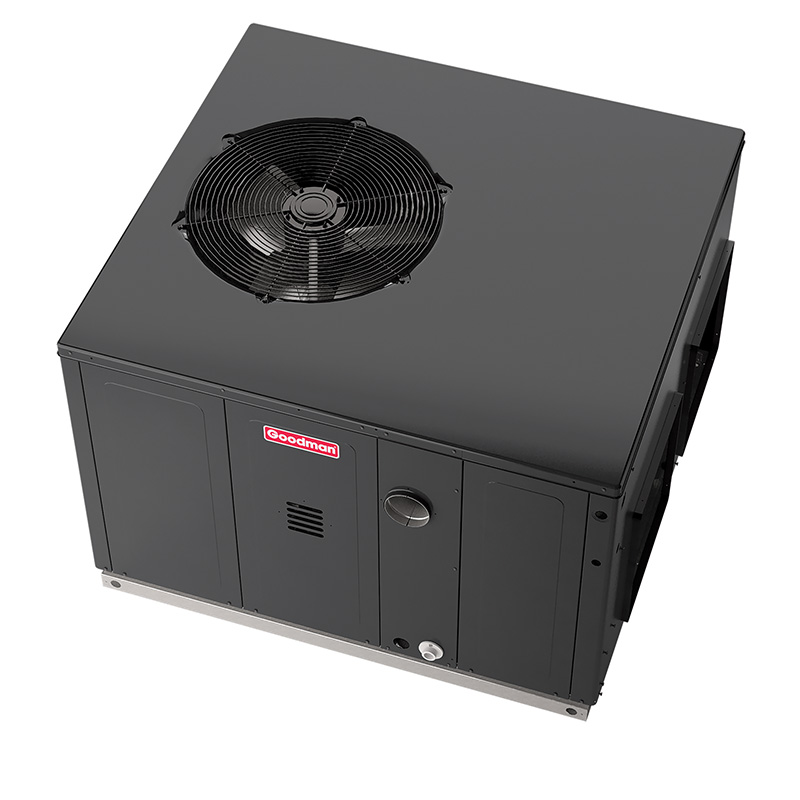
Two-stage operation is the headline upgrade here over basic single-stage package units. The compressor runs at a lower capacity most of the time, cycling on and off less aggressively, which improves humidity control, reduces temperature swings, and generally runs quieter than a single-stage unit hammering on and off at full output. On the hottest days, it shifts to full capacity. For a 3-ton application covering roughly 1,400 to 1,800 square feet in a moderate climate, that behavior matters for comfort as much as energy bills. Multi-positional flexibility means the cabinet can be installed in horizontal or vertical orientations, broadening where it can go without requiring a custom setup.
This system suits budget-conscious buyers who want a real efficiency and comfort upgrade over builder-grade single-stage equipment but cannot justify the price of a Trane, Carrier, or Lennox premium line. It is a workman’s unit: honest mid-tier specs at a value price, with long-term performance tied closely to how well it is installed and maintained.
This Goodman package unit delivers genuine two-stage comfort and mid-tier efficiency at a price point 15 to 25 percent below comparable Carrier, Trane, and Lennox equipment, making it an honest value for budget-sensitive buyers. Long-term ownership costs depend heavily on install quality and a willingness to service the unit proactively, particularly around capacitors and refrigerant charge. It is not a premium product, but it is not priced like one either.
Overall score is the average of the five ratings above.
What we like
- Two-stage operation improves humidity control and comfort over single-stage alternatives at a similar price
- 15.2 SEER2 rating provides a meaningful efficiency improvement over older or minimum-efficiency replacement units
- R-32 refrigerant is future-friendly and easier to source as R-410A phases down
- All-in-one package format simplifies installation in spaces without room for separate indoor equipment
- Priced 15 to 25 percent below Trane, Lennox, and Carrier equivalents, freeing budget for a quality installation
Trade-offs
- Dual-run capacitors are a documented weak point, with failures common enough that owners should budget 300 to 600 dollars for that repair within the first decade
- Compressor lifespan averages 10 to 14 years versus 15 to 20 years for premium-brand compressors, meaning replacement may come sooner
- Evaporator coil leaks appear in a meaningful share of owner reports, a failure mode worth monitoring after year 5
- A minority of owners report refrigerant leaks in the first year, which points to installation or factory charge issues rather than design, but still creates early service calls
What homeowners and pros say about Goodman
Owner sentiment about Goodman equipment breaks along predictable lines. On ConsumerAffairs, which skews toward buyers motivated enough by frustration to leave a review, Goodman scores around 2.5 out of 5, with the recurring complaint being repair costs that climb noticeably after roughly year seven. That pattern is consistent with the documented failure modes: dual-run capacitors that wear out and need replacing in the 300 to 600 dollar range, evaporator coil leaks that show up in a meaningful share of owner reports, and compressor lifespans that average 10 to 14 years rather than the 15 to 20 years more common in premium brands. A minority of owners also report refrigerant leaks within the first year, which technicians generally trace to installation or factory charge issues rather than a design flaw in the unit itself. Across Google dealer reviews, which capture a broader cross-section of buyers including satisfied ones, Goodman averages around 3.8 out of 5, with affordability cited most often as the reason buyers chose it.
HVAC professionals tend to be candid about what Goodman is and what it is not. It is a value-tier product priced 15 to 25 percent below Trane, Lennox, and Carrier, and in the hands of a careful installer it can deliver solid service for a decade or more. Technicians consistently flag that install quality is the single biggest variable in how a Goodman performs long-term, more so than with premium brands that have tighter manufacturing tolerances. For this particular two-stage R-32 package unit, the R-32 refrigerant transition adds a wrinkle: contractors need to confirm certification and local availability before committing to the install. The bottom line from both camps is that Goodman rewards buyers who invest in a skilled installation and proactive annual maintenance, and it underdelivers for those who treat it as fully set-and-forget equipment.
Sources: ConsumerAffairs Goodman owner reviews, AHRI Directory of Certified Product Performance, U.S. DOE appliance and equipment efficiency standards, Goodman product specification sheets.
What it costs to run
At 15.2 SEER2, cooling this 3-ton system for a typical 1200-hour cooling season at the U.S. average electricity rate of $0.17/kWh works out to roughly $483 per year in cooling, about $65 less per year than a minimum-efficiency 13.4 SEER2 unit of the same size. Your real cost depends on your climate and local rate.
Method: (36,000 BTU/hr ÷ 15.2 SEER2) × 1200 hours ÷ 1000 × $0.17/kWh. Rate source: U.S. EIA average; cooling hours: moderate-climate estimate.
How it compares
| Brand | Comparable model | SEER2 | Stage | Price position |
|---|---|---|---|---|
| Goodman | 3-Ton Two-Stage Package Heat Pump, 15.2 SEER2, R-32 | 15.2 | Two-stage | Value pick |
| Carrier | WeatherMaster 50XC series | 15+ SEER2 depending on configuration | Two-stage | Typically 15 to 25 percent more than Goodman |
| Trane | Precedent TWE / TWA series (light commercial package) | 15+ SEER2 depending on configuration | Two-stage | Typically 15 to 25 percent more than Goodman |
| Lennox | LRP16 package heat pump series | 16 SEER2 (marketed rating, varies by configuration) | Single-stage | Typically 15 to 25 percent more than Goodman |
Competitor rows are comparable single-stage units at similar efficiency; price is relative position, not a quote.
Questions about this system
Does this unit work as both a heat pump and an air conditioner, or do I still need a furnace?
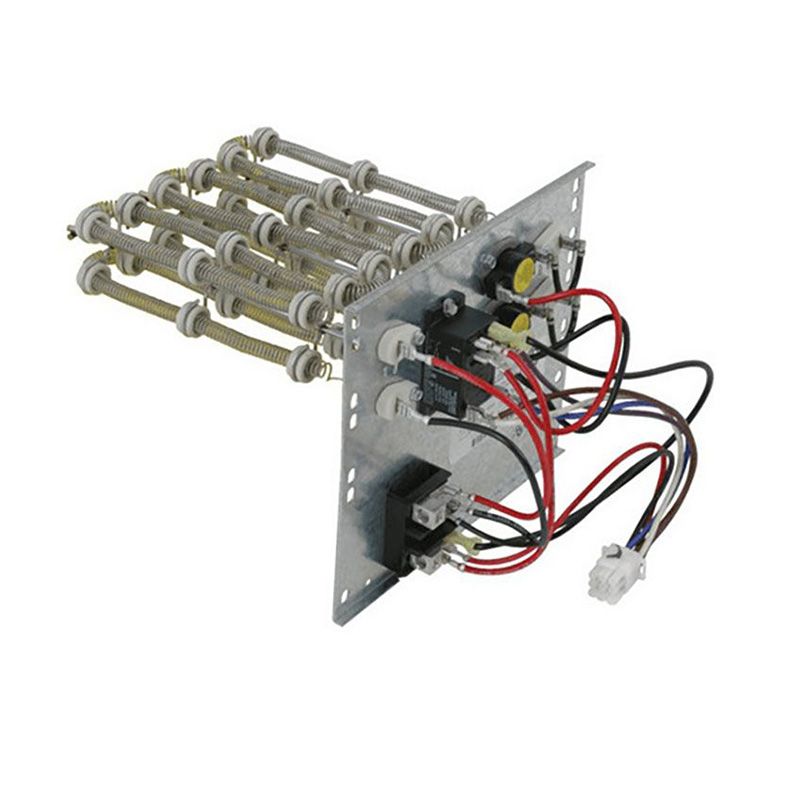
Yes, this is a true package heat pump, meaning it both heats and cools from the single outdoor cabinet with no separate indoor furnace or air handler required. Heat pump performance does drop off in very cold weather, typically below 35 to 40 degrees Fahrenheit, so buyers in colder climates should confirm whether supplemental electric heat strips are included or need to be added.
What does two-stage actually mean for day-to-day comfort compared with a single-stage unit?
A two-stage compressor runs at a lower output level most of the time, which means longer, gentler cooling or heating cycles rather than short blasts at full power. The practical result is better humidity removal in summer, fewer temperature swings between cycles, and somewhat lower operating noise most of the time. The unit shifts to full capacity only when outdoor conditions or load demand it.
Is R-32 refrigerant safe, and will I be able to get it serviced easily?
R-32 is mildly flammable but has a much lower global warming potential than R-410A, which is why the industry is transitioning toward it. Certified HVAC technicians handle it routinely, and availability is growing as more manufacturers adopt it. Confirm that your servicing contractor has R-32 certification before signing a maintenance agreement.
What are the most likely repair costs in the first ten years of ownership?
Dual-run capacitor failure is the most commonly reported issue on Goodman equipment and typically costs 300 to 600 dollars to repair, including labor. Refrigerant leaks in the first year are also documented in a minority of units, usually tied to installation charge rather than equipment defect. Evaporator coil leaks are worth monitoring after about year five.
How important is installer choice for a Goodman package unit?
Extremely important. HVAC technicians consistently identify install quality as the single biggest factor in how long a Goodman unit lasts and how efficiently it runs. Proper refrigerant charge, clean ductwork connections, correct electrical sizing, and thorough commissioning can meaningfully extend service life and reduce early-year failures. Getting multiple quotes and selecting an experienced contractor matters as much as the equipment choice itself.
Specifications
| Cooling capacity | 3 Ton |
| Efficiency | 15.2 SEER2 |
| Refrigerant | R-32 |