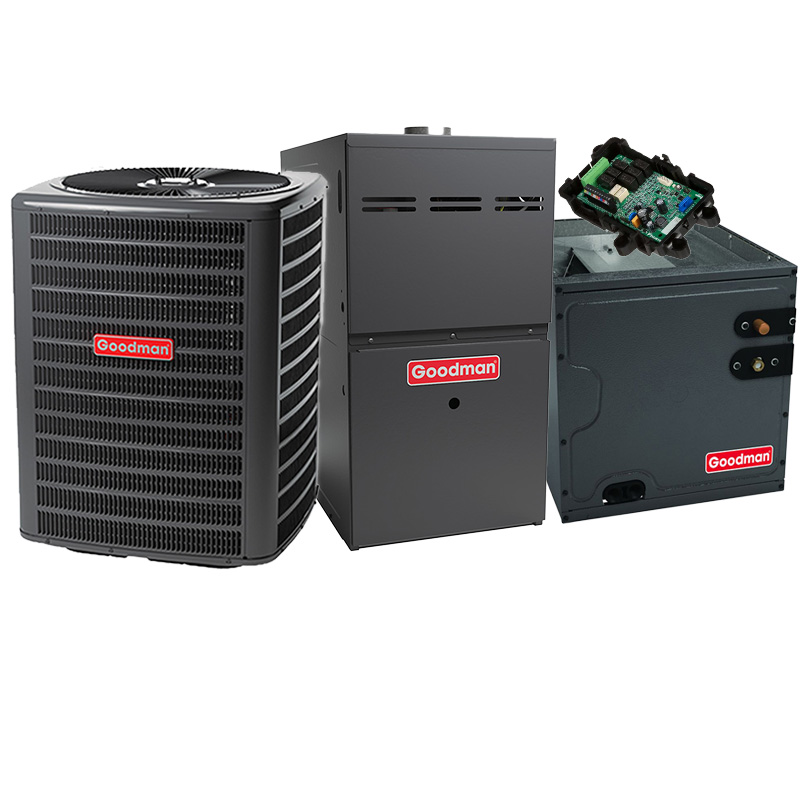
Goodman 4 Ton 13.4 SEER2 100000 BTU 96% AFUE Two-Stage Gas Furnace With R32 Air Condenser and Coil System – Upflow
View on AC Direct see your lowest price →Check current price on AC Direct →
Key features
- 4-ton cooling capacity with 13.4 SEER2 efficiency rating
- 100,000 BTU two-stage gas furnace at 96% AFUE
- R-32 refrigerant with significantly lower global warming potential than R-410A
- Upflow configuration for basement or ground-level installs with overhead ductwork
- Two-stage heating reduces short-cycling and improves temperature consistency
- Factory-matched coil included for system efficiency and warranty compliance
About this system
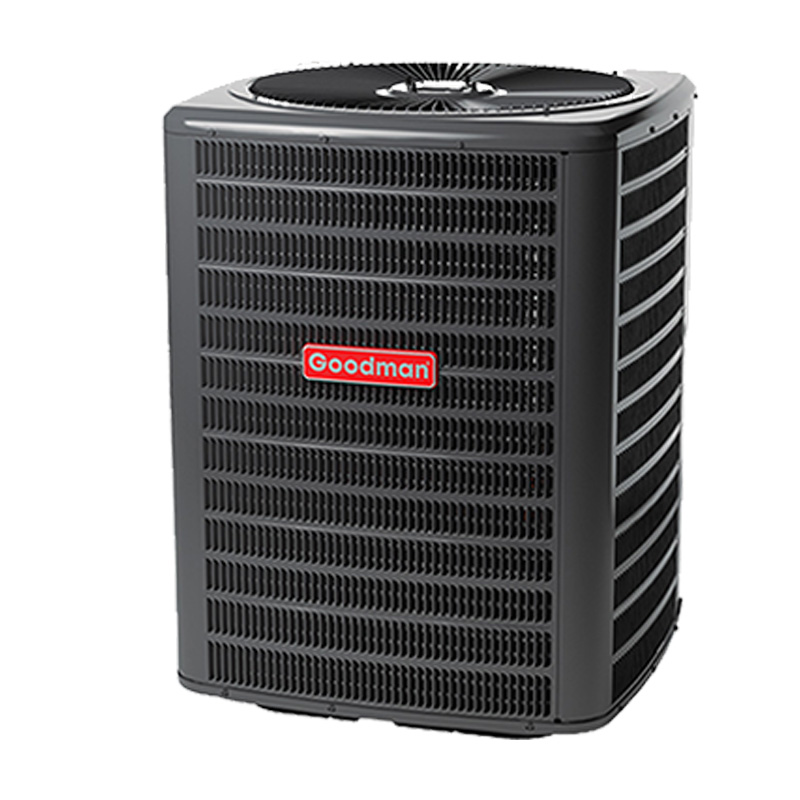
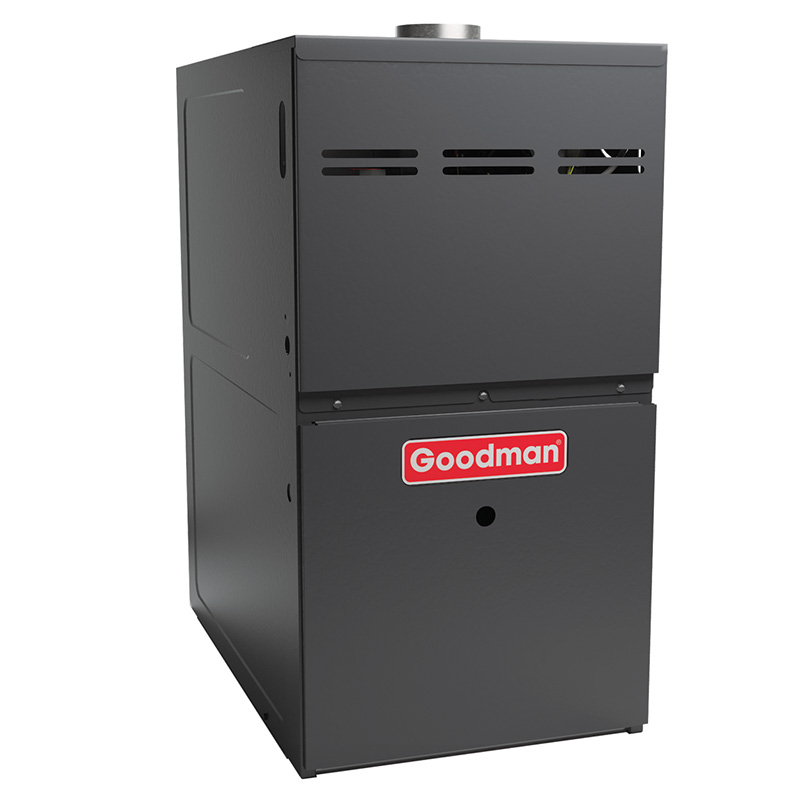
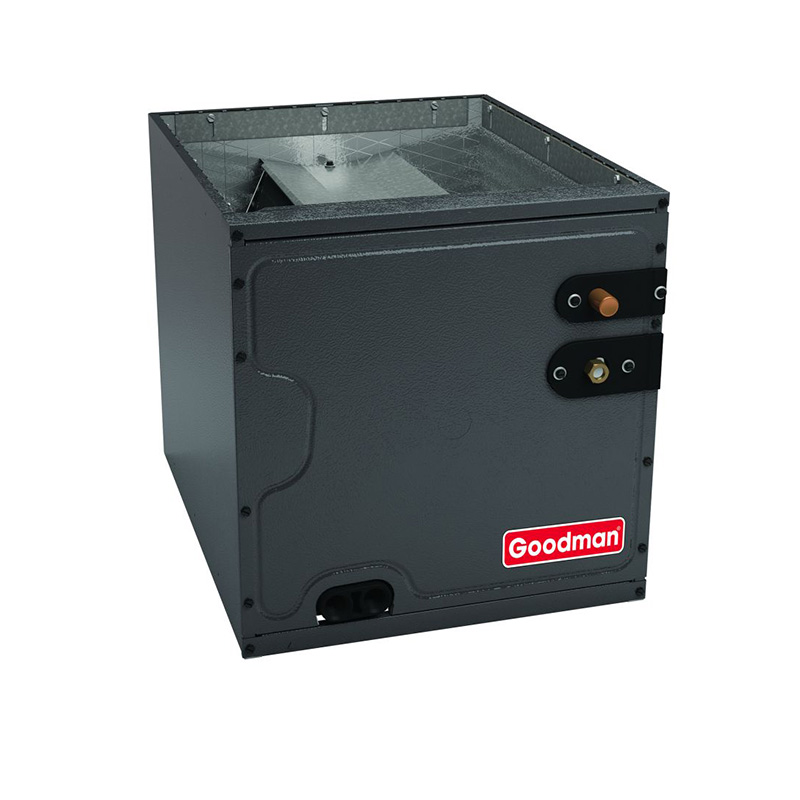
This Goodman upflow system pairs a 4-ton R-32 air condenser with a 100,000 BTU, 96% AFUE two-stage gas furnace and a matched evaporator coil. The result is a complete heating and cooling solution sized for homes roughly in the 2,000 to 2,600 square foot range, depending on climate, insulation, and layout. The 13.4 SEER2 rating sits at the federal minimum efficiency threshold for most U.S. regions, which keeps the purchase price down but means operating costs will run higher over the system’s life compared to mid- or high-efficiency alternatives. The two-stage furnace is a meaningful comfort upgrade over single-stage equipment: on milder days it runs on the lower stage, cycling less frequently and maintaining more even temperatures while reducing short-cycling noise.
R-32 refrigerant is a forward-looking choice. It has a global warming potential roughly 68 percent lower than the R-410A it replaces and is increasingly the industry standard as R-410A is phased down. The upflow configuration directs conditioned air upward through the duct system, making it the right fit for basement or ground-level installations where ducts run overhead. As with all Goodman equipment, how well this system performs and how long it lasts is closely tied to installation quality, so choosing a licensed contractor who performs a proper Manual J load calculation and verifies refrigerant charge is not optional, it is essential.
This Goodman system offers a solid entry point for homeowners who need a complete upflow heating and cooling replacement without premium-brand pricing. The two-stage furnace and 96% AFUE are genuine comfort and efficiency advantages, though the baseline 13.4 SEER2 cooling efficiency and Goodman's documented reliability history after year seven mean buyers should weigh long-term operating and repair costs against the lower upfront price.
Overall score is the average of the five ratings above.
What we like
- Two-stage furnace operation improves comfort and reduces temperature swings versus single-stage
- 96% AFUE furnace recovers nearly all fuel energy, lowering heating bills meaningfully
- R-32 refrigerant is a lower-emissions, future-oriented choice as R-410A is phased out
- Priced roughly 15 to 25 percent below comparable Carrier, Trane, and Lennox systems
- Factory-matched coil simplifies installation and protects warranty coverage
Trade-offs
- 13.4 SEER2 is the regulatory minimum; operating costs will be higher than mid- or high-efficiency alternatives over the system's life
- Dual-run capacitors are the most frequently reported failure point, typically adding $300 to $600 in repair costs
- Evaporator coil leaks appear in a meaningful share of owner reviews, a known Goodman weak point
- Compressor lifespan averages 10 to 14 years versus 15 to 20 years for premium brands, raising the likelihood of a mid-life replacement
What homeowners and pros say about Goodman
Homeowners who have lived with Goodman equipment tend to land in two camps. Those who had a careful, experienced installer often report years of trouble-free operation and point to the lower purchase price as a straightforward win. Those who ran into problems frequently trace them to one of three specific issues: a failed dual-run capacitor, an evaporator coil that developed a leak, or a compressor that gave out before the 12-year mark. Goodman’s Google dealer reviews average around 3.8 out of 5 across hundreds of locations, with affordability being the most common reason buyers are satisfied. On ConsumerAffairs, the score drops to roughly 2.5 out of 5, a channel skewed toward people who had a bad experience, but the recurring complaint there is repair costs climbing after around year seven, which lines up with what technicians report about compressor lifespan averaging 10 to 14 years versus the 15 to 20 years more common with Trane, Carrier, or Lennox.
HVAC professionals who work on Goodman equipment regularly have a consistent message: the brand is not a bad choice, but it is less forgiving of a sloppy install than premium equipment. Capacitor replacements are routine calls on Goodman systems and are inexpensive to fix, but coil leaks are more involved repairs that can run into the thousands depending on how far along the refrigerant loss has progressed. For this specific two-stage upflow system, the R-32 refrigerant adds a variable that requires a properly certified technician for any future service. Pros generally view R-32 as the right direction for the industry, but they note that not every shop is fully equipped for it yet, so vetting your service contractor before you need emergency repairs is a practical step worth taking.
Sources: ConsumerAffairs Goodman owner reviews, AHRI Directory of Certified Product Performance, U.S. DOE appliance and equipment efficiency standards, Goodman product specification sheets.
What it costs to run
At 13.4 SEER2, cooling this 4-ton system for a typical 1200-hour cooling season at the U.S. average electricity rate of $0.17/kWh works out to roughly $731 per year in cooling, about $0 less per year than a minimum-efficiency 13.4 SEER2 unit of the same size. Your real cost depends on your climate and local rate.
Method: (48,000 BTU/hr ÷ 13.4 SEER2) × 1200 hours ÷ 1000 × $0.17/kWh. Rate source: U.S. EIA average; cooling hours: moderate-climate estimate.
How it compares
| Brand | Comparable model | SEER2 | Stage | Price position |
|---|---|---|---|---|
| Goodman | 4-Ton 13.4 SEER2 / 100K BTU 96% AFUE Two-Stage Upflow System | 13.4 | Two-stage | Value pick |
| Carrier | Comfort 14 Series (CA14NA / 58TP) | 13.4-14 | Single-stage | Typically 15 to 25 percent more than this Goodman system |
| Trane | XR14 / S9X1 Series | 13.4-14 | Single-stage | Typically 15 to 25 percent more than this Goodman system |
| Lennox | Merit ML14XC1 / ML196E Series | 13.4-14 | Single-stage | Typically 15 to 25 percent more than this Goodman system |
Competitor rows are comparable single-stage units at similar efficiency; price is relative position, not a quote.
Questions about this system
Is 13.4 SEER2 going to cost me significantly more to run than a higher-efficiency system?
Yes, over a full cooling season a 16 or 17 SEER2 system will use noticeably less electricity. The gap is more pronounced in hot climates with long cooling seasons. If you run the air conditioner heavily from May through September, the energy savings from a higher-efficiency unit can offset much of the price difference within five to eight years.
What is the warranty on this Goodman system?
Goodman typically offers a 10-year parts warranty on registered equipment, which requires registration within a set window after installation. The compressor usually carries its own 10-year coverage under that same registration. Failing to register on time can reduce coverage, so confirm the registration requirement with your installer before the job is complete.
Why does installation quality matter so much with Goodman specifically?
Goodman's own reliability data and HVAC technician feedback consistently point to installation as the primary variable in how the equipment performs and how long it lasts. Issues like incorrect refrigerant charge, improper airflow, or an undersized or oversized system are more likely to surface as early failures. Goodman is not unique in this, but because its components run closer to design tolerances than premium brands, poor installs tend to show up faster.
What should I know about R-32 refrigerant before buying this system?
R-32 is mildly flammable, which means technicians servicing it must be certified to handle A2L refrigerants. Most licensed HVAC professionals are already trained or are in the process of being certified as the industry transitions away from R-410A. Parts availability and service familiarity will increase over time as R-32 becomes the new standard, so this is not a reason to avoid the system.
How often do the dual-run capacitors fail on Goodman equipment, and what does it cost?
Dual-run capacitor failure is the most commonly reported repair across Goodman systems. It is not unique to this model but shows up frequently enough in owner reviews to be worth budgeting for. The repair is straightforward for any HVAC technician and typically costs $300 to $600 including labor, making it annoying but not catastrophic.
Specifications
| Cooling capacity | 4 Ton |
| Efficiency | 13.4 SEER2 |
| Furnace output | 100000 BTU |
| Furnace efficiency | 96% AFUE |
| Configuration | Upflow |
| Refrigerant | R-32 |