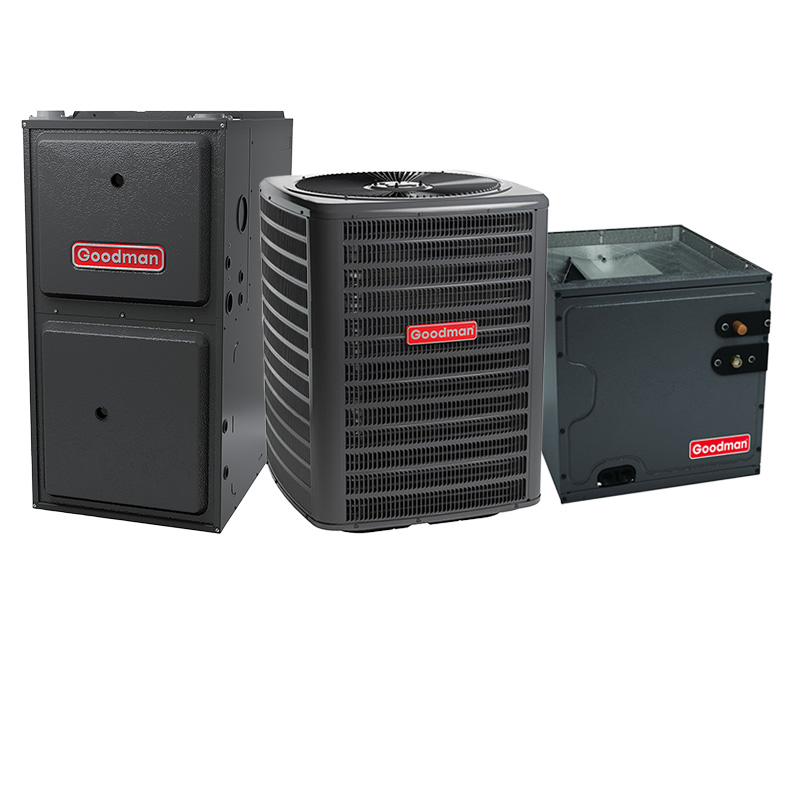
Goodman 4 Ton 13.4 SEER2 100000 BTU 96% AFUE Two Stage Multi-Speed ECM Gas Furnace System – Upflow | R32
View on AC Direct see your lowest price →Check current price on AC Direct →
Key features
- 4-ton cooling capacity with 13.4 SEER2 efficiency rating
- 100,000 BTU two-stage gas furnace at 96% AFUE
- Multi-speed ECM blower motor for quieter, more efficient airflow
- Upflow configuration for basement or closet installations with overhead ductwork
- R-32 refrigerant with lower global-warming potential than R-410A
- Two-stage heating reduces temperature swings and lowers noise during mild weather
About this system
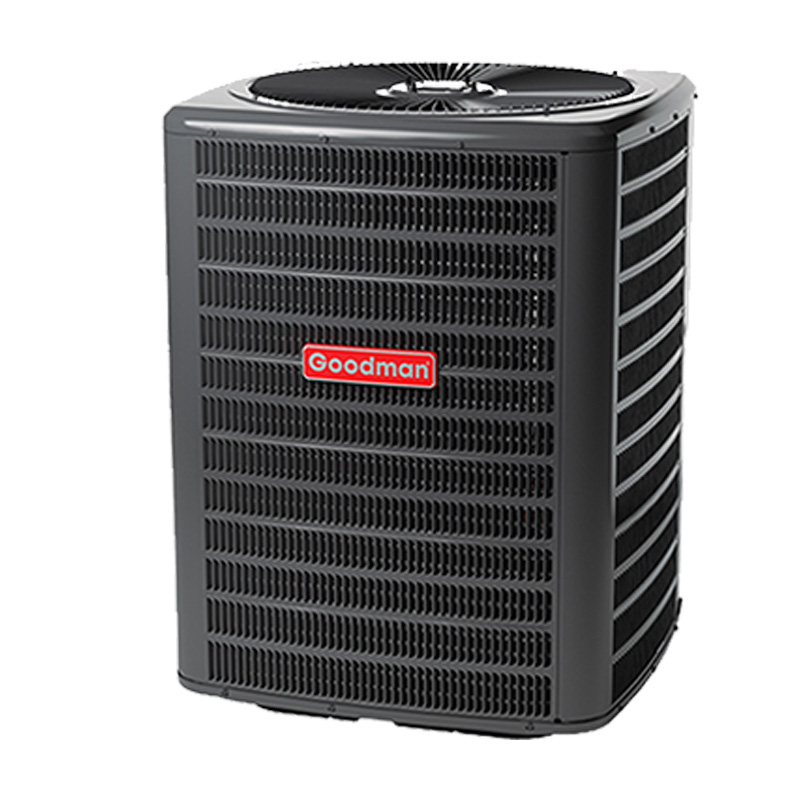
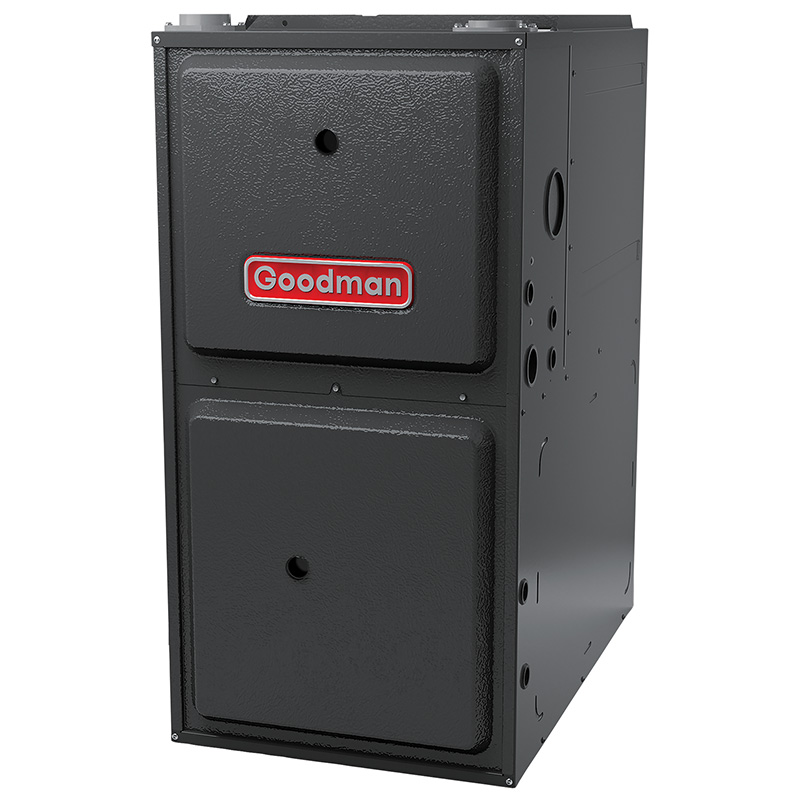
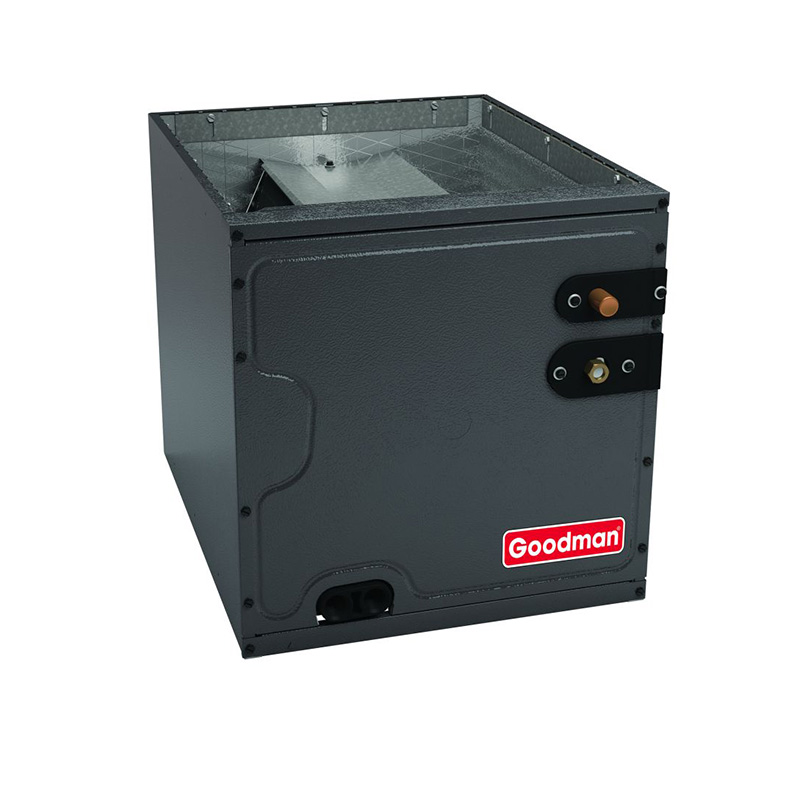
This Goodman bundle pairs a 4-ton, 13.4 SEER2 split-system air conditioner with a 100,000 BTU, 96% AFUE two-stage gas furnace in an upflow configuration. The 13.4 SEER2 rating sits right at the current federal minimum threshold for most of the country, so it is efficient enough to pass code but not the most energy-sipping option on the market. The 96% AFUE furnace, however, is a genuine high-efficiency unit that converts 96 cents of every fuel dollar into usable heat, which makes a real difference on monthly gas bills in colder climates. Two-stage heating means the furnace runs at a lower capacity most of the time, cycling on high only when outdoor temperatures drop sharply, which reduces temperature swings and cut-on noise versus a single-stage unit.
The multi-speed ECM blower motor is the quietest and most energy-frugal motor type available at this price tier. It ramps airflow up and down gradually rather than slamming on at full speed, which also helps with humidity removal in summer. R-32 refrigerant is a lower global-warming-potential option compared with the R-410A it replaces, and it is now the direction the industry is moving, so finding service technicians familiar with it should become easier over time. The upflow configuration means the furnace discharges conditioned air upward through the supply plenum, making it the right fit for basement or closet installations where ductwork runs above the unit.
This system suits homeowners in the 2,000 to 2,800 square foot range in mixed or colder climates who want a step up from basic single-stage equipment without paying the premium prices of Trane, Carrier, or Lennox. It is a solid budget-to-mid-range choice, but buyers should understand that long-term satisfaction will depend heavily on the quality of the installation and how diligently routine maintenance is kept up.
This Goodman system delivers genuinely high-efficiency heating and code-compliant cooling at a price point 15 to 25 percent below comparable premium-brand bundles. The two-stage furnace and ECM motor are real comfort upgrades over base-level equipment, but buyers should budget for the possibility of mid-life component repairs and understand that installation quality will largely determine how close to the top of the lifespan range this unit performs.
Overall score is the average of the five ratings above.
What we like
- 96% AFUE furnace meaningfully cuts gas bills compared with 80% AFUE alternatives
- Two-stage operation provides steadier temperatures and lower sound levels on mild days
- ECM blower motor reduces electrical draw and humidity issues in summer
- Priced 15 to 25 percent below Trane, Carrier, and Lennox equivalents
- R-32 refrigerant is a forward-looking choice that aligns with industry direction
Trade-offs
- 13.4 SEER2 is the federal minimum floor, not a standout efficiency rating for cooling
- Compressor longevity (typically 10 to 14 years) trails premium brands at 15 to 20 years
- Dual-run capacitor failures and evaporator coil leaks are documented weak points that add to repair costs, often after year 7
- A minority of owners have reported refrigerant leaks in the first year, typically linked to install or charge errors
What homeowners and pros say about Goodman
Homeowners who leave reviews for Goodman equipment tend to split along a familiar line. Those who had the system installed by an experienced contractor and keep up with annual tune-ups often report years of trouble-free operation and cite the lower upfront cost as the reason they chose the brand. On ConsumerAffairs, where the platform skews toward people with grievances, Goodman averages around 2.5 out of 5, and the recurring complaint pattern involves repair costs climbing after roughly year 7. Google dealer reviews tell a more balanced story, averaging around 3.8 out of 5 across multiple locations, where affordability is the single most common reason buyers say they are satisfied. The takeaway is that Goodman owners who run into problems tend to feel it more acutely because the upfront savings can erode quickly if repairs stack up.
HVAC technicians who service Goodman equipment regularly point to two specific weak spots: dual-run capacitors and evaporator coil leaks. Capacitor failures are the most frequently reported repair call and are generally a straightforward, lower-cost fix, but they do happen with enough regularity that a quality annual maintenance visit specifically checks capacitor health. Coil leaks are less common but more disruptive and expensive when they do occur. Compressor lifespan on Goodman equipment tends to average 10 to 14 years, a real gap compared with the 15 to 20 years often cited for premium brands. A small number of owners have also reported refrigerant leaks within the first year, which technicians attribute to installation or initial charge issues rather than the equipment itself. For this two-stage bundle specifically, the higher-quality ECM motor and 96% AFUE furnace represent the upper end of what Goodman builds, so buyers are at least getting the more durable components the brand offers.
Sources: ConsumerAffairs Goodman owner reviews, AHRI Directory of Certified Product Performance, U.S. DOE appliance and equipment efficiency standards, Goodman product specification sheets.
What it costs to run
At 13.4 SEER2, cooling this 4-ton system for a typical 1200-hour cooling season at the U.S. average electricity rate of $0.17/kWh works out to roughly $731 per year in cooling, about $0 less per year than a minimum-efficiency 13.4 SEER2 unit of the same size. Your real cost depends on your climate and local rate.
Method: (48,000 BTU/hr ÷ 13.4 SEER2) × 1200 hours ÷ 1000 × $0.17/kWh. Rate source: U.S. EIA average; cooling hours: moderate-climate estimate.
How it compares
| Brand | Comparable model | SEER2 | Stage | Price position |
|---|---|---|---|---|
| Goodman | 4-Ton 13.4 SEER2 / 96% AFUE Two-Stage Bundle (This System) | 13.4 | Two-stage | Value pick |
| Carrier | Performance 17 / 59TP6 Two-Stage Bundle | 15-17 | Two-stage | Moderately higher than this system |
| Trane | XR15 / S9V2 Two-Stage Bundle | 15 | Two-stage | Moderately to significantly higher than this system |
| Lennox | Merit 14ACX / ML196 Two-Stage Bundle | 14-15 | Two-stage | Moderately higher than this system |
Competitor rows are comparable single-stage units at similar efficiency; price is relative position, not a quote.
Questions about this system
Is 13.4 SEER2 going to cost me significantly more to run than a higher-efficiency unit?
Compared with a 16 SEER2 system, a 13.4 SEER2 unit will use roughly 16 to 18 percent more electricity for cooling over the same hours of operation. In a moderate climate with average cooling loads, that gap is real but not enormous on an annual basis. If you are in a hot climate with long cooling seasons, the payback on a higher-efficiency unit shortens considerably and is worth pricing out.
What does R-32 refrigerant mean for me as an owner, and is it harder to service?
R-32 has a lower global-warming potential than the R-410A it replaces and operates at similar pressures, so most HVAC technicians with modern equipment can handle it. It is mildly flammable (A2L classification), which requires certified handling but is not a practical hazard under normal residential service conditions. Availability is increasing steadily as the industry transitions away from R-410A.
How serious is the dual-run capacitor failure issue people mention with Goodman?
Capacitor failures are the most commonly reported repair for Goodman equipment and typically show up in the 5 to 10 year range. The good news is that a capacitor replacement is among the least expensive HVAC repairs, generally falling in the $300 to $600 range when a technician is dispatched. Keeping the capacitor on a regular maintenance check-list can catch a weakening capacitor before it causes a no-cooling call on a hot day.
Can I install this system myself to save money?
Legally and practically, no. R-32 refrigerant handling requires EPA 608 certification, gas line connections require a licensed plumber or HVAC contractor in most jurisdictions, and improper installation is the leading cause of early failures and voided warranties on Goodman equipment. Industry technicians specifically cite install quality as the single biggest factor in how long a Goodman unit lasts, so cutting corners here carries real financial risk.
What warranty does this Goodman system come with, and are there any catches?
Goodman typically offers a 10-year parts warranty when the equipment is registered within 60 days of installation by a licensed contractor. If registration is missed, coverage usually drops to 5 years, so registering promptly is important. Labor is not covered under the manufacturer warranty, which is standard across the industry, meaning a repair inside the warranty period still carries a service call and labor charge.
Specifications
| Cooling capacity | 4 Ton |
| Efficiency | 13.4 SEER2 |
| Furnace output | 100000 BTU |
| Furnace efficiency | 96% AFUE |
| Configuration | Upflow |
| Refrigerant | R-32 |