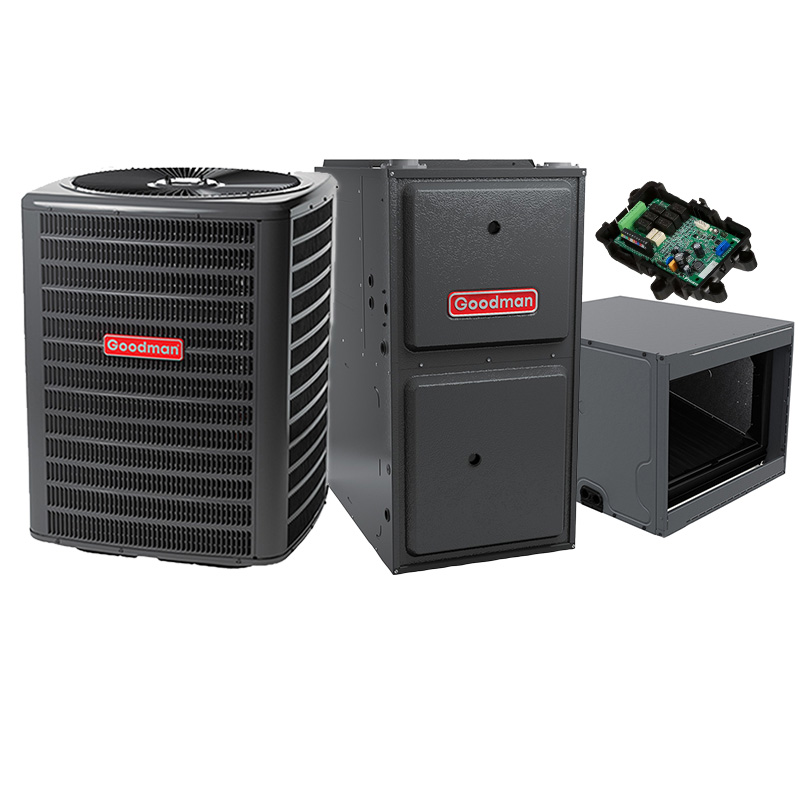
Goodman 4 Ton 13.4 SEER2 120000 BTU 96% AFUE Gas Furnace With R32 Air Condenser and Coil System – Horizontal
View on AC Direct see your lowest price →Check current price on AC Direct →
Key features
- 4-ton cooling capacity suited for homes roughly 2,000 to 2,600 sq ft depending on climate and insulation
- 13.4 SEER2 efficiency rating meets current federal minimums for most northern U.S. regions
- 96% AFUE gas furnace reduces fuel waste to approximately 4 cents per dollar of gas burned
- R-32 refrigerant with lower global warming potential than outgoing R-410A systems
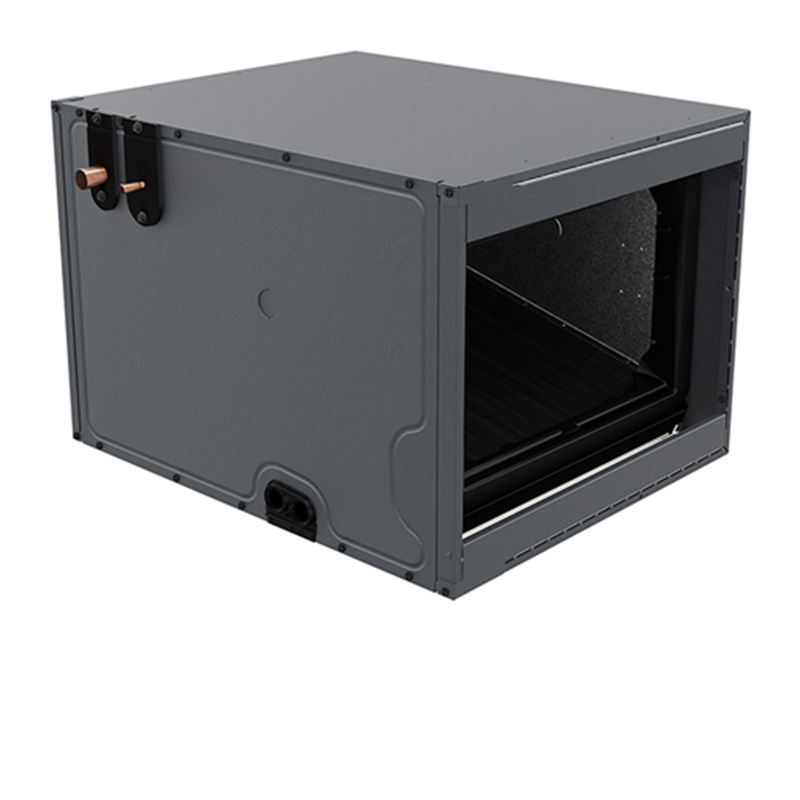
- Horizontal evaporator coil orientation for crawlspace, attic, or side-access air handler installations
- Factory-matched system components support warranty eligibility and consistent rated performance
About this system
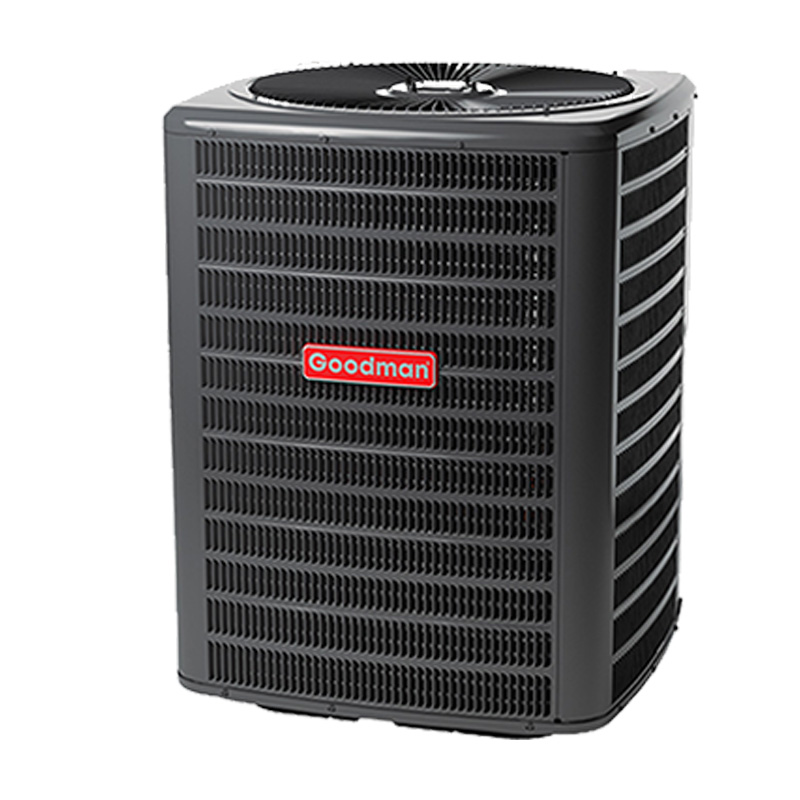
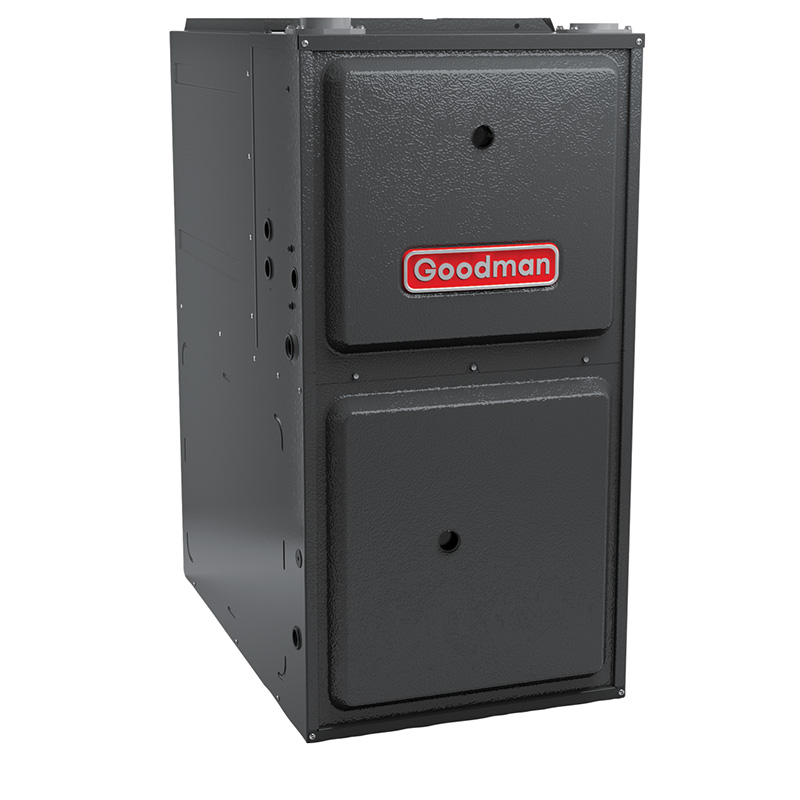
This Goodman bundle pairs a 4-ton, 13.4 SEER2 R-32 condensing unit with a 120,000 BTU, 96% AFUE two-stage gas furnace and a matching evaporator coil in a horizontal configuration, making it a direct fit for homes where the air handler sits in a crawlspace, attic, or closet with limited vertical clearance. The 96% AFUE rating means only about four cents of every fuel dollar escapes as waste heat, placing this furnace in the high-efficiency tier without the added cost of a 98% modulating unit. At 13.4 SEER2, cooling efficiency meets the new federal minimum for most northern U.S. regions and sits just below it for the Southwest and Southeast, so buyers in those markets should confirm local compliance before purchasing.
R-32 refrigerant is a meaningful forward-looking detail here. It has roughly one-third the global warming potential of the R-410A it replaces and is becoming the industry standard as R-410A production winds down under federal phase-out rules. The horizontal coil configuration is the spec that narrows the audience most: this is not a drop-in swap for a standard vertical upflow or downflow installation without an appropriate air handler cabinet. Buyers should confirm cabinet orientation and airflow direction with their installer before ordering. As a complete matched system, it qualifies for Goodman’s parts and labor warranty program, which requires professional installation and registration within a set window after purchase.
This Goodman bundle delivers a high-efficiency furnace and entry-level cooling in a horizontal package at a price point that is difficult to match from premium brands. The 96% AFUE furnace is a genuine strength, while the 13.4 SEER2 condenser is competent but not exceptional for cooling-heavy climates. Long-term ownership costs depend heavily on install quality and whether known weak points like dual-run capacitors and evaporator coils hold up past the warranty window.
Overall score is the average of the five ratings above.
What we like
- 96% AFUE furnace meaningfully reduces annual heating bills compared to 80% units
- Priced roughly 15 to 25 percent below comparable Carrier, Trane, and Lennox systems
- R-32 refrigerant is future-compatible as R-410A phases out industry-wide
- Matched coil and condenser combination supports full warranty coverage when professionally installed and registered
- Horizontal coil configuration fills a real installation need that not every bundle addresses
Trade-offs
- 13.4 SEER2 is the baseline tier and will not satisfy buyers prioritizing cooling efficiency or seeking utility rebates that require higher SEER2 ratings
- Dual-run capacitor failures are the most commonly reported repair, typically appearing after year 5 and costing $300 to $600 per occurrence
- Evaporator coil leaks appear in a meaningful share of owner reviews and can be costly to diagnose and repair outside the warranty period
- Compressor lifespan averages 10 to 14 years versus 15 to 20 years for premium-brand compressors, meaning replacement risk arrives sooner
What homeowners and pros say about Goodman
On ConsumerAffairs, Goodman scores around 2.5 out of 5, though that platform skews toward owners who experienced problems and went looking for somewhere to report them. The recurring pattern in those reviews is not early catastrophic failure but rather rising repair costs after roughly year 7, which matches the documented weak points: dual-run capacitors failing in the $300 to $600 repair range, evaporator coil leaks appearing in a meaningful share of units, and compressors that tend to average 10 to 14 years rather than the 15 to 20 years owners of premium equipment report. Google dealer reviews land considerably higher at around 3.8 out of 5 across hundreds of location-level reviews, where affordability is consistently the most praised attribute and complaints center on responsiveness after the sale rather than the equipment itself.
HVAC technicians who work on Goodman equipment regularly point to install quality as the single largest variable in how long one of these systems performs. A properly charged, correctly sized, and cleanly installed Goodman can run reliably for a decade or more; a rushed or under-charged install tends to surface the brand’s documented weak points faster. For this specific horizontal bundle, the installation complexity is real: matching the coil orientation to the cabinet, verifying refrigerant charge on R-32 with a tech who knows A2L handling procedures, and registering the system promptly to lock in the 10-year parts warranty are the steps most likely to determine whether this is a smart buy or a frustrating one. The furnace’s 96% AFUE is a genuine standout for the price tier and tends to generate consistent satisfaction in owner feedback regardless of brand sentiment overall.
Sources: ConsumerAffairs Goodman owner reviews, AHRI Directory of Certified Product Performance, U.S. DOE appliance and equipment efficiency standards, Goodman product specification sheets.
What it costs to run
At 13.4 SEER2, cooling this 4-ton system for a typical 1200-hour cooling season at the U.S. average electricity rate of $0.17/kWh works out to roughly $731 per year in cooling, about $0 less per year than a minimum-efficiency 13.4 SEER2 unit of the same size. Your real cost depends on your climate and local rate.
Method: (48,000 BTU/hr ÷ 13.4 SEER2) × 1200 hours ÷ 1000 × $0.17/kWh. Rate source: U.S. EIA average; cooling hours: moderate-climate estimate.
How it compares
| Brand | Comparable model | SEER2 | Stage | Price position |
|---|---|---|---|---|
| Goodman | GLXS4BA48 / GCVC960804CNA / CHPTA4830C3 (this system) | 13.4 | Single-stage cooling / Two-stage heating | Value pick |
| Carrier | Comfort 13 (24ACC3) series with compatible furnace | 13.4 | Single-stage | Typically 15 to 25 percent more than this Goodman bundle |
| Trane | XR13c series with S9V2 furnace | 13.4 | Single-stage | Typically 15 to 25 percent more than this Goodman bundle |
| Lennox | Merit 13ACX series with ML196 furnace | 13.4 | Single-stage | Typically 15 to 25 percent more than this Goodman bundle |
Competitor rows are comparable single-stage units at similar efficiency; price is relative position, not a quote.
Questions about this system
Does this system meet efficiency requirements in Arizona, Texas, or Florida where minimums are stricter?
No. The Department of Energy's Southwest and Southeast regional minimums for a 4-ton split system are 15 SEER2 as of January 2023. At 13.4 SEER2, this condenser does not comply for new installations in those regions. Buyers in northern states should verify their specific regional threshold before purchasing.
What does the horizontal configuration actually mean, and can I install this in a standard upflow closet?
The horizontal designation refers to the evaporator coil, which is designed to sit on its side in a duct system where airflow runs horizontally, typical of attic and crawlspace air handlers. Installing it in an upflow or downflow vertical cabinet requires a coil specifically designed for that orientation. Confirm your cabinet type with your installer before ordering.
What warranty comes with this system, and what do I need to do to activate it?
Goodman typically offers a 10-year parts warranty on registered systems when installed by a licensed professional and registered within the required window after installation. Without registration, coverage usually drops to a shorter base period. Labor is not covered by the manufacturer and depends on your installing contractor.
Should I budget for repairs, and what is most likely to need attention first?
Dual-run capacitors are the most commonly reported failure point and typically cost $300 to $600 to replace when they go, often around years 5 to 8. It is reasonable to budget for at least one capacitor replacement over the system's life. Evaporator coil leaks are a less frequent but more expensive issue that has appeared in a meaningful share of owner reviews.
Does R-32 refrigerant require any special handling compared to R-410A, and can any HVAC tech service it?
R-32 requires EPA Section 608 certification to handle, the same credential required for R-410A, so any properly licensed technician is legally qualified to work on it. However, R-32 is mildly flammable (A2L classification), which means it requires specific equipment and procedures during service. Some older technicians may not yet have the updated training, so confirming your service tech is familiar with A2L refrigerants is worth doing.
Specifications
| Cooling capacity | 4 Ton |
| Efficiency | 13.4 SEER2 |
| Furnace output | 120000 BTU |
| Furnace efficiency | 96% AFUE |
| Configuration | Horizontal |
| Refrigerant | R-32 |