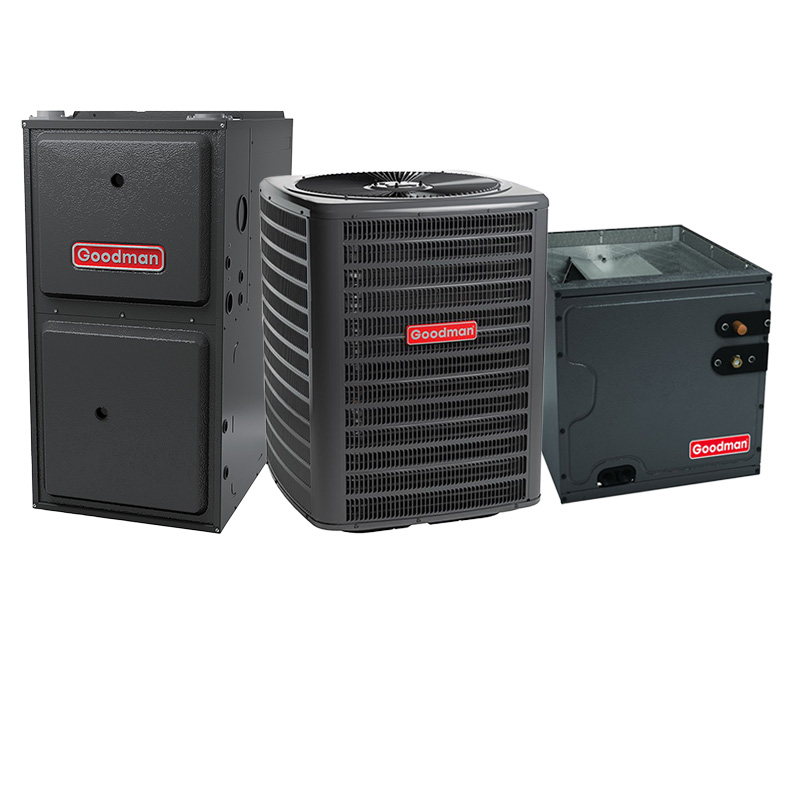
Goodman 4 Ton 13.4 SEER2 120000 BTU 96% AFUE Two Stage Multi-Speed ECM Gas Furnace System – Upflow | R32
View on AC Direct see your lowest price →Check current price on AC Direct →
Key features
- 4-ton cooling capacity rated at 13.4 SEER2 for regional efficiency compliance
- 120,000 BTU, 96% AFUE two-stage condensing gas furnace
- Multi-speed ECM blower motor reduces electricity use and improves airflow balance
- R-32 refrigerant with lower global warming potential than R-410A
- Upflow configuration for basement or closet installs with supply air rising
- Two-stage heating reduces temperature swings and short-cycling on mild days
About this system
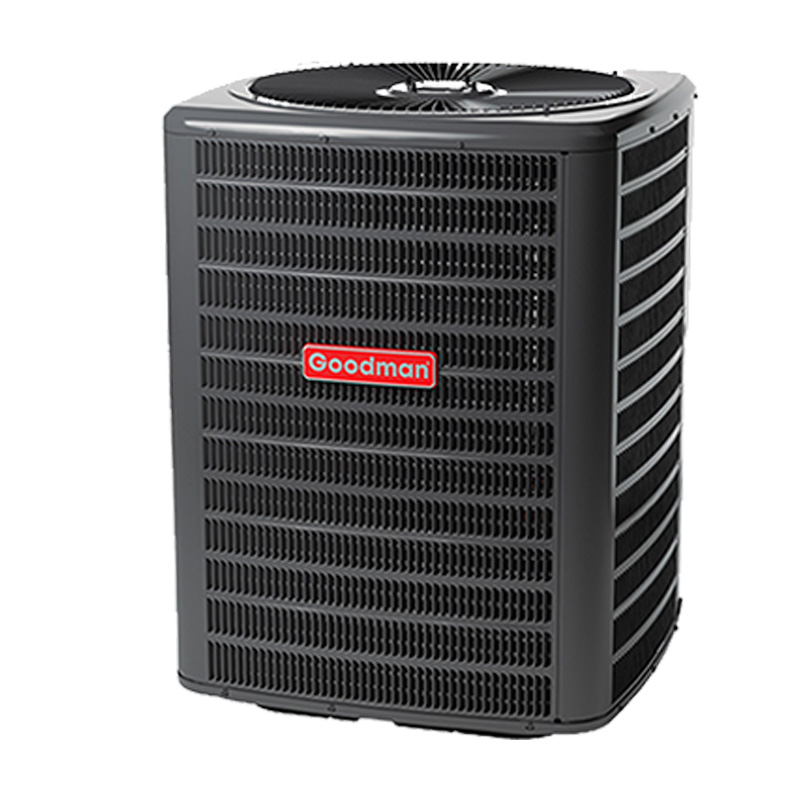
This Goodman bundle pairs a 4-ton, 13.4 SEER2 R-32 split-system air conditioner with a 120,000 BTU, 96% AFUE two-stage gas furnace in an upflow configuration. The 4-ton capacity targets larger homes, typically in the 2,000 to 2,600 square foot range depending on climate zone, insulation, and duct layout. At 13.4 SEER2, the cooling side clears the federal minimum for most U.S. regions without climbing into premium efficiency territory, which keeps the upfront cost lower at the expense of long-term energy savings compared to 16 SEER2 or higher equipment.
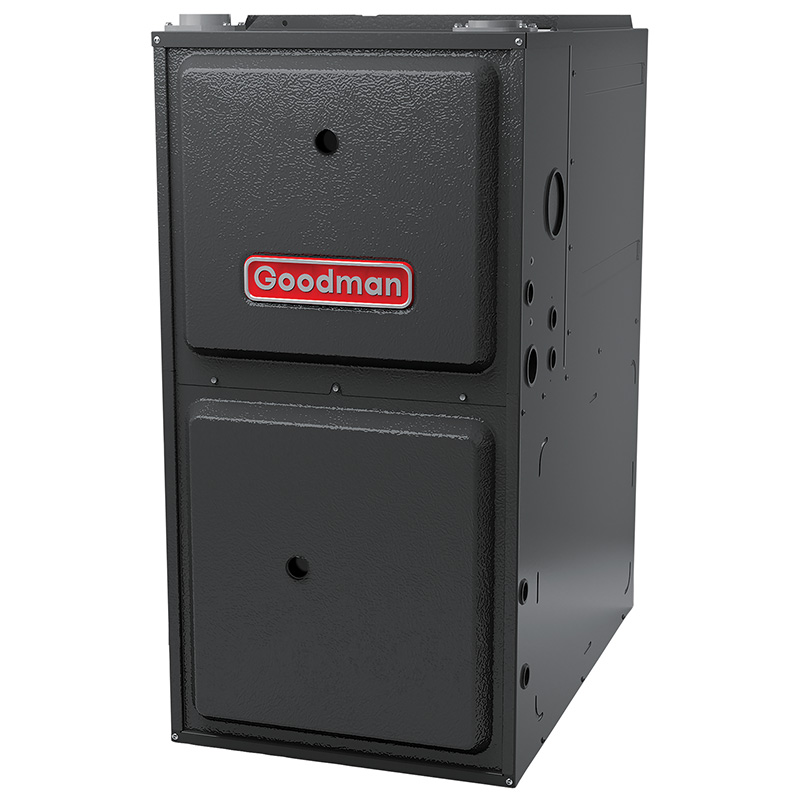
The furnace side is where this system earns its keep in cold climates. A 96% AFUE rating means 96 cents of every fuel dollar becomes heat, placing it in the condensing-furnace tier. Two-stage operation lets the furnace run at a lower output on mild days, which reduces temperature swings and lowers gas consumption compared to a single-stage unit. The multi-speed ECM blower motor further trims electricity use and improves airflow consistency. R-32 refrigerant carries a lower global warming potential than the R-410A it replaces, which is worth noting as regulations continue to tighten.
This system suits homeowners who want a reliable, code-compliant installation without paying the premium that Trane, Lennox, or Carrier command. It is a practical choice for a straightforward upflow furnace installation where the existing duct system is in reasonable shape. Budget-minded buyers, rental property owners, and anyone working with a contractor who knows Goodman equipment well will find the combination functional and priced to move.
The Goodman 4-ton 13.4 SEER2 / 96% AFUE bundle is a solid entry-level system for buyers who prioritize upfront affordability and need to replace aging equipment without a large capital outlay. It delivers genuinely capable heating efficiency and adequate cooling efficiency, though buyers should budget for possible capacitor and coil repairs in the 7-to-12-year window and should not expect compressor longevity on par with premium brands. Install quality will matter more here than with higher-tier equipment.
Overall score is the average of the five ratings above.
What we like
- 96% AFUE furnace meaningfully lowers gas bills compared to an 80% AFUE replacement
- Two-stage furnace operation reduces temperature swings and improves comfort on shoulder-season days
- ECM blower motor cuts fan electricity consumption versus a standard PSC motor
- Priced roughly 15 to 25 percent below equivalent Carrier, Trane, and Lennox systems
- R-32 refrigerant is forward-looking as refrigerant regulations continue to evolve
Trade-offs
- Dual-run capacitors are the most commonly reported failure point, typically needing replacement in the 7-to-10-year range at a cost of 300 to 600 dollars
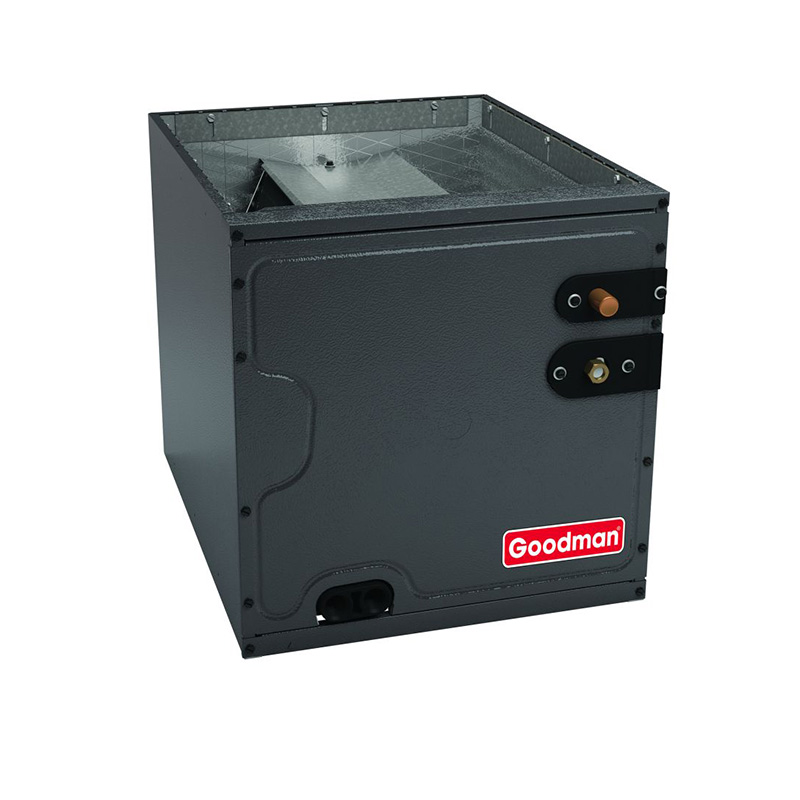
- Evaporator coil leaks appear in a meaningful share of owner reports, a potentially costly repair outside warranty
- Compressor lifespan averages 10 to 14 years versus 15 to 20 years for premium-brand compressors
- 13.4 SEER2 is near the federal minimum, so long-term cooling energy savings are modest compared to 16 SEER2 or higher systems
What homeowners and pros say about Goodman
On ConsumerAffairs, Goodman holds roughly 2.5 out of 5 stars, a score shaped by that platform’s tendency to attract dissatisfied owners rather than happy ones. The recurring theme in those reviews is repair costs that start climbing after year 7, with dual-run capacitor failures and evaporator coil leaks cited most often. On Google dealer reviews the picture is more balanced, averaging around 3.8 out of 5 stars across many locations, where affordability is consistently the most praised attribute. HVAC technicians in trade forums often frame Goodman as a system whose outcome depends heavily on who installs it and how well the refrigerant charge and airflow are set up at commissioning, pointing to first-year refrigerant leaks as a known sign of a rushed or careless install rather than a factory defect.
For this specific 4-ton two-stage bundle, the furnace side tends to generate fewer complaints than the cooling side, which aligns with Goodman’s reputation for producing functional gas furnaces at accessible price points. The documented weak spots remain the compressor, which averages 10 to 14 years rather than the 15 to 20 years typical of premium brands, and the evaporator coil, where leak reports are frequent enough to make an extended labor warranty worth considering. Buyers who pair this system with a skilled installer, register the equipment promptly for the 10-year parts warranty, and keep up with annual maintenance generally report serviceable performance. Those who cut corners on installation or skip maintenance are the ones most likely to end up writing the low-star reviews.
Sources: ConsumerAffairs Goodman owner reviews, AHRI Directory of Certified Product Performance, U.S. DOE appliance and equipment efficiency standards, Goodman product specification sheets.
What it costs to run
At 13.4 SEER2, cooling this 4-ton system for a typical 1200-hour cooling season at the U.S. average electricity rate of $0.17/kWh works out to roughly $731 per year in cooling, about $0 less per year than a minimum-efficiency 13.4 SEER2 unit of the same size. Your real cost depends on your climate and local rate.
Method: (48,000 BTU/hr ÷ 13.4 SEER2) × 1200 hours ÷ 1000 × $0.17/kWh. Rate source: U.S. EIA average; cooling hours: moderate-climate estimate.
How it compares
| Brand | Comparable model | SEER2 | Stage | Price position |
|---|---|---|---|---|
| Goodman | 4-Ton 13.4 SEER2 / 96% AFUE Two-Stage Bundle (this system) | 13.4 | Two-stage | Value pick |
| Carrier | Comfort 24ACC636 / 58SB0 series | 13.4-14.0 | Single-stage | Typically 15 to 25 percent more than this Goodman bundle |
| Trane | XR14 / S9X1 series | 13.4-14.0 | Single-stage | Typically 15 to 25 percent more than this Goodman bundle |
| Lennox | Merit ML14XC1 / ML296V series | 13.4-14.0 | Single-stage | Typically 15 to 25 percent more than this Goodman bundle |
Competitor rows are comparable single-stage units at similar efficiency; price is relative position, not a quote.
Questions about this system
Is 4 tons the right size for my house, or should I get a load calculation done first?
A 4-ton unit is sized for roughly 2,000 to 2,600 square feet in a mid-climate zone, but actual needs depend on insulation, window area, ceiling height, and local design temperatures. An oversized system short-cycles, which hurts humidity control and accelerates wear. Ask your contractor to run a Manual J load calculation before ordering.
What does 120,000 BTU mean for a 4-ton cooling system, and is the furnace oversized?
Cooling capacity and heating capacity are sized independently. A 4-ton air conditioner handles about 48,000 BTU of cooling, while the 120,000 BTU furnace is sized for heating demand in colder climates where a large home may need significant output on a design-day. In mild climates, a 80,000 or 100,000 BTU furnace might be more appropriate, so confirm the heating load with your contractor.
What are the most likely repair costs I should plan for over the life of this system?
Goodman's most documented failure point is the dual-run capacitor, a relatively inexpensive repair typically in the 300 to 600 dollar range that often surfaces around years 7 to 10. Evaporator coil leaks are a second common complaint and can be significantly more expensive. Compressors on Goodman equipment average 10 to 14 years, so budgeting for a potential compressor replacement or full system swap inside 15 years is prudent.
Does this system use R-32 refrigerant, and will that affect service costs?
Yes, this unit uses R-32, which is becoming more common as R-410A is phased down under EPA regulations. R-32 requires technicians with appropriate safety training and compatible recovery equipment, but it is widely available and most newer HVAC shops are already equipped for it. Verify your servicing contractor is R-32 certified before scheduling future maintenance.
What warranty does Goodman provide on this system, and is registration required?
Goodman typically offers a 10-year parts limited warranty on registered equipment, which requires online registration within a set period after installation. Without registration, coverage usually drops to a shorter base warranty. The compressor carries its own coverage term within that parts warranty. Always register promptly and keep documentation, because the evaporator coil and compressor are the two components most worth having under warranty coverage given the documented failure modes.
Specifications
| Cooling capacity | 4 Ton |
| Efficiency | 13.4 SEER2 |
| Furnace output | 120000 BTU |
| Furnace efficiency | 96% AFUE |
| Configuration | Upflow |
| Refrigerant | R-32 |