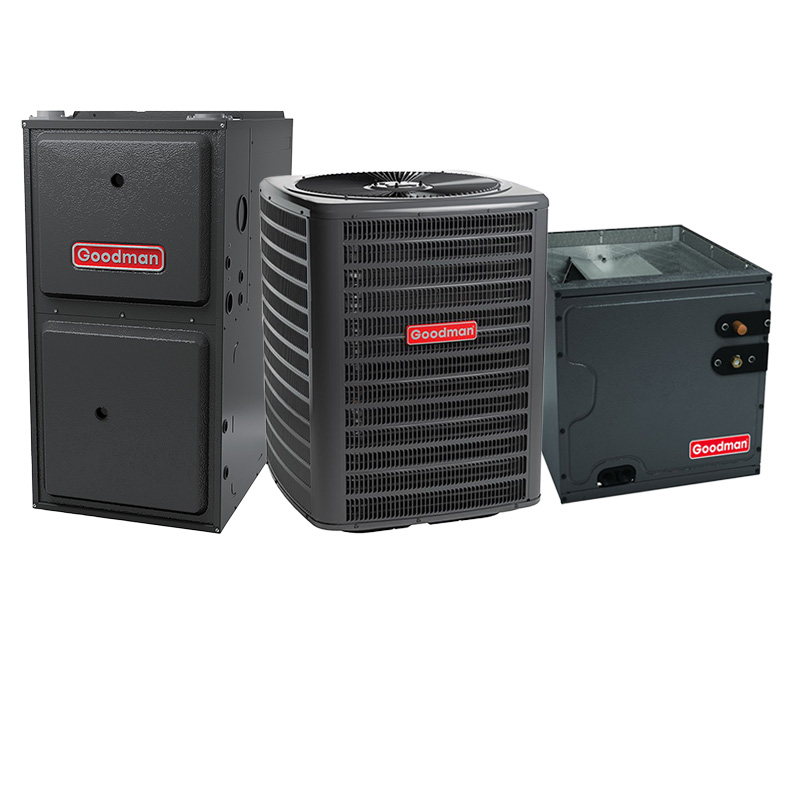
Goodman 4 Ton 13.4 SEER2 80000 BTU 96% AFUE Two Stage Multi-Speed ECM Gas Furnace System – Upflow | R32
View on AC Direct see your lowest price →Check current price on AC Direct →
Key features
- 96% AFUE two-stage gas furnace reduces heating bills and temperature swings versus single-stage
- 13.4 SEER2 cooling meets current federal minimum efficiency requirements for most climate zones
- Multi-speed ECM blower motor lowers blower energy use and reduces air noise compared to PSC motors
- R-32 refrigerant charge offers a lower global warming potential than R-410A and longer regulatory viability
- Upflow cabinet designed for basement or ground-level mechanical room installations
- 4-ton / 80,000 BTU capacity suited for roughly 2,000 to 2,800 sq ft depending on local load calculations
About this system
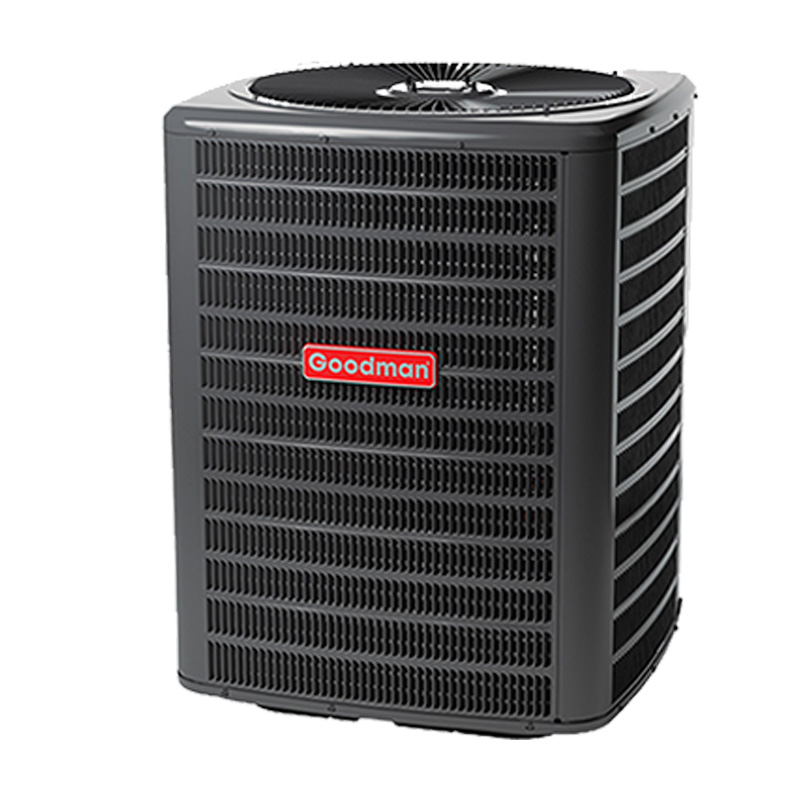
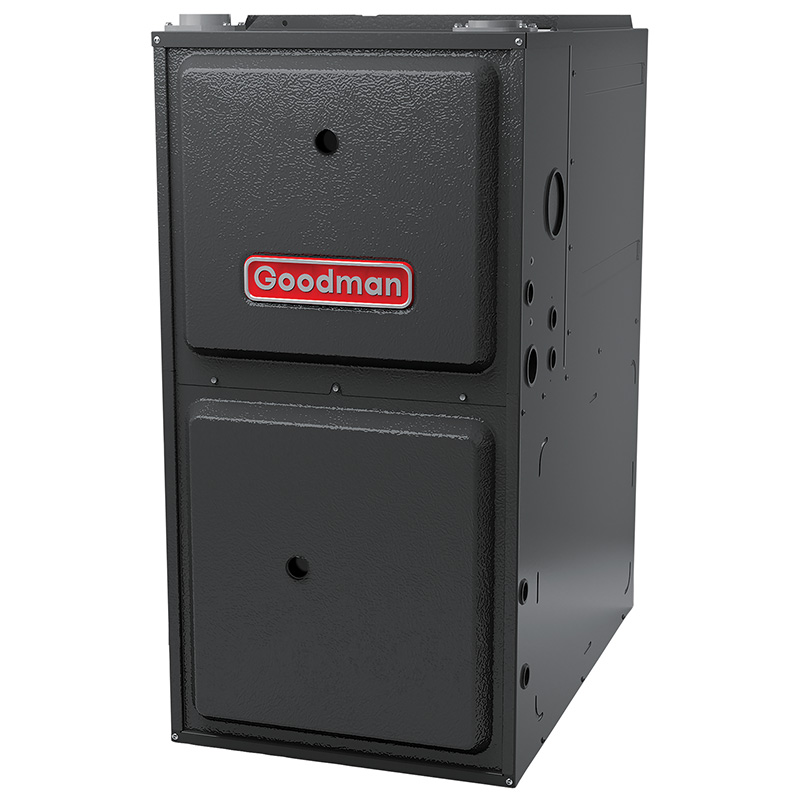
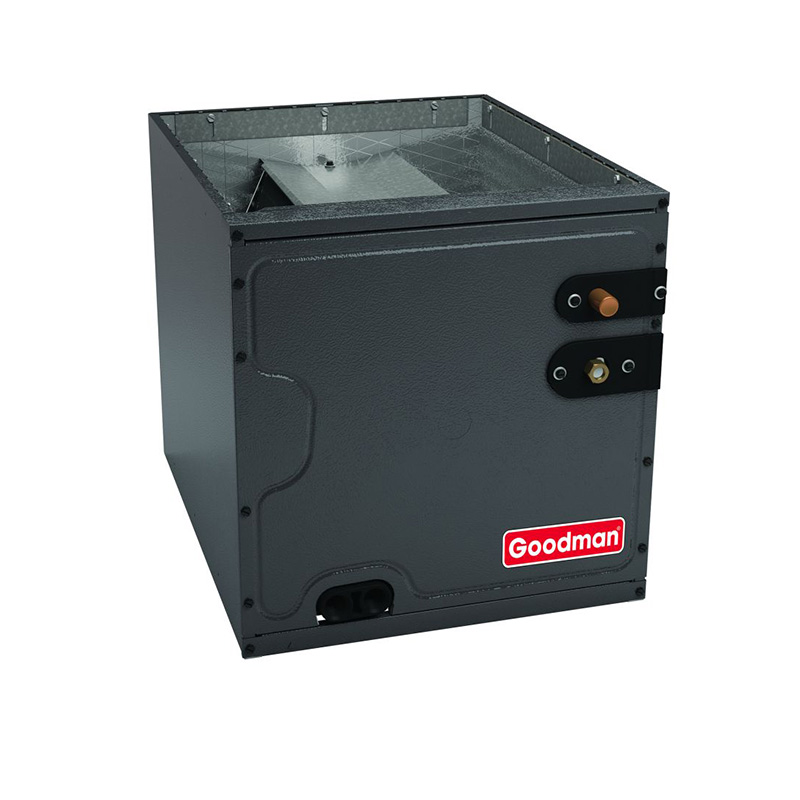
This Goodman bundle pairs a 4-ton, 13.4 SEER2 R-32 split-system air conditioner with an 80,000 BTU, 96% AFUE two-stage gas furnace in an upflow configuration. The 13.4 SEER2 rating sits at the current federal minimum threshold for most U.S. climate zones, so it is not a high-efficiency cooling system, but the 96% AFUE furnace is a genuinely strong heating performer that converts 96 cents of every fuel dollar into usable heat. Two-stage operation on the furnace means it runs at a lower capacity on mild days, which reduces temperature swings and short-cycling compared to a single-stage unit. The multi-speed ECM blower motor adds to comfort by moving air more quietly and more consistently than a standard PSC motor, and it draws less electricity doing it.
The R-32 refrigerant charge is worth noting for buyers planning long-term ownership. R-32 has a lower global warming potential than R-410A and is expected to remain available well after the HVAC industry phases down R-410A, so parts and recharge service should stay accessible. The upflow configuration assumes the air handler sits in a basement, utility closet, or ground-level mechanical room with supply air moving upward into the duct system. This system suits budget-conscious homeowners in the 2,000 to 2,800 square foot range who want solid heating efficiency and improved comfort staging without paying premium-brand prices, and who understand that a careful, quality installation is non-negotiable with this equipment.
This Goodman bundle delivers a genuinely strong furnace spec (96% AFUE, two-stage, ECM) and a future-ready refrigerant at a price that undercuts comparable Trane, Carrier, and Lennox systems by 15 to 25 percent. The cooling side is baseline-efficient rather than impressive, and Goodman's real-world track record makes installation quality and ongoing maintenance more consequential here than with premium brands. Buyers who get a proper load calculation, a careful install, and a solid maintenance routine will get meaningful value; those who cut corners on any of those steps are more likely to encounter the brand's documented weak points.
Overall score is the average of the five ratings above.
What we like
- 96% AFUE furnace is a high-efficiency rating that meaningfully lowers heating operating costs
- Two-stage furnace operation reduces short-cycling and improves room-to-room temperature consistency
- ECM blower motor runs quieter and consumes less electricity than a standard PSC motor
- R-32 refrigerant is lower-GWP than R-410A and faces less regulatory risk over the system's service life
- Purchase price runs 15 to 25 percent below comparable Trane, Lennox, and Carrier systems, freeing budget for a quality install or service contract
Trade-offs
- 13.4 SEER2 is the current federal minimum for cooling efficiency, so operating costs will be higher than mid- or high-efficiency alternatives
- Dual-run capacitors are the most frequently reported failure component, and evaporator coil leaks appear in a meaningful share of owner reports
- Compressor lifespan averages 10 to 14 years versus 15 to 20 years typical of premium-brand compressors, which matters on a 4-ton unit
- ConsumerAffairs scores average around 2.5 out of 5, with owners frequently citing rising repair costs after year 7
What homeowners and pros say about Goodman
Homeowners who shop Goodman most often land on the same two talking points: the upfront price is hard to argue with, and the experience after that depends enormously on who does the install. Google dealer reviews for Goodman equipment average around 3.8 out of 5 across hundreds of location-level reviews, and affordability is the single most common reason buyers say they chose it. The story on ConsumerAffairs is less flattering, averaging about 2.5 out of 5, and the recurring thread there is not early catastrophic failure but rather rising repair frequency after roughly year 7. That pattern fits what the equipment’s documented failure modes actually show: dual-run capacitors are the most frequently reported part to fail, usually a 300 to 600 dollar repair, but a problem that compounds if ignored. Evaporator coil leaks appear in a meaningful share of owner accounts, and compressor lifespan tends to run 10 to 14 years rather than the 15 to 20 years more commonly associated with Trane or Carrier compressors.
HVAC technicians who work across multiple brands tend to describe Goodman as acceptable equipment that punishes neglect more than premium brands do. A yearly maintenance visit that catches capacitor wear, checks refrigerant charge, and cleans the coil is not optional here in the way it might feel optional on a higher-tier system. A small number of owners have also reported refrigerant leaks in the first year, and field experience points to installation errors or an improper initial charge rather than factory defects as the cause in most cases. The upshot for this specific two-stage, ECM, 96% AFUE bundle is that the furnace specification is genuinely good for the price, the R-32 refrigerant charge is a forward-looking choice, and the value case is real. The trade-off is that you are accepting a shorter expected compressor life, some documented component vulnerability, and a brand reputation that sits firmly in the middle of the market rather than at the top.
Sources: ConsumerAffairs Goodman owner reviews, AHRI Directory of Certified Product Performance, U.S. DOE appliance and equipment efficiency standards, Goodman product specification sheets.
What it costs to run
At 13.4 SEER2, cooling this 4-ton system for a typical 1200-hour cooling season at the U.S. average electricity rate of $0.17/kWh works out to roughly $731 per year in cooling, about $0 less per year than a minimum-efficiency 13.4 SEER2 unit of the same size. Your real cost depends on your climate and local rate.
Method: (48,000 BTU/hr ÷ 13.4 SEER2) × 1200 hours ÷ 1000 × $0.17/kWh. Rate source: U.S. EIA average; cooling hours: moderate-climate estimate.
How it compares
| Brand | Comparable model | SEER2 | Stage | Price position |
|---|---|---|---|---|
| Goodman | 4-Ton 13.4 SEER2 / 96% AFUE Two-Stage ECM Bundle (this system) | 13.4 | Two-stage furnace / standard AC | Value pick |
| Carrier | Performance 13 (24ACC3) with 96% AFUE Performance furnace | 13.4 | Single-stage | Typically 15 to 25 percent more than this Goodman bundle |
| Trane | XR13c with S9X2 96% AFUE furnace | 13.4 | Single-stage | Typically 15 to 25 percent more than this Goodman bundle |
| Lennox | Merit 13ACX with ML96DF two-stage furnace | 13.4 | Two-stage furnace / single-stage AC | Typically 15 to 25 percent more than this Goodman bundle |
Competitor rows are comparable single-stage units at similar efficiency; price is relative position, not a quote.
Questions about this system
Is 13.4 SEER2 going to cost me noticeably more to run than a higher-efficiency system?
Yes, compared to a 16 or 17 SEER2 system the annual cooling cost difference can be meaningful in warm climates or in homes that run the AC heavily. In milder climates or for homeowners with shorter cooling seasons, the gap narrows, but the 96% AFUE furnace largely offsets that with strong heating-season savings.
What does two-stage furnace operation actually mean day to day?
The furnace has a lower firing stage (typically around 65 to 70 percent of full capacity) for mild weather and a full stage for the coldest days. In practice this means the unit runs longer, quieter cycles at lower output, which keeps temperatures more even throughout your home and reduces the blast-and-coast feeling common with single-stage units.
What are the most likely repairs I should budget for over the first 10 years?
Based on Goodman's documented failure patterns, dual-run capacitors are the most common service call and typically cost 300 to 600 dollars to repair. Evaporator coil leaks are the next most frequently reported issue and can be more expensive. Setting aside a small annual maintenance fund and scheduling yearly tune-ups helps catch capacitor wear early before it cascades into a compressor failure.
Why does this system use R-32 instead of R-410A, and does that matter for service?
R-32 is a lower global warming potential refrigerant that the industry is shifting toward as R-410A is phased down under EPA regulations starting in 2025. For you as an owner this means R-32 should remain widely available and reasonably priced for recharge or repair for the foreseeable future, which is a practical advantage for a system you may own for 12 or more years.
Will a Goodman installer warranty cover refrigerant leaks in the first year?
Factory warranty terms typically cover parts, but labor and refrigerant recharge costs are not covered by Goodman directly. A minority of owners have reported refrigerant leaks within the first year, and these are most often traced to installation or initial charge errors rather than a factory defect. Confirming that your installer carries their own labor warranty for at least one year, and verifying the refrigerant charge at startup, are both important steps.
Specifications
| Cooling capacity | 4 Ton |
| Efficiency | 13.4 SEER2 |
| Furnace output | 80000 BTU |
| Furnace efficiency | 96% AFUE |
| Configuration | Upflow |
| Refrigerant | R-32 |