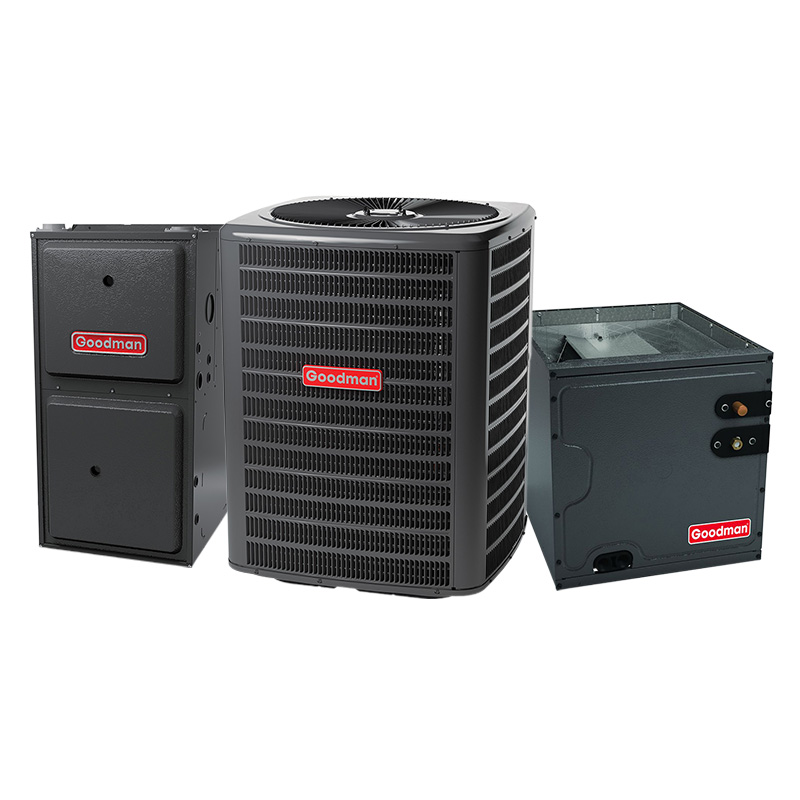
Goodman 4 Ton 13.4 SEER2 AC & Gas Furnace System – Multi-Speed, 100000 BTU Gas Furnace, 92% AFUE, Upflow, R32
View on AC Direct see your lowest price →Check current price on AC Direct →
Key features
- 4-ton cooling capacity with 13.4 SEER2 efficiency rating
- 100,000 BTU upflow gas furnace at 92% AFUE
- Multi-speed blower motor for improved airflow distribution
- R-32 refrigerant with lower global warming potential than R-410A
- Single-stage compressor operation
- Factory-matched system designed for simplified warranty registration
About this system
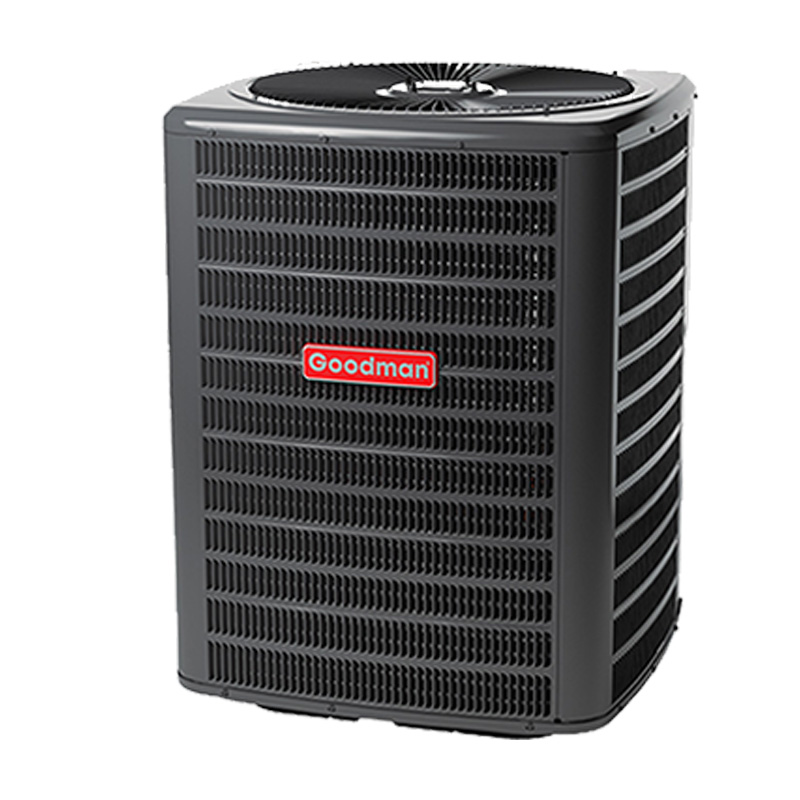
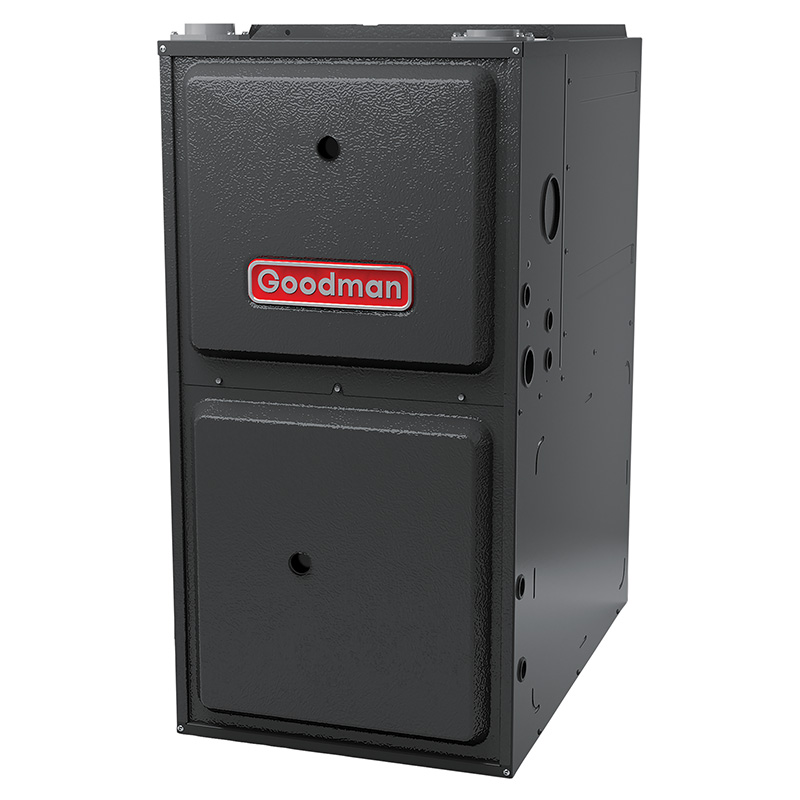
The Goodman GLXS3BN4810D pairs a 4-ton, 13.4 SEER2 single-stage air conditioner with a 100,000 BTU, 92% AFUE upflow gas furnace running on R-32 refrigerant. At 13.4 SEER2, this system sits right at the federal efficiency floor for most of the country, meaning it meets the minimum standard but does not push into mid- or high-efficiency territory. That is a reasonable trade-off for buyers whose primary goal is replacing a failed or aging system at the lowest upfront cost, not maximizing monthly energy savings. The 92% AFUE furnace is a genuine efficiency step above 80% units, recovering 92 cents of heat energy from every dollar of gas burned, which matters in climates with long heating seasons.
The upflow configuration suits homes where the air handler sits in a basement or closet with ductwork running up through the structure, which covers a large share of single-family homes in the Midwest and Northeast. The shift to R-32 refrigerant is worth noting: R-32 has a lower global warming potential than the R-410A it replaces, and it is becoming the industry standard, so sourcing refrigerant for future service calls should remain straightforward. The multi-speed furnace blower improves comfort and air distribution compared to a single-speed motor, though this system does not reach the comfort ceiling of a variable-speed or two-stage setup. Overall, this is a workhorse bundle aimed at cost-conscious homeowners in mid-size homes who want reliable heating and cooling without the premium price tag of top-tier brands.
The Goodman GLXS3BN4810D delivers a functional, code-compliant replacement system at a price point that is hard to argue with for budget-focused buyers. It covers the basics well but runs at minimum efficiency, uses a single-stage compressor that cycles on at full blast every time, and carries a brand reliability record that is noticeably below premium competitors. The value proposition is real, but only when paired with a careful, experienced installer.
Overall score is the average of the five ratings above.
What we like
- Purchase price runs roughly 15 to 25 percent below comparable Carrier, Trane, and Lennox systems
- 92% AFUE furnace meaningfully reduces heating costs compared to 80% AFUE units
- R-32 refrigerant is the emerging industry standard, keeping future service costs predictable
- Multi-speed blower improves temperature evenness compared to a single-speed furnace motor
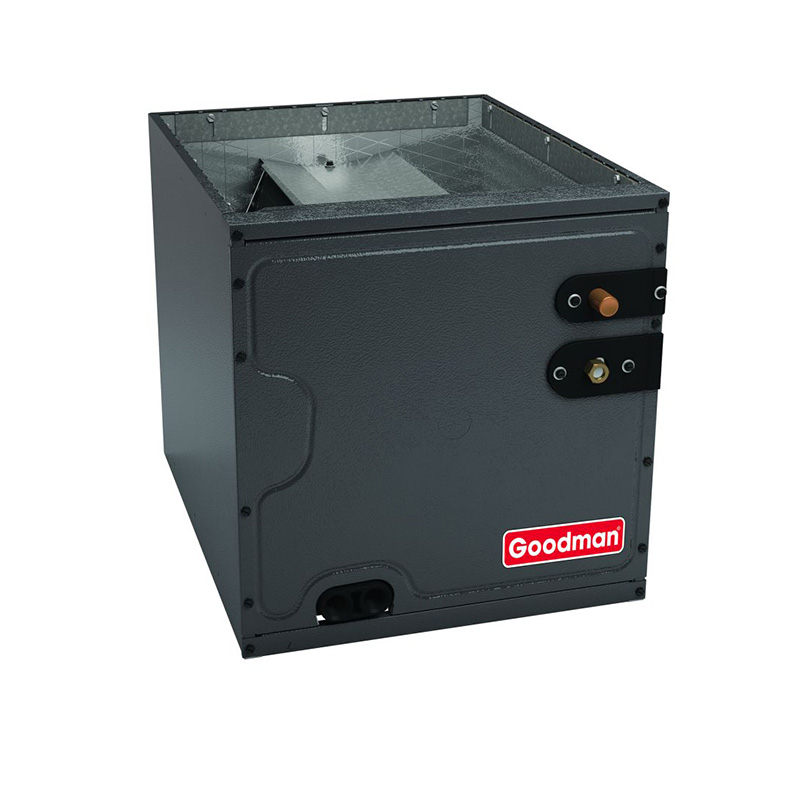
- Factory-matched coil and furnace pairing simplifies warranty registration and documentation
Trade-offs
- 13.4 SEER2 is the federal minimum efficiency floor, offering no energy savings headroom above baseline
- Single-stage compressor runs at full capacity or off, which can cause humidity and comfort issues in mild weather
- Dual-run capacitors and evaporator coil leaks are the two most documented failure modes in owner feedback, and compressor lifespan averages 10 to 14 years versus 15 to 20 for premium brands
- ConsumerAffairs scores average around 2.5 out of 5, with repair cost complaints rising sharply after year 7
What homeowners and pros say about Goodman
Homeowners who leave reviews on ConsumerAffairs give Goodman equipment an average of about 2.5 out of 5, and it is important to understand what that score reflects: that platform attracts people who are frustrated, so it skews negative by nature. The recurring theme in those reviews is not early catastrophic failure but rather repair bills climbing after roughly year 7, which aligns with what technicians report about the brand. Google dealer reviews, which capture a broader cross-section of customers including satisfied ones, land closer to 3.8 out of 5, where the most consistent praise is straightforward: the price is hard to beat. Both data points together paint an honest picture of a brand that delivers adequate performance at a lower entry cost, with a reliability ceiling that falls below what premium brands typically achieve.
On the technician side, the conversation about Goodman almost always comes back to installation quality as the controlling variable. The documented failure modes on this equipment include dual-run capacitor failures, which are the most frequently reported issue and are generally a low-cost fix, and evaporator coil leaks, which show up in a meaningful share of owner accounts and are considerably more disruptive and expensive. A minority of owners also report refrigerant leaks within the first year, which technicians attribute primarily to install or initial charge errors rather than manufacturing defects. Compressor lifespan on Goodman units averages 10 to 14 years in real-world experience, a noticeable gap from the 15 to 20 years more commonly associated with Carrier, Trane, and Lennox compressors. For a 4-ton system like this GLXS3BN4810D, those trade-offs are worth weighing honestly against the upfront savings before committing.
Sources: ConsumerAffairs Goodman owner reviews, AHRI Directory of Certified Product Performance, U.S. DOE appliance and equipment efficiency standards, Goodman product specification sheets.
What it costs to run
At 13.4 SEER2, cooling this 4-ton system for a typical 1200-hour cooling season at the U.S. average electricity rate of $0.17/kWh works out to roughly $731 per year in cooling, about $0 less per year than a minimum-efficiency 13.4 SEER2 unit of the same size. Your real cost depends on your climate and local rate.
Method: (48,000 BTU/hr ÷ 13.4 SEER2) × 1200 hours ÷ 1000 × $0.17/kWh. Rate source: U.S. EIA average; cooling hours: moderate-climate estimate.
How it compares
| Brand | Comparable model | SEER2 | Stage | Price position |
|---|---|---|---|---|
| Goodman | GLXS3BN4810D | 13.4 | Single-stage | Value pick |
| Carrier | Comfort 14 Series (24ACC4) | 13.4-14 | Single-stage | Typically 15 to 25 percent more than Goodman |
| Trane | XR14 Series | 13.4-14 | Single-stage | Typically 15 to 25 percent more than Goodman |
| Lennox | Merit Series ML14XC1 | 13.4-14 | Single-stage | Typically 15 to 25 percent more than Goodman |
Competitor rows are comparable single-stage units at similar efficiency; price is relative position, not a quote.
Questions about this system
Is 13.4 SEER2 going to cost me significantly more to run than a higher-efficiency unit?
Compared to a 16 or 18 SEER2 system, yes, there is a real operating cost difference over time, though the gap depends heavily on how many cooling hours your climate delivers each year. In a moderately hot region the annual savings from a higher-SEER2 unit might recover the price premium in 8 to 12 years, so if budget is tight now, the 13.4 SEER2 is defensible, but it is worth running the math for your specific location.
What does upflow mean and will this work in my home?
Upflow means the furnace pulls return air in at the bottom and pushes conditioned air out the top, which routes up into overhead ductwork. This is the most common configuration in homes with basement or main-floor utility closet installations and ductwork running through the ceiling or second floor. If your existing furnace is an upflow unit, this is a direct replacement match.
What are the most likely repairs I should budget for on this system?
Based on documented owner experience, dual-run capacitors are the most frequent failure point and typically cost between 300 and 600 dollars to replace including labor, making them a manageable fix. Evaporator coil leaks appear in a meaningful share of reviews and are more expensive to address, and compressor lifespan on Goodman equipment averages 10 to 14 years, so budgeting for a possible compressor repair or replacement in that window is prudent.
Does the warranty cover parts and labor, and what do I need to do to keep it valid?
Goodman's parts warranty on a registered system is typically 10 years on covered components including the compressor and heat exchanger, but labor is not included, meaning you pay the technician's time on every service call. Registration must be completed within a specific window after installation, and the warranty generally requires that a licensed HVAC contractor install the system, so DIY installation would void coverage.
Why does this system use R-32 refrigerant instead of R-410A, and does that affect servicing?
R-32 has a lower global warming potential than R-410A and is increasingly the industry standard as manufacturers phase out older refrigerants under updated environmental regulations. For servicing, R-32 does require technicians to use dedicated equipment and follow specific handling procedures since it is mildly flammable, but it is widely available and most established HVAC shops are already equipped to work with it.
Specifications
| Cooling capacity | 4 Ton |
| Efficiency | 13.4 SEER2 |
| Furnace output | 100000 BTU |
| Furnace efficiency | 92% AFUE |
| Configuration | Upflow |
| Refrigerant | R-32 |
| Model | GLXS3BN4810D |