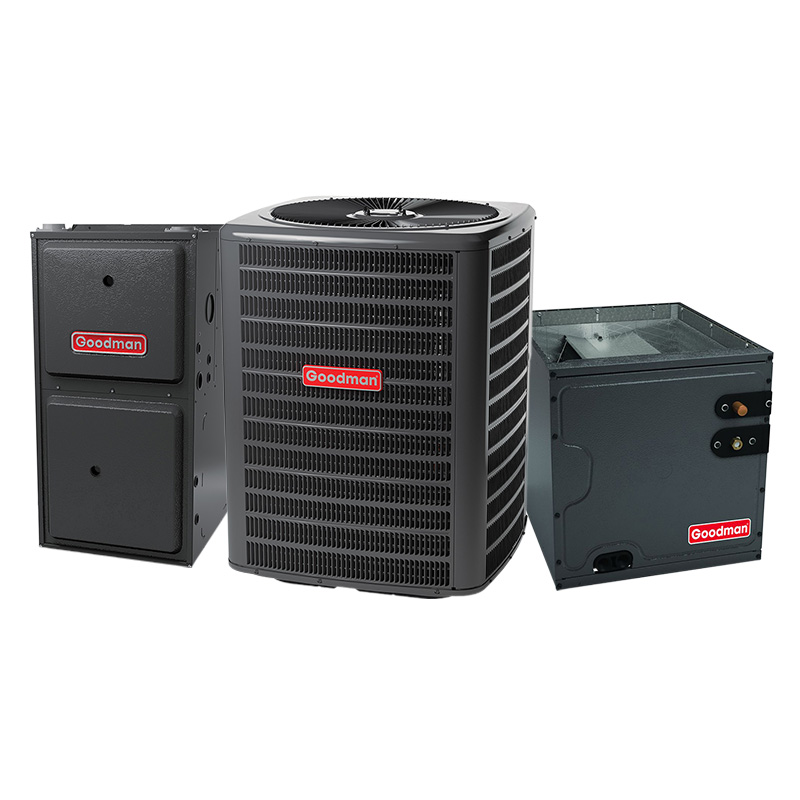
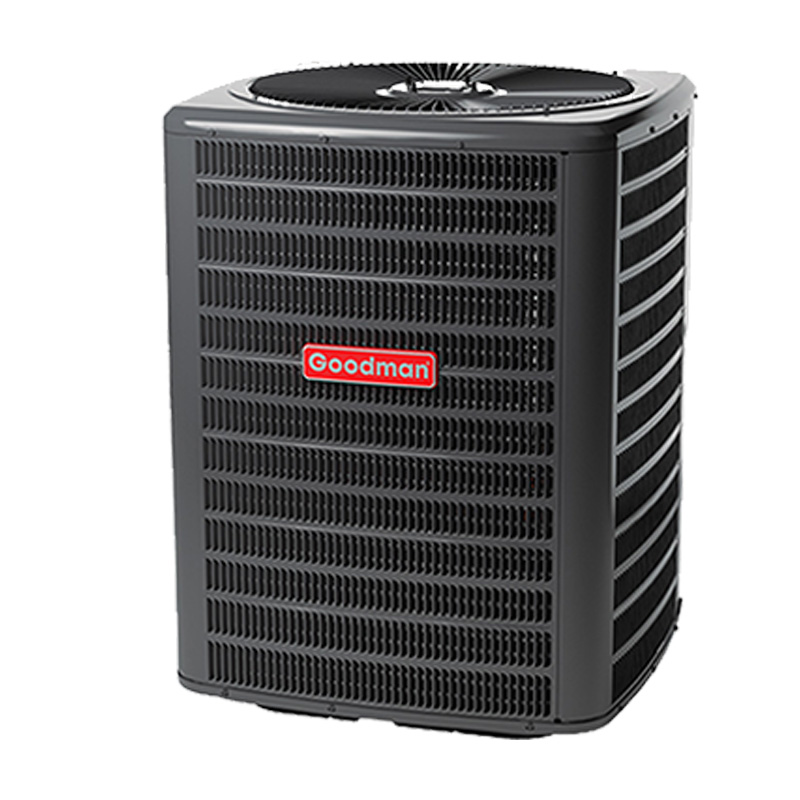
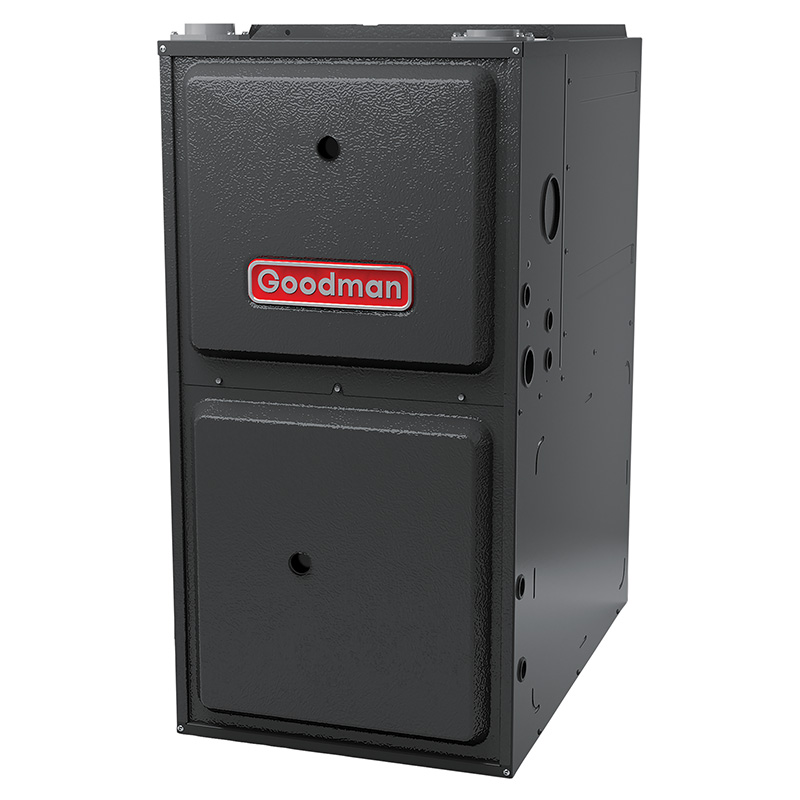
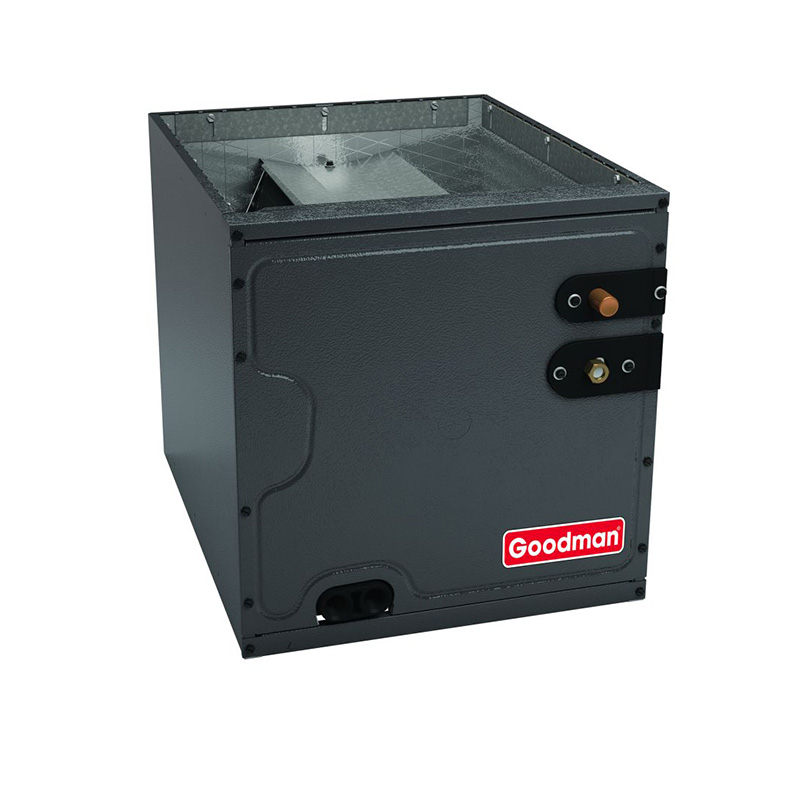
Goodman 4 Ton 13.4 SEER2 AC & Gas Furnace System – Multi-Speed, 120000 BTU Gas Furnace, 92% AFUE, Upflow, R32
View on AC Direct see your lowest price →Check current price on AC Direct →
Key features
- 4-ton single-stage cooling rated at 13.4 SEER2 for baseline energy efficiency
- 120,000 BTU upflow gas furnace with 92% AFUE high-efficiency rating
- Multi-speed ECM blower motor for improved airflow and humidity control
- R-32 refrigerant with lower global warming potential than R-410A
- Upflow configuration suits basement or ground-level air handler installations
- Factory-matched system designed to simplify AHJ approval and commissioning
About this system
The Goodman GLXS3BN4810D pairs a 4-ton, 13.4 SEER2 single-stage air conditioner with a 120,000 BTU, 92% AFUE upflow gas furnace running on R-32 refrigerant. This is a workhorse combination aimed at larger homes, typically in the 2,200 to 3,000 square foot range depending on climate zone and insulation, where heating demand is high enough to justify a 120,000 BTU furnace and where summer cooling loads push into the 4-ton territory. The 92% AFUE rating means roughly 92 cents of every dollar spent on gas converts to usable heat, which clears the federal “high efficiency” threshold and may qualify for certain utility rebates, though it falls short of the 96% or 98% tier that premium condensing furnaces can achieve.
R-32 refrigerant is a meaningful forward-looking detail. It carries a lower global warming potential than the R-410A it replaces and is increasingly common as the industry moves away from older blends. The multi-speed furnace blower improves air distribution and humidity control compared to a single-speed motor, even though the compressor itself is single-stage. For buyers who want a reliable, code-compliant system without paying premium-brand prices, this package covers the fundamentals. The trade-off is that single-stage cooling means the compressor runs at full capacity or not at all, which is less precise in mild weather than two-stage or variable-speed alternatives.
The Goodman GLXS3BN4810D is a competent, budget-accessible system that delivers on the basics: adequate efficiency, a proper refrigerant transition, and enough heating capacity for large homes in cold climates. It costs meaningfully less than Carrier, Trane, or Lennox equivalents, but that gap comes with documented reliability trade-offs after the first several years, and real-world longevity depends heavily on who installs it and how well it is maintained.
Overall score is the average of the five ratings above.
What we like
- Priced 15 to 25 percent below comparable premium-brand systems, reducing upfront cost
- 92% AFUE furnace meets high-efficiency thresholds and may qualify for utility rebates
- R-32 refrigerant is future-friendly and increasingly supported by service technicians
- Multi-speed blower improves comfort and humidity management over single-speed motors
- Factory-matched AC and furnace simplify permitting and warranty administration
Trade-offs
- Dual-run capacitors are the most frequently reported failure point, typically in years 5 through 9
- Evaporator coil leaks appear in a meaningful share of owner reviews, a known Goodman failure mode
- Compressor lifespan averages 10 to 14 years versus 15 to 20 for premium-brand compressors
- Single-stage compressor runs at full capacity or off, which is less efficient and comfortable in mild weather than two-stage or variable options
What homeowners and pros say about Goodman
Homeowners reviewing Goodman equipment on ConsumerAffairs give the brand roughly 2.5 out of 5, a score shaped partly by the fact that dissatisfied customers are more likely to leave reviews on that platform. The recurring theme in those reviews is repair costs that begin climbing around year 7 or 8. The specific failure modes that show up most often are dual-run capacitor failures, which are generally a quick and relatively low-cost fix, and evaporator coil leaks, which tend to be more involved repairs. Compressor lifespan is another honest concern: Goodman compressors typically average 10 to 14 years of service, compared to 15 to 20 years for premium-brand counterparts. On Google, dealer-level reviews for Goodman equipment average closer to 3.8 out of 5 across hundreds of reviews per location, and affordability is consistently the most cited reason buyers chose it.
HVAC technicians tend to have a nuanced view of Goodman systems. Most will install them without hesitation but are quick to point out that the brand rewards careful installation more than almost any other. A well-charged, properly sized Goodman system installed by a thorough contractor can run without significant issues for a decade. One installed carelessly, with a marginal refrigerant charge or undersized ductwork, will show problems within the first few years. For the 4-ton, 92% AFUE configuration specifically, professionals also note that R-32 refrigerant requires a technician certified for mildly flammable refrigerants, which is increasingly standard but still worth confirming with any service provider before signing a maintenance agreement.
Sources: ConsumerAffairs Goodman owner reviews, AHRI Directory of Certified Product Performance, U.S. DOE appliance and equipment efficiency standards, Goodman product specification sheets.
What it costs to run
At 13.4 SEER2, cooling this 4-ton system for a typical 1200-hour cooling season at the U.S. average electricity rate of $0.17/kWh works out to roughly $731 per year in cooling, about $0 less per year than a minimum-efficiency 13.4 SEER2 unit of the same size. Your real cost depends on your climate and local rate.
Method: (48,000 BTU/hr ÷ 13.4 SEER2) × 1200 hours ÷ 1000 × $0.17/kWh. Rate source: U.S. EIA average; cooling hours: moderate-climate estimate.
How it compares
| Brand | Comparable model | SEER2 | Stage | Price position |
|---|---|---|---|---|
| Goodman | GLXS3BN4810D | 13.4 | Single-stage | Value pick |
| Carrier | Comfort 13 (24ACC3) series | 13.4 | Single-stage | Typically 15 to 25 percent more than the Goodman |
| Trane | XR13 series | 13.4 | Single-stage | Typically 15 to 25 percent more than the Goodman |
| Lennox | Merit 13ACX series | 13.4 | Single-stage | Typically 15 to 25 percent more than the Goodman |
Competitor rows are comparable single-stage units at similar efficiency; price is relative position, not a quote.
Questions about this system
Is 120,000 BTU too large a furnace for my home?
It depends on your climate zone, insulation quality, and square footage. A 120,000 BTU furnace is appropriate for homes in the 2,500 to 4,000 square foot range in cold climates, but an oversized furnace will short-cycle in milder regions, reducing comfort and efficiency. Have a Manual J load calculation done before purchasing to confirm the right size.
What does R-32 refrigerant mean for me as a homeowner?
R-32 has a lower global warming potential than the R-410A used in older systems and is now widely stocked by HVAC wholesalers, so future service calls should not be difficult. It does require technicians to handle it as a mildly flammable refrigerant, so confirm your service provider is certified for R-32 work.
What are the most common repairs I should budget for over the first 10 years?
Dual-run capacitor failures are the most frequently reported issue with Goodman equipment and typically cost between $300 and $600 to repair. Evaporator coil leaks have also been documented in a meaningful share of owner reviews, which can be a more expensive fix. Setting aside a small annual service budget and scheduling yearly tune-ups is the best way to catch these issues early.
Does this system qualify for any tax credits or rebates?
The 92% AFUE furnace meets the efficiency threshold for the federal 25C energy efficiency tax credit, which currently covers a percentage of qualified installation costs up to an annual cap. Rebate availability from your utility varies by region, so check the ENERGY STAR rebate finder and your local utility's website for current offers.
How important is the installer for a Goodman system specifically?
Install quality is cited by HVAC technicians as the single biggest factor in how long a Goodman system lasts. Proper refrigerant charge, correct static pressure setup, and accurate load sizing have an outsized effect on this brand compared to premium alternatives. Use a licensed contractor who will pull permits and perform a Manual J calculation, and verify the refrigerant charge is documented on the service ticket.
Specifications
| Cooling capacity | 4 Ton |
| Efficiency | 13.4 SEER2 |
| Furnace output | 120000 BTU |
| Furnace efficiency | 92% AFUE |
| Configuration | Upflow |
| Refrigerant | R-32 |
| Model | GLXS3BN4810D |