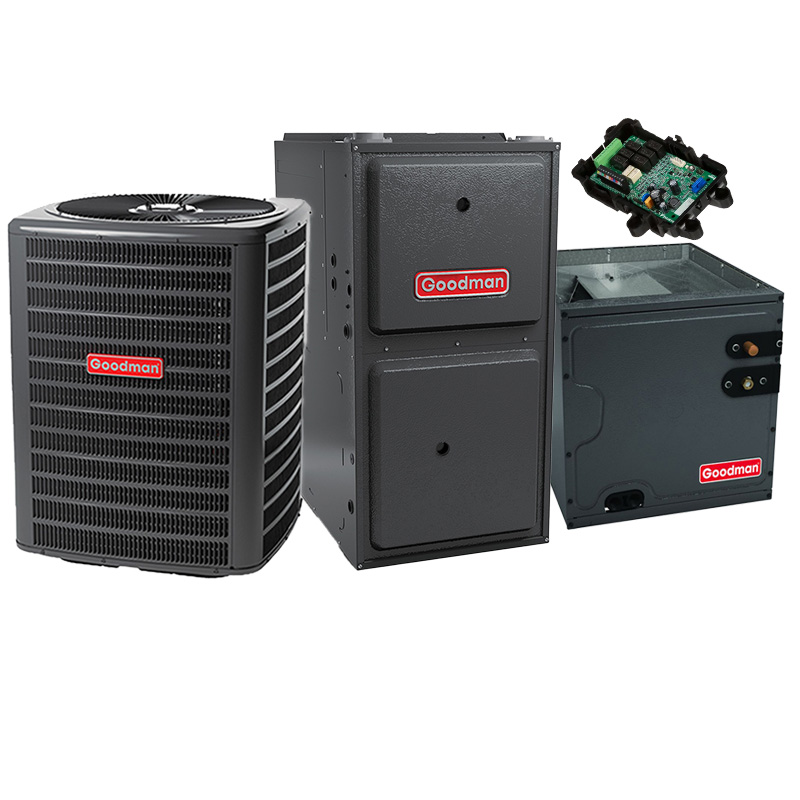
Goodman 4 Ton 13.5 SEER2 100000 BTU 96% AFUE Two-Stage Gas Furnace With R32 Air Condenser and Coil System – Upflow
View on AC Direct see your lowest price →Check current price on AC Direct →
Key features
- 13.5 SEER2 cooling efficiency meets current federal minimums for most regions
- 96% AFUE two-stage gas furnace reduces temperature swings and short-cycling on mild days
- R-32 refrigerant has a lower global warming potential than R-410A
- Upflow configuration designed for basement or closet installs with overhead ductwork
- Factory-matched condenser, evaporator coil, and furnace simplifies warranty compliance
- 10-year parts warranty on compressor and covered components with timely registration
About this system
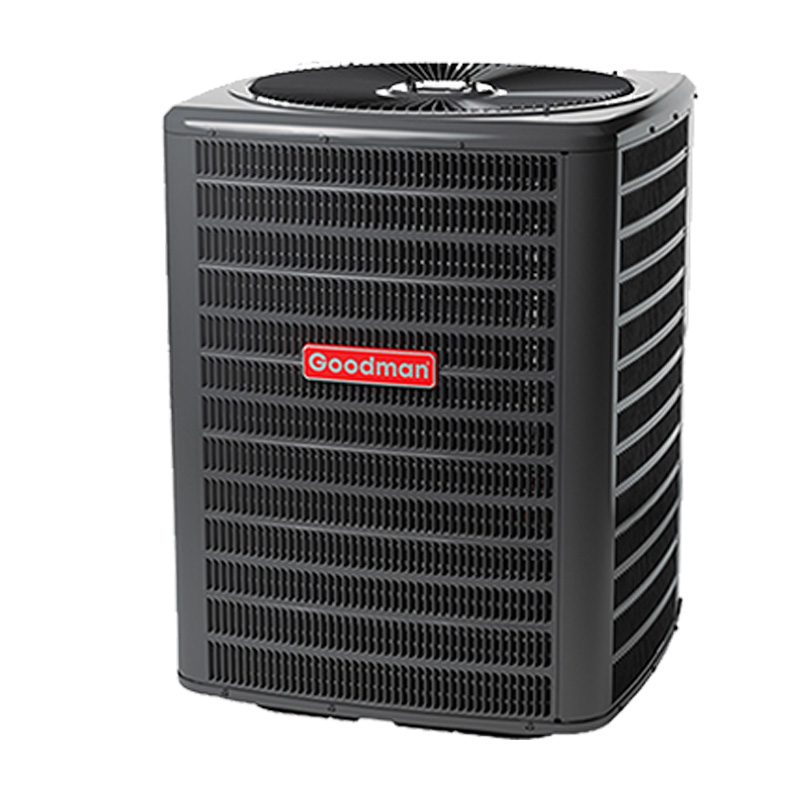
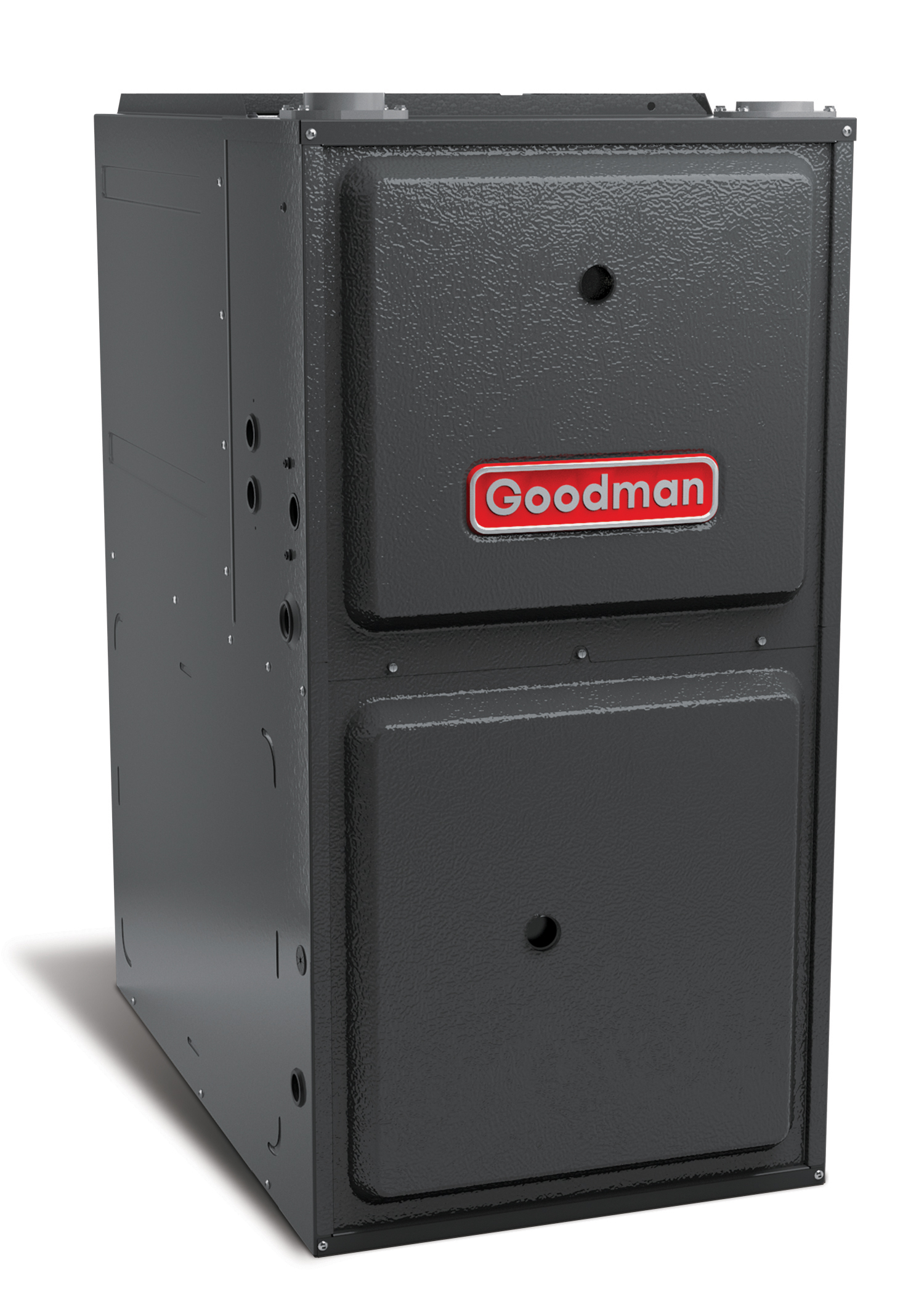
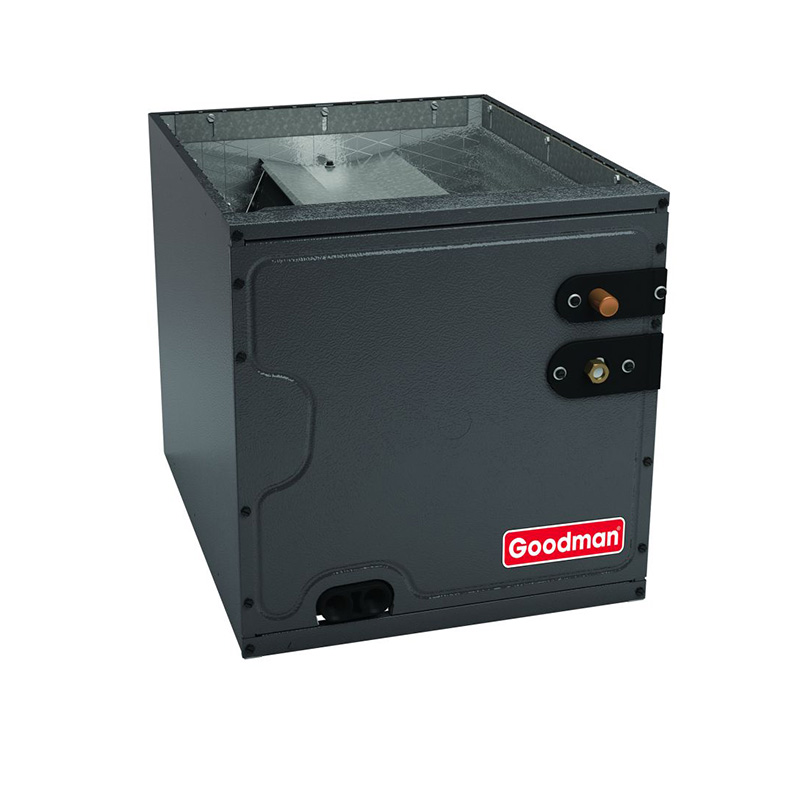
This Goodman bundle pairs a 4-ton R-32 air condenser and matching evaporator coil with a 100,000 BTU, 96% AFUE two-stage gas furnace in an upflow configuration. Together they cover homes roughly in the 2,000 to 2,600 square foot range, depending on local climate, insulation, and ceiling height. The 13.5 SEER2 rating sits right at the current federal minimum efficiency threshold for most U.S. regions, so it satisfies code without reaching into the premium efficiency tier. The two-stage furnace is a meaningful upgrade over single-stage models: it runs at a lower output on mild days, which reduces temperature swings, cuts short-cycling, and keeps operating costs lower than a single-stage unit of the same BTU rating.
R-32 refrigerant is a forward-looking choice. It has a lower global warming potential than the R-410A it replaces and is increasingly the industry standard in new equipment. The upflow configuration means supply air exits the top of the air handler, which suits the most common basement or utility-closet installations where ductwork runs into the floor above. Matching a coil, furnace, and condenser from the same manufacturer is also important for warranty purposes: mismatched components can void coverage, so this pre-bundled system removes that risk. Goodman backs the compressor with a 10-year parts warranty and the other covered components with a 10-year parts warranty as well, provided you register the equipment within 60 days of installation.
This Goodman bundle delivers a functional, code-compliant system at a price point 15 to 25 percent below comparable Trane, Lennox, and Carrier equipment, making it a reasonable choice for budget-conscious buyers in mid-size homes. The two-stage furnace and R-32 refrigerant add genuine value beyond the entry-level price. The trade-off is a documented history of capacitor failures, coil leak reports, and compressor longevity that falls short of premium brands, so long-term ownership costs deserve honest weight in the decision.
Overall score is the average of the five ratings above.
What we like
- Priced 15 to 25 percent below comparable Trane, Lennox, and Carrier systems
- Two-stage furnace operation improves comfort and efficiency over single-stage alternatives
- 96% AFUE is a high-efficiency rating that meaningfully reduces annual gas consumption
- R-32 refrigerant is current-generation with lower environmental impact than R-410A
- Pre-matched components simplify installation and protect the 10-year parts warranty
Trade-offs
- Dual-run capacitors are the most commonly reported failure, typically occurring within the first several years of operation
- Evaporator coil leaks appear in a meaningful share of owner reviews, potentially requiring costly repairs
- Compressor lifespan averages 10 to 14 years versus 15 to 20 years for premium-brand equipment
- A minority of owners report refrigerant leaks in the first year, most often traced to install or initial charge issues rather than the equipment itself
What homeowners and pros say about Goodman
Homeowners who share feedback on this type of Goodman system tend to split along a clear line: those who got a careful, experienced installer report years of trouble-free operation and consistently cite the price as the main draw. Those who encountered problems more often point to either a capacitor failure a few years in or a coil leak that became a frustrating and expensive warranty claim process. Goodman scores around 2.5 out of 5 on ConsumerAffairs, a complaint-heavy channel where the recurring theme is repair costs rising after year seven or so. Google dealer reviews average closer to 3.8 out of 5, where affordability is the most praised attribute. The gap between those two scores reflects both the self-selection of who leaves reviews and the real variability in long-term experience.
HVAC technicians tend to have a nuanced view of Goodman. Many install it regularly and consider it a solid value at its price point, particularly for customers who want to keep first costs low and understand they may see a capacitor swap or two over the equipment’s life. Where pros raise concerns is compressor longevity: Goodman compressors are generally cited as averaging 10 to 14 years, a meaningful gap compared to the 15 to 20 years common with Trane, Carrier, or Lennox equipment. Technicians also flag that a minority of units arrive from the factory with refrigerant charge or coil issues that only show up after the first cooling season, which is why a commissioning check shortly after startup is worth asking for. The consistent professional advice is that install quality matters more with Goodman than with premium brands, and choosing an experienced contractor is not optional if you want the system to reach its potential lifespan.
Sources: ConsumerAffairs Goodman owner reviews, AHRI Directory of Certified Product Performance, U.S. DOE appliance and equipment efficiency standards, Goodman product specification sheets.
What it costs to run
At 13.5 SEER2, cooling this 4-ton system for a typical 1200-hour cooling season at the U.S. average electricity rate of $0.17/kWh works out to roughly $725 per year in cooling, about $6 less per year than a minimum-efficiency 13.4 SEER2 unit of the same size. Your real cost depends on your climate and local rate.
Method: (48,000 BTU/hr ÷ 13.5 SEER2) × 1200 hours ÷ 1000 × $0.17/kWh. Rate source: U.S. EIA average; cooling hours: moderate-climate estimate.
How it compares
| Brand | Comparable model | SEER2 | Stage | Price position |
|---|---|---|---|---|
| Goodman | GLXS4BA48 / GCVC961005CN / CAPF4961D6 | 13.5 | Two-stage | Value pick |
| Carrier | Comfort 24ACC636A003 with 58TP | 13.8 | Two-stage | Roughly 20 to 25 percent higher than this Goodman bundle |
| Trane | XR15 (4TTR5048) with XV80 furnace | 14.0 | Single-stage condenser, two-stage furnace | Roughly 20 to 30 percent higher than this Goodman bundle |
| Lennox | Merit ML14XC1 with ML196E furnace | 14.3 | Single-stage | Roughly 25 to 35 percent higher than this Goodman bundle |
Competitor rows are comparable single-stage units at similar efficiency; price is relative position, not a quote.
Questions about this system
Do I have to register the system after installation to get the full 10-year warranty?
Yes. Goodman requires product registration within 60 days of installation to activate the 10-year parts warranty on the compressor and other covered components. Without registration, coverage typically drops to a shorter base warranty period, so this step is important and should be confirmed with your installer.
Why does this system use R-32 refrigerant instead of R-410A?
R-32 has a significantly lower global warming potential than R-410A and is the direction the HVAC industry is moving following regulatory phase-down of older refrigerants. It also requires slightly smaller refrigerant charge by weight, which can make units more efficient. One practical note: R-32 requires technicians who have handled it before, since it is mildly flammable, so confirm your service contractor is familiar with it.
What is the most likely repair I should budget for in the first ten years?
Based on documented owner experience, dual-run capacitor failure is the most common issue and typically costs between 300 and 600 dollars including a service call. It is generally a straightforward repair. Evaporator coil leaks are less frequent but more expensive, and a small number of owners have reported refrigerant leaks in the first year that turned out to be installation or initial charge issues rather than manufacturing defects.
Is 13.5 SEER2 good enough, or should I upgrade to a higher-efficiency condenser?
13.5 SEER2 meets current federal minimums and is a reasonable baseline for most climates. If you live in a hot climate with long cooling seasons, or if your utility rates are high, stepping up to a 16 or 17 SEER2 unit could meaningfully reduce your monthly bills and may pay back the cost premium over time. For shorter or milder cooling seasons, the payback period on a higher-efficiency unit stretches out considerably.
Can this upflow furnace be converted to a different airflow configuration if my ductwork layout changes?
The unit is specifically designed and rated as an upflow model. Some Goodman furnace lines can be converted to horizontal orientation with an accessory kit, but an upflow-only rating means supply air is designed to exit the top of the cabinet. You should confirm with your installer whether any conversion is supported for your specific model before purchasing, since installing it in an unsupported orientation can affect efficiency ratings and warranty coverage.
Specifications
| Cooling capacity | 4 Ton |
| Efficiency | 13.5 SEER2 |
| Furnace output | 100000 BTU |
| Furnace efficiency | 96% AFUE |
| Configuration | Upflow |
| Refrigerant | R-32 |