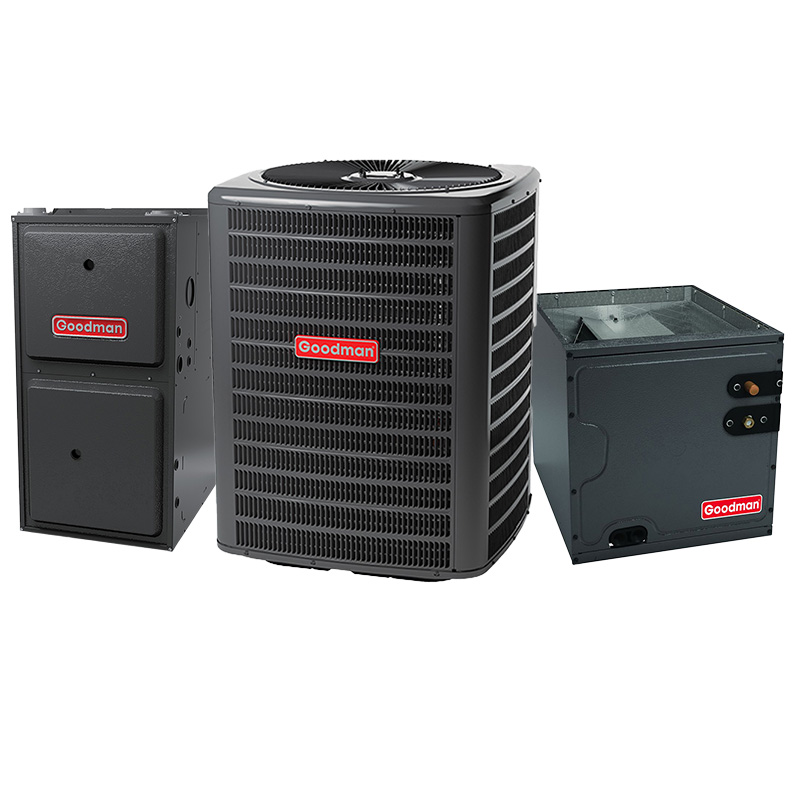
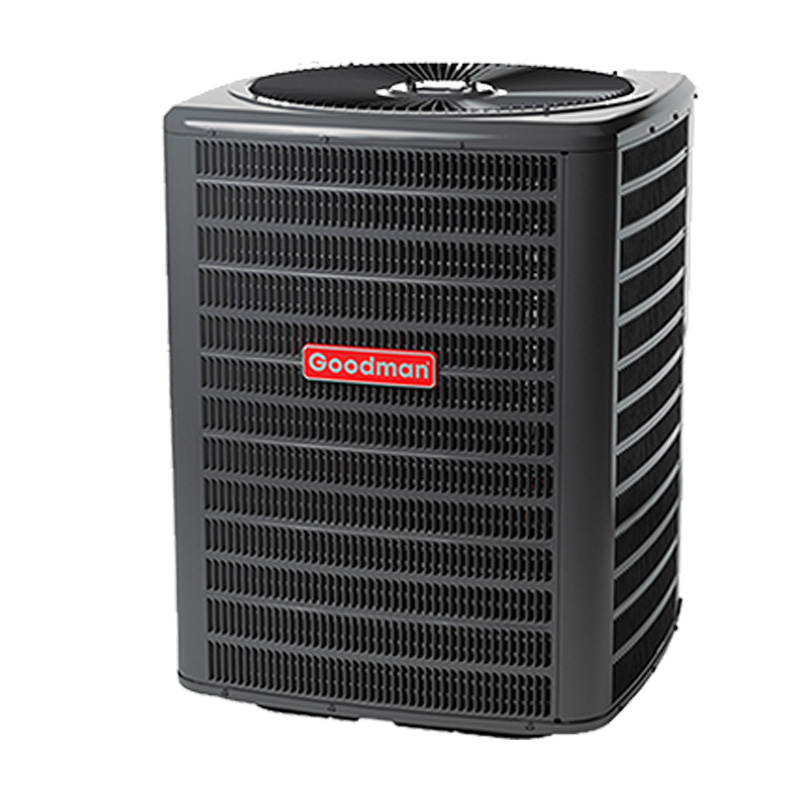
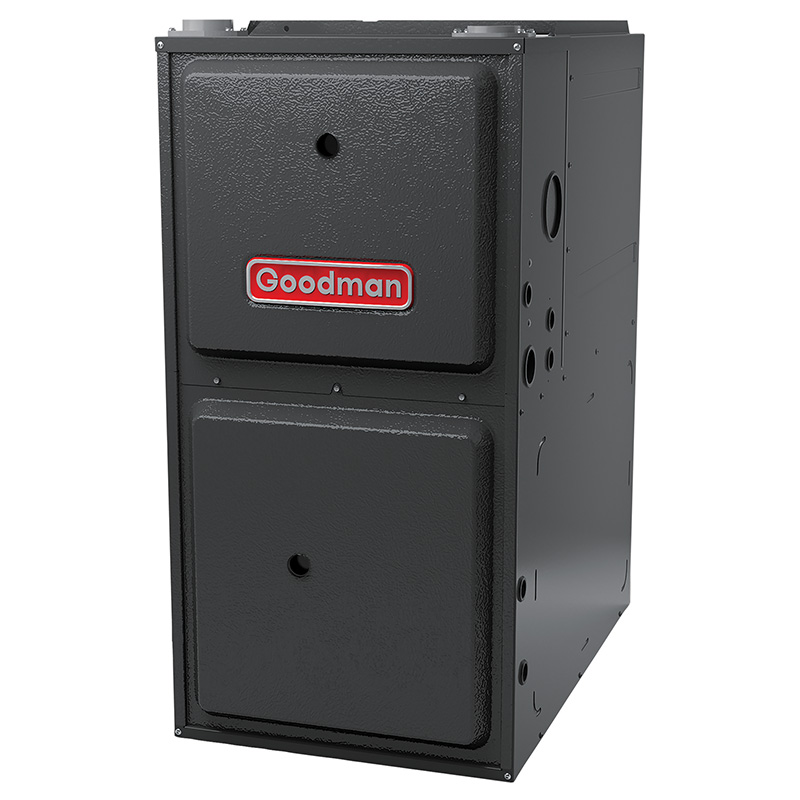
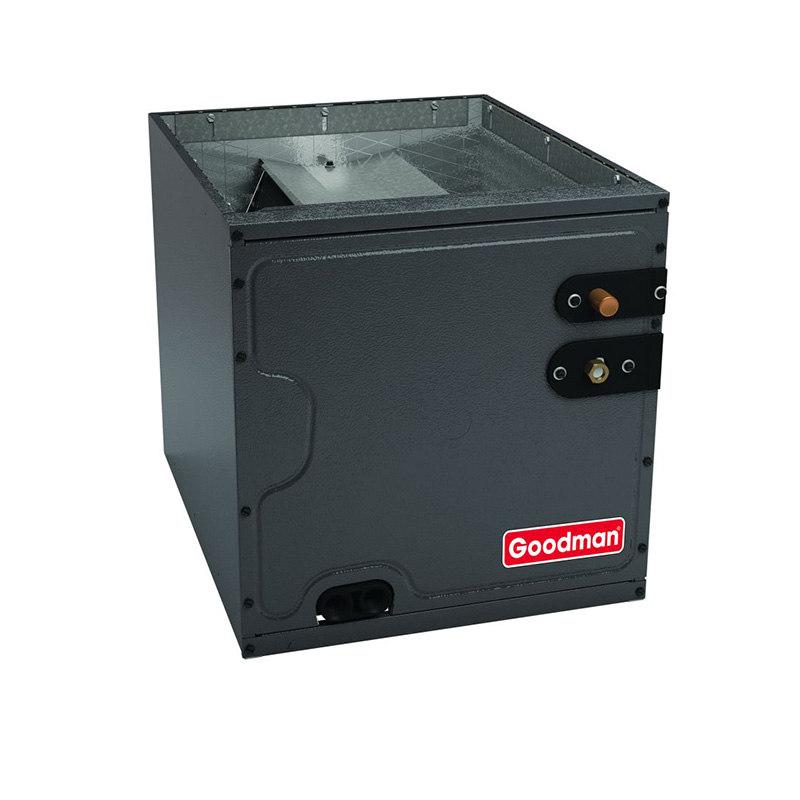
Goodman 4 Ton 13.5 SEER2 AC With 100000 BTU 96% AFUE 2-Stage Variable-Speed ECM Gas Furnace System – Upflow | R32
View on AC Direct see your lowest price →Check current price on AC Direct →
Key features
- 4-ton cooling capacity matched with 100,000 BTU heating for larger homes
- 96% AFUE two-stage gas furnace reduces fuel consumption versus single-stage units
- Variable-speed ECM blower motor lowers electricity use and reduces noise during long heating runs
- R-32 refrigerant meets current and upcoming environmental regulations as R-410A is phased out
- 13.5 SEER2 cooling efficiency meets federal minimum standards for most U.S. climate regions
- Upflow configuration suits homes with the air handler in a basement, utility room, or closet with supply above
About this system
This Goodman bundle pairs a 4-ton, 13.5 SEER2 central air conditioner with a 100,000 BTU, 96% AFUE two-stage, variable-speed ECM gas furnace in an upflow configuration, and it transitions the refrigerant circuit to R-32, a lower-global-warming-potential refrigerant that is becoming the new standard as R-410A is phased out. The combination is aimed at mid-to-large homes, roughly 2,000 to 2,800 square feet depending on climate zone and envelope quality, that need serious heating capacity alongside summer cooling without the sticker shock of a premium brand.
The 13.5 SEER2 rating lands at the federal minimum efficiency threshold for most U.S. climate zones, so this is not a system buyers choose for best-in-class energy savings. Where it earns its keep is on the heating side: 96% AFUE is a genuine high-efficiency rating, and the two-stage gas valve combined with a variable-speed ECM blower motor allows the furnace to run at a lower fire much of the winter, reducing temperature swings, lowering blower noise, and trimming monthly gas bills compared to a single-stage furnace. The ECM motor also draws significantly less electricity than a standard PSC motor, which partially offsets the modest cooling efficiency. Buyers who heat more months than they cool and want that heating investment to last will find the furnace spec compelling; buyers who prioritize cooling efficiency should look at higher SEER2 tiers.
This system is a solid budget-conscious choice for homeowners who want a capable high-efficiency furnace and do not need top-tier cooling efficiency. The two-stage furnace with ECM blower is a genuine comfort upgrade over basic equipment, but long-term ownership costs depend heavily on install quality and routine maintenance, two factors that matter more with Goodman than with premium brands. Buyers who can afford a certified, experienced installer and plan to maintain the system consistently will get the most from this pairing.
Overall score is the average of the five ratings above.
What we like
- Priced 15 to 25 percent below comparable Carrier, Trane, and Lennox systems, making high-efficiency furnace technology accessible at a lower upfront cost
- 96% AFUE two-stage furnace is a meaningful heating efficiency upgrade that can cut gas bills versus single-stage alternatives
- Variable-speed ECM blower improves comfort by reducing temperature swings and runs much quieter during low-fire heating cycles
- R-32 refrigerant is forward-compatible with evolving refrigerant regulations, reducing future retrofit risk
- Upflow design is one of the most common residential configurations, giving installers and technicians wide familiarity with the setup
Trade-offs
- 13.5 SEER2 is at the low end of the efficiency spectrum; homeowners in hot climates will see noticeably higher cooling bills compared to 16+ SEER2 systems
- Dual-run capacitors are the most frequently reported failure point, and evaporator coil leaks appear in a meaningful share of owner reviews, signaling above-average maintenance attention may be needed after year 7
- Compressor lifespan averages 10 to 14 years versus 15 to 20 years documented for premium brands, so total cost of ownership over a 15-plus-year horizon can narrow the initial savings gap
- A minority of owners have reported refrigerant leaks within the first year, typically traced to install or charge quality, which underscores the importance of hiring an experienced technician
What homeowners and pros say about Goodman
Homeowners who have lived with Goodman equipment tend to split into two camps, and the dividing line is usually around year seven. Earlier in ownership, the most common feedback mirrors the Google dealer review average of roughly 3.8 out of 5, with affordability cited most often as the reason buyers are satisfied. The upfront savings compared to Carrier or Trane are real, and for owners who get a clean install and stay current on maintenance, the system performs as expected through the early years. The two-stage furnace with ECM blower in particular draws consistent praise for quieter operation and more even heat distribution compared to the single-stage units many homeowners are replacing.
The harder conversation shows up in the ConsumerAffairs data, where Goodman sits around 2.5 out of 5 on a channel that skews toward dissatisfied owners. The recurring theme is repair costs that climb after year seven, and it lines up with the documented failure patterns: dual-run capacitor failures are the most frequently reported issue and are relatively inexpensive to address, but evaporator coil leaks and compressor wear are more consequential. Goodman compressors are documented to average 10 to 14 years of service life, a shorter window than the 15 to 20 years more common in premium-brand equipment. A minority of owners have also reported refrigerant leaks within the first year, and HVAC technicians consistently attribute those early failures to install or charge quality rather than the equipment itself. The honest takeaway for this specific system is that the furnace spec is strong for the price, the cooling efficiency is baseline, and long-term satisfaction will depend more on who installs it and how faithfully it is maintained than on the Goodman nameplate alone.
Sources: ConsumerAffairs Goodman owner reviews, AHRI Directory of Certified Product Performance, U.S. DOE appliance and equipment efficiency standards, Goodman product specification sheets.
What it costs to run
At 13.5 SEER2, cooling this 4-ton system for a typical 1200-hour cooling season at the U.S. average electricity rate of $0.17/kWh works out to roughly $725 per year in cooling, about $6 less per year than a minimum-efficiency 13.4 SEER2 unit of the same size. Your real cost depends on your climate and local rate.
Method: (48,000 BTU/hr ÷ 13.5 SEER2) × 1200 hours ÷ 1000 × $0.17/kWh. Rate source: U.S. EIA average; cooling hours: moderate-climate estimate.
How it compares
| Brand | Comparable model | SEER2 | Stage | Price position |
|---|---|---|---|---|
| Goodman | 4 Ton 13.5 SEER2 AC + 100K BTU 96% AFUE 2-Stage ECM Furnace (R-32) | 13.5 | Two-stage furnace / single-stage condenser | Value pick |
| Carrier | Comfort 13 (24ACC3) with 58MVC Variable-Speed Furnace | 13.4-14 | Two-stage furnace / single-stage condenser | Typically 15 to 25 percent more than this Goodman bundle |
| Trane | XR13c with S9V2 96% AFUE Variable-Speed Furnace | 13.5-14 | Two-stage furnace / single-stage condenser | Typically 15 to 25 percent more than this Goodman bundle |
| Lennox | Merit ML14XC1 with SL280V Variable-Speed Furnace | 13.5-14 | Two-stage furnace / single-stage condenser | Typically 15 to 25 percent more than this Goodman bundle |
Competitor rows are comparable single-stage units at similar efficiency; price is relative position, not a quote.
Questions about this system
Is 13.5 SEER2 good enough, or should I spend more for a higher-efficiency AC unit?
13.5 SEER2 meets the federal minimum for most U.S. regions, so it is legal and functional, but it is the least efficient option available. If you live in a climate where you run the AC heavily from May through September, stepping up to a 16 or 17 SEER2 system will produce meaningful monthly savings that can offset the higher upfront cost over the life of the equipment. If your summers are mild and your bigger concern is heating costs, the 96% AFUE furnace is where this bundle earns its value.
What does R-32 refrigerant mean for me as an owner, and is it harder to service?
R-32 has a lower global warming potential than R-410A and is increasingly required as regulators phase out older refrigerants, so choosing it now avoids a future compatibility headache. For service, R-32 requires technicians to use equipment rated for it and to follow slightly different handling procedures because it is mildly flammable at high concentrations. Most HVAC companies are already equipped for it, but confirm your service provider is R-32 certified before scheduling any future work.
How often do Goodman capacitors fail, and what does it cost to fix?
Dual-run capacitors are the most commonly reported failure point in Goodman systems. They are also one of the least expensive HVAC repairs, typically in the 300 to 600 dollar range including parts and labor, and most technicians can complete the job in under an hour. Having your capacitor checked annually during a tune-up is the simplest way to catch wear before it causes a no-cool situation in the middle of summer.
The upflow label on this furnace means what, exactly? How do I know if my house is set up for it?
Upflow means the furnace pulls return air in through the bottom and discharges conditioned air upward through the top into the supply duct system. This is the correct orientation for furnaces installed in a basement or ground-floor utility closet where ducts run through the ceiling or upper floors. If your existing furnace sits in a basement with supply ducts above it, this configuration will match. If your air handler sits in an attic or crawlspace blowing down, you would need a downflow or horizontal unit instead.
What warranty does this Goodman system come with, and are there any conditions I need to know about?
Goodman generally offers a 10-year parts warranty when the equipment is registered within a set window after installation, along with a lifetime heat exchanger warranty on qualifying furnace models. The key condition is that registration must be completed on time and the system must be installed by a licensed contractor. Failure to register typically drops coverage to a shorter base period, and warranty claims on items like the compressor or coil can be affected by documentation of annual maintenance, so keep your service records.
Specifications
| Cooling capacity | 4 Ton |
| Efficiency | 13.5 SEER2 |
| Furnace output | 100000 BTU |
| Furnace efficiency | 96% AFUE |
| Configuration | Upflow |
| Refrigerant | R-32 |