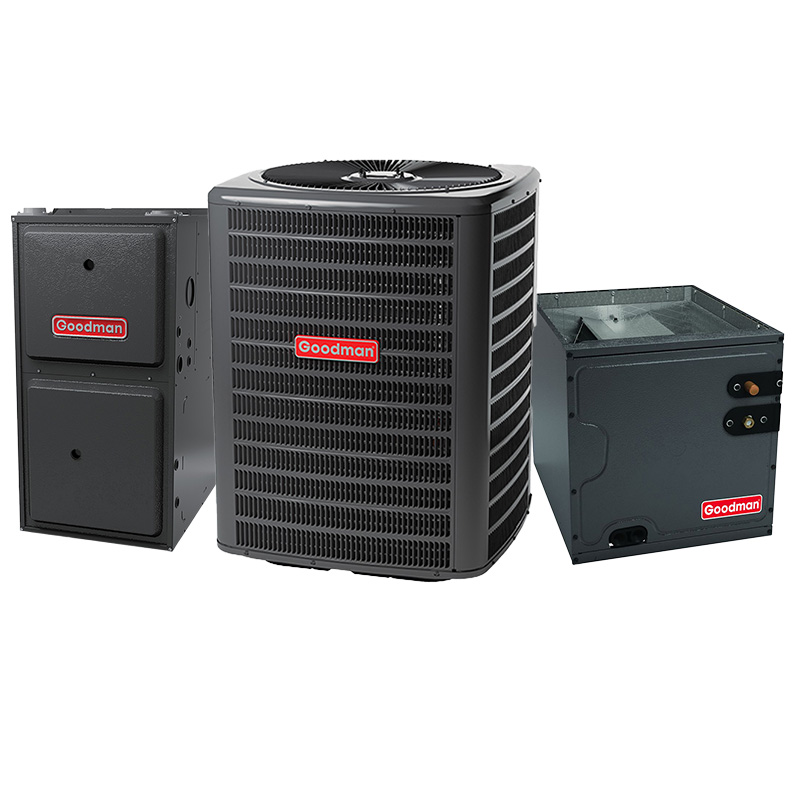
Goodman 4 Ton 13.5 SEER2 AC With 120000 BTU 96% AFUE 2-Stage Variable-Speed ECM Gas Furnace System – Upflow | R32
View on AC Direct see your lowest price →Check current price on AC Direct →
Key features
- 4-ton cooling capacity with 13.5 SEER2 efficiency rating
- 120,000 BTU, 96% AFUE two-stage gas furnace for high-efficiency heating
- Variable-speed ECM blower motor reduces energy use and noise at part load
- R-32 refrigerant with lower global warming potential than R-410A
- Upflow configuration designed for basement or ground-floor mechanical rooms
- Two-stage gas valve delivers quieter, more even heat distribution at low fire
About this system
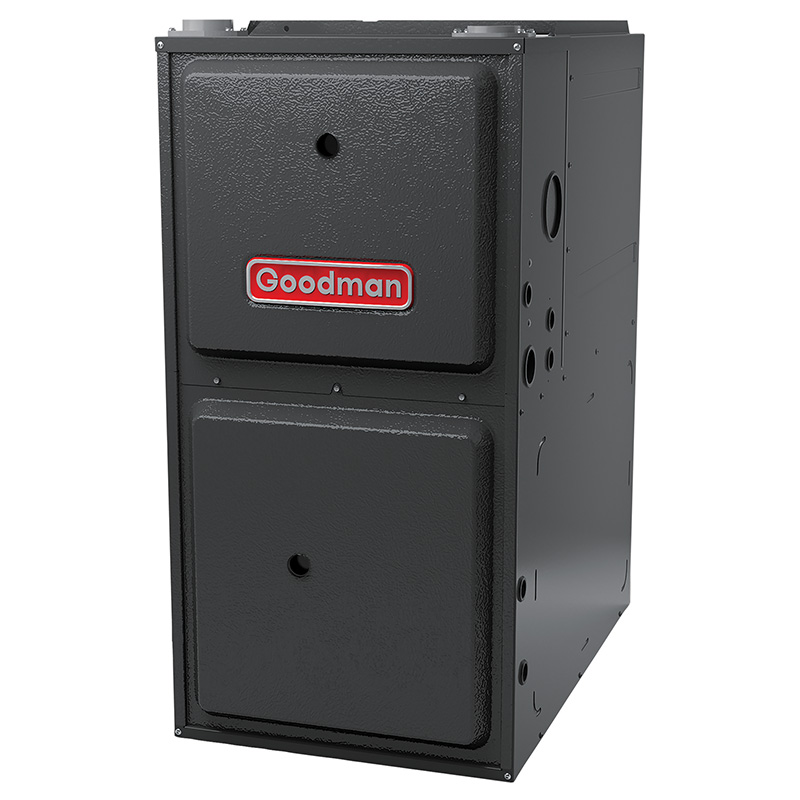
This Goodman bundle pairs a 4-ton, 13.5 SEER2 central air conditioner with a 120,000 BTU, 96% AFUE two-stage, variable-speed ECM gas furnace in an upflow configuration. The combination is aimed at larger homes, typically in the 2,400 to 3,200 square foot range depending on climate and insulation, that need serious heating capacity alongside reliable summer cooling. The 96% AFUE rating means roughly 96 cents of every fuel dollar becomes usable heat, putting this furnace firmly in the high-efficiency tier. The two-stage gas valve and variable-speed ECM blower work together to run at lower output most of the time, which reduces temperature swings, lowers noise, and can meaningfully cut monthly gas bills compared to a single-stage unit.
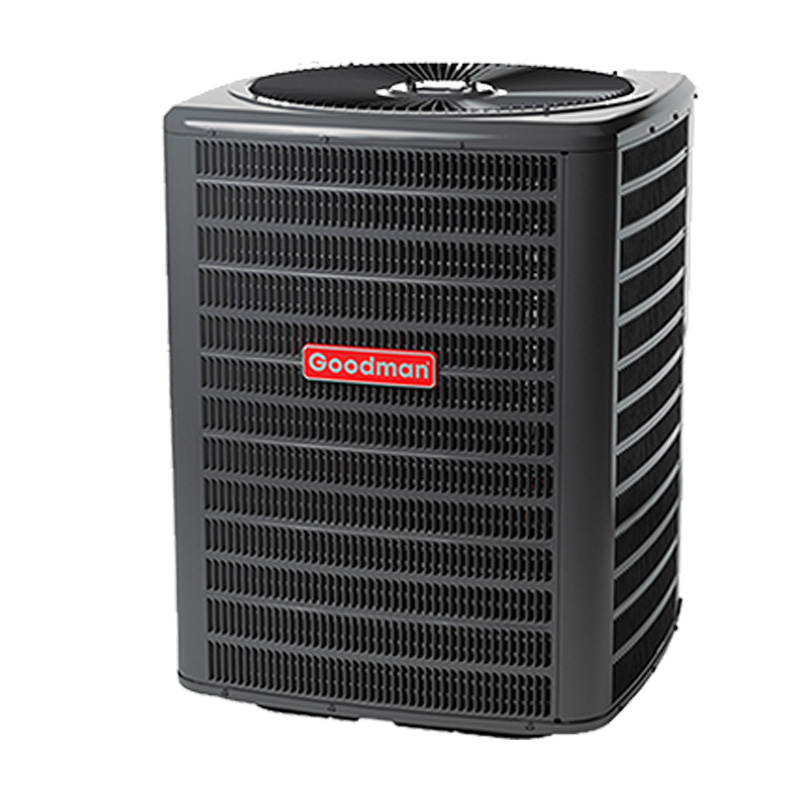
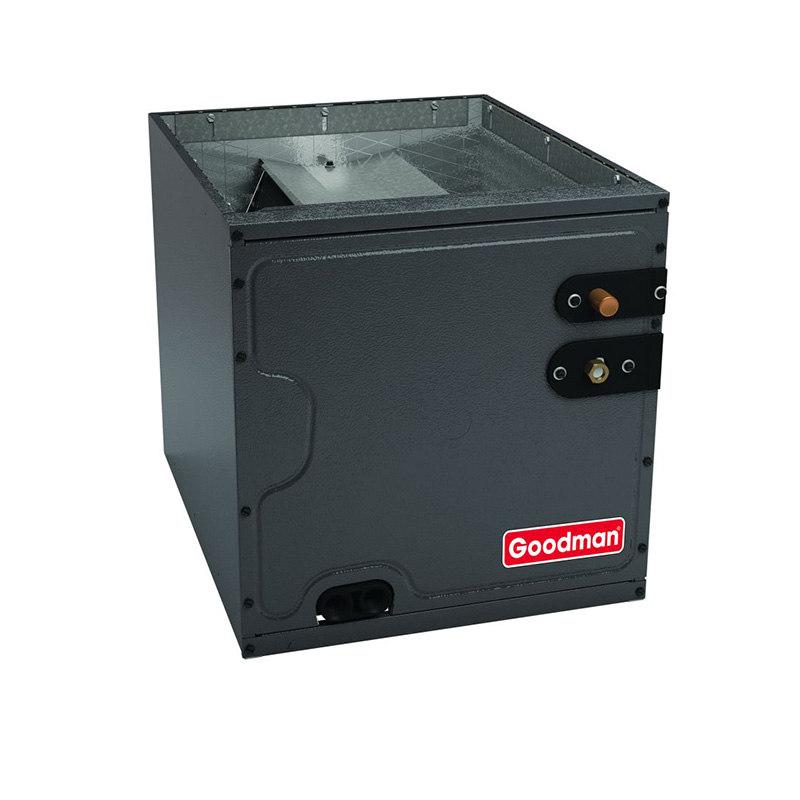
The air conditioner side runs on R-32 refrigerant, a newer lower-global-warming-potential option that is becoming the industry standard as R-410A is phased out. At 13.5 SEER2, this system meets current federal minimum efficiency standards with only a modest buffer above the floor, so it is not a premium efficiency product, but it is a compliant and functional one. The upflow configuration requires a basement or ground-floor mechanical room where the furnace sits upright and air exits through the top into the duct system above it. Buyers who need downflow or horizontal installation will need a different model. This system suits cost-conscious homeowners who want a high-efficiency furnace paired with a code-compliant AC and are comfortable accepting a value-tier brand in exchange for a lower upfront cost.
This Goodman system offers a genuinely capable furnace spec, with 96% AFUE and a variable-speed motor that most budget competitors do not include at this price point, paired with an AC unit that meets current efficiency standards without exceeding them. The value proposition is real, but the brand's documented reliability history means buyers are accepting a trade-off: lower upfront cost in exchange for a higher probability of needing repairs after year seven and a compressor lifespan that typically runs shorter than premium brands. Careful installer selection matters more with Goodman than with nearly any other brand in this category.
Overall score is the average of the five ratings above.
What we like
- 96% AFUE furnace with two-stage operation and variable-speed ECM is a premium furnace spec at a value-brand price
- Priced roughly 15 to 25 percent below comparable Trane, Lennox, and Carrier systems
- R-32 refrigerant is future-ready as R-410A is phased out industry-wide
- Two-stage gas valve and ECM blower reduce temperature swings and operating noise on mild days
- Dual-run capacitor failures, the most common documented issue, are typically a quick, low-cost repair in the $300 to $600 range
Trade-offs
- Compressor lifespan averages 10 to 14 years, versus 15 to 20 years for premium brands like Trane and Carrier
- Evaporator coil leaks appear in a meaningful share of owner reviews and can be a costly mid-life repair
- A minority of owners have reported refrigerant leaks within the first year, typically traced to install or charge issues rather than factory defects
- 13.5 SEER2 sits near the federal minimum, offering limited energy savings compared to higher-efficiency AC options
What homeowners and pros say about Goodman
Homeowners who leave reviews on ConsumerAffairs give Goodman equipment roughly 2.5 out of 5, and it is worth understanding what that number reflects. That platform draws a disproportionate share of frustrated owners, and the recurring theme is not early catastrophic failure but rather repair costs that start accumulating around year seven or eight. The specific failure modes that come up most consistently are dual-run capacitor failures, which are genuinely minor and inexpensive to fix, and evaporator coil leaks, which are not. A smaller but real group of owners have reported refrigerant leaks in the first year, a pattern that technicians generally attribute to installation and charge quality rather than factory defects. For this particular system, the 96% AFUE two-stage furnace component tends to draw less criticism than Goodman’s AC hardware, and the variable-speed ECM motor is noted positively for quiet operation and even temperatures.
HVAC professionals tend to give Goodman a more measured assessment than either its critics or its advocates. Google dealer reviews across Goodman-selling contractors average around 3.8 out of 5, where affordability is consistently the top reason buyers choose the brand. Technicians frequently point out that install quality is the single largest variable in how long any Goodman system lasts, more so than with premium brands that have tighter manufacturing tolerances. The compressor lifespan concern is real: documented averages of 10 to 14 years compare unfavorably to the 15 to 20 years typical of Trane or Carrier compressors. For a 4-ton system like this one, where replacement or repair costs are meaningful, that gap is worth factoring into the total cost of ownership calculation before committing to the lower upfront price.
Sources: ConsumerAffairs Goodman owner reviews, AHRI Directory of Certified Product Performance, U.S. DOE appliance and equipment efficiency standards, Goodman product specification sheets.
What it costs to run
At 13.5 SEER2, cooling this 4-ton system for a typical 1200-hour cooling season at the U.S. average electricity rate of $0.17/kWh works out to roughly $725 per year in cooling, about $6 less per year than a minimum-efficiency 13.4 SEER2 unit of the same size. Your real cost depends on your climate and local rate.
Method: (48,000 BTU/hr ÷ 13.5 SEER2) × 1200 hours ÷ 1000 × $0.17/kWh. Rate source: U.S. EIA average; cooling hours: moderate-climate estimate.
How it compares
| Brand | Comparable model | SEER2 | Stage | Price position |
|---|---|---|---|---|
| Goodman | 4-Ton 13.5 SEER2 AC + 96% AFUE 2-Stage Variable-Speed ECM Furnace (this system) | 13.5 | Two-stage | Value pick |
| Carrier | Comfort 24ACC4 / 59SC2 series | ~14 | Single-stage | Typically 15 to 25 percent more than this Goodman bundle |
| Trane | XR14 / S9X2 series | ~14 | Single-stage | Typically 15 to 25 percent more than this Goodman bundle |
| Lennox | Merit 14ACX / ML196 series | ~14 | Single-stage | Typically 15 to 25 percent more than this Goodman bundle |
Competitor rows are comparable single-stage units at similar efficiency; price is relative position, not a quote.
Questions about this system
What size home is a 4-ton, 120,000 BTU system appropriate for?
A 4-ton AC is generally sized for homes in the 2,000 to 3,200 square foot range, but the right size depends heavily on your climate zone, insulation, window area, and ceiling height. The 120,000 BTU furnace is on the larger end and suits cold climates or homes with significant heat loss. A Manual J load calculation by your installer is the only reliable way to confirm this system is correctly sized for your specific home.
What are the most common repairs owners report with Goodman systems?
The most frequently documented failure point is the dual-run capacitor, which typically costs $300 to $600 to replace and is a straightforward repair for any HVAC technician. Evaporator coil leaks and compressor failures have also been reported, with compressors averaging 10 to 14 years of service life. ConsumerAffairs reviewers note that repair costs tend to climb after roughly year seven.
Does this system work with my existing ductwork and thermostat?
The upflow configuration requires ductwork above the unit, which is standard in homes with a basement or first-floor mechanical closet. The variable-speed ECM furnace works with most conventional 24-volt thermostats, but to take full advantage of the two-stage and variable-speed operation, a communicating or at minimum a two-stage-compatible thermostat is recommended. Have your installer assess duct sizing, as undersized ducts can reduce efficiency and cause noise issues.
Is R-32 refrigerant a concern for future service or availability?
R-32 is an intentional upgrade from R-410A and is being adopted broadly across the HVAC industry as R-410A is phased out under EPA regulations. Availability for service should improve over time rather than worsen, and technicians are increasingly trained to handle it. R-32 requires specific handling procedures due to its mild flammability classification, so confirm your service technician is familiar with it.
Should I buy an extended warranty on this Goodman system?
Given the brand's documented history of rising repair costs after year seven and a compressor lifespan that runs shorter than premium brands, an extended labor warranty is worth serious consideration. Goodman's parts warranty covers major components for ten years if you register the product within a set window after install, but labor is not included in the factory coverage, and that is typically where the real cost exposure lies after the initial years.
Specifications
| Cooling capacity | 4 Ton |
| Efficiency | 13.5 SEER2 |
| Furnace output | 120000 BTU |
| Furnace efficiency | 96% AFUE |
| Configuration | Upflow |
| Refrigerant | R-32 |