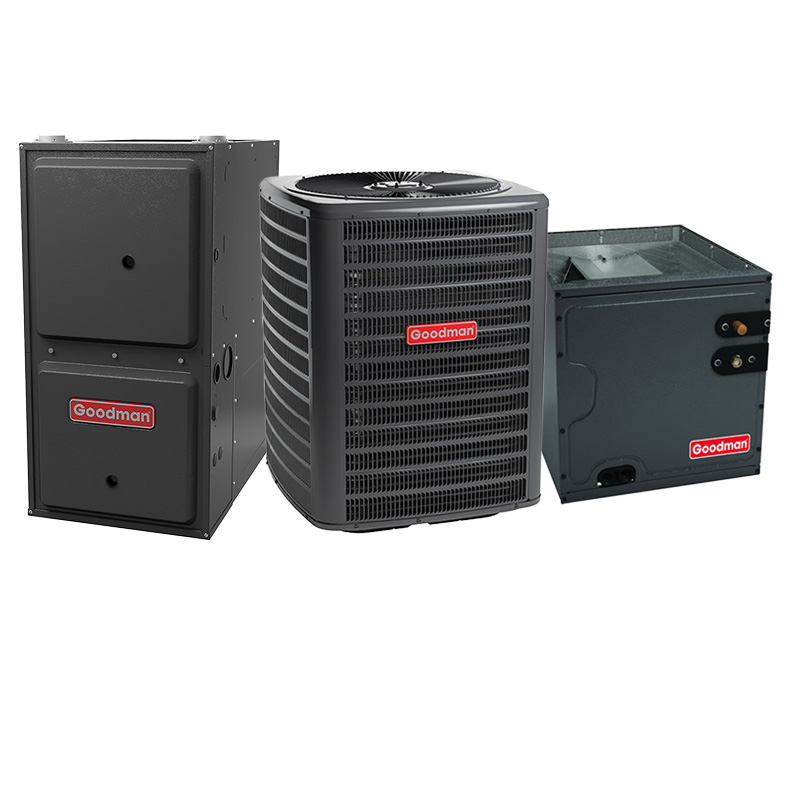
Goodman 4 Ton 13.6 SEER2 120000 BTU 96% AFUE Multi-Speed ECM Gas Furnace System – Downflow | R32
View on AC Direct see your lowest price →Check current price on AC Direct →
Key features
- 13.6 SEER2 rated cooling efficiency, meeting current federal minimum standards for most U.S. climate zones
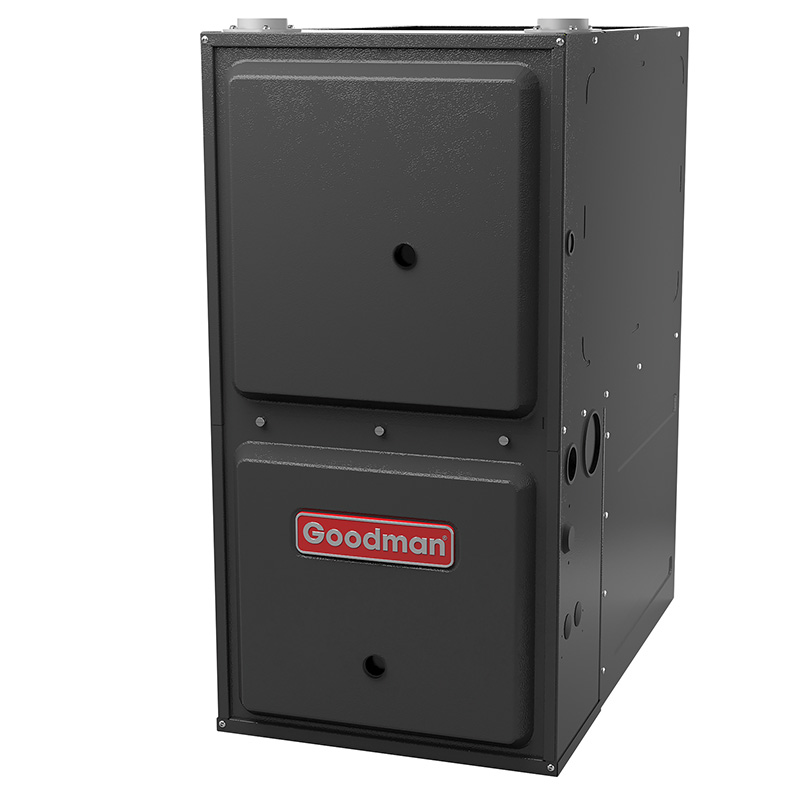
- 96% AFUE gas furnace with multi-speed ECM blower motor for lower electrical draw and quieter operation
- Downflow configuration designed for installations where supply air flows from the unit downward into the duct system
- R-32 refrigerant, a lower global-warming-potential refrigerant replacing R-410A across the HVAC industry
- 4-ton / 120,000 BTU capacity suited to larger homes, typically 2,000 to 2,800 square feet depending on load
- Goodman factory warranty covers the compressor and parts, with registration required for full term coverage
About this system
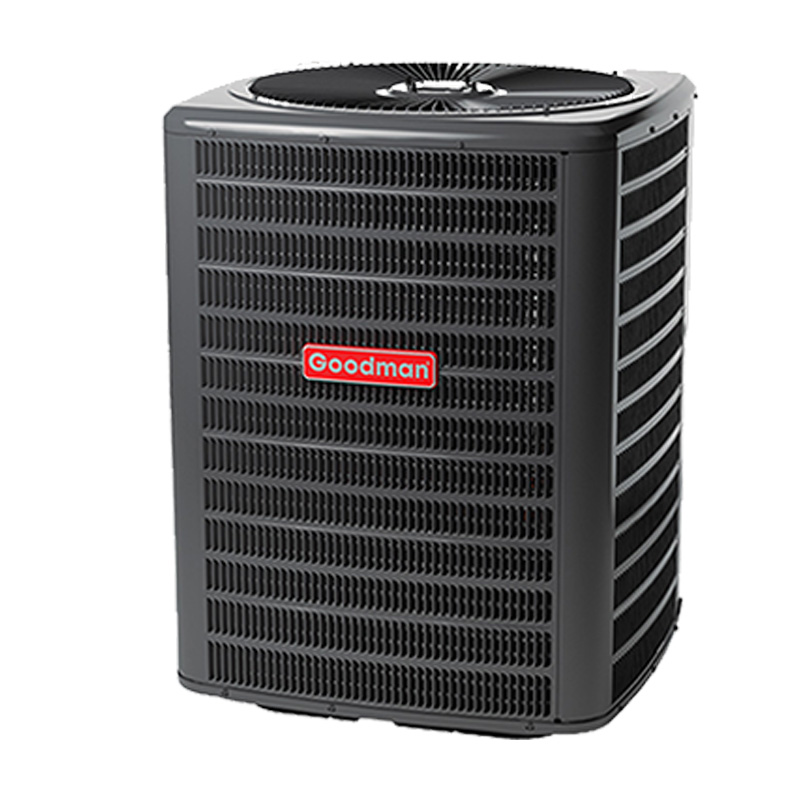
This Goodman bundle pairs a 4-ton, 13.6 SEER2 split-system condenser with a 120,000 BTU, 96% AFUE multi-speed ECM gas furnace in a downflow configuration, making it a strong candidate for homes where the air handler sits above the living space and supplies conditioned air downward, such as a closet or utility room on the main floor. The R-32 refrigerant charge is a forward-looking choice: R-32 has a lower global-warming potential than the older R-410A it is replacing across the industry, and it operates at slightly higher efficiency, which helps the system reach that 13.6 SEER2 rating without requiring variable-speed compressor technology.
The 96% AFUE furnace is a genuine high-efficiency rating, meaning roughly 96 cents of every dollar spent on gas converts to usable heat. Combined with the ECM (electronically commutated motor) blower, the system uses significantly less electricity for air circulation than a standard PSC motor would. At 4 tons and 120,000 BTU, this is sized for larger homes, typically in the 2,000 to 2,800 square foot range depending on climate, insulation, and ceiling height. A proper Manual J load calculation before purchase is important: oversizing a furnace or condenser causes short-cycling, increased wear, and humidity problems that no equipment upgrade can fix after the fact.
This Goodman bundle delivers solid efficiency numbers and a sensible feature set at a price point that is meaningfully below comparable Carrier, Trane, and Lennox equipment. The 96% AFUE furnace and ECM motor are genuine upgrades over base-tier systems, but the brand's documented reliability record means the long-term cost picture depends heavily on install quality and a willingness to budget for potential capacitor and coil service calls after year 7.
Overall score is the average of the five ratings above.
What we like
- 96% AFUE furnace is a true high-efficiency rating that reduces monthly gas costs compared to 80% AFUE alternatives
- ECM multi-speed blower cuts electrical consumption during fan operation and improves humidity control
- R-32 refrigerant is better positioned for long-term regulatory and service availability than R-410A systems
- Purchase price typically runs 15 to 25 percent below comparable Trane, Lennox, and Carrier equipment
- 13.6 SEER2 satisfies federal minimum efficiency requirements without the cost premium of variable-speed compressor systems
Trade-offs
- Dual-run capacitors are the most frequently reported failure point, adding likely service costs in the 300 to 600 dollar range within the equipment's life
- Compressor lifespan averages 10 to 14 years in owner reports, shorter than the 15 to 20 year typical range cited for premium brands
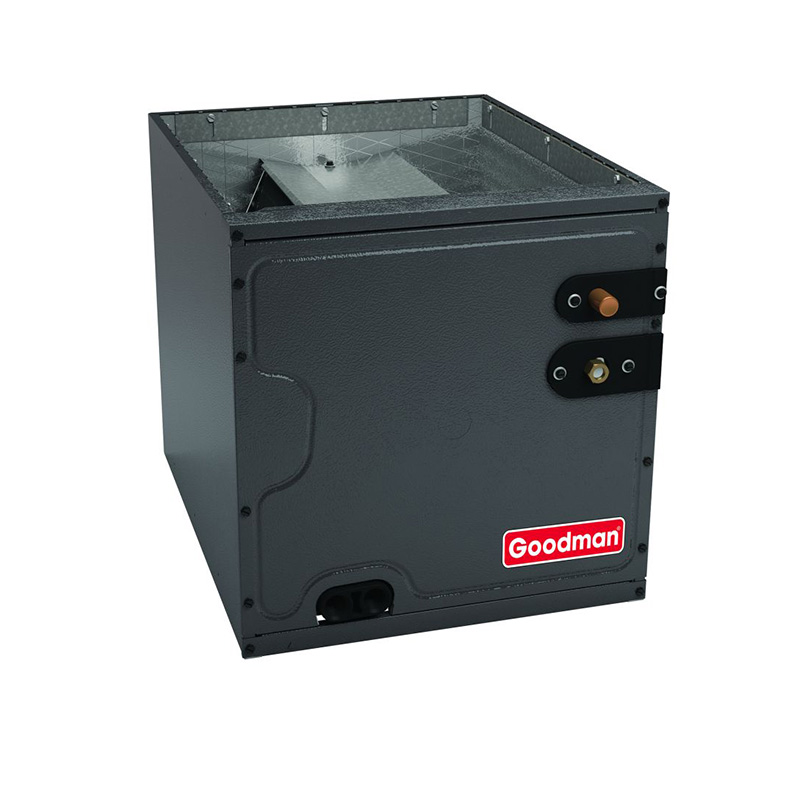
- Evaporator coil leaks appear in a meaningful share of owner reviews and can be expensive to address outside of warranty
- Downflow-only configuration limits installation flexibility; this unit cannot be repositioned for horizontal or upflow applications
What homeowners and pros say about Goodman
Homeowners who have purchased Goodman equipment reflect the split picture captured in the brand’s ratings: a ConsumerAffairs score of roughly 2.5 out of 5 and a Google dealer review average of around 3.8 out of 5. The ConsumerAffairs channel skews toward people motivated to post after a bad experience, and the recurring complaint there is repair costs that climb after about year 7. Google dealer reviews, where a broader range of customers weigh in, surface affordability as the most consistent praise. For a 4-ton downflow system at this price point, that trade-off is the central question a buyer needs to sit with honestly.
HVAC technicians who service Goodman equipment tend to describe it as workable equipment that rewards a careful installation. The dual-run capacitor is widely cited as the first component to watch; it fails more often on Goodman units than on premium brands, though the fix is relatively inexpensive at 300 to 600 dollars. More consequential are the evaporator coil leaks that show up in a meaningful share of owner accounts, and the compressor lifespan, which runs 10 to 14 years on average compared to 15 to 20 years for Carrier, Trane, or Lennox. For this specific system, the 96% AFUE furnace and ECM blower represent the better end of what Goodman offers at entry-level pricing, but pros consistently note that no amount of good equipment compensates for a rushed or poorly commissioned install.
Sources: ConsumerAffairs Goodman owner reviews, AHRI Directory of Certified Product Performance, U.S. DOE appliance and equipment efficiency standards, Goodman product specification sheets.
What it costs to run
At 13.6 SEER2, cooling this 4-ton system for a typical 1200-hour cooling season at the U.S. average electricity rate of $0.17/kWh works out to roughly $720 per year in cooling, about $11 less per year than a minimum-efficiency 13.4 SEER2 unit of the same size. Your real cost depends on your climate and local rate.
Method: (48,000 BTU/hr ÷ 13.6 SEER2) × 1200 hours ÷ 1000 × $0.17/kWh. Rate source: U.S. EIA average; cooling hours: moderate-climate estimate.
How it compares
| Brand | Comparable model | SEER2 | Stage | Price position |
|---|---|---|---|---|
| Goodman | 4-Ton 13.6 SEER2 / 120,000 BTU 96% AFUE Downflow ECM System (R-32) | 13.6 | Single-stage | Value pick |
| Carrier | Comfort Series (24ACC6 condenser + 59SC5 furnace) | 13.4 – 14.0 | Single-stage | Typically 15 to 25 percent more than Goodman |
| Trane | XR14 / S9X1 series | 13.4 – 14.0 | Single-stage | Typically 15 to 25 percent more than Goodman |
| Lennox | Merit ML14XC1 / ML196E series | 13.4 – 14.0 | Single-stage | Typically 15 to 25 percent more than Goodman |
Competitor rows are comparable single-stage units at similar efficiency; price is relative position, not a quote.
Questions about this system
Why does this system use R-32 instead of R-410A, and does that affect service costs?
R-32 is the refrigerant Goodman and much of the industry are transitioning to as R-410A is phased down under federal regulations. R-32 has a lower global-warming potential and slightly better thermodynamic properties. Service costs should be comparable to R-410A in the near term, but availability and technician familiarity will improve over time as the transition progresses.
What does downflow configuration actually mean, and how do I know if my home needs it?
Downflow means the furnace pulls return air in at the top and discharges supply air downward into the duct system beneath it. It is typically used when the unit sits in a closet or utility space on the main floor with ductwork running under the floor. If your existing furnace is a downflow unit, this is a straightforward replacement; if not, the ductwork and cabinet orientation would need to change, which adds cost.
Is 4 tons and 120,000 BTU the right size for my home?
Not necessarily, and this is one of the most important questions to answer before purchasing. A Manual J load calculation performed by a licensed HVAC contractor accounts for your climate zone, insulation levels, window area, and home layout. Oversizing causes short-cycling, uneven temperatures, and accelerated wear; undersizing leaves the system running constantly in extreme weather. Do not rely on square footage rules of thumb alone.
What are the most likely repair costs I should budget for over the life of this system?
Dual-run capacitors are the most commonly reported failure on Goodman equipment and typically cost 300 to 600 dollars to replace including labor. Evaporator coil leaks appear in a meaningful portion of owner reviews and can run significantly higher depending on whether the coil is under warranty. Compressor replacements are the major cost risk after year 10, as Goodman compressors average 10 to 14 years versus 15 to 20 for premium brands.
Do I need to register the system to get the full warranty, and what does it actually cover?
Yes, Goodman requires product registration within a specified window after installation to receive the extended warranty terms; without registration, coverage defaults to a shorter base period. The warranty covers the compressor and functional parts, but it does not cover labor costs, which are typically the larger portion of any repair bill. Confirm the exact registration deadline and labor coverage with your installer before the system is commissioned.
Specifications
| Cooling capacity | 4 Ton |
| Efficiency | 13.6 SEER2 |
| Furnace output | 120000 BTU |
| Furnace efficiency | 96% AFUE |
| Configuration | Downflow |
| Refrigerant | R-32 |