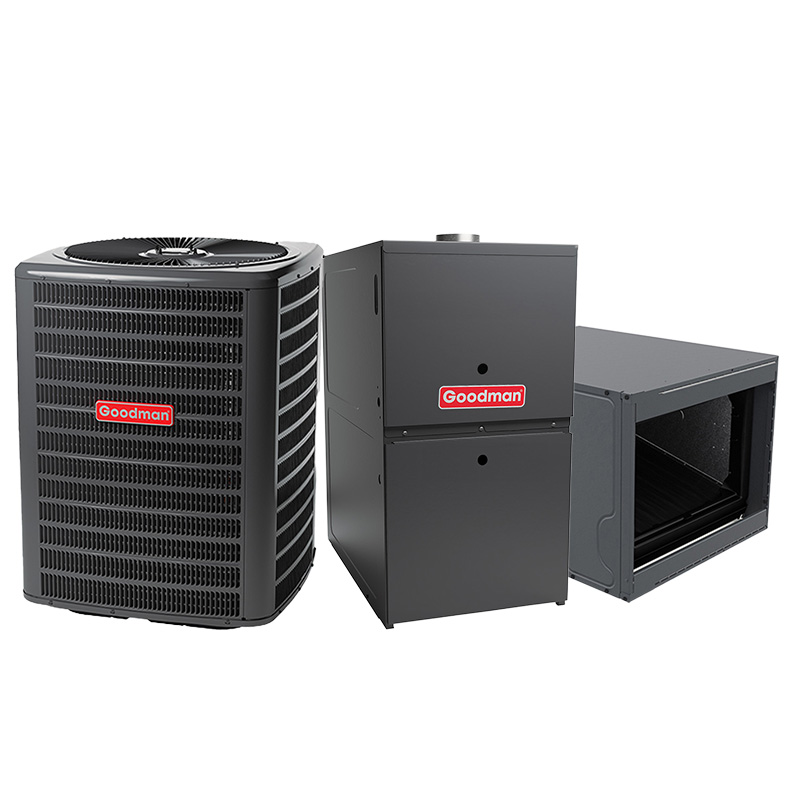
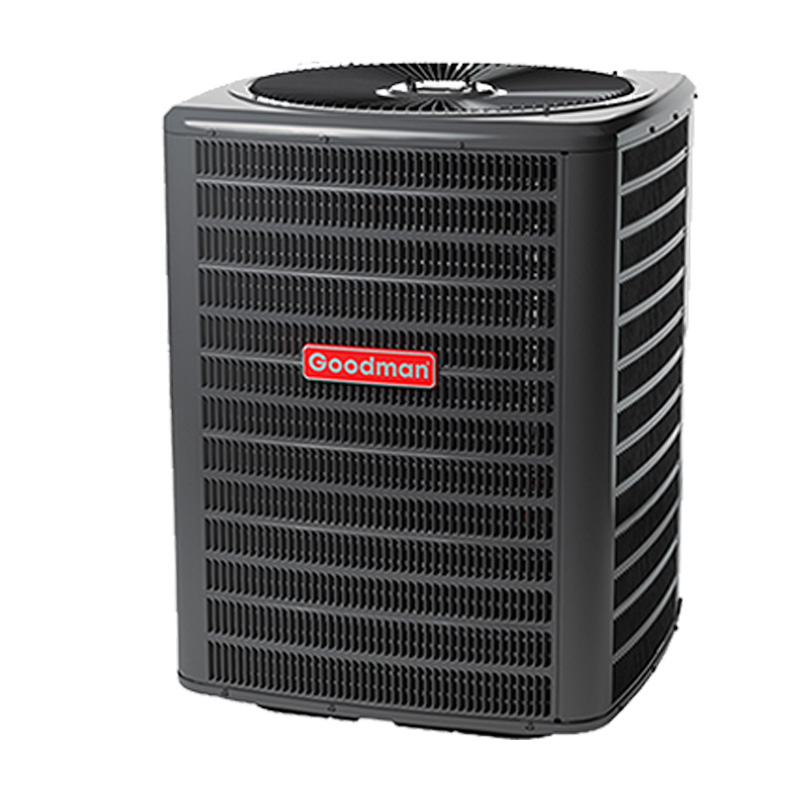
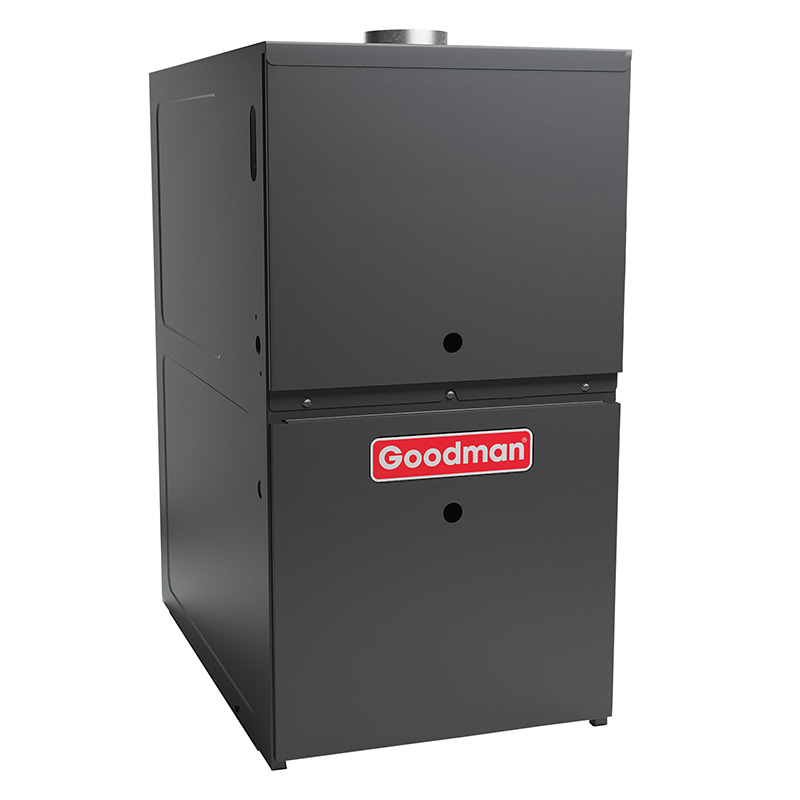
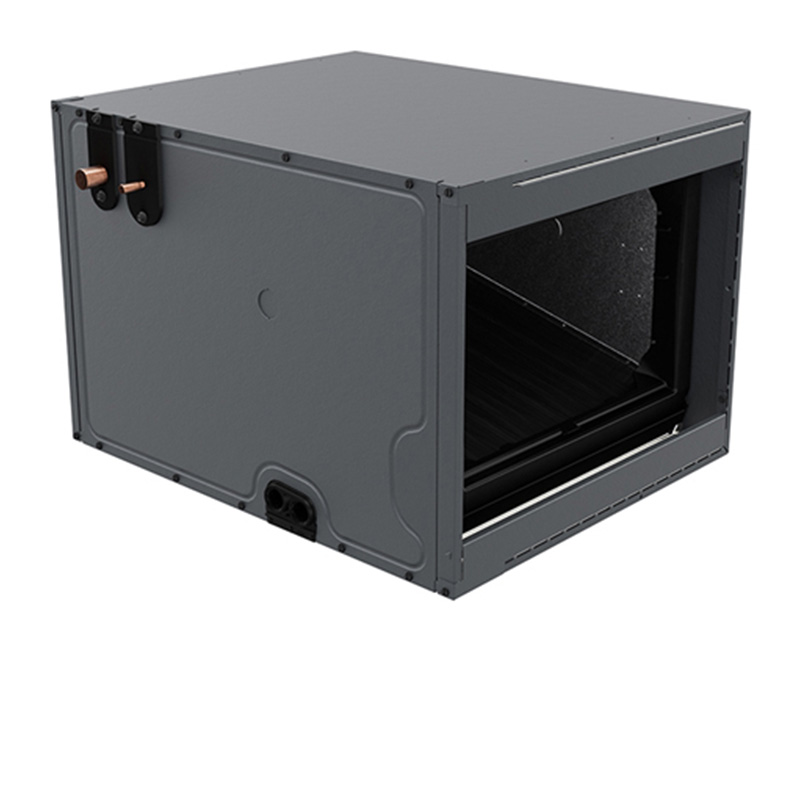
Goodman 4 Ton 13.6 SEER2 AC & Gas Furnace System – Two Stage Variable-Speed, 100000 BTU Gas Furnace, 80% AFUE, Horizontal, R32
View on AC Direct see your lowest price →Check current price on AC Direct →
Key features
- Two-stage compressor runs at partial capacity most of the time for better humidity control and quieter operation
- Variable-speed air handler adjusts airflow continuously for more even temperatures and lower operating noise
- 100,000 BTU gas furnace rated at 80% AFUE, meeting federal minimum efficiency standards for most regions
- Horizontal configuration designed for attic or crawl space installations with limited vertical clearance
- R-32 refrigerant with a lower global warming potential than older R-410A systems
- 13.6 SEER2 efficiency rating meets current federal minimum standards with modest operating cost savings over single-stage equipment
About this system
The Goodman 4-ton 13.6 SEER2 two-stage AC and gas furnace system is designed for larger homes, typically in the 2,000 to 2,600 square foot range, where a single-stage system struggles to maintain even temperatures across multiple rooms or floors. The two-stage compressor runs at a lower capacity most of the time, cycling less aggressively and doing a better job of pulling humidity out of the air before switching to full output on the hottest days. Paired with a variable-speed air handler, that combination means quieter operation and more consistent comfort compared to basic single-stage setups.
The 100,000 BTU furnace operates at 80% AFUE, which meets the federal minimum for most U.S. climate zones and is a practical, cost-effective choice for homes that prioritize upfront savings over long-run fuel economy. The horizontal configuration makes this system suited for attic or crawl space installations where vertical access is limited. R-32 refrigerant is a newer, lower-global-warming-potential option that is becoming more common across the industry and is worth confirming your installing technician is certified to handle before scheduling work. This system is a reasonable fit for homeowners who want two-stage performance at a value-brand price and understand that installation quality will largely determine how the equipment performs over time.
This system delivers two-stage comfort and variable-speed airflow at a price point that undercuts comparable Trane, Carrier, and Lennox equipment by roughly 15 to 25 percent, making it a legitimate option for budget-conscious buyers who can vet their installer carefully. The 80% AFUE furnace and 13.6 SEER2 rating are entry-level numbers that will not minimize utility bills the way a 96% AFUE or 18+ SEER2 system would, so the savings are upfront, not ongoing. Long-term ownership costs depend heavily on install quality and how quickly wear items like dual-run capacitors and evaporator coils are addressed.
Overall score is the average of the five ratings above.
What we like
- Two-stage cooling improves humidity removal and comfort compared to single-stage systems at a similar price
- Variable-speed air handler reduces temperature swings and lowers operating noise noticeably
- Priced 15 to 25 percent below equivalent Trane, Lennox, and Carrier configurations, freeing budget for a quality installation
- Horizontal layout makes attic and crawl space retrofits practical without major ductwork changes
- R-32 refrigerant is forward-compatible with current and near-future environmental regulations
Trade-offs
- 80% AFUE is the federal minimum for most regions and will cost more to operate annually than 90%+ AFUE alternatives
- Compressor lifespan averages 10 to 14 years in documented owner experience, shorter than the 15 to 20 years reported for premium brands
- Evaporator coil leaks and dual-run capacitor failures are the most commonly reported service issues, and repair costs tend to increase after roughly year 7
- A minority of owners have reported refrigerant leaks within the first year, typically tied to installation or initial charge errors rather than equipment defects
What homeowners and pros say about Goodman
Goodman sits squarely in value-brand territory, and owner feedback reflects that positioning honestly. On Google dealer reviews, Goodman equipment averages around 3.8 out of 5 stars across several hundred reviews per location, with affordability cited most often as the reason buyers chose it. ConsumerAffairs tells a harder story, with Goodman averaging about 2.5 out of 5 on that platform, where the recurring complaint is repair costs that climb after roughly year seven of ownership. That gap between the two ratings sources is worth understanding: Google reviews skew toward the buying decision, while ConsumerAffairs captures owners who are motivated to write because something went wrong.
The specific failure modes that show up consistently in owner and technician accounts are worth knowing before you buy. Dual-run capacitors are the most frequently reported problem and are usually a quick, relatively inexpensive fix in the $300 to $600 range. Evaporator coil leaks appear in a meaningful share of longer-term owner reports and carry higher repair costs. Compressors on Goodman equipment average 10 to 14 years of service in documented experience, compared to 15 to 20 years for premium brands, which matters for a 4-ton two-stage system where compressor replacement is a significant expense. A minority of owners have also reported refrigerant leaks within the first year, which HVAC technicians consistently attribute to installation or initial charge errors rather than the equipment itself. That last point underscores what contractors repeat most often about Goodman: the hardware is acceptable at the price, but the quality of the installation is the single biggest variable in how long the system lasts and how much it costs to own.
Sources: ConsumerAffairs Goodman owner reviews, AHRI Directory of Certified Product Performance, U.S. DOE appliance and equipment efficiency standards, Goodman product specification sheets.
What it costs to run
At 13.6 SEER2, cooling this 4-ton system for a typical 1200-hour cooling season at the U.S. average electricity rate of $0.17/kWh works out to roughly $720 per year in cooling, about $11 less per year than a minimum-efficiency 13.4 SEER2 unit of the same size. Your real cost depends on your climate and local rate.
Method: (48,000 BTU/hr ÷ 13.6 SEER2) × 1200 hours ÷ 1000 × $0.17/kWh. Rate source: U.S. EIA average; cooling hours: moderate-climate estimate.
How it compares
| Brand | Comparable model | SEER2 | Stage | Price position |
|---|---|---|---|---|
| Goodman | GSZ16 / GMVC8 Series (Two-Stage / Variable-Speed, 80% AFUE) | 13.6 | Two-stage | Value pick |
| Carrier | Comfort 14 Series (24ACC4 / 58SB0) | 13.4 to 14.0 | Single-stage | Typically 15 to 25 percent more than Goodman |
| Trane | XR14 Series (4TTR4 / S8X1) | 13.4 to 14.0 | Single-stage | Typically 15 to 25 percent more than Goodman |
| Lennox | Merit 14 Series (14ACX / ML180) | 13.4 to 14.3 | Single-stage | Typically 15 to 25 percent more than Goodman |
Competitor rows are comparable single-stage units at similar efficiency; price is relative position, not a quote.
Questions about this system
Is 80% AFUE going to cost me a lot more in gas bills compared to a 96% AFUE furnace?
For every dollar of gas burned, an 80% AFUE furnace delivers 80 cents of heat versus 96 cents from a high-efficiency unit. On a large home with a 100,000 BTU furnace in a cold climate, that gap can add up to several hundred dollars per heating season. If you plan to stay in the home 10 or more years, a high-efficiency furnace often pays back the price difference, so it is worth running the numbers with your contractor before committing.
Does my HVAC technician need special certification to work with R-32 refrigerant?
R-32 is an A2L refrigerant, meaning it is mildly flammable, which requires technicians to follow specific handling procedures and use compatible tools. Not every technician is currently equipped or trained for A2L refrigerants, so it is worth confirming before hiring that your installer has experience with R-32 systems to avoid charge errors or safety issues.
What does horizontal configuration mean, and how do I know if it fits my situation?
Horizontal means the air handler is designed to lie on its side, which is standard for attic or crawl space installations where there is not enough vertical clearance to mount the unit upright. If your existing system is already installed horizontally in an attic or tight crawl space, this configuration is a direct match. Have your installer confirm the orientation before ordering.
How worried should I be about the reported capacitor and evaporator coil failures in Goodman systems?
Dual-run capacitor failures are the single most commonly reported issue with Goodman equipment, but they are also one of the least expensive HVAC repairs, typically running $300 to $600 including a service call. Evaporator coil leaks are more serious and more costly. Keeping up with annual maintenance, confirming the refrigerant charge is correct at installation, and having a service agreement in place will catch these issues before they become expensive emergencies.
Will this system work as a straight replacement for my existing 4-ton R-410A setup, or will there be additional costs?
Switching from R-410A to R-32 requires a system that is fully compatible with R-32 from the start, which this unit is, but your installer will need to flush any residual R-410A oil from the lineset if you are reusing existing refrigerant lines. New linesets are often recommended to avoid contamination issues. Factor in that labor and materials cost when comparing this system's price against alternatives.
Specifications
| Cooling capacity | 4 Ton |
| Efficiency | 13.6 SEER2 |
| Furnace output | 100000 BTU |
| Furnace efficiency | 80% AFUE |
| Configuration | Horizontal |
| Refrigerant | R-32 |