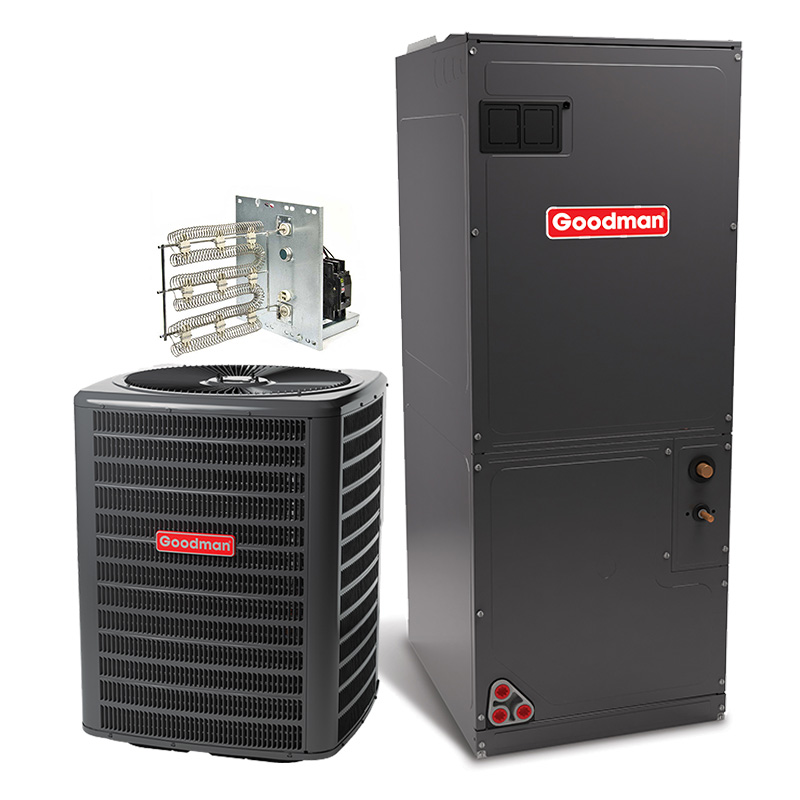
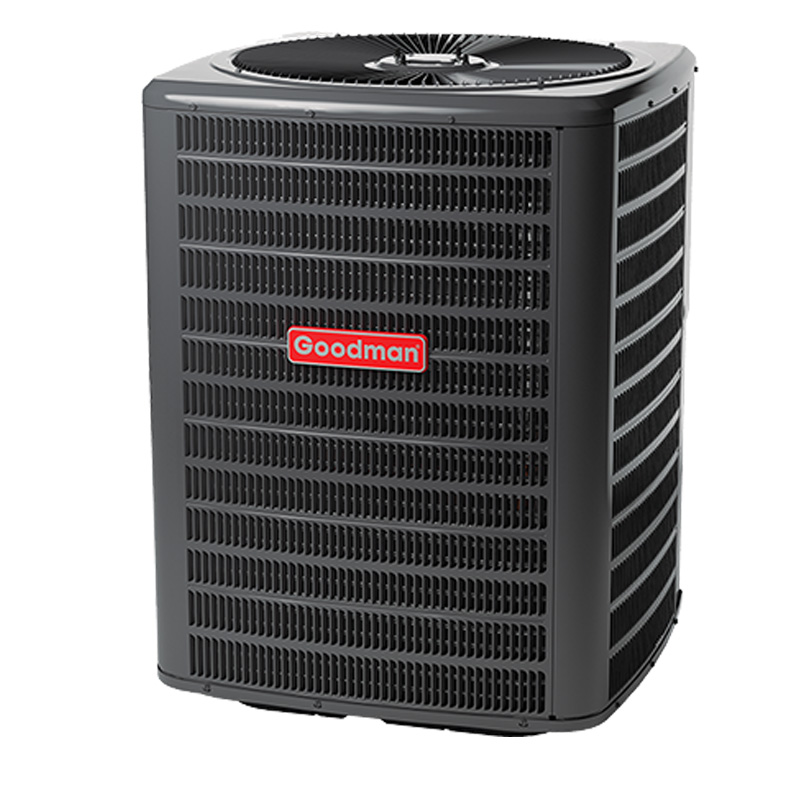
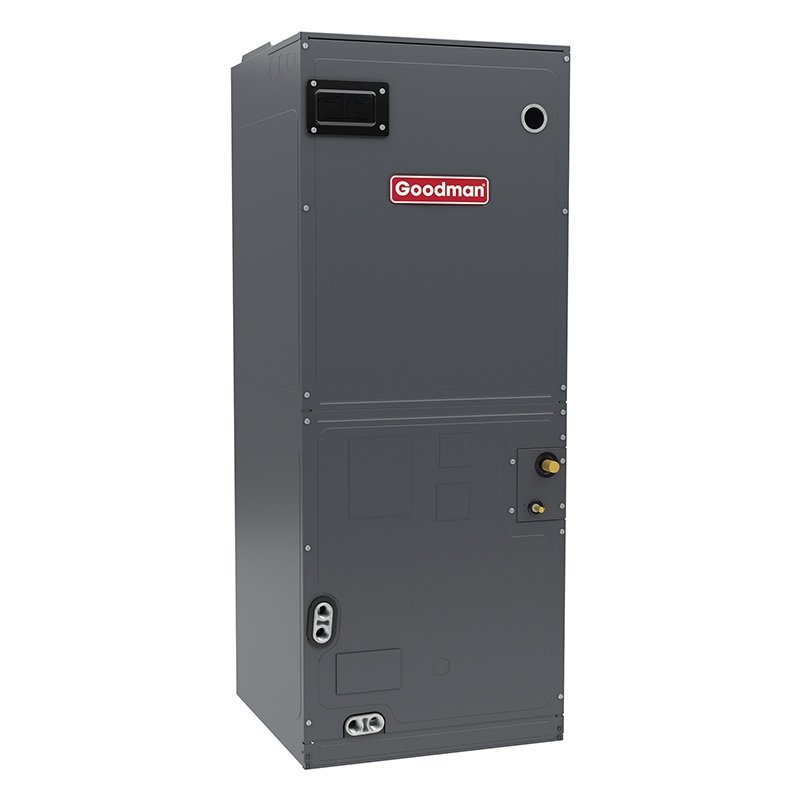
Goodman 4 Ton 13.6 SEER2 R32 Air Conditioner System With Electric Heat
View on AC Direct see your lowest price →Check current price on AC Direct →
Key features
- 4-ton cooling capacity suited to homes in the 1,800 to 2,400 sq ft range (climate-dependent)
- 13.6 SEER2 efficiency rating, meeting current federal minimum standards for most U.S. regions
- R-32 refrigerant with a global warming potential roughly 68 percent lower than R-410A
- Single-stage operation with electric heat for all-electric, gas-free installation
- Compatible with Goodman's existing dealer and parts network across the U.S.
- Factory-tested refrigerant circuit before shipping to reduce field charge errors
About this system
The Goodman 4-ton 13.6 SEER2 air conditioner with electric heat is a straightforward single-stage cooling and heating system built around the newer R-32 refrigerant. At 4 tons, it is sized for homes roughly in the 1,800 to 2,400 square foot range, depending on climate zone, insulation quality, and ceiling height. The R-32 refrigerant upgrade is meaningful: it carries a global warming potential about 68 percent lower than the R-410A it replaces, and it operates at higher efficiency per unit of refrigerant charge, which helps the system hit that 13.6 SEER2 rating despite being a single-stage design.
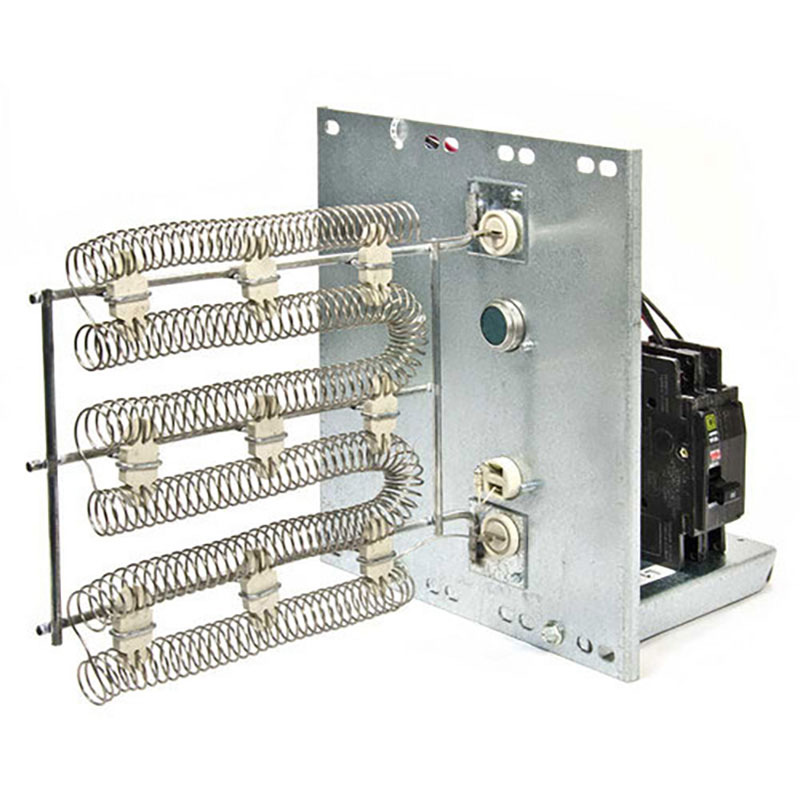
The electric heat component makes this a self-contained solution for climates where a gas furnace is either unavailable or cost-prohibitive to install. It suits homes in the South and Southwest where heating loads are modest and electric resistance heat is an acceptable backup rather than a primary workhorse. Buyers who want all-electric operation without the upfront cost of a heat pump will find this configuration practical. That said, electric resistance heating is less efficient than a heat pump, so if your winters are more than mild, the monthly operating cost difference is worth calculating before committing. This system is best suited to situations where cooling accounts for the overwhelming majority of the system’s annual runtime.
This Goodman system delivers solid entry-level cooling at a price point that is hard to argue with, and the shift to R-32 is a genuine forward-looking improvement. The trade-offs are real though: single-stage operation means less humidity control than a variable or <a href="https://hvac.best/glossary/two-stage/">two-stage</a> system, compressor lifespan trails premium brands by a meaningful margin, and long-term costs depend heavily on the quality of the installer you hire.
Overall score is the average of the five ratings above.
What we like
- Priced 15 to 25 percent below comparable Carrier, Trane, and Lennox systems, leaving room in the budget for a quality installation
- R-32 refrigerant is more environmentally responsible and supports better long-term serviceability as R-410A is phased out
- Large national parts and dealer network makes service calls and replacement components accessible in most markets
- Electric heat component eliminates the need for gas lines or a separate furnace, simplifying the installation scope
- Factory refrigerant testing before shipment reduces, though does not eliminate, the risk of early charge-related issues
Trade-offs
- Single-stage compressor runs at full capacity or not at all, which can leave humid climates with comfort complaints on mild days
- Compressor lifespan averages 10 to 14 years versus 15 to 20 years for premium-brand equipment, meaning replacement may come sooner
- Dual-run capacitors are the most commonly reported failure point, and evaporator coil leaks appear frequently enough in owner feedback to be a legitimate concern
- Electric resistance heat is expensive to operate in climates with meaningful heating seasons, and this system does not deliver the efficiency of a heat pump
What homeowners and pros say about Goodman
Homeowners who share feedback on Goodman equipment land in two fairly distinct camps. On dealer review platforms where the conversation includes context, Goodman earns roughly 3.8 out of 5 stars across Google dealer reviews, and the most frequent compliment is straightforward: it costs less to get into than a Trane or Carrier, and when the installation is done right it cools effectively without drama. On complaint-weighted channels like ConsumerAffairs, the picture is rougher, sitting around 2.5 out of 5, with the recurring theme being repair bills that start climbing after roughly the seventh year of ownership. Neither number tells the whole story on its own.
HVAC professionals tend to speak about Goodman with a certain pragmatism. They note that the dual-run capacitor is the most commonly seen failure point in the field, usually a quick fix in the 300 to 600 dollar range but an annoyance that shows up more often than on premium-brand equipment. Evaporator coil leaks come up enough in owner accounts to be a real consideration rather than an edge case. Compressor lifespan is the larger structural issue: Goodman compressors tend to average 10 to 14 years in practice, compared to 15 to 20 years for premium brands, which affects how you think about the total cost of ownership over a long horizon. The consistent professional advice is to view the money saved on the equipment cost as an investment in hiring a more experienced installer, since the quality of the commissioning work has an outsized effect on how this particular brand performs over time.
Sources: ConsumerAffairs Goodman owner reviews, AHRI Directory of Certified Product Performance, U.S. DOE appliance and equipment efficiency standards, Goodman product specification sheets.
What it costs to run
At 13.6 SEER2, cooling this 4-ton system for a typical 1200-hour cooling season at the U.S. average electricity rate of $0.17/kWh works out to roughly $720 per year in cooling, about $11 less per year than a minimum-efficiency 13.4 SEER2 unit of the same size. Your real cost depends on your climate and local rate.
Method: (48,000 BTU/hr ÷ 13.6 SEER2) × 1200 hours ÷ 1000 × $0.17/kWh. Rate source: U.S. EIA average; cooling hours: moderate-climate estimate.
How it compares
| Brand | Comparable model | SEER2 | Stage | Price position |
|---|---|---|---|---|
| Goodman | 4-Ton 13.6 SEER2 R-32 AC with Electric Heat | 13.6 | Single-stage | Value pick |
| Carrier | Comfort Series (24ACC6) | 13.4 to 14.3 | Single-stage | Typically 15 to 25 percent more than the Goodman |
| Trane | XR15 Series | 14.3 to 15.0 | Single-stage | Typically 15 to 25 percent more than the Goodman |
| Lennox | Merit Series (ML14XC1) | 13.4 to 15.0 | Single-stage | Typically 15 to 25 percent more than the Goodman |
Competitor rows are comparable single-stage units at similar efficiency; price is relative position, not a quote.
Questions about this system
Is 13.6 SEER2 going to cost me more to run than a higher-efficiency system?
Yes, compared to a 16 or 18 SEER2 system you will pay more in electricity per hour of cooling. In a hot climate where the unit runs heavily, the efficiency gap translates to a meaningful annual difference. Whether the upfront savings justify that gap depends on your local electricity rate, how many cooling hours your climate produces per year, and how long you plan to stay in the home.
Why does this system use R-32 instead of R-410A?
R-410A is being phased down under EPA regulations due to its high global warming potential. R-32 has roughly 68 percent lower global warming potential, is more efficient per unit of charge, and is already widely used in international markets. Choosing an R-32 system now means your equipment aligns with where the industry is heading, which can matter when it comes time for future service.
What does the electric heat portion of this system actually do, and how efficient is it?
The electric heat strips provide resistance heating, similar in concept to a large space heater built into your air handler. Unlike a heat pump, which moves heat rather than generating it, electric resistance heat converts electricity to heat at roughly a 1-to-1 ratio. It keeps the system fully self-contained with no gas lines needed, but it is significantly more expensive to operate than a heat pump in climates where heating demand is high.
How important is the installer when it comes to a Goodman system?
Extremely important. HVAC technicians and Goodman's own performance track record consistently point to installation quality as the single biggest factor in how long the unit lasts and how efficiently it runs. A minority of owners report refrigerant leaks within the first year, and these are most often traced to an improper charge or connection at installation rather than a defective unit. Hiring an experienced, licensed contractor and confirming proper commissioning is not optional with this brand.
What are the most likely repair calls I should budget for over the life of this system?
Dual-run capacitors are the most commonly documented failure point in Goodman equipment and typically cost between 300 and 600 dollars to diagnose and replace. Evaporator coil leaks appear with enough frequency in owner reviews to be worth noting, and compressor replacement becomes a realistic scenario in the 10 to 14 year range given Goodman's documented average lifespan for that component. Setting aside a modest annual service budget and keeping a maintenance contract is advisable.
Specifications
| Cooling capacity | 4 Ton |
| Efficiency | 13.6 SEER2 |
| Refrigerant | R-32 |