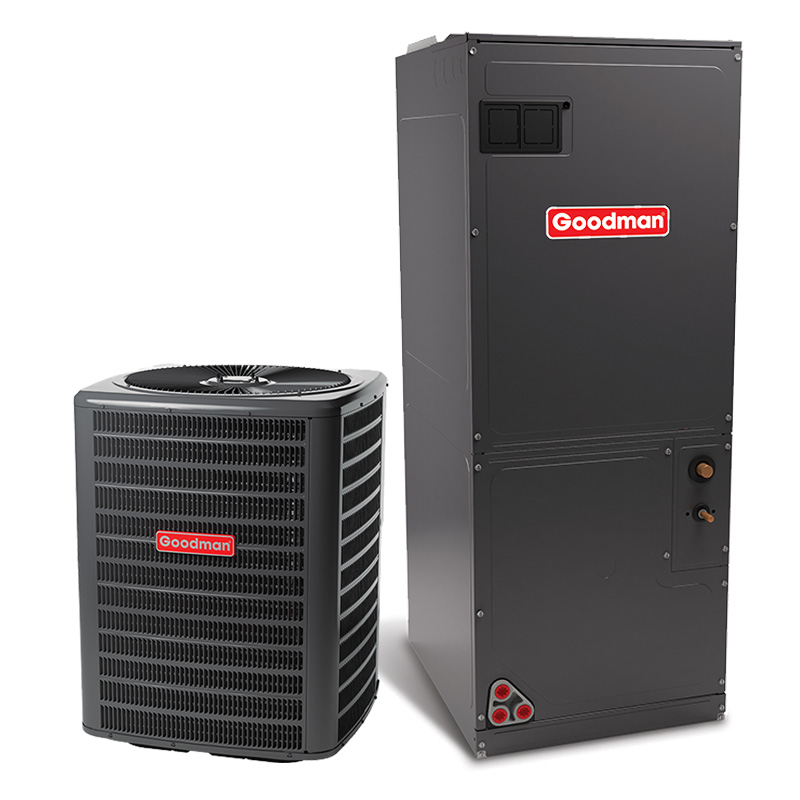
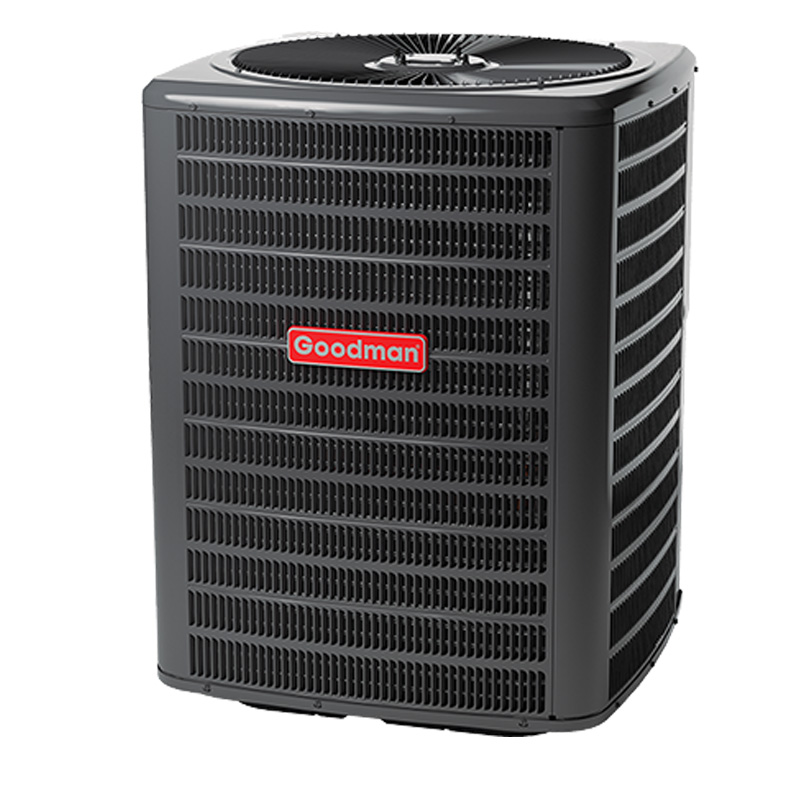
Goodman 4 Ton 13.6 SEER2 R32 Cooling Only System
View on AC Direct see your lowest price →Check current price on AC Direct →
Key features
- 4-ton capacity suited to homes approximately 1,800 to 2,400 sq ft with proper load calculation
- 13.6 SEER2 efficiency rating meets current federal minimum standards for most U.S. regions
- R-32 refrigerant offers lower global warming potential than legacy R-410A systems
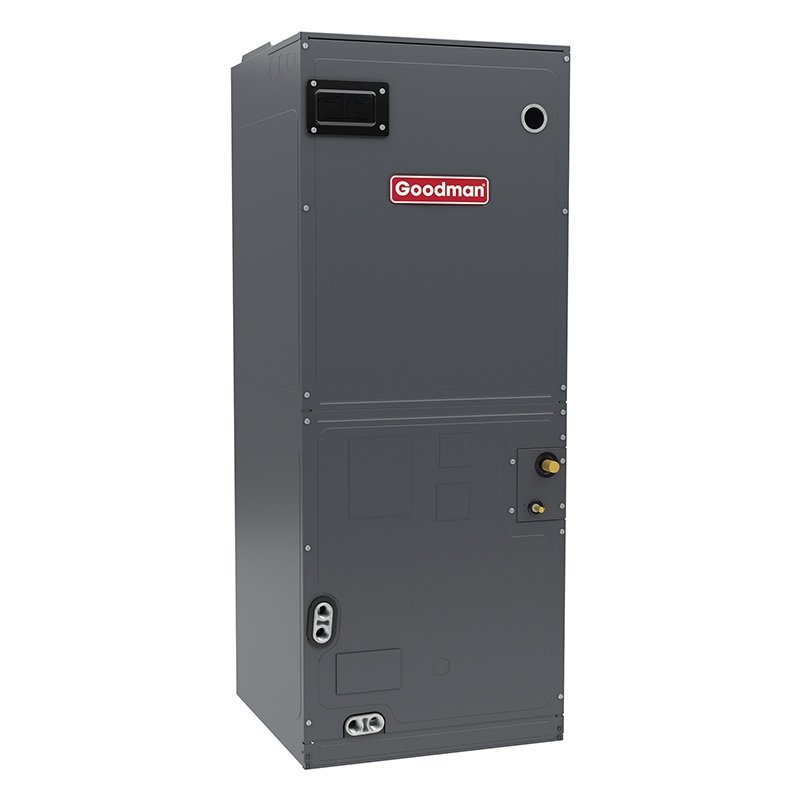
- Cooling-only configuration pairs with an existing furnace or air handler
- Single-stage compressor operation: full capacity on or off, no variable modulation
- Priced 15 to 25 percent below comparable Carrier, Trane, and Lennox models
About this system
The Goodman 4-ton 13.6 SEER2 cooling-only system is a straightforward, single-stage air conditioner built for homeowners who want reliable summer cooling without the premium price tag of a Trane, Lennox, or Carrier. At 4 tons, it is sized for homes roughly in the 1,800 to 2,400 square foot range, though correct sizing always depends on a proper Manual J load calculation for your specific home, climate, and insulation. The 13.6 SEER2 rating sits right at the current federal efficiency floor for most U.S. regions, meaning it meets code but does not exceed it. That is a realistic trade-off for a value-tier buy.
This unit runs on R-32 refrigerant, a newer lower-global-warming-potential alternative to the R-410A used in most older systems. R-32 is more environmentally responsible and is increasingly common in new equipment, though it does require certified technicians familiar with the refrigerant for service and recharge. As a cooling-only system, it pairs with an existing furnace or air handler and does not provide heat, making it a direct replacement candidate for homeowners in warmer climates or those with a separate heating system already in place. Budget-conscious buyers, landlords, and those replacing an aging unit without changing ductwork are the clearest fit.
The Goodman 4-ton 13.6 SEER2 R-32 system is a serviceable, budget-friendly cooling unit that does exactly what it promises at a price that is genuinely hard to argue with. It is not the most efficient or the most durable option on the market, and its long-term reliability depends heavily on quality installation and routine maintenance. For cost-conscious buyers who are realistic about those trade-offs, it represents reasonable value.
Overall score is the average of the five ratings above.
What we like
- Purchase price typically 15 to 25 percent below comparable Carrier, Trane, and Lennox equipment
- R-32 refrigerant is more environmentally responsible than R-410A and is the industry direction going forward
- Straightforward single-stage design means lower service complexity and widely available technician familiarity
- Dual-run capacitor failures, the most common documented issue, are usually a low-cost fix in the $300 to $600 range
- Broad dealer and parts network makes service scheduling and part sourcing relatively accessible
Trade-offs
- 13.6 SEER2 is the efficiency floor, not a standout rating, and monthly energy costs will be higher than a higher-SEER2 alternative
- Compressor lifespan averages 10 to 14 years versus 15 to 20 years for premium-brand compressors, per documented owner feedback
- Evaporator coil leaks appear in a meaningful share of owner reviews and can be a significant repair expense
- A minority of owners report refrigerant leaks in the first year, typically tied to install or factory charge issues, underscoring how critical installer quality is
What homeowners and pros say about Goodman
On ConsumerAffairs, Goodman holds roughly 2.5 out of 5 stars, a score shaped by the platform’s complaint-heavy audience. The recurring pattern in those reviews is not immediate failure but rather repair costs that begin climbing after about year seven, particularly around compressor issues and evaporator coil leaks. On Google dealer reviews, the brand lands closer to 3.8 out of 5, where affordability is consistently the most cited reason buyers chose it and are satisfied. The gap between those two scores tells you something useful: owners who go in with realistic expectations about longevity tend to be more satisfied than those expecting premium-brand durability at a value-brand price.
HVAC technicians who work on these units regularly point to a few specific failure patterns worth knowing before you buy this 4-ton system. Dual-run capacitors are the most common call-back repair and are generally inexpensive to fix. Evaporator coil leaks show up in a meaningful portion of owner reports and are a more costly problem when they occur. Compressor lifespan on Goodman equipment tends to average 10 to 14 years, compared to 15 to 20 years documented for premium-brand compressors. A smaller group of owners also reports refrigerant leaks in the first year, which technicians typically attribute to installation or factory charge issues rather than a systemic product defect. The consistent advice from pros: the quality of the person installing this unit matters as much as the unit itself.
Sources: ConsumerAffairs Goodman owner reviews, AHRI Directory of Certified Product Performance, U.S. DOE appliance and equipment efficiency standards, Goodman product specification sheets.
What it costs to run
At 13.6 SEER2, cooling this 4-ton system for a typical 1200-hour cooling season at the U.S. average electricity rate of $0.17/kWh works out to roughly $720 per year in cooling, about $11 less per year than a minimum-efficiency 13.4 SEER2 unit of the same size. Your real cost depends on your climate and local rate.
Method: (48,000 BTU/hr ÷ 13.6 SEER2) × 1200 hours ÷ 1000 × $0.17/kWh. Rate source: U.S. EIA average; cooling hours: moderate-climate estimate.
How it compares
| Brand | Comparable model | SEER2 | Stage | Price position |
|---|---|---|---|---|
| Goodman | 4-Ton 13.6 SEER2 R-32 Cooling Only | 13.6 | Single-stage | Value pick |
| Carrier | Comfort Series (24ACC6) | 13.8 to 15.2 | Single-stage | Typically 15 to 25 percent more than Goodman |
| Trane | XR14c | 14.0 to 15.0 | Single-stage | Typically 15 to 25 percent more than Goodman |
| Lennox | Merit Series (14ACX) | 14.0 to 16.0 | Single-stage | Typically 15 to 25 percent more than Goodman |
Competitor rows are comparable single-stage units at similar efficiency; price is relative position, not a quote.
Questions about this system
Is 13.6 SEER2 efficient enough, or will I regret not going higher?
13.6 SEER2 meets the current federal minimum and will keep your home cool, but you will pay more in electricity each month compared to a 16 or 18 SEER2 unit. If you run your AC heavily from May through September and energy costs are high in your area, the payback period on a higher-efficiency unit may be worth calculating before you buy.
What does switching to R-32 refrigerant mean for me as an owner?
R-32 is mildly flammable, so it requires technicians who are certified to handle it, which most modern HVAC companies are or are becoming. On a practical level, you should not notice a difference day to day, and R-32 systems are serviced with the same general approach as R-410A units. If you ever need a recharge, confirm your service company stocks R-32 before scheduling.
How often do Goodman capacitors actually fail, and what does it cost to fix?
Dual-run capacitor failure is the most commonly documented repair issue for Goodman condensing units, typically showing up as a unit that hums but will not start. It is also one of the cheaper HVAC repairs, usually running $300 to $600 with a service call, and most technicians can complete it in under an hour.
How important is installer quality with this system?
It is the single most important factor in how long this unit lasts and how well it performs, according to technicians who work on these systems regularly. Proper refrigerant charge, correct airflow, and accurate load sizing at installation directly affect efficiency, coil health, and compressor lifespan. Spending extra to hire an experienced, licensed installer is not optional if you want to avoid early failures.
Does this system come with a warranty, and what does it actually cover?
Goodman typically offers a 10-year parts limited warranty on registered equipment, covering components like the compressor and coil for a decade. However, the warranty generally requires registration within a set window after installation and does not cover labor costs, which can be a significant portion of any repair bill. Read the warranty terms carefully and confirm registration requirements with your installer.
Specifications
| Cooling capacity | 4 Ton |
| Efficiency | 13.6 SEER2 |
| Refrigerant | R-32 |