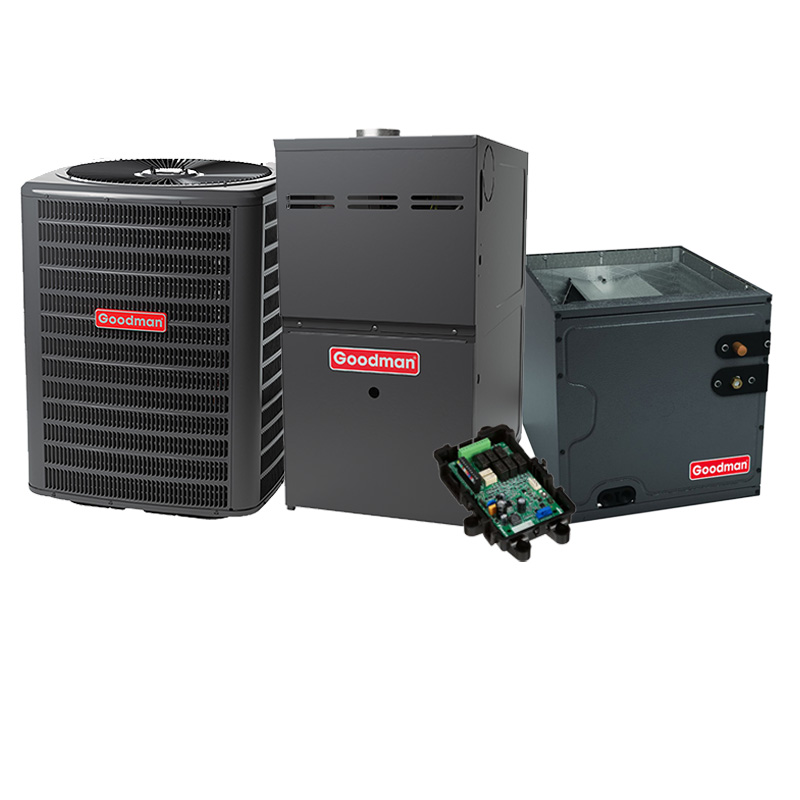
Goodman 4 Ton 13.8 SEER2 60000 BTU 80% Two-Stage Variable Speed Gas Furnace With R32 AC Condenser And Coil System – Upflow
View on AC Direct see your lowest price →Check current price on AC Direct →
Key features
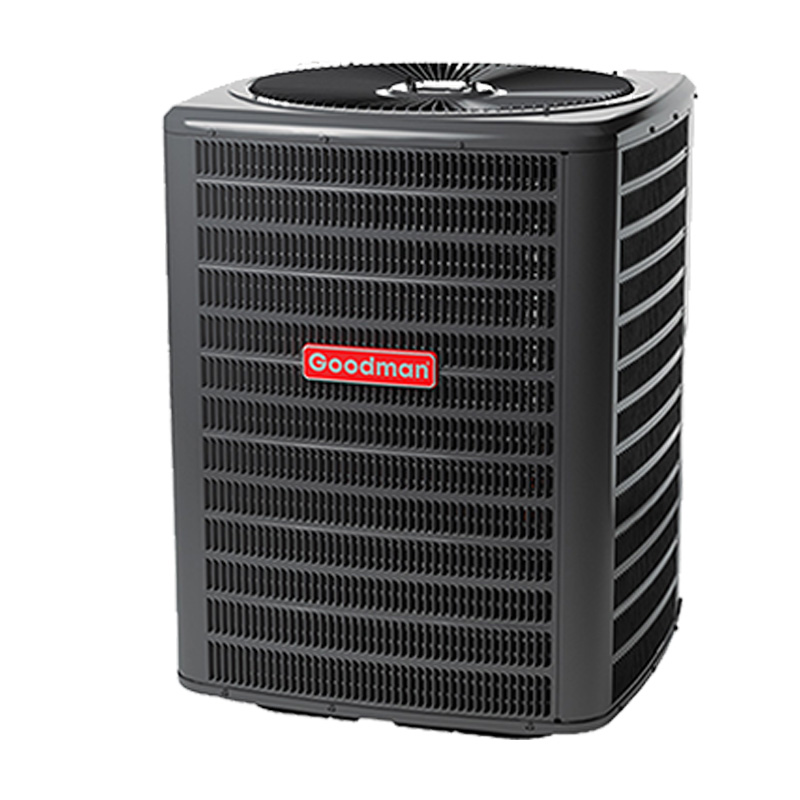
- 4-ton R-32 condenser rated at 13.8 SEER2, meeting 2023+ federal efficiency standards
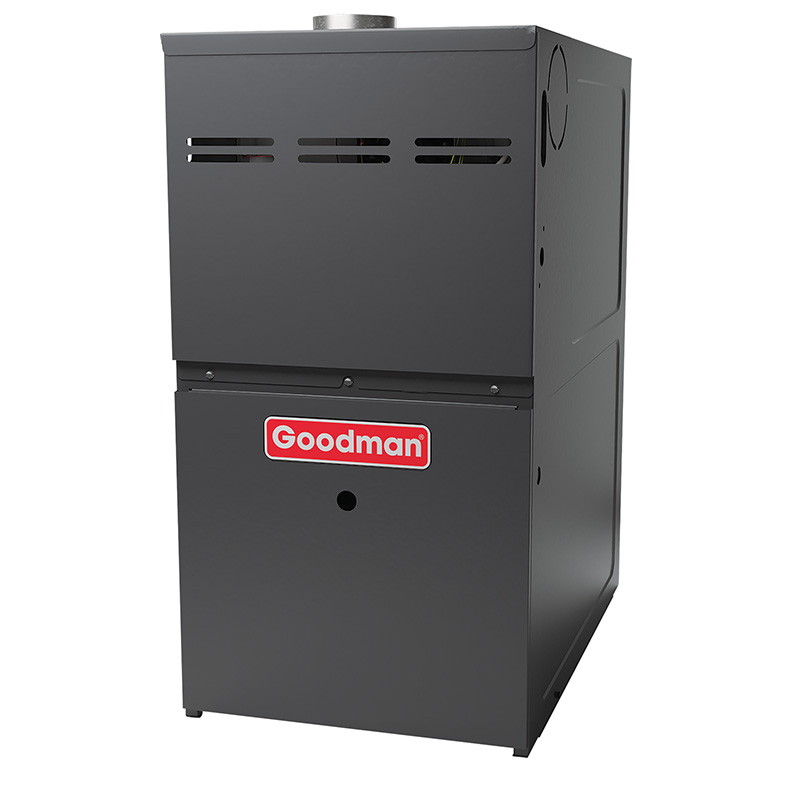
- 60,000 BTU two-stage gas furnace for reduced temperature swings and lower short-cycling
- Variable-speed ECM blower for quieter operation and improved humidity management
- 80% AFUE furnace converts four-fifths of fuel to usable heat, standard efficiency tier
- Upflow configuration designed for basement or first-floor mechanical room installations
- R-32 refrigerant with roughly 68% lower global warming potential than R-410A
About this system
This Goodman system pairs a 4-ton R-32 condenser rated at 13.8 SEER2 with a 60,000 BTU 80% AFUE two-stage, variable-speed gas furnace in an upflow configuration. Together they cover roughly 1,800 to 2,400 square feet in moderate climates, though actual sizing depends on insulation, window area, and local heat load. The two-stage furnace runs on a lower firing rate during mild weather, reducing temperature swings and short-cycling, while the variable-speed blower adjusts airflow continuously for quieter operation and better humidity control than a single-stage setup.
The R-32 refrigerant is a forward-looking choice: it carries a global warming potential roughly 68 percent lower than R-410A, and as federal refrigerant regulations tighten it is increasingly the industry standard for new residential equipment. The upflow configuration means the furnace sits on the floor and discharges conditioned air upward through ductwork in the ceiling or attic, which suits the majority of homes with a basement or first-floor mechanical room. Buyers should confirm their existing ductwork and electrical service match the system before purchasing, as an upflow furnace cannot simply replace a downflow or horizontal unit without modifications.
At 13.8 SEER2 this system sits just above the federal minimum efficiency threshold for most U.S. climate zones, which means operating costs are reasonable but not class-leading. Homeowners in high-cooling climates who run the AC heavily from May through September will find the efficiency savings modest compared with a 16 or 18 SEER2 system. The real value proposition here is the combination of two-stage heating, variable-speed airflow, and a competitive price point, rather than top-shelf seasonal efficiency numbers.
This Goodman bundle delivers a genuine two-stage, variable-speed comfort upgrade at a price that undercuts Carrier, Trane, and Lennox by a meaningful margin, making it a solid pick for budget-conscious buyers who prioritize upfront cost. The trade-off is a brand track record that shows more repair activity after year seven and a compressor lifespan that tends to run shorter than premium competitors. Buyers who invest in a quality installation and keep up with maintenance will get reasonable long-term value; those who cut corners on startup may encounter the failure modes the brand is known for.
Overall score is the average of the five ratings above.
What we like
- Two-stage furnace operation reduces temperature swings and lowers operating noise compared to single-stage units
- Variable-speed ECM blower improves comfort and humidity control without a significant efficiency penalty
- R-32 refrigerant positions the system well for tightening regulatory requirements on high-GWP refrigerants
- Priced roughly 15 to 25 percent below comparable Carrier, Trane, and Lennox equipment
- 13.8 SEER2 meets current federal minimums, keeping cooling operating costs in a reasonable range
Trade-offs
- 80% AFUE furnace is entry-level efficiency; homeowners in cold climates will pay noticeably more to operate than a 95%+ condensing unit
- Compressor longevity averages 10 to 14 years versus 15 to 20 years typical of premium brands, which can affect long-term total cost of ownership
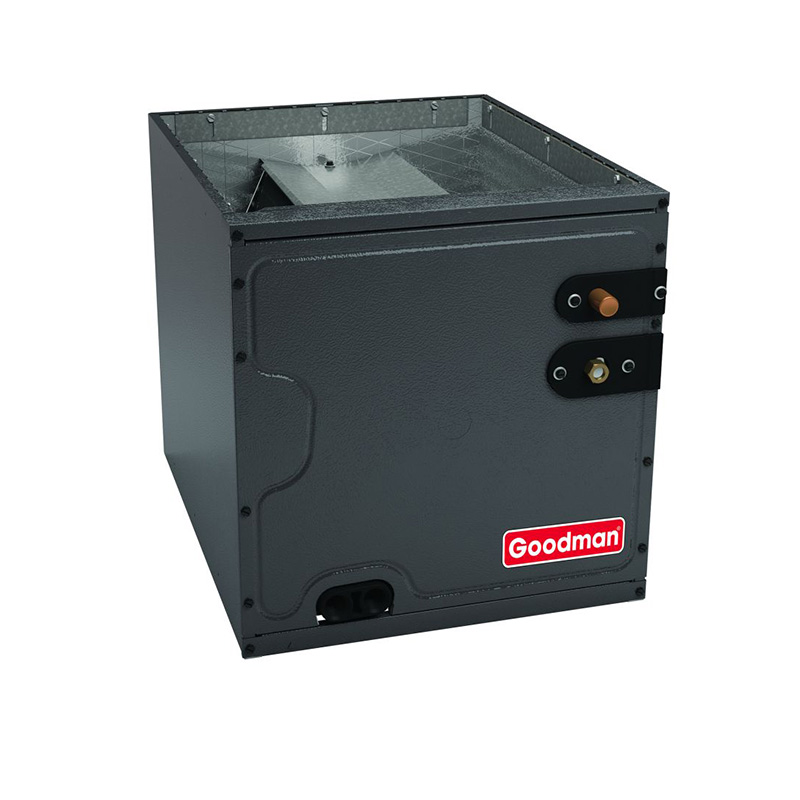
- Dual-run capacitors and evaporator coil leaks are documented recurring failure points that can add repair costs after the warranty period
- Overall system performance depends heavily on installation quality, meaning a poor startup charge or ductwork mismatch can undercut the efficiency and reliability ratings quickly
What homeowners and pros say about Goodman
Homeowners who post about Goodman equipment on review platforms tend to land in two camps. Buyers who had a professional startup and clean ductwork often describe years of uneventful operation and point to affordability as the main reason they chose the brand. The Google dealer review average of around 3.8 out of 5, drawn from several hundred reviews per location, reflects that baseline of satisfied budget buyers. The ConsumerAffairs score tells a different story, sitting near 2.5 out of 5, though it is worth noting that platform draws disproportionately from owners who sought a place to vent frustration. The recurring theme there is repair bills that start accumulating around year seven or eight, which lines up with the brand’s documented compressor lifespan of roughly 10 to 14 years, noticeably shorter than the 15 to 20 years typical of Carrier, Trane, or Lennox compressors.
HVAC technicians who work on Goodman equipment frequently cite the dual-run capacitor as the unit’s most predictable weak point. It fails more often than on premium brands but is also one of the cheaper repairs in the industry, usually resolved for 300 to 600 dollars. More consequential are evaporator coil leaks, which show up in a meaningful share of owner reports and can be significantly more expensive to address. A small but notable minority of owners also report refrigerant issues in the first year, which technicians generally attribute to improper charge at installation rather than a product defect. For this specific system, with its R-32 refrigerant and two-stage furnace, those installation standards matter even more than usual: the efficiency and comfort benefits of variable-speed and two-stage operation only materialize when the system is started up correctly and matched to properly sized ductwork.
Sources: ConsumerAffairs Goodman owner reviews, AHRI Directory of Certified Product Performance, U.S. DOE appliance and equipment efficiency standards, Goodman product specification sheets.
What it costs to run
At 13.8 SEER2, cooling this 4-ton system for a typical 1200-hour cooling season at the U.S. average electricity rate of $0.17/kWh works out to roughly $710 per year in cooling, about $21 less per year than a minimum-efficiency 13.4 SEER2 unit of the same size. Your real cost depends on your climate and local rate.
Method: (48,000 BTU/hr ÷ 13.8 SEER2) × 1200 hours ÷ 1000 × $0.17/kWh. Rate source: U.S. EIA average; cooling hours: moderate-climate estimate.
How it compares
| Brand | Comparable model | SEER2 | Stage | Price position |
|---|---|---|---|---|
| Goodman | 4-Ton 13.8 SEER2 Two-Stage Variable-Speed with R-32 (this system) | 13.8 | Two-stage | Value pick |
| Carrier | Comfort Series 24ACC636A003 with 59SC2C060S17–14 furnace | 14.0 | Single-stage | Typically 20 to 30 percent more than this Goodman bundle |
| Trane | XR14c condenser with S8X2 two-stage furnace | 14.0 | Two-stage | Typically 25 to 35 percent more than this Goodman bundle |
| Lennox | Merit ML14XC1 condenser with ML196E furnace | 14.3 | Single-stage condenser, two-stage furnace | Typically 25 to 40 percent more than this Goodman bundle |
Competitor rows are comparable single-stage units at similar efficiency; price is relative position, not a quote.
Questions about this system
Is the 80% AFUE furnace going to cost me significantly more to run than a high-efficiency model?
Yes, in cold climates where you run heat for five or more months a year the difference between 80% and 96% AFUE can add up to several hundred dollars annually in gas costs. In mild climates with short heating seasons the gap narrows considerably. A rough rule of thumb is that upgrading to a 96% furnace pays back in roughly five to eight years in a northern climate but may never fully pay back in a southern one.
What does two-stage heating actually mean for day-to-day comfort?
A two-stage furnace fires at a lower capacity, typically around 65 to 70 percent of full output, during moderate weather and only kicks to full capacity when temperatures drop sharply. This means the system runs longer cycles at lower intensity, which reduces the hot-and-cold swings common with single-stage units and generally keeps indoor humidity more stable in winter.
Are there R-32 refrigerant service concerns I should know about?
R-32 is classified as mildly flammable, so not every technician or jurisdiction has adopted it yet. You should confirm that local HVAC service companies in your area are certified and equipped to handle R-32 before purchasing, particularly if you live in a rural area with fewer service options. Availability is expanding quickly as the industry transitions away from R-410A.
What are the most likely repair calls on this system and what do they typically cost?
Based on Goodman's documented failure history, the dual-run capacitor is the most common repair and usually runs between 300 and 600 dollars including labor. Evaporator coil leaks are the next most frequently reported issue and are more costly to address, sometimes approaching or exceeding 1,000 dollars depending on whether the coil needs replacement. Keeping a service contract or setting aside a small annual repair fund is a practical step.
Can I install this upflow furnace myself to save money?
No. Gas furnace and refrigerant system installation requires licensed HVAC contractors in virtually every U.S. jurisdiction, and the Goodman warranty typically requires professional installation to remain valid. Beyond legal requirements, Goodman equipment in particular is noted by technicians as being highly sensitive to startup quality, meaning an improper refrigerant charge or duct connection at installation is a leading cause of early system problems.
Specifications
| Cooling capacity | 4 Ton |
| Efficiency | 13.8 SEER2 |
| Furnace output | 60000 BTU |
| Configuration | Upflow |
| Refrigerant | R-32 |