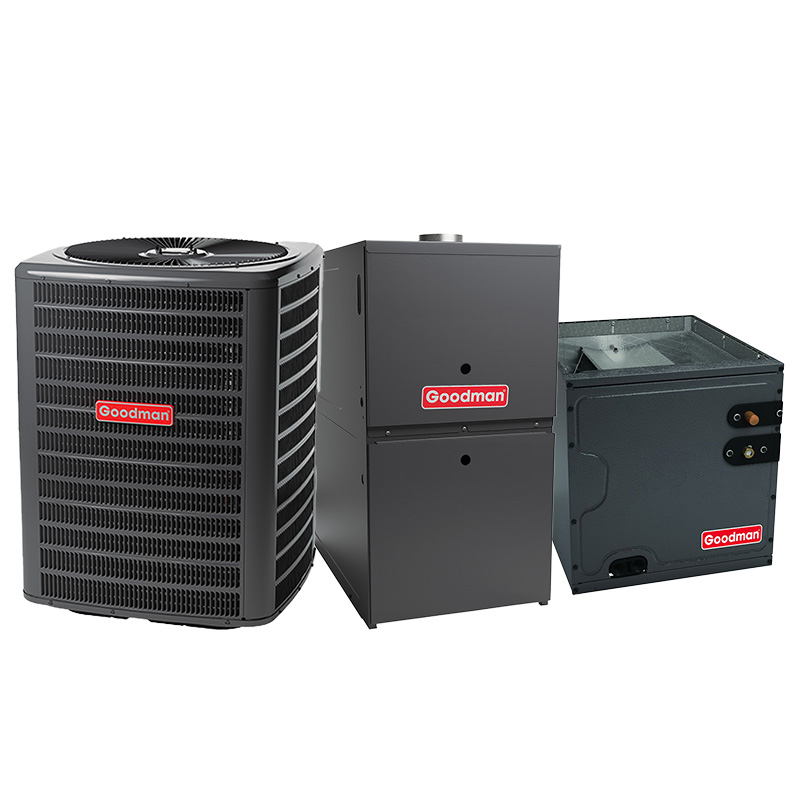
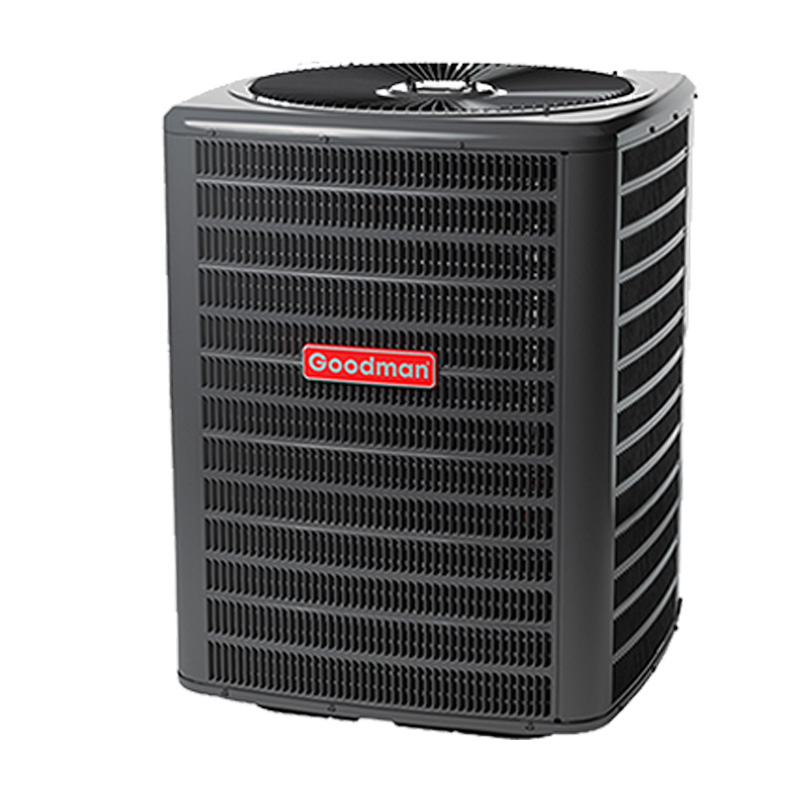
Goodman 4 Ton 13.8 SEER2 AC & Gas Furnace System – Two Stage Variable-Speed, 80000 BTU Gas Furnace, 80% AFUE, Upflow, R32
View on AC Direct see your lowest price →Check current price on AC Direct →
Key features
- Two-stage compressor reduces runtime at partial load, improving comfort and humidity control
- Variable-speed air handler minimizes temperature swings and operates quietly at low speed
- R-32 refrigerant with lower global warming potential than legacy R-410A
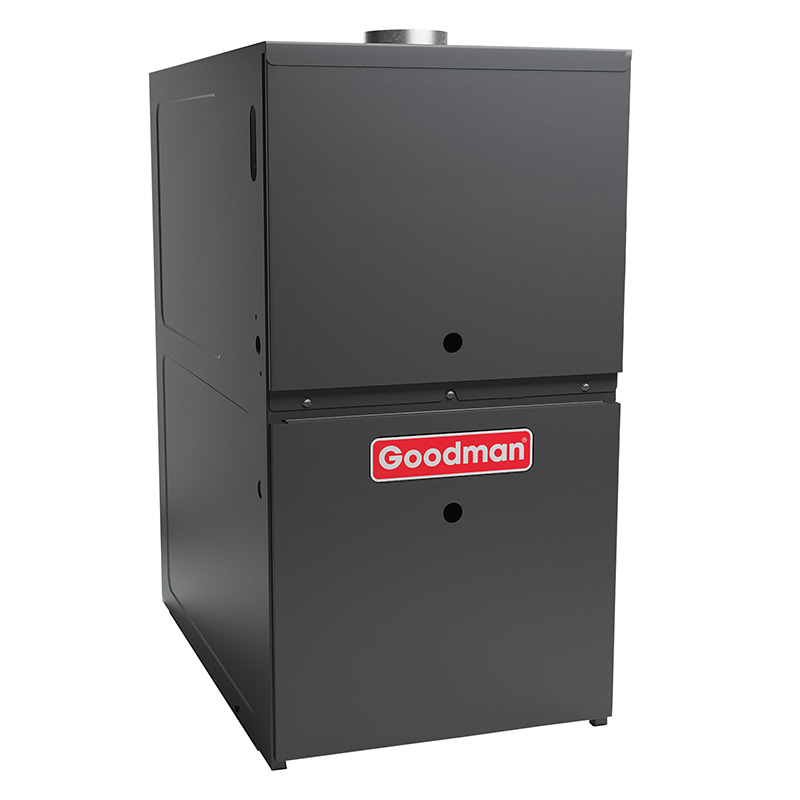
- 80,000 BTU upflow gas furnace, 80% AFUE, suitable for basement or closet installations with ductwork above
- 13.8 SEER2 efficiency rating meets federal minimum for most northern climate zones
- Goodman price point typically 15 to 25 percent below Trane, Lennox, and Carrier equivalents
About this system
The Goodman 4-ton 13.8 SEER2 system pairs a two-stage, variable-speed air conditioner with an 80,000 BTU upflow gas furnace running at 80% AFUE. The two-stage cooling compressor runs at a lower capacity on mild days and ramps up only when conditions demand it, which smooths out temperature swings and wrings a bit more efficiency out of each cycle compared to a single-stage unit. The variable-speed air handler adjusts airflow continuously, which also helps with humidity control in humid climates. R-32 refrigerant, the newer lower-global-warming-potential alternative to R-410A, is now the industry standard direction, so parts and service availability will only improve over time.
At 13.8 SEER2, this system sits right at the current federal minimum threshold for most northern U.S. climate zones and just below the 14.3 SEER2 minimum required in southern regions, so buyers in the Sun Belt should confirm local code compliance before purchasing. The 80% AFUE furnace is a mid-efficiency unit, meaning roughly 20 cents of every heating dollar exits through the flue. Homeowners in cold climates or those facing high gas prices will want to weigh whether a 96% AFUE condensing furnace makes more financial sense over a 15-year horizon. This system is best suited to moderate-climate installations, budget-conscious replacements, and rental or light-commercial properties where upfront cost is the primary driver.
This system offers a genuine cost-of-entry advantage over premium brands and the two-stage compressor is a real comfort upgrade over a basic single-stage replacement. The trade-off is a compressor life expectancy and owner satisfaction record that lag behind Trane, Carrier, and Lennox, and the 80% AFUE furnace will cost more to operate annually than a high-efficiency alternative. For buyers who prioritize upfront budget over long-term running costs, it is a workable choice, provided installation is performed by an experienced technician.
Overall score is the average of the five ratings above.
What we like
- Two-stage cooling provides noticeably better humidity management and fewer temperature swings than single-stage units
- Variable-speed blower reduces noise and improves airflow consistency throughout the home
- R-32 refrigerant is future-oriented and easier to service as R-410A is phased out
- Goodman pricing runs 15 to 25 percent below comparable premium-brand systems, a real dollar difference on a 4-ton install
- Upflow configuration is the most common residential furnace orientation, giving broad contractor familiarity
Trade-offs
- Compressor lifespan averages 10 to 14 years versus 15 to 20 years for premium brands, shortening the window before a major repair or replacement
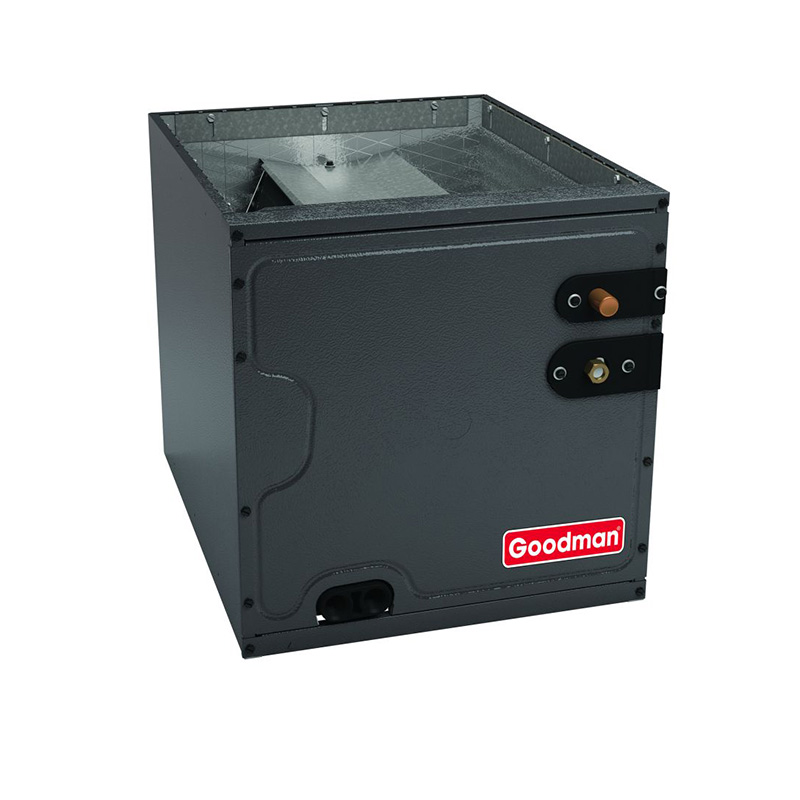
- Evaporator coil leaks are a documented recurring complaint among owners, and repairs can run into the thousands
- 80% AFUE means roughly 20% of fuel cost goes up the flue, a meaningful penalty in cold climates or where gas rates are high
- 13.8 SEER2 does not meet the 14.3 SEER2 minimum required in southern U.S. climate zones, limiting where this unit can legally be installed
What homeowners and pros say about Goodman
Homeowners who share experiences on ConsumerAffairs rate Goodman at roughly 2.5 out of 5, a score shaped heavily by people who sought out a review platform after a frustrating repair experience. The pattern that appears most often is not early failure but rather rising repair costs after roughly year seven, with capacitor replacements and evaporator coil issues showing up as the most cited culprits. Google dealer reviews tell a softer story, landing around 3.8 out of 5 across dealer locations, where affordability is the most frequently mentioned reason for choosing the brand. That gap between the two scores reflects both channel bias and a real divide between buyers who got a clean install and those who did not.
HVAC technicians are consistent on one point: Goodman’s outcome depends heavily on who installs it and how carefully the refrigerant charge is set. The documented first-year refrigerant leaks on some units are traced almost universally to installation error rather than factory defect. On the hardware side, the dual-run capacitor is widely acknowledged as the brand’s most common weak link, but it is also a quick, low-cost fix in the 300-to-600-dollar range. The more consequential concern is compressor longevity, which averages 10 to 14 years for this brand versus the 15-to-20-year window associated with Trane, Lennox, and Carrier. For this specific 4-ton two-stage system, the two-stage compressor adds genuine value over the entry-level Goodman lineup, but buyers should budget for at least one service event after year seven and choose their installing contractor as carefully as they choose the equipment itself.
Sources: ConsumerAffairs Goodman owner reviews, AHRI Directory of Certified Product Performance, U.S. DOE appliance and equipment efficiency standards, Goodman product specification sheets.
What it costs to run
At 13.8 SEER2, cooling this 4-ton system for a typical 1200-hour cooling season at the U.S. average electricity rate of $0.17/kWh works out to roughly $710 per year in cooling, about $21 less per year than a minimum-efficiency 13.4 SEER2 unit of the same size. Your real cost depends on your climate and local rate.
Method: (48,000 BTU/hr ÷ 13.8 SEER2) × 1200 hours ÷ 1000 × $0.17/kWh. Rate source: U.S. EIA average; cooling hours: moderate-climate estimate.
How it compares
| Brand | Comparable model | SEER2 | Stage | Price position |
|---|---|---|---|---|
| Goodman | 4-Ton 13.8 SEER2 Two-Stage Variable-Speed with 80,000 BTU 80% AFUE Upflow Furnace | 13.8 | Two-stage | Value pick |
| Carrier | Comfort Series (24ACC636A / 59SC5 furnace pairing) | 14.3 | Single-stage | Typically 15 to 25 percent more than the Goodman equivalent |
| Trane | XR14 / S8X1 furnace pairing | 14.3 | Single-stage | Typically 15 to 25 percent more than the Goodman equivalent |
| Lennox | Merit Series (14ACX / ML180 furnace pairing) | 14.3 | Single-stage | Typically 15 to 25 percent more than the Goodman equivalent |
Competitor rows are comparable single-stage units at similar efficiency; price is relative position, not a quote.
Questions about this system
Is 13.8 SEER2 legal to install in my state or region?
The 13.8 SEER2 rating meets federal minimum efficiency standards for most northern U.S. climate zones but falls below the 14.3 SEER2 minimum required in southern states including the Southeast and Southwest. Check your local utility and state energy codes before purchasing, and ask your installing contractor to confirm compliance for your specific ZIP code.
What does the two-stage compressor actually mean for day-to-day comfort?
A two-stage compressor runs at a lower output on mild days, cycling less frequently and running longer at reduced capacity. This removes more humidity from the air and reduces the hot-and-cold swings you get with a single-stage unit. On the hottest days it kicks into full capacity. It is a tangible comfort improvement over a basic single-stage replacement, though not as precise as a true variable-capacity compressor.
What are the most common repair issues owners report on Goodman systems?
The most frequently reported failure is the dual-run capacitor, which typically costs 300 to 600 dollars to replace and is considered a routine repair. Evaporator coil leaks are a more serious documented issue and can run into the thousands depending on whether the coil needs to be replaced. Compressor failures become more likely after the 10-to-14-year mark, which is shorter than the 15-to-20-year window seen on premium brands. A minority of owners also report refrigerant leaks within the first year, which is usually an installation or charge issue rather than a product defect.
Should I upgrade to a 96% AFUE furnace instead of this 80% AFUE unit?
If your home is in a climate with long, cold winters or if local natural gas rates are high, a 96% AFUE furnace can recover the price premium through fuel savings within a few years. In mild climates or for short-term ownership, the 80% AFUE unit may make more financial sense. A load calculation and a simple payback estimate from your contractor will give you a clear answer for your specific situation.
Does Goodman's warranty require professional registration, and what does it cover?
Yes, Goodman requires the system to be registered by a licensed contractor within a set window after installation to receive the full warranty term, which typically extends to 10 years on parts for registered units. Without registration, coverage drops to a shorter base period. The warranty covers parts but not labor, so any service call after the free-labor period ends will carry its own technician cost. Confirm the current registration terms with your dealer at the time of purchase.
Specifications
| Cooling capacity | 4 Ton |
| Efficiency | 13.8 SEER2 |
| Furnace output | 80000 BTU |
| Furnace efficiency | 80% AFUE |
| Configuration | Upflow |
| Refrigerant | R-32 |