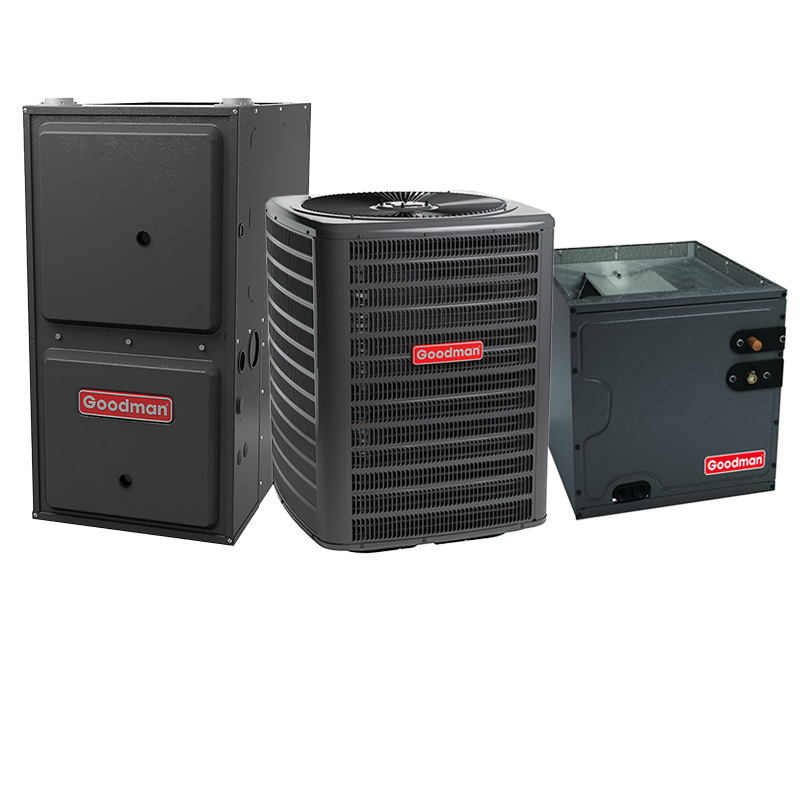
Goodman 4 Ton 14.3 SEER2 R32 AC System with 80,000 BTU 96% AFUE Gas Furnace – California & Colorado Ultra Low NOx, Upflow, Multi-Speed ECM
View on AC Direct see your lowest price →Check current price on AC Direct →
Key features
- 4-ton cooling capacity with 14.3 SEER2 efficiency, meeting current federal minimums
- 96% AFUE gas furnace rated for California and Colorado Ultra Low NOx compliance
- R-32 refrigerant with lower global warming potential than R-410A
- Multi-speed ECM blower motor for improved airflow control and reduced fan energy use
- Upflow configuration for installations with ductwork above the air handler
- 80,000 BTU heating output suited to larger homes in mixed or cold climates
About this system
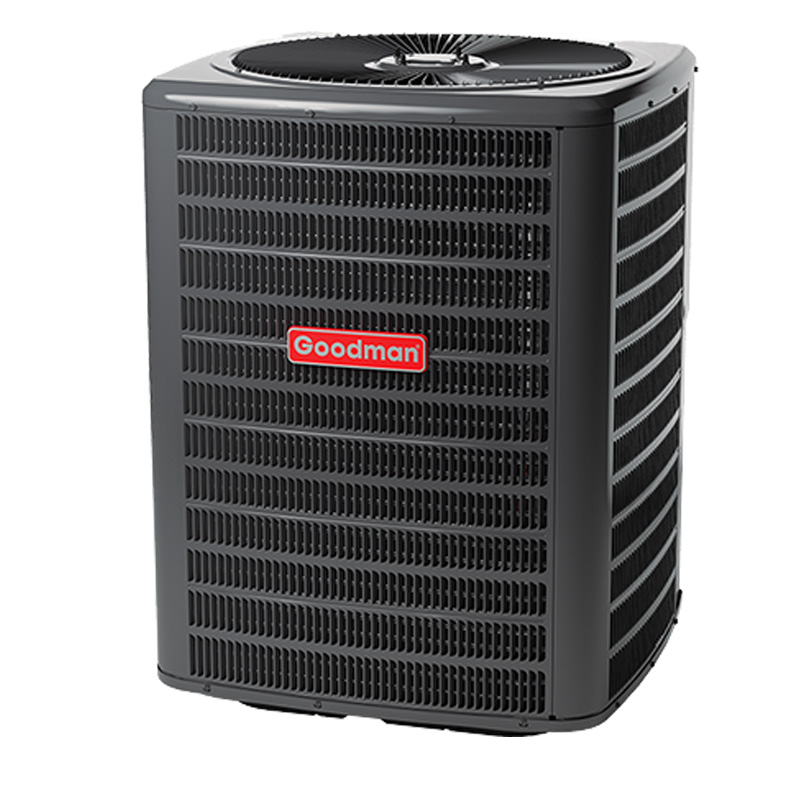
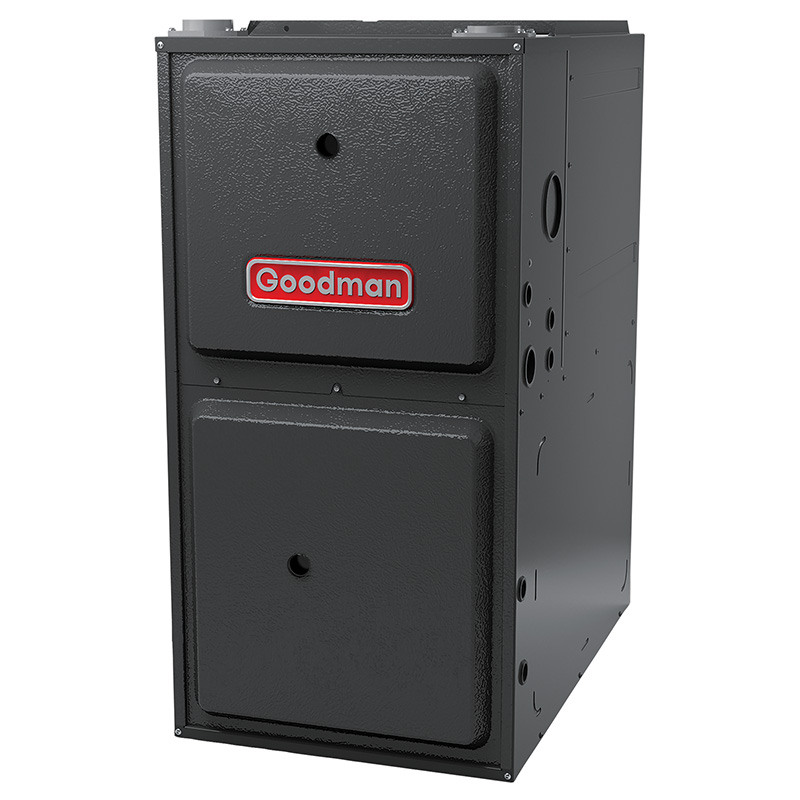
This Goodman 4-ton, 14.3 SEER2 system pairs a single-stage R-32 air conditioner with an 80,000 BTU, 96% AFUE upflow gas furnace built to meet California and Colorado Ultra Low NOx emissions standards. If you live in either of those states, NOx compliance is not optional, and this system is engineered to clear that bar without requiring an add-on combustion kit or variance. The 96% AFUE rating means roughly 96 cents of every fuel dollar becomes usable heat, which puts this squarely in the high-efficiency tier for gas furnaces and will show up as a measurable reduction in monthly gas costs compared to an older 80% unit.
The 14.3 SEER2 efficiency sits at the current federal minimum threshold for new equipment, so it is not a high-efficiency AC by today’s standards, but it is fully compliant and a significant step up from the aging R-22 or low-SEER R-410A systems it typically replaces. R-32 refrigerant carries a lower global warming potential than R-410A and is increasingly the industry standard for new equipment. The multi-speed ECM blower motor improves comfort distribution and humidity control compared to single-speed PSC motors, and it consumes less electricity during fan-only or low-demand operation. This system suits homeowners in California or Colorado who want a code-compliant replacement at a value price, have an upflow duct configuration, and are comfortable knowing that long-term reliability depends heavily on who installs it.
This system delivers solid value for budget-conscious homeowners in California or Colorado who need a NOx-compliant replacement without premium-brand pricing. The 96% AFUE furnace is a genuine efficiency highlight, though the 14.3 SEER2 AC is entry-level on the cooling side and long-term durability will depend more on installation quality than on the brand name on the cabinet.
Overall score is the average of the five ratings above.
What we like
- 96% AFUE furnace is a meaningful efficiency upgrade over standard 80% units
- Factory-built Ultra Low NOx compliance avoids costly field modifications in CA and CO
- R-32 refrigerant is more environmentally friendly than R-410A and increasingly well-supported by technicians
- Multi-speed ECM motor improves comfort and lowers fan electricity use versus basic single-speed motors
- Priced roughly 15 to 25 percent below comparable Trane, Lennox, and Carrier systems, reducing upfront cost
Trade-offs
- 14.3 SEER2 is the federal minimum for cooling efficiency; higher SEER2 options exist at modest additional cost
- Single-stage compressor cycles fully on or off, which can mean wider temperature swings and less precise humidity control than two-stage or variable systems
- Goodman's documented failure modes include dual-run capacitor failures, evaporator coil leaks, and compressors that average 10 to 14 years versus 15 to 20 for premium brands
- A minority of owners report refrigerant leaks in the first year, typically traced to installation or initial charge issues rather than a factory defect
What homeowners and pros say about Goodman
Homeowners who shop Goodman tend to land in one of two camps. Those who had a smooth installation and routine maintenance report years of dependable service and consistently point to the lower upfront cost as the reason they chose the brand. That view aligns with Google dealer review scores that average around 3.8 out of 5 across hundreds of reviews per location, where affordability is the single most common point of praise. On the other end, ConsumerAffairs aggregates a complaint-skewed audience and shows a score of roughly 2.5 out of 5, with the recurring theme being repair costs that begin climbing after about year seven. That gap between the two scores is not a contradiction. It largely reflects the fact that Goodman’s performance is unusually sensitive to installation quality, and owners who had a less careful setup or deferred maintenance are the ones most likely to seek out a review forum.
HVAC technicians tend to be candid about where Goodman equipment is vulnerable on this type of system. Dual-run capacitors are the most commonly cited failure point, but technicians also note that they are a quick, low-cost fix and not a reason to avoid the brand. More consequential are evaporator coil leaks, which show up in a meaningful share of owner accounts, and compressor longevity that averages 10 to 14 years rather than the 15 to 20 years typical of premium brands. A smaller number of early refrigerant leaks are documented as well, and most technicians attribute those to charging errors at installation rather than a factory defect. The consistent professional advice is that Goodman at this price point is a reasonable choice as long as the installing contractor is experienced and the system receives annual maintenance. Cut corners on either of those and the value proposition erodes quickly.
Sources: ConsumerAffairs Goodman owner reviews, AHRI Directory of Certified Product Performance, U.S. DOE appliance and equipment efficiency standards, Goodman product specification sheets.
What it costs to run
At 14.3 SEER2, cooling this 4-ton system for a typical 1200-hour cooling season at the U.S. average electricity rate of $0.17/kWh works out to roughly $685 per year in cooling, about $46 less per year than a minimum-efficiency 13.4 SEER2 unit of the same size. Your real cost depends on your climate and local rate.
Method: (48,000 BTU/hr ÷ 14.3 SEER2) × 1200 hours ÷ 1000 × $0.17/kWh. Rate source: U.S. EIA average; cooling hours: moderate-climate estimate.
How it compares
| Brand | Comparable model | SEER2 | Stage | Price position |
|---|---|---|---|---|
| Goodman | This system (4-ton 14.3 SEER2 + 96% AFUE Ultra Low NOx) | 14.3 | Single-stage | Value pick |
| Carrier | Comfort 14 Series (24ACC4) | 14.3 | Single-stage | Typically 15 to 25 percent more than this Goodman system |
| Trane | XR14c Series | 14.3 | Single-stage | Typically 15 to 25 percent more than this Goodman system |
| Lennox | Merit 14ACX Series | 14.3 | Single-stage | Typically 15 to 25 percent more than this Goodman system |
Competitor rows are comparable single-stage units at similar efficiency; price is relative position, not a quote.
Questions about this system
Does this system actually meet California and Colorado Ultra Low NOx requirements out of the box, or do I need additional parts?
Yes, this unit is factory-configured for Ultra Low NOx compliance in both states, so no field combustion kit or variance is required. Confirm with your installing contractor that local jurisdiction requirements have not changed, but the unit itself is built to meet those standards.
Why is R-32 being used instead of R-410A, and will it be harder to service?
R-32 has a significantly lower global warming potential than R-410A and is the direction the industry is moving under updated EPA regulations. Most licensed HVAC technicians are already certified to handle R-32, and refrigerant availability is growing, so servicing should not be more difficult than with R-410A equipment.
What does the multi-speed ECM blower actually do differently compared to a standard motor?
An ECM motor can run at lower speeds during moderate conditions rather than only at full blast, which improves temperature consistency between rooms, helps wring more moisture out of the air in humid weather, and uses less electricity during fan-only operation. It is not variable-speed in the way premium systems are, but it is a step up from a basic single-speed PSC motor.
Goodman gets mixed reviews online. What are the most common real-world problems with this type of system?
The most frequently documented failure points are dual-run capacitors (a relatively inexpensive fix, typically in the 300 to 600 dollar range), evaporator coil leaks reported by a meaningful share of owners, and compressors that tend to reach end of life in the 10-to-14-year range rather than the 15-to-20-year range seen with premium brands. A smaller number of owners report refrigerant leaks in the first year, which are usually tied to installation rather than a factory issue.
Is this system compatible with a smart thermostat, and does the ECM motor require anything special for controls?
The system uses standard low-voltage control wiring and is compatible with most 24V smart thermostats, including Ecobee, Nest, and similar brands. Check that your chosen thermostat supports multi-speed or variable-speed furnace control if you want to take full advantage of the ECM blower's staging; your installer can confirm the wiring configuration during commissioning.
Specifications
| Cooling capacity | 4 Ton |
| Efficiency | 14.3 SEER2 |
| Furnace output | 80,000 BTU |
| Furnace efficiency | 96% AFUE |
| Configuration | Upflow |
| Refrigerant | R-32 |