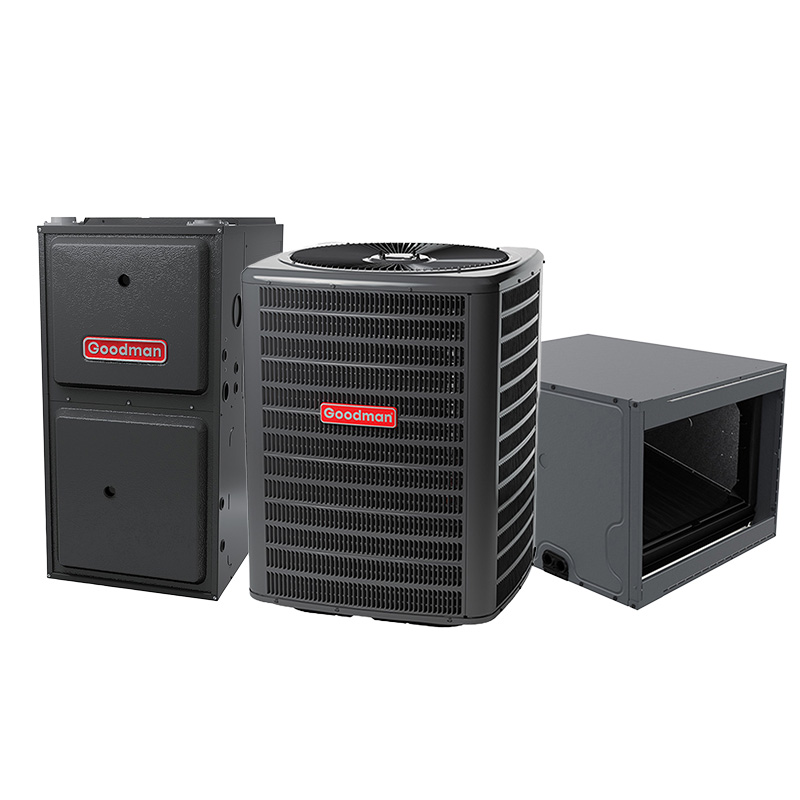
Goodman 4 Ton 14.3 SEER2 AC & Gas Furnace System – Two Stage Variable-Speed, 100000 BTU Gas Furnace, 96% AFUE, Horizontal, R32
View on AC Direct see your lowest price →Check current price on AC Direct →
Key features
- Two-stage 4-ton compressor reduces short-cycling and improves humidity control
- 96% AFUE high-efficiency gas furnace with variable-speed blower motor
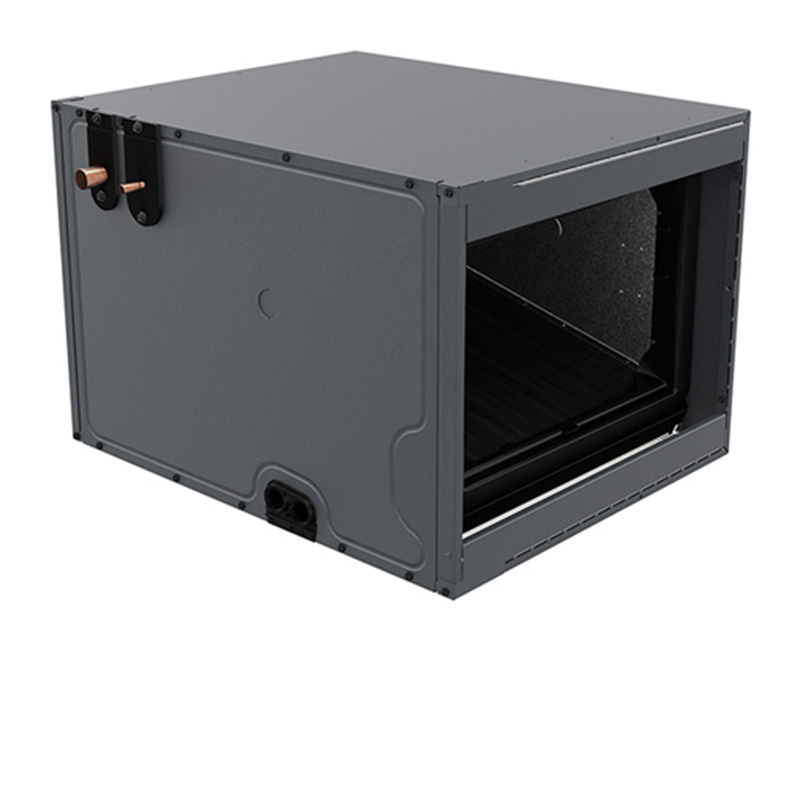
- Horizontal configuration for attic, crawlspace, or side-load installations
- R-32 refrigerant with lower global warming potential than R-410A
- 100,000 BTU heating capacity suited to larger or colder-climate homes
- 14.3 SEER2 efficiency rating meets current federal minimums for most U.S. regions
About this system
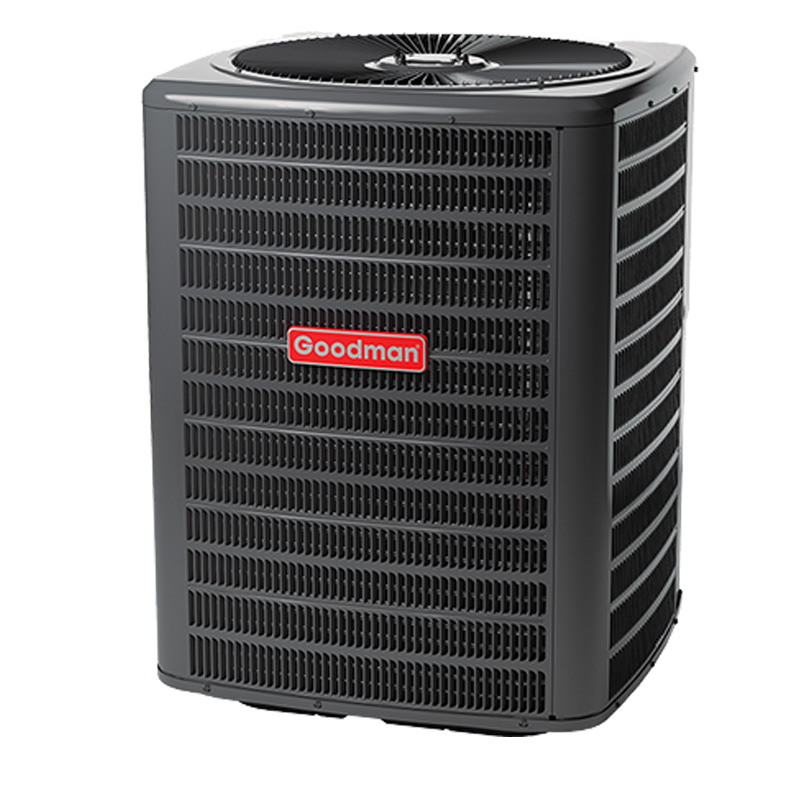
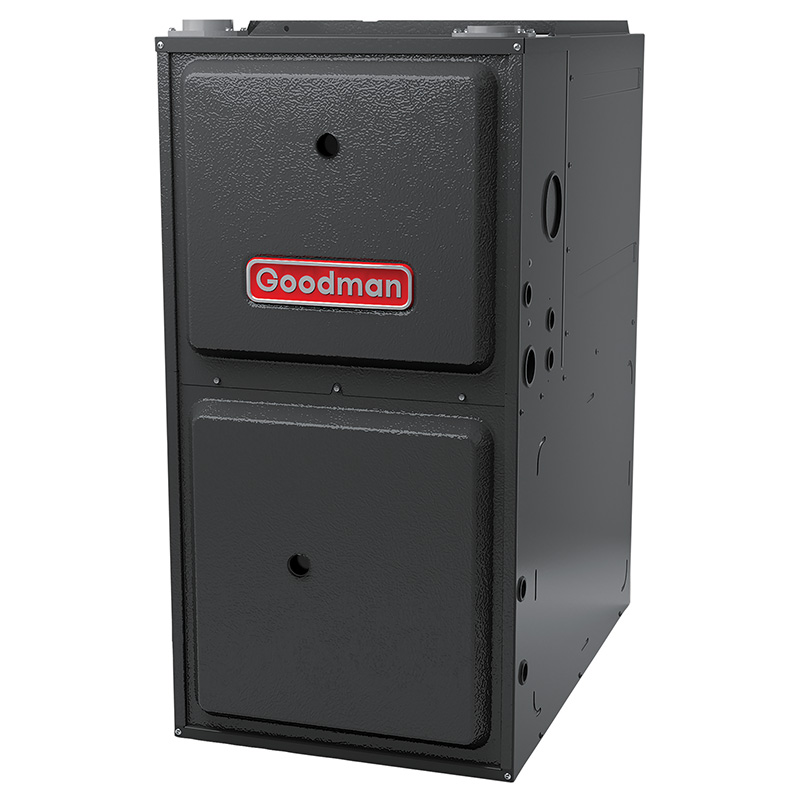
The Goodman GLXS4BA4810 pairs a 4-ton, 14.3 SEER2 two-stage air conditioner with a 100,000 BTU, 96% AFUE variable-speed gas furnace configured for horizontal installation. That horizontal layout makes it the right choice for attic or crawlspace applications where a vertical unit simply will not fit, and the two-stage compressor means the system spends most of its runtime at the lower stage, reducing short-cycling, cutting humidity more effectively, and easing the load on the equipment compared to a single-stage alternative.
The 96% AFUE rating puts this furnace in the high-efficiency tier, meaning only about 4% of combustion heat escapes through the flue. Paired with a variable-speed air handler, that translates to quieter, steadier airflow and better temperature consistency room to room. R-32 refrigerant has a lower global warming potential than the R-410A it replaces and is increasingly the industry standard going forward, though it does require technicians who are rated to handle it. At 14.3 SEER2, this system clears the federal minimums for most U.S. regions but sits at the lower end of the efficiency ladder, so owners in climates with long, hot cooling seasons or high electricity rates should weigh whether a higher SEER2 unit would pay back the premium over time.
This system is realistically sized for homes in the 2,000 to 2,400 square foot range, though proper Manual J load calculations by your installer should always confirm sizing. Because Goodman prices this equipment 15 to 25 percent below comparable Trane, Lennox, and Carrier systems, it is a sensible choice for budget-conscious buyers who are willing to invest in a quality installation and keep up with routine maintenance to get the most out of the equipment.
The GLXS4BA4810 delivers a capable two-stage, high-AFUE system at a price point well below premium brands, making it a practical choice for homeowners who prioritize upfront savings and are realistic about mid-cycle maintenance costs. The horizontal configuration fills a specific need that many competing packages do not address. Long-term ownership costs depend heavily on install quality and willingness to budget for repairs after the seven-year mark.
Overall score is the average of the five ratings above.
What we like
- Priced 15 to 25 percent below comparable Trane, Lennox, and Carrier equipment
- 96% AFUE furnace meaningfully reduces heating fuel costs versus 80% AFUE alternatives
- Two-stage compressor improves comfort and humidity removal compared to single-stage units
- Horizontal configuration serves attic and crawlspace installs that vertical systems cannot
- R-32 refrigerant positions the system for compliance with evolving refrigerant regulations
Trade-offs
- Dual-run capacitors are the most commonly documented failure point, typically requiring a 300 to 600 dollar repair
- Evaporator coil leaks appear in a meaningful share of owner reports and can be a more costly fix
- Compressor lifespan averages 10 to 14 years, shorter than the 15 to 20 years reported for premium brands
- A minority of owners report refrigerant leaks within the first year, most often traced to installation or initial charge issues
What homeowners and pros say about Goodman
Goodman’s reputation among homeowners is genuinely split, and the numbers reflect that. On ConsumerAffairs, Goodman scores around 2.5 out of 5, though that platform skews toward owners who have experienced problems rather than satisfied ones. The recurring theme in those reviews is that repair costs begin to climb after roughly year seven, with capacitor failures and evaporator coil leaks appearing most frequently in the complaint record. On Google dealer reviews, where the audience is broader, Goodman averages closer to 3.8 out of 5, and the most common praise in those reviews is straightforward: the price made the decision easier. Those two data points together tell you something honest about what the brand is and is not.
HVAC technicians tend to be pragmatic about Goodman. Many will install it without hesitation for budget-conscious customers while being upfront that the dual-run capacitor is the component most likely to call them back, usually a straightforward repair but one that shows up more often than on premium equipment. Compressor longevity is another honest trade-off they raise: Goodman compressors averaging 10 to 14 years versus the 15 to 20 years associated with Trane or Carrier is a real difference when you are planning around a 15-year ownership horizon. Technicians consistently say that install quality is the single biggest factor in how long any Goodman system performs, and the minority of owners who report refrigerant leaks in the first year almost always trace it back to an installation or initial charge issue rather than a defective component. For the GLXS4BA4810 specifically, the horizontal configuration adds a layer of complexity that makes that point even more relevant.
Sources: ConsumerAffairs Goodman owner reviews, AHRI Directory of Certified Product Performance, U.S. DOE appliance and equipment efficiency standards, Goodman product specification sheets.
What it costs to run
At 14.3 SEER2, cooling this 4-ton system for a typical 1200-hour cooling season at the U.S. average electricity rate of $0.17/kWh works out to roughly $685 per year in cooling, about $46 less per year than a minimum-efficiency 13.4 SEER2 unit of the same size. Your real cost depends on your climate and local rate.
Method: (48,000 BTU/hr ÷ 14.3 SEER2) × 1200 hours ÷ 1000 × $0.17/kWh. Rate source: U.S. EIA average; cooling hours: moderate-climate estimate.
How it compares
| Brand | Comparable model | SEER2 | Stage | Price position |
|---|---|---|---|---|
| Goodman | GLXS4BA4810 (this system) | 14.3 | Two-stage | Value pick |
| Carrier | Performance 14 (24ACC4) with 58MVC furnace | 14.3 | Single-stage | Typically 15 to 25 percent more than this system |
| Trane | XR14c with S9X2 furnace | 14.3 | Single-stage | Typically 15 to 25 percent more than this system |
| Lennox | Merit 14ACX with ML196E furnace | 14.3 | Single-stage | Typically 15 to 25 percent more than this system |
Competitor rows are comparable single-stage units at similar efficiency; price is relative position, not a quote.
Questions about this system
Why does this system use a horizontal configuration and can it be installed vertically?
The GLXS4BA4810 is specifically engineered for horizontal airflow, which is required in attic or crawlspace installations where the unit lies on its side. It is not rated for vertical installation, so if your application requires an upflow or downflow configuration you would need a different model from the Goodman lineup.
My installer mentioned R-32 refrigerant. Is it harder or more expensive to service than R-410A?
R-32 requires technicians who hold the proper EPA Section 608 certification and are familiar with its slightly higher operating pressures compared to R-410A. It is mildly flammable, which means handling procedures differ. Service costs are comparable in most markets, but you should confirm your local technician is equipped to work with R-32 before committing.
What is the most common repair I should budget for with this system?
Based on documented owner experience with Goodman equipment, dual-run capacitor failure is the most frequently reported issue and typically costs 300 to 600 dollars to repair. Evaporator coil leaks are the next most commonly cited problem and can run significantly higher depending on labor rates and refrigerant costs in your area.
Is 14.3 SEER2 going to result in noticeably higher electric bills compared to a higher-efficiency unit?
At 14.3 SEER2 this system meets current federal minimums but is not at the top of the efficiency range. Homeowners in climates with long cooling seasons or high electricity rates, say above 0.15 dollars per kWh, will see a more meaningful difference when comparing it to 17 or 18 SEER2 alternatives. In moderate climates with shorter cooling seasons, the payback period on a higher-efficiency unit stretches out and the upfront savings from this system become more attractive.
Does Goodman's warranty cover parts if my contractor makes a mistake during installation?
Goodman's parts warranty typically requires registration within 60 days of installation for the full term, and coverage applies to manufacturing defects rather than damage caused by improper installation. Failures traced to incorrect refrigerant charge, improper electrical connections, or sizing errors are generally not covered, which is why choosing a qualified, licensed installer matters significantly with this brand.
Specifications
| Cooling capacity | 4 Ton |
| Efficiency | 14.3 SEER2 |
| Furnace output | 100000 BTU |
| Furnace efficiency | 96% AFUE |
| Configuration | Horizontal |
| Refrigerant | R-32 |
| Model | GLXS4BA4810 |