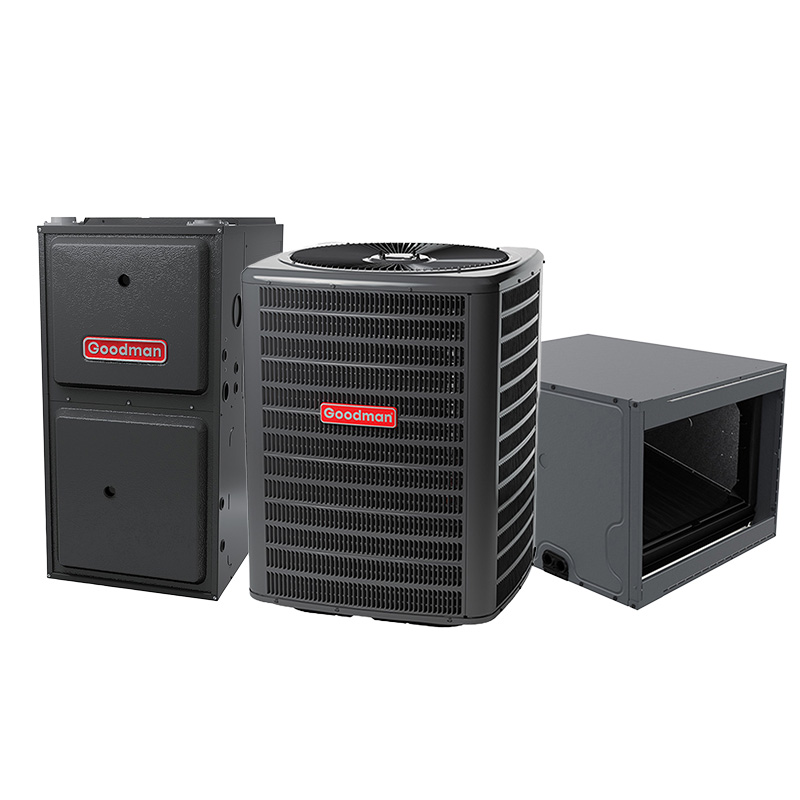
Goodman 4 Ton 14.3 SEER2 AC & Gas Furnace System – Two Stage Variable-Speed, 120000 BTU Gas Furnace, 96% AFUE, Horizontal, R32
View on AC Direct see your lowest price →Check current price on AC Direct →
Key features
- 4-ton two-stage compressor for part-load efficiency and improved dehumidification
- 14.3 SEER2 cooling efficiency, meeting 2023 federal minimum standards
- 120,000 BTU, 96% AFUE gas furnace for near-maximum fuel-to-heat conversion
- Variable-speed ECM air handler for quiet, consistent airflow and humidity control
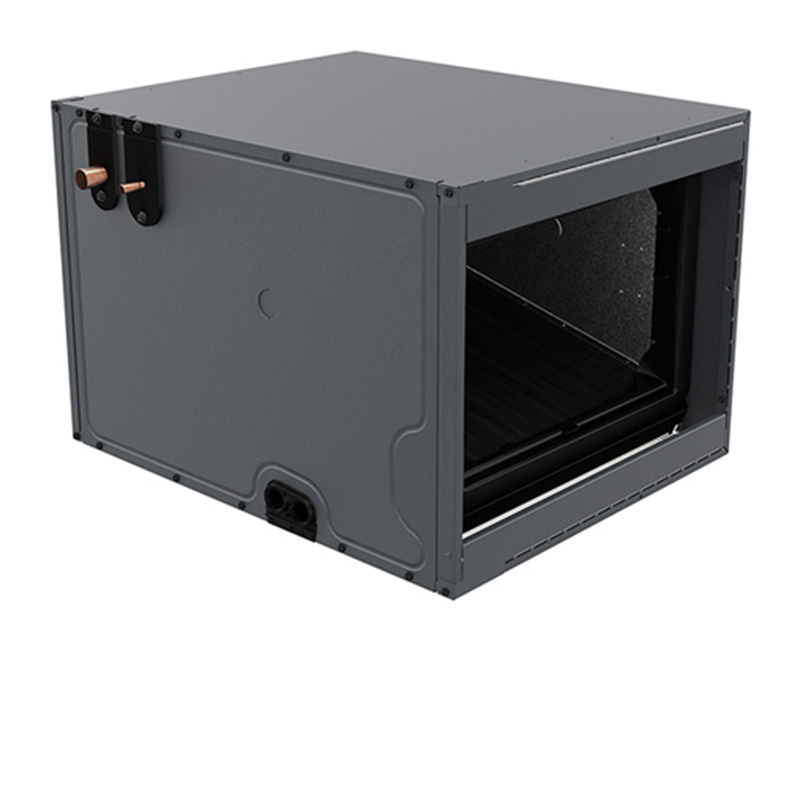
- Horizontal cabinet configuration for attic, crawlspace, or side-discharge installs
- R-32 refrigerant with lower global-warming potential than R-410A
About this system
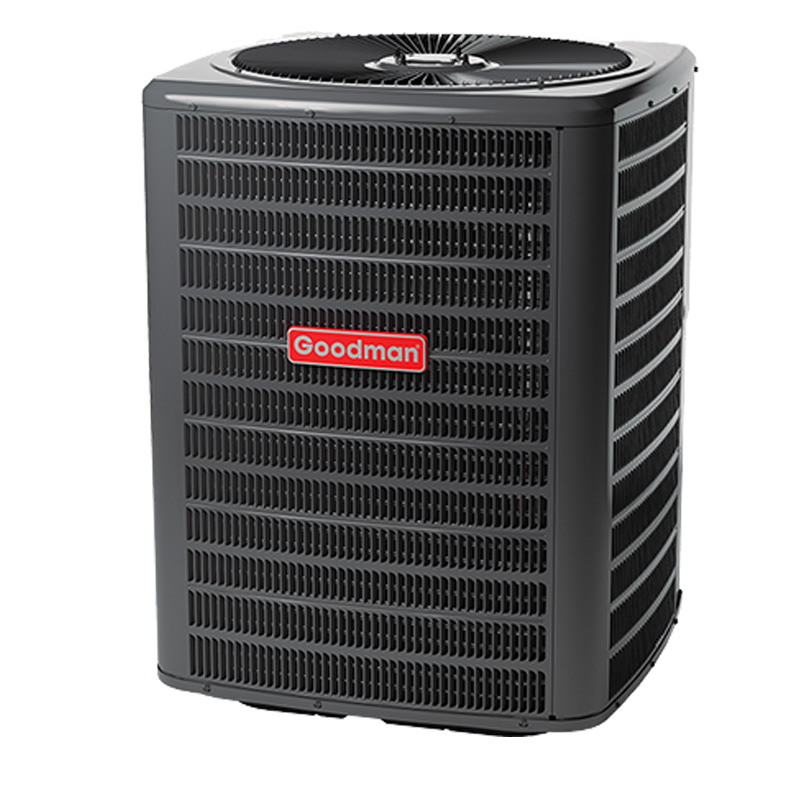
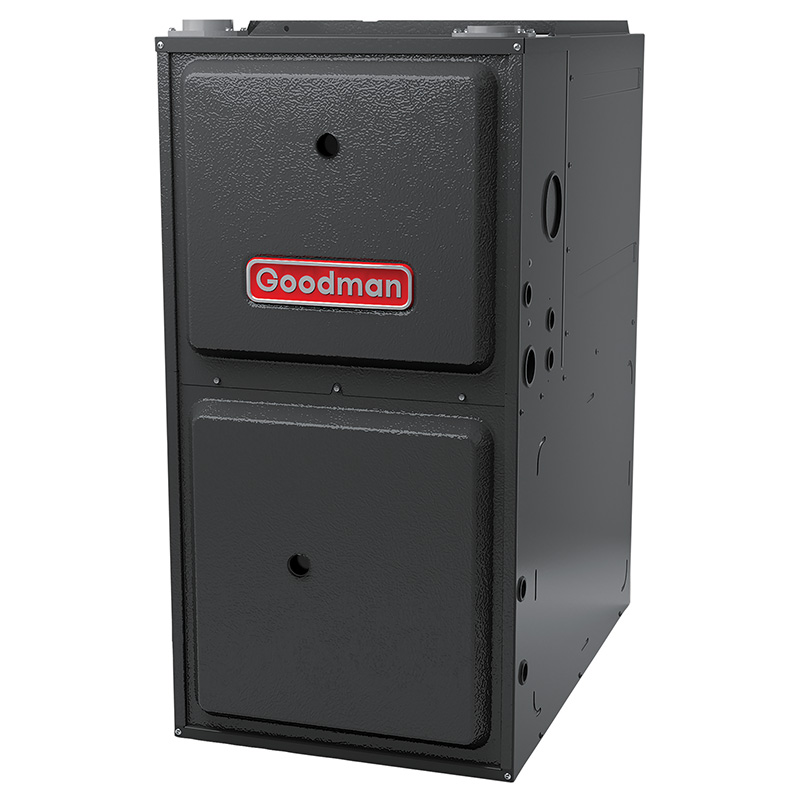
The Goodman GLXS4BA4810 pairs a 4-ton, 14.3 SEER2 two-stage air conditioner with a 120,000 BTU, 96% AFUE variable-speed gas furnace configured for horizontal installation. That combination makes it a practical choice for homes with attic or crawlspace air handlers where vertical cabinet orientation is not an option. The two-stage compressor runs at a lower capacity on most days, trimming humidity and evening out temperatures before stepping up to full output only when the heat load demands it. The variable-speed air handler amplifies that benefit by moving air slowly and quietly most of the time, which also helps the coil pull more moisture out of the air on humid days.
At 96% AFUE, nearly all the fuel you pay for becomes heat, which is about as efficient as a gas furnace gets without a condensing second heat exchanger. R-32 refrigerant carries a lower global-warming potential than the R-410A it replaces and operates at slightly different pressures, so any technician servicing this system will need R-32 certification and compatible recovery equipment. The 14.3 SEER2 efficiency rating meets but does not exceed the 2023 federal minimums for most U.S. climate regions, so buyers in mild climates or those chasing lower utility bills over a long payback period may want to price a higher-SEER2 option before committing.
This system suits a mid-size to larger home, roughly 2,000 to 2,800 square feet depending on local climate and insulation, where a horizontal configuration is required and where the priority is a capable, two-stage system at a price meaningfully below Carrier, Trane, or Lennox equivalents. It is not aimed at buyers who want the longest possible compressor life on record or the fewest service calls over 15-plus years.
The GLXS4BA4810 delivers genuinely capable two-stage cooling and high-efficiency gas heat at a price that typically undercuts comparable systems from premium brands by 15 to 25 percent. The trade-off is a brand track record that includes documented capacitor failures, evaporator coil leaks, and compressor longevity that trails the industry leaders. For budget-conscious buyers who hire an experienced installer and stay current on maintenance, it represents reasonable value; for buyers prioritizing the lowest lifetime cost of ownership, the reliability gap with premium brands is worth pricing out.
Overall score is the average of the five ratings above.
What we like
- Two-stage compressor improves comfort and humidity control versus single-stage units
- 96% AFUE furnace is among the most fuel-efficient gas heating options available
- Variable-speed ECM blower reduces operating noise and energy use at part load
- R-32 refrigerant lowers environmental impact compared to R-410A systems
- Purchase price is typically 15 to 25 percent below equivalent Carrier, Trane, or Lennox systems
Trade-offs
- Dual-run capacitors are the most commonly reported failure, typically occurring after a few years of use
- Evaporator coil leaks appear in a meaningful share of owner reviews, a potential repair cost in later years
- Compressor lifespan averages 10 to 14 years, roughly three to five years shorter than premium-brand expectations
- 14.3 SEER2 is entry-level efficiency; utility savings over the system's life will be modest compared to higher-SEER2 alternatives
What homeowners and pros say about Goodman
Goodman draws consistent praise for one thing: price. Across Google dealer reviews, which average around 3.8 out of 5 across several hundred reviews per location, affordability is the most repeated point of satisfaction. Buyers who get a clean install from a skilled contractor often report years of trouble-free operation, and those owners tend to feel they came out ahead financially. The picture on ConsumerAffairs is harder, with ratings sitting around 2.5 out of 5, and the recurring story there is repair costs that start climbing after roughly year seven. Those reviewers are a self-selected group of frustrated owners, so the score overstates the failure rate, but the pattern of what breaks is consistent enough to take seriously.
HVAC technicians are specific about what tends to go wrong with Goodman equipment. Dual-run capacitors are the most commonly cited failure point on the AC side, usually a relatively low-cost repair but one that comes up more often than on premium-brand equipment. Evaporator coil leaks show up in a meaningful share of owner accounts, and compressors on Goodman systems tend to average 10 to 14 years in the field, compared to 15 to 20 years that premium brands typically achieve. A minority of first-year refrigerant leak reports also appear in owner reviews, almost always traced back to install or initial charge issues rather than a factory defect. For this horizontal two-stage system specifically, technicians consistently point out that the quality of the installation matters more than the brand name on the cabinet, and that a well-commissioned Goodman will consistently outperform a poorly installed Carrier or Trane.
Sources: ConsumerAffairs Goodman owner reviews, AHRI Directory of Certified Product Performance, U.S. DOE appliance and equipment efficiency standards, Goodman product specification sheets.
What it costs to run
At 14.3 SEER2, cooling this 4-ton system for a typical 1200-hour cooling season at the U.S. average electricity rate of $0.17/kWh works out to roughly $685 per year in cooling, about $46 less per year than a minimum-efficiency 13.4 SEER2 unit of the same size. Your real cost depends on your climate and local rate.
Method: (48,000 BTU/hr ÷ 14.3 SEER2) × 1200 hours ÷ 1000 × $0.17/kWh. Rate source: U.S. EIA average; cooling hours: moderate-climate estimate.
How it compares
| Brand | Comparable model | SEER2 | Stage | Price position |
|---|---|---|---|---|
| Goodman | GLXS4BA4810 | 14.3 | Two-stage | Value pick |
| Carrier | Comfort 14 (24ACC4) series | 14.3 | Single-stage | Typically 15 to 25 percent more than Goodman |
| Trane | XR14c series | 14.3 | Single-stage | Typically 15 to 25 percent more than Goodman |
| Lennox | Merit ML14XC1 series | 14.3 | Single-stage | Typically 15 to 25 percent more than Goodman |
Competitor rows are comparable single-stage units at similar efficiency; price is relative position, not a quote.
Questions about this system
What does the horizontal configuration actually mean, and can this system be installed vertically?
Horizontal configuration means the air handler cabinet is designed to lie on its side, with airflow entering and exiting horizontally. This is common in attic or crawlspace installs where there is not enough vertical clearance. This specific model is built for horizontal orientation only and should not be forced into a vertical application without confirming compatibility with your installer.
Do I need a certified technician to service R-32 refrigerant, and will it be easy to find one?
Yes. R-32 requires technicians with specific safety training and compatible recovery equipment because it is mildly flammable, unlike R-410A. R-32 service capability is spreading quickly as the industry transitions away from R-410A, but you should confirm your local HVAC contractors are equipped before purchasing, especially in smaller markets.
What is the warranty on this Goodman system, and are there any registration requirements?
Goodman typically offers a 10-year parts warranty when the system is registered online within a set window after installation, and a limited lifetime heat exchanger warranty on qualifying furnaces. Registration requirements and specific terms can vary by model, so confirm the exact coverage for the GLXS4BA4810 with your dealer before purchase and register promptly after install.
How often do the dual-run capacitors on Goodman systems actually fail, and what does it cost to fix?
Capacitor failure is the most frequently reported repair issue in owner reviews, with many units seeing a failure somewhere in the first seven to ten years. The repair is generally straightforward and inexpensive, typically in the 300 to 600 dollar range for parts and labor, but it does mean at least one service call you should budget for over the system's life.
Is 120,000 BTU the right furnace size for my home, or could I be getting a mis-matched system?
Furnace sizing should be confirmed through a Manual J load calculation by your installer, not assumed from square footage alone. A 120,000 BTU furnace is on the larger end of residential equipment and can cause short-cycling and efficiency losses if the heat load does not warrant it. Ask your contractor to show you the load calculation before accepting this configuration.
Specifications
| Cooling capacity | 4 Ton |
| Efficiency | 14.3 SEER2 |
| Furnace output | 120000 BTU |
| Furnace efficiency | 96% AFUE |
| Configuration | Horizontal |
| Refrigerant | R-32 |
| Model | GLXS4BA4810 |