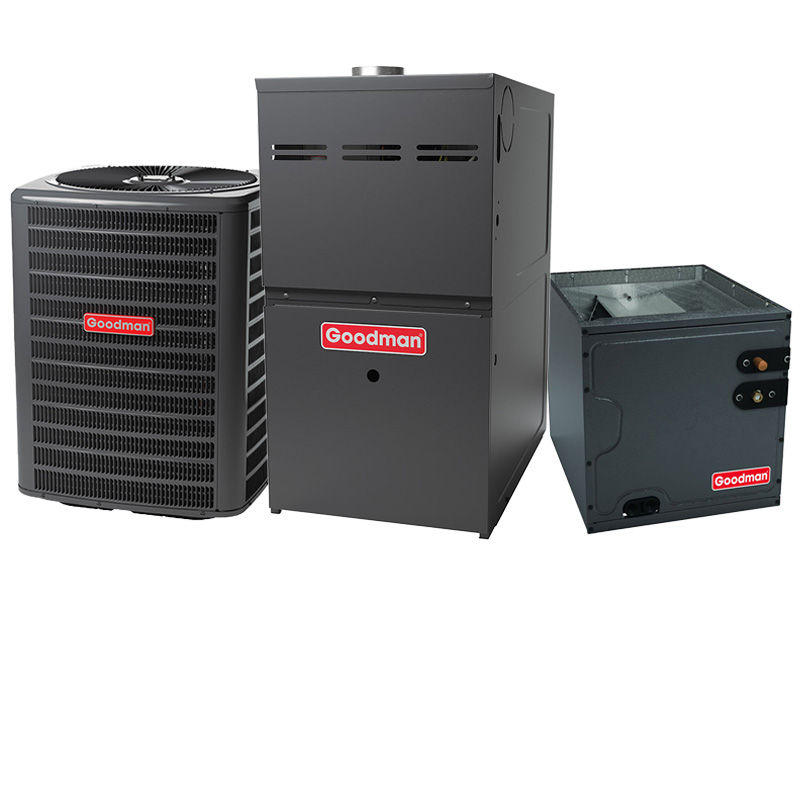
Goodman 4 Ton 14.5 SEER2 100000 BTU 80% AFUE Multi-Speed ECM Gas Furnace System – Upflow | R32
View on AC Direct see your lowest price →Check current price on AC Direct →
Key features
- 4-ton cooling capacity with 14.5 SEER2 efficiency rating
- 100,000 BTU gas furnace at 80% AFUE standard efficiency
- Multi-speed ECM blower motor reduces electricity use and improves dehumidification
- R-32 refrigerant with lower global-warming potential than R-410A
- Upflow configuration for basement or ground-level closet installations with overhead ducts
- Factory-matched system designed for straightforward compatibility between coil, furnace, and condenser
About this system
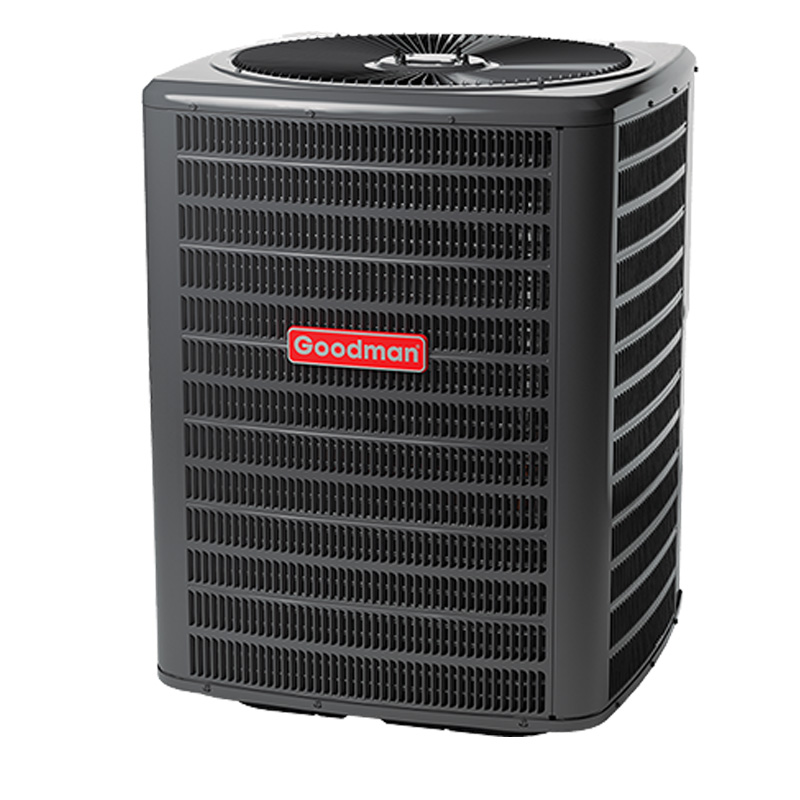
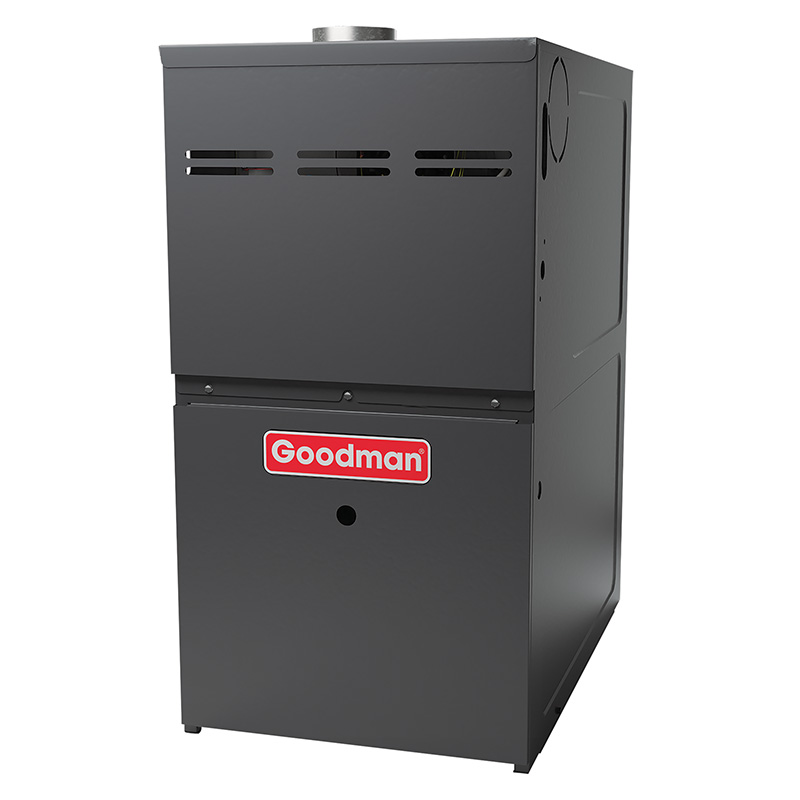
The Goodman 4-ton 14.5 SEER2 upflow system pairs a 100,000 BTU, 80% AFUE gas furnace with a matched central air conditioner running on R-32 refrigerant. At 4 tons, it is sized for homes roughly in the 1,800 to 2,400 square-foot range, though actual sizing depends on insulation, climate, and a proper Manual J load calculation. The 80% AFUE furnace converts four out of every five units of gas into usable heat, making it a standard-efficiency unit suited to moderate-winter climates where a high-efficiency 96% AFUE upgrade would take many years to pay back.
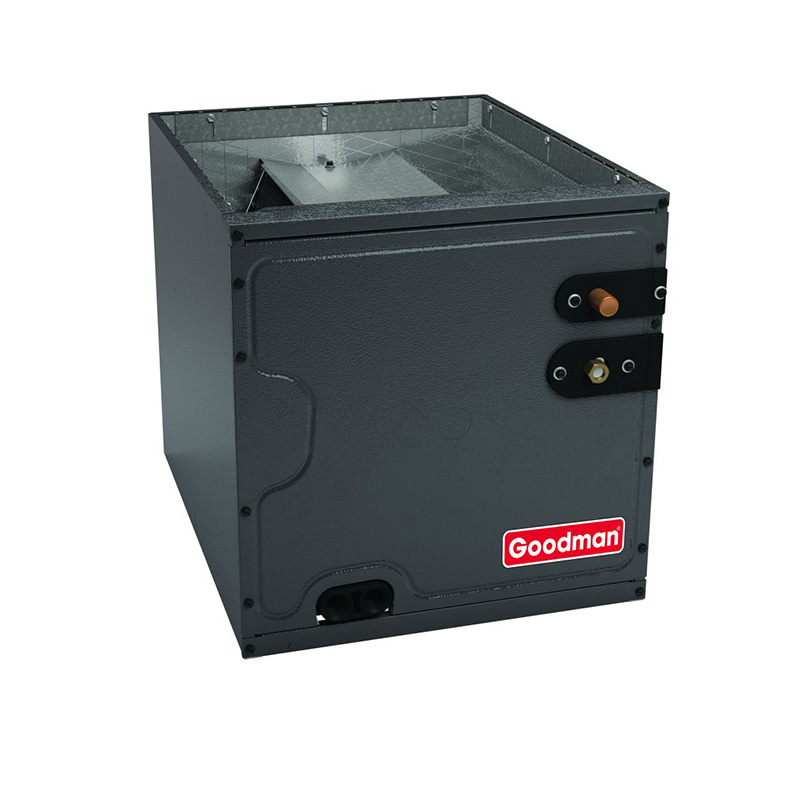
The 14.5 SEER2 cooling rating clears the federal minimum for most U.S. regions and will produce a modest efficiency gain over older 13 or 14 SEER equipment, though it sits well below the 18-plus SEER2 range of premium variable-speed systems. The multi-speed ECM blower motor is a genuine practical benefit: it runs at lower speeds during partial-load conditions, cutting blower electricity use and improving humidity control compared to a fixed-speed PSC motor. R-32 refrigerant has a lower global-warming potential than the R-410A it replaces, and it operates at higher pressure, so technicians servicing this unit need R-32 certification and compatible tools. This is an upflow configuration, meaning the air enters from the bottom of the air handler and exits the top, which is the standard orientation for a basement or closet installation where ductwork runs overhead.
This Goodman package delivers solid entry-level performance at a price point that is 15 to 25 percent below comparable Carrier, Trane, and Lennox systems. The ECM motor and R-32 refrigerant are genuine modern features, but the 80% AFUE furnace and 14.5 SEER2 rating are minimum-compliance specs that leave real efficiency gains on the table. Long-term satisfaction will hinge heavily on installation quality and whether a homeowner budgets for maintenance in years seven and beyond.
Overall score is the average of the five ratings above.
What we like
- Priced 15 to 25 percent below comparable premium-brand systems, reducing upfront cost significantly
- Multi-speed ECM blower improves humidity control and lowers blower motor electricity consumption versus single-speed PSC motors
- R-32 refrigerant has a lower environmental impact than the R-410A used in older systems
- Factory-matched components reduce compatibility guesswork and can simplify warranty claims
- 10-year parts warranty is available with registration, which is competitive for a value-tier brand
Trade-offs
- 80% AFUE furnace wastes 20% of fuel, a meaningful ongoing cost in colder climates where a 96% AFUE unit would pay back the price difference
- Goodman compressors average 10 to 14 years versus 15 to 20 years for premium brands, meaning earlier potential replacement costs
- Dual-run capacitor failures and evaporator coil leaks are documented recurring issues that add repair costs, especially after year seven
- R-32 servicing requires specially certified technicians and compatible tools, which may limit your service options depending on your area
What homeowners and pros say about Goodman
Homeowners who have lived with Goodman equipment tend to split along a clear fault line. Those who hired experienced installers and kept up with annual maintenance often report years of uneventful operation and consistently point to the lower purchase price as money well spent. That experience tracks with the Google dealer review average of around 3.8 out of 5, where affordability is the most frequently cited positive. The picture that emerges from ConsumerAffairs is less comfortable: Goodman scores around 2.5 out of 5 on that platform, and the complaints are concentrated not in the first few years but in the 7-to-10-year window, when dual-run capacitor failures and evaporator coil leaks become recurring line items. Owners in that group often describe a gradual repair-cost creep that erodes the upfront savings.
HVAC technicians tend to describe Goodman as a brand that rewards good workmanship and punishes shortcuts. Technicians who install Goodman equipment frequently report that most early refrigerant leaks trace back to installation or charging errors rather than factory defects, which is consistent with documented reports of refrigerant loss in the first year of ownership. The compressor lifespan story is also a real consideration for this specific system: Goodman compressors have been observed averaging 10 to 14 years in the field, compared to 15 to 20 years for Trane, Carrier, and Lennox at the same age and usage. For a 4-ton unit serving a larger home, that gap matters when you are weighing total cost of ownership over a 15-year horizon. The R-32 refrigerant and ECM blower are genuine steps forward, but they do not change the brand-level reliability picture that installers and long-term owners have documented.
Sources: ConsumerAffairs Goodman owner reviews, AHRI Directory of Certified Product Performance, U.S. DOE appliance and equipment efficiency standards, Goodman product specification sheets.
What it costs to run
At 14.5 SEER2, cooling this 4-ton system for a typical 1200-hour cooling season at the U.S. average electricity rate of $0.17/kWh works out to roughly $675 per year in cooling, about $56 less per year than a minimum-efficiency 13.4 SEER2 unit of the same size. Your real cost depends on your climate and local rate.
Method: (48,000 BTU/hr ÷ 14.5 SEER2) × 1200 hours ÷ 1000 × $0.17/kWh. Rate source: U.S. EIA average; cooling hours: moderate-climate estimate.
How it compares
| Brand | Comparable model | SEER2 | Stage | Price position |
|---|---|---|---|---|
| Goodman | 4-Ton 14.5 SEER2 / 100K BTU 80% AFUE Multi-Speed ECM Upflow R-32 | 14.5 | Multi-speed | Value pick |
| Carrier | Comfort 14 Series (24ACC4) | 14.3-15 | Single-stage | Typically 15 to 25 percent more than Goodman |
| Trane | XR14c Series | 14.3-15 | Single-stage | Typically 15 to 25 percent more than Goodman |
| Lennox | Merit ML14XC1 Series | 14.3-15 | Single-stage | Typically 15 to 25 percent more than Goodman |
Competitor rows are comparable single-stage units at similar efficiency; price is relative position, not a quote.
Questions about this system
Is 80% AFUE good enough, or should I upgrade to a 96% furnace?
In mild-winter climates like the Southeast or Southwest, 80% AFUE is often sufficient and the upgrade payback period can exceed 10 years. In colder regions where the furnace runs heavily from November through March, a 96% AFUE unit will cut your gas bill noticeably and typically pays back the price difference in 5 to 8 years. If you are in a cold-climate state, check whether local rebates or building codes already require higher efficiency.
Can any HVAC technician work on this system, or does R-32 require special certification?
R-32 requires EPA Section 608 certification, which most licensed HVAC technicians already hold, but it also requires R-32-specific recovery equipment and manifold gauges because it operates at higher pressure than R-410A. Before scheduling service, confirm your technician has the proper R-32 tooling. In some rural markets, this can limit your service options.
What are the most common repairs I should budget for over 10 years?
Goodman owner reports point to dual-run capacitor failures as the most frequent issue, typically a 300 to 600 dollar repair that a qualified tech can complete in under an hour. Evaporator coil leaks appear in a meaningful share of reviews and are more expensive to address. Budgeting 150 to 200 dollars per year for a maintenance contract that covers inspections and catches capacitor wear early is a reasonable approach.
Do I need to register the system to get the 10-year warranty, and what does it actually cover?
Yes, Goodman requires product registration within a set window after installation to activate the 10-year parts warranty. Without registration, the default coverage is typically shorter. The warranty covers parts but not labor, so a compressor failure outside of labor coverage can still cost 800 to 1,500 dollars in technician time even if the part itself is free.
How do I know if 4 tons is the right size for my home?
A rule-of-thumb estimate of 400 to 600 square feet per ton is a starting point, but it is not a substitute for a Manual J load calculation that accounts for your insulation, window area, ceiling height, local climate, and duct condition. An oversized system will short-cycle, leaving excess humidity indoors and wearing components faster. Ask your installer for written documentation of the load calculation before agreeing on equipment size.
Specifications
| Cooling capacity | 4 Ton |
| Efficiency | 14.5 SEER2 |
| Furnace output | 100000 BTU |
| Furnace efficiency | 80% AFUE |
| Configuration | Upflow |
| Refrigerant | R-32 |