Goodman 4 Ton 14.5 SEER2 100000 BTU 80% AFUE Two Stage Multi-Speed ECM Gas Furnace System – Upflow | R32
View on AC Direct see your lowest price →Check current price on AC Direct →
Key features
- 4-ton cooling capacity with 14.5 SEER2 efficiency rating
- 100,000 BTU two-stage gas furnace at 80% AFUE
- Multi-speed ECM blower motor for quieter, lower-energy fan operation
- R-32 refrigerant with lower global warming potential than R-410A
- Upflow configuration for basement or floor-level utility-room installs
- Two-stage heating reduces short cycling and improves temperature consistency
About this system
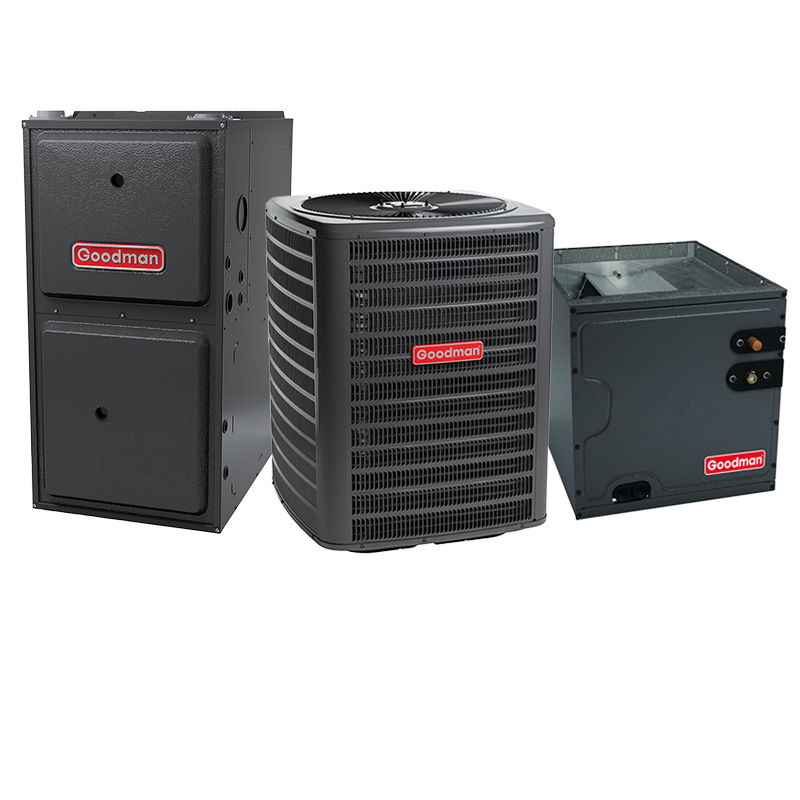
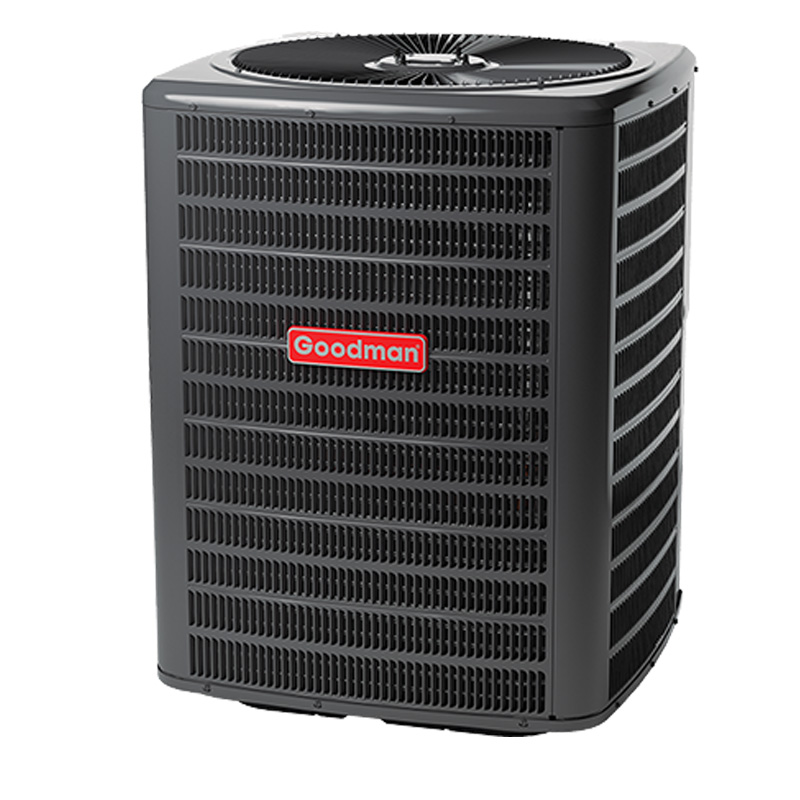
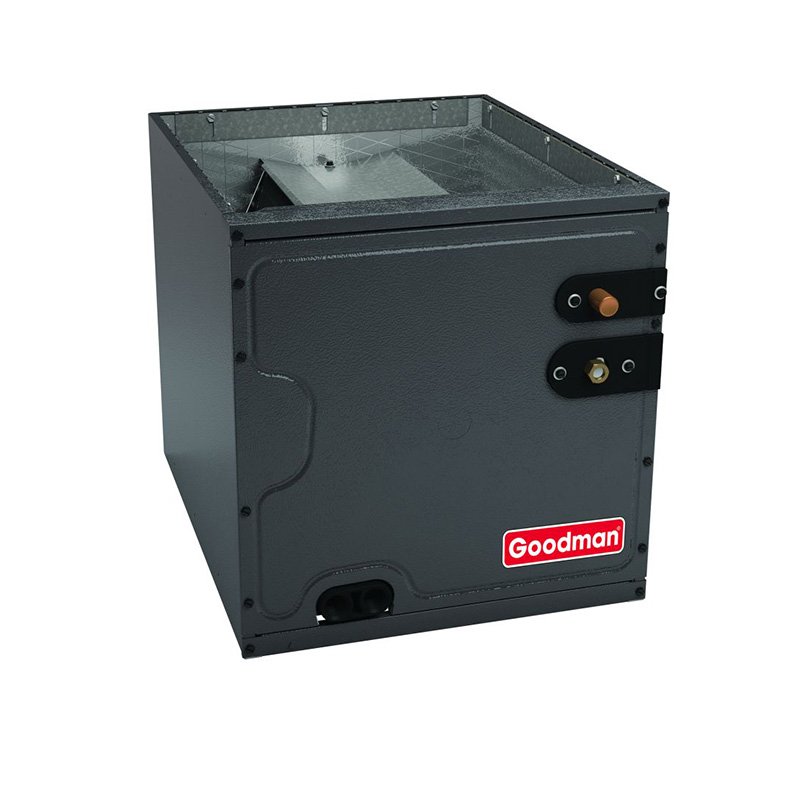
The Goodman GLXS4BA4810 pairs a 4-ton, 14.5 SEER2 split-system air conditioner with a 100,000 BTU, 80% AFUE two-stage gas furnace in an upflow configuration. That combination suits mid-to-large homes in mixed climates where both serious cooling capacity and reliable winter heating are required year-round. The 14.5 SEER2 rating clears the current federal minimum for most U.S. regions and delivers a meaningful efficiency step above entry-level 13 SEER2 equipment, though it stops well short of the high-teens and low-twenties ratings found on premium variable-speed systems. R-32 refrigerant is a lower-global-warming-potential alternative to the outgoing R-410A, positioning this system for long-term regulatory stability.
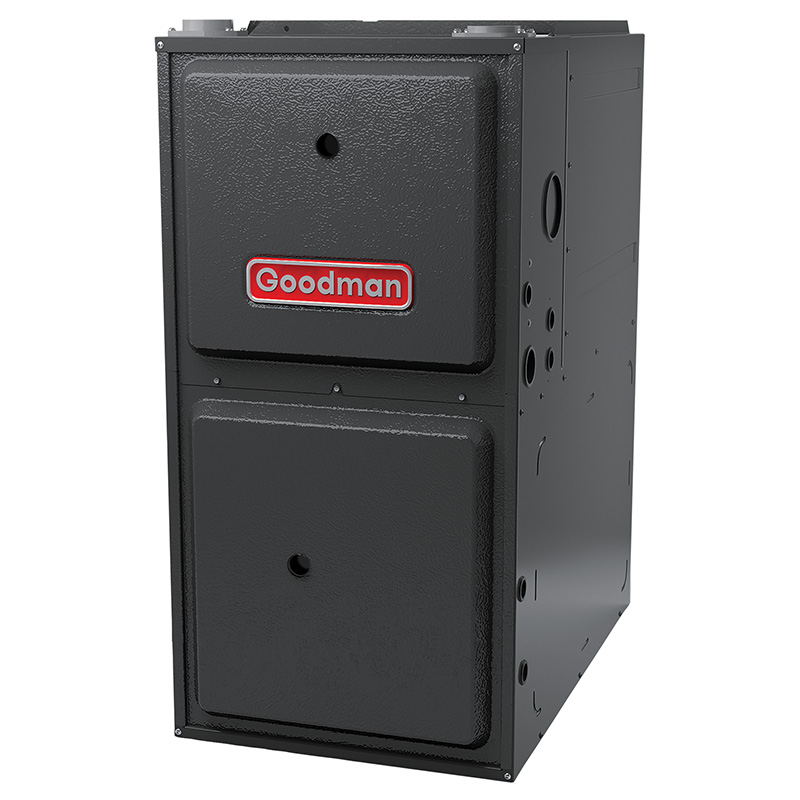
The two-stage furnace operation is the standout spec on the heating side. Running at low fire for the majority of heating calls, it cycles less aggressively than single-stage equipment, which can mean more even room temperatures and slightly longer blower run times that help distribute heat through the home. The multi-speed ECM blower motor is significantly more energy-efficient than a PSC motor during fan-only and cooling operation, and it tends to run quieter at lower speeds. Upflow-only configuration means this is strictly a basement, utility-room, or closet-floor installation pointing supply air upward. Homes with horizontal attic or crawlspace applications will need a different configuration entirely.
Goodman’s positioning as a value-tier brand means the purchase price is typically 15 to 25 percent below comparable Carrier, Trane, or Lennox equipment. That savings is real, but it comes with trade-offs in average compressor longevity and a complaint profile that trends upward after the seven-year mark. For budget-conscious homeowners in a standard residential install who want genuine two-stage comfort without premium-brand pricing, this system is a practical option worth serious consideration.
The GLXS4BA4810 delivers genuine two-stage heating comfort and a current-minimum-compliant 14.5 SEER2 cooling efficiency at a price point that undercuts premium brands by a meaningful margin. It is a reasonable choice for cost-focused buyers who understand they are trading some long-term compressor longevity and brand-reliability pedigree for upfront savings. Getting the installation right is not optional with this equipment: a quality contractor matters more here than it does with top-tier brands.
Overall score is the average of the five ratings above.
What we like
- Purchase price typically 15 to 25 percent lower than Carrier, Trane, or Lennox equivalents
- Two-stage furnace reduces temperature swings and cycling noise compared to single-stage heating
- ECM blower motor cuts fan electricity use and operates more quietly at lower speeds
- R-32 refrigerant provides better regulatory longevity than R-410A systems
- 14.5 SEER2 meets current federal minimums and offers a real efficiency improvement over minimum-rated predecessors
Trade-offs
- Compressor lifespan averages 10 to 14 years versus 15 to 20 years typical of premium-brand compressors
- Dual-run capacitor failures are the most commonly reported repair issue, adding unexpected service calls
- Evaporator coil leaks appear in a notable share of owner reports, particularly in the mid-life range
- 80% AFUE furnace leaves roughly 20 percent of gas heat going up the flue, a real operating-cost gap versus 90-plus AFUE options
What homeowners and pros say about Goodman
Feedback on Goodman equipment lands in two fairly predictable camps. On Google dealer review pages, where scores average around 3.8 out of 5 across several hundred reviews per location, the most repeated praise is straightforward: the equipment is affordable and, when installed correctly, it does the job. Homeowners in that group often note that their system ran without incident through the early years. On ConsumerAffairs, where the audience skews toward people who had a frustrating enough experience to write a review, the aggregate rating drops to roughly 2.5 out of 5. The recurring thread in those complaints is not failure on day one but repair costs that start accumulating around year seven or eight, particularly around the compressor and coil.
HVAC technicians who work on Goodman equipment regularly will tell you two things consistently. First, dual-run capacitor failures are essentially routine on these systems and are a low-cost, quick repair when caught early. Second, evaporator coil leaks and compressor wear showing up in the 10 to 14 year range are well-documented, and Goodman compressors tend to reach that endpoint sooner than the 15 to 20 years more commonly reported on Trane and Carrier equipment. The first-year refrigerant leak issue that a minority of owners report is almost always traced back to installation quality rather than the equipment itself, which is why contractors who specialize in Goodman installs emphasize precise charging and thorough leak checks at startup. The system reviewed here adds two-stage heating and an ECM blower, which address some of the comfort criticisms of basic single-stage Goodman units, but the underlying brand reliability picture remains the same.
Sources: ConsumerAffairs Goodman owner reviews, AHRI Directory of Certified Product Performance, U.S. DOE appliance and equipment efficiency standards, Goodman product specification sheets.
What it costs to run
At 14.5 SEER2, cooling this 4-ton system for a typical 1200-hour cooling season at the U.S. average electricity rate of $0.17/kWh works out to roughly $675 per year in cooling, about $56 less per year than a minimum-efficiency 13.4 SEER2 unit of the same size. Your real cost depends on your climate and local rate.
Method: (48,000 BTU/hr ÷ 14.5 SEER2) × 1200 hours ÷ 1000 × $0.17/kWh. Rate source: U.S. EIA average; cooling hours: moderate-climate estimate.
How it compares
| Brand | Comparable model | SEER2 | Stage | Price position |
|---|---|---|---|---|
| Goodman | GLXS4BA4810 (this system) | 14.5 | two-stage | Value pick |
| Carrier | Comfort 14 (24ACC4) with 80% AFUE 58SB furnace | 14.3 | single-stage | Typically 15 to 25 percent more than this Goodman |
| Trane | XR14c with S8B1 80% AFUE furnace | 14.3 | single-stage | Typically 15 to 25 percent more than this Goodman |
| Lennox | Merit 14ACX with ML180 80% AFUE furnace | 14.3 | single-stage | Typically 15 to 25 percent more than this Goodman |
Competitor rows are comparable single-stage units at similar efficiency; price is relative position, not a quote.
Questions about this system
Is 14.5 SEER2 good enough, or should I step up to a higher efficiency system?
14.5 SEER2 meets the current federal minimum for most U.S. climate zones and is a real step above older 13 SEER equipment. In moderate climates or where the home is well-insulated, the payback on stepping up to a 16 or 18 SEER2 system can stretch to seven or more years. In hot climates with very long cooling seasons, a higher SEER2 system can pay back faster, so it is worth running the numbers against your local electricity rates before deciding.
What does upflow-only mean, and will this unit work in my home?
Upflow means the furnace draws return air in at the bottom and discharges heated or cooled air upward through supply ductwork above it. This configuration works in basements, utility closets, and mechanical rooms where the unit sits on the floor and ducts run overhead. It will not work in an attic, crawlspace, or any installation where the airflow needs to go horizontally or downward without additional equipment modifications.
What are the most likely repairs I should budget for over the first 10 years?
Dual-run capacitor failure is the single most commonly reported issue on Goodman cooling equipment and typically costs between 300 and 600 dollars to repair. Evaporator coil refrigerant leaks are documented in a meaningful share of owner reports and are a more expensive fix. A small minority of owners have also reported refrigerant leaks in the first year, which is usually tied to installation or initial charge quality rather than a manufacturing defect.
Does the two-stage furnace require a compatible thermostat?
Yes. To take full advantage of two-stage operation, you need a thermostat that supports two-stage heating communication. Many modern smart thermostats from Ecobee, Honeywell, and others support this, but confirm compatibility before purchasing. Running a two-stage furnace on a single-stage thermostat is possible, but the unit will typically default to high-fire operation and lose most of the comfort and efficiency benefit.
How important is installer choice with a Goodman system specifically?
More important than with premium-brand equipment. Technicians consistently cite install quality as the biggest factor in how long a Goodman system lasts and how few problems it has. Proper refrigerant charge, correct duct sizing, and thorough commissioning are not optional extras here. Choosing the lowest-bid contractor without verifying credentials and process increases the risk of the first-year refrigerant leak and early component failures that show up in owner complaints.
Specifications
| Cooling capacity | 4 Ton |
| Efficiency | 14.5 SEER2 |
| Furnace output | 100000 BTU |
| Furnace efficiency | 80% AFUE |
| Configuration | Upflow |
| Refrigerant | R-32 |
| Model | GLXS4BA4810 |