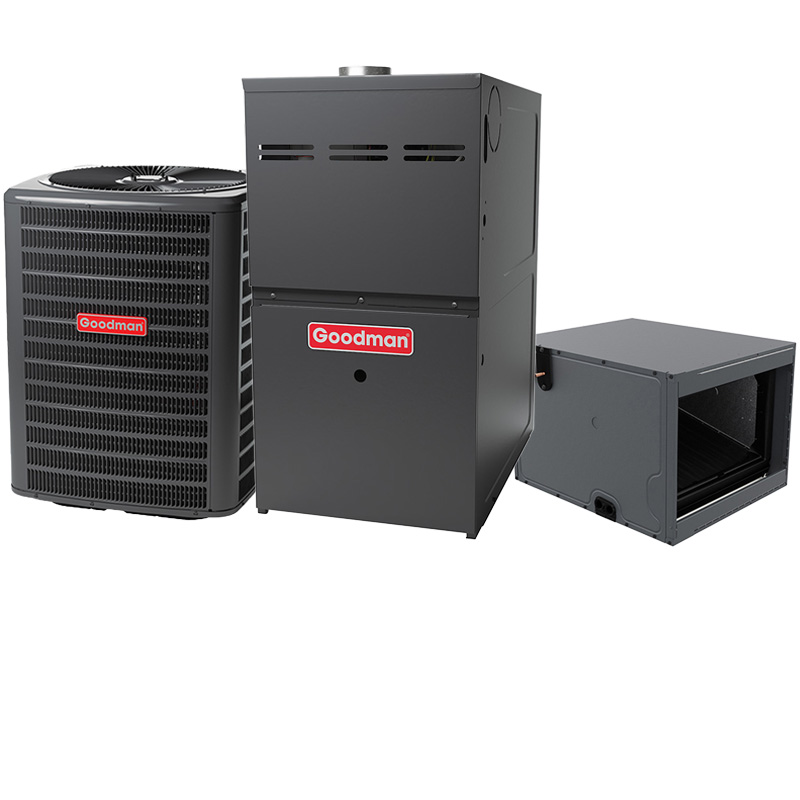
Goodman 4 Ton 14.5 SEER2 120000 BTU 80% AFUE Multi-Speed ECM Gas Furnace System – Horizontal | R32
View on AC Direct see your lowest price →Check current price on AC Direct →
Key features
- 4-ton cooling capacity suited to larger homes in the 2,000-2,600 sq ft range
- 14.5 SEER2 efficiency rating meets 2023 federal minimums for most U.S. regions
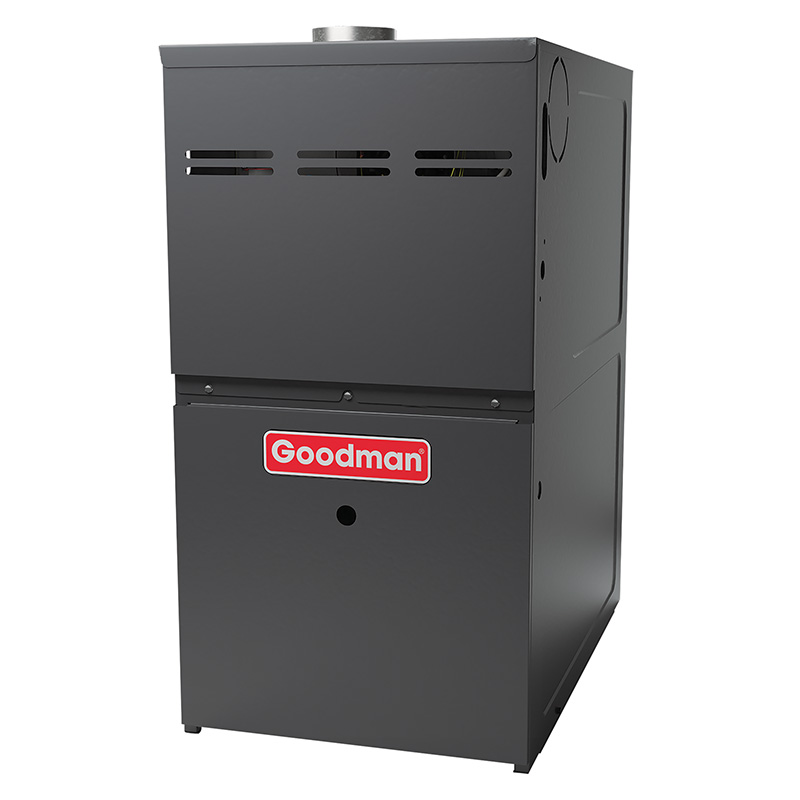
- 120,000 BTU, 80% AFUE multi-speed gas furnace with ECM blower motor
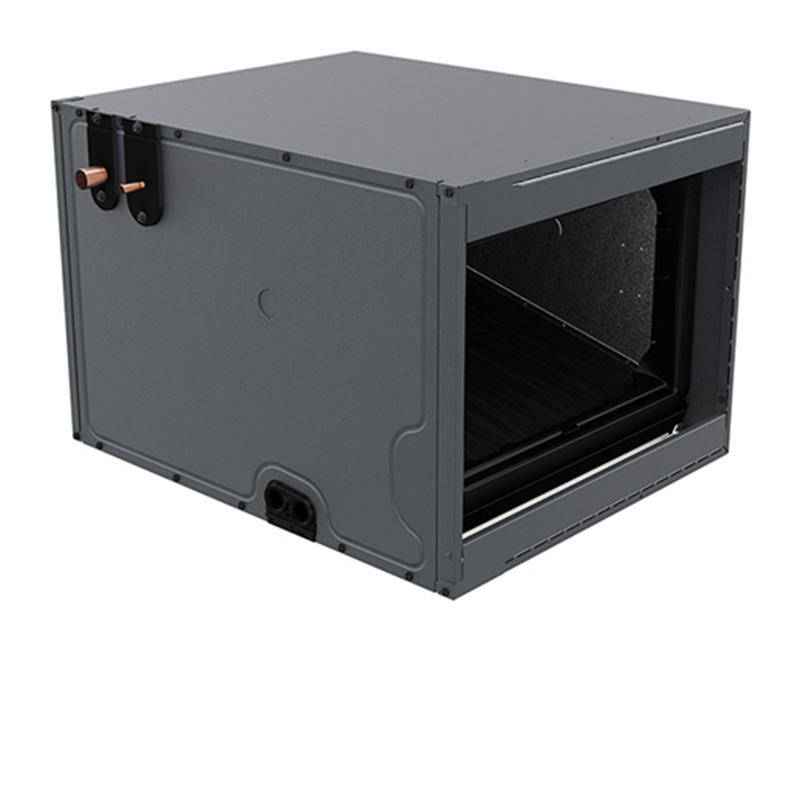
- Horizontal configuration designed for attic, crawlspace, or side-discharge installs
- R-32 refrigerant with lower global warming potential than R-410A
- ECM motor modulates airflow for improved humidity control and quieter part-load operation
About this system
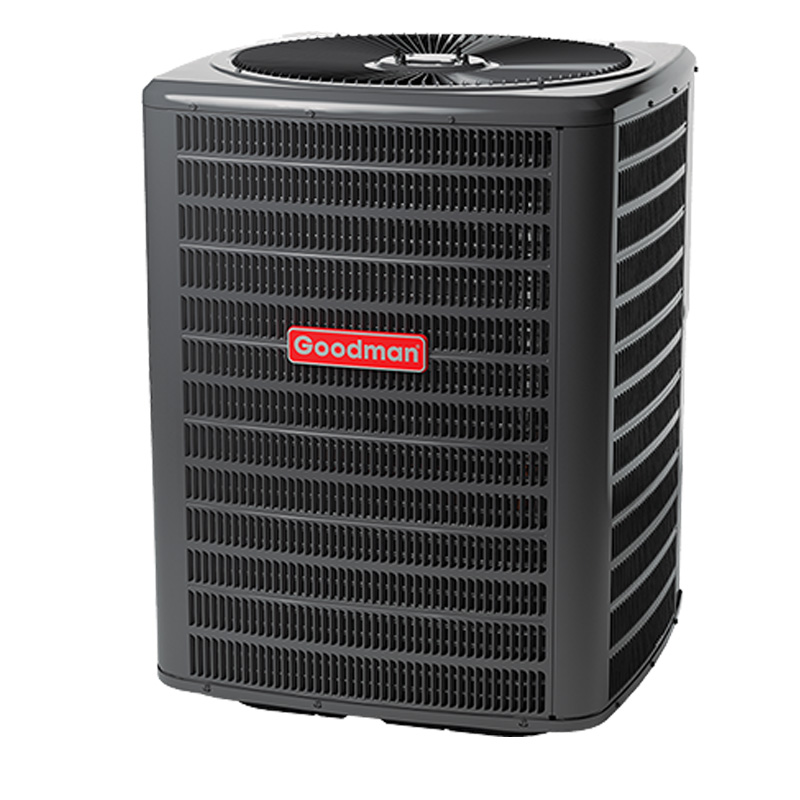
This Goodman 4-ton system pairs a 14.5 SEER2 cooling package with a 120,000 BTU, 80% AFUE multi-speed ECM gas furnace in a horizontal configuration, making it a practical choice for homes where the air handler or furnace sits in a crawlspace, attic, or closet with limited vertical clearance. At 4 tons, it is sized for larger homes typically in the 2,000 to 2,600 square foot range, depending on climate, insulation, and local load calculations. The R-32 refrigerant is a step forward environmentally, carrying a lower global warming potential than the older R-410A it replaces, and it is now the industry direction for new residential equipment.
The 80% AFUE furnace means 20 cents of every heating dollar exits through the flue as exhaust, which is the minimum efficiency tier allowed for most new installations in northern U.S. climates. Homeowners in colder regions who heat heavily should price a 96% AFUE alternative before committing, since the operating cost gap is real over a 10 to 15 year lifespan. The multi-speed ECM blower motor is a meaningful upgrade over a single-speed PSC motor: it modulates airflow for better humidity control, quieter operation at lower speeds, and reduced electricity draw during fan-only and cooling cycles. At 14.5 SEER2, this system clears the 2023 federal minimum for most regions by a narrow margin, so it qualifies for standard installation but does not reach the 15 SEER2 threshold required for federal tax credits under current rules.
This Goodman system delivers a functional, code-compliant HVAC package at a price point that is typically 15 to 25 percent below comparable Carrier, Trane, or Lennox equipment, making it a reasonable choice for budget-conscious buyers who can secure a skilled installer. The 80% AFUE furnace and entry-level SEER2 rating keep upfront costs low but leave long-term operating savings on the table compared to higher-efficiency alternatives. Its real weaknesses are component longevity and the brand's documented repair pattern after year seven, not first-year performance.
Overall score is the average of the five ratings above.
What we like
- Priced 15 to 25 percent below comparable Trane, Lennox, and Carrier systems, lowering the upfront barrier
- Multi-speed ECM blower improves comfort and humidity control over standard single-speed motors
- R-32 refrigerant is the emerging industry standard with a lower environmental footprint than R-410A
- Horizontal configuration fills a specific install need that not all packages accommodate
- Widely available through HVAC distributors, which keeps parts and replacement components accessible
Trade-offs
- 80% AFUE is the lowest efficiency tier available; homeowners in colder climates will pay noticeably more to heat over time versus a 96% AFUE unit
- 14.5 SEER2 falls just above the federal minimum and does not qualify for the federal tax credit threshold, limiting incentive value
- Compressor lifespan averages 10 to 14 years in owner experience, shorter than the 15 to 20 years typical of premium brands
- Dual-run capacitor failures and evaporator coil leaks are documented recurring issues, and repair costs tend to climb after roughly year seven
What homeowners and pros say about Goodman
Homeowners who have lived with Goodman equipment share a pattern that shows up clearly in the brand’s ConsumerAffairs score of roughly 2.5 out of 5: the first several years tend to be uneventful, but repair frequency and cost often increase noticeably around year seven or eight. That platform skews toward complaints by design, so it is worth weighing alongside Google dealer reviews, where Goodman installers average around 3.8 out of 5, with affordability cited most often as the reason buyers chose the brand. For a 4-ton horizontal system like this one, the upfront savings versus a Carrier, Trane, or Lennox equivalent are real and meaningful, typically 15 to 25 percent less out of pocket at installation.
HVAC technicians who service Goodman equipment regularly point to dual-run capacitor failures as the most routine callout, a repair that is usually quick and costs in the $300 to $600 range including labor. More consequential are evaporator coil leaks, which appear in a meaningful share of owner reports and carry a higher repair cost, and compressor lifespan that averages 10 to 14 years compared to 15 to 20 years on premium brands. Refrigerant leaks within the first year are reported by a minority of owners and typically trace back to installation or initial charge issues rather than the equipment itself, which is why technicians consistently flag install quality as the variable that matters most with Goodman systems. For this horizontal configuration specifically, choosing a contractor with documented attic or crawlspace install experience is not optional advice; it is the most important factor in whether this unit performs as intended over its service life.
Sources: ConsumerAffairs Goodman owner reviews, AHRI Directory of Certified Product Performance, U.S. DOE appliance and equipment efficiency standards, Goodman product specification sheets.
What it costs to run
At 14.5 SEER2, cooling this 4-ton system for a typical 1200-hour cooling season at the U.S. average electricity rate of $0.17/kWh works out to roughly $675 per year in cooling, about $56 less per year than a minimum-efficiency 13.4 SEER2 unit of the same size. Your real cost depends on your climate and local rate.
Method: (48,000 BTU/hr ÷ 14.5 SEER2) × 1200 hours ÷ 1000 × $0.17/kWh. Rate source: U.S. EIA average; cooling hours: moderate-climate estimate.
How it compares
| Brand | Comparable model | SEER2 | Stage | Price position |
|---|---|---|---|---|
| Goodman | 4-Ton 14.5 SEER2 / 120K BTU 80% AFUE ECM Horizontal R-32 | 14.5 | Multi-speed | Value pick |
| Carrier | Comfort 14 (24ACC4 series) | 14.3-14.5 | Single-stage | Typically 15 to 25 percent more than Goodman |
| Trane | XR14 series | 14.5 | Single-stage | Typically 15 to 25 percent more than Goodman |
| Lennox | Merit ML14XC1 series | 14.3-15.0 | Single-stage | Typically 15 to 25 percent more than Goodman |
Competitor rows are comparable single-stage units at similar efficiency; price is relative position, not a quote.
Questions about this system
Does this system qualify for the federal energy efficiency tax credit?
Under current federal guidelines, central air conditioning must meet a 15 SEER2 threshold (16 SEER2 in the South) to qualify for the 25C tax credit. At 14.5 SEER2, this system does not meet that threshold, so no federal credit applies to the cooling component. Consult a tax professional for the most current rules.
Is 80% AFUE acceptable for my area, or should I step up to a higher-efficiency furnace?
Federal rules now restrict 80% AFUE non-weatherized gas furnaces to southern and southwestern climate zones; many northern states require 90% or higher for new installations. Check your local code before purchasing, and compare estimated annual heating costs between 80% and 96% AFUE options if you are in an eligible region, since the operating cost difference compounds over a 10-15 year lifespan.
What are the most common repairs I should budget for with a Goodman system?
Dual-run capacitor failures are the most frequently reported issue and are typically an inexpensive fix in the $300 to $600 range including labor. Evaporator coil leaks and refrigerant loss show up in a meaningful share of owner reviews, with coil replacement being more costly. Compressors on Goodman units average 10 to 14 years, so owners planning a long stay should factor in the possibility of a compressor replacement before the unit's end of life.
How does the horizontal configuration affect installation and who installs it?
A horizontal unit is oriented to discharge air from the side rather than the bottom, which is required in attic truss spaces, crawlspaces, and certain closet configurations where vertical clearance is limited. Not every contractor works comfortably in tight horizontal spaces, so ask specifically about horizontal install experience when getting quotes. Goodman's brand data consistently shows that installation quality is the single biggest factor in long-term reliability.
R-32 refrigerant is new to me. Will I have trouble finding a technician who can service it?
R-32 is mildly flammable (classified A2L), which requires technicians to use certified tools and follow updated handling procedures. Most licensed HVAC contractors are already training to work with A2L refrigerants as the industry transitions away from R-410A, but it is worth confirming your service technician is R-32 certified before scheduling work. Availability of R-32 refrigerant for future service calls is not a concern; it is becoming the standard residential refrigerant.
Specifications
| Cooling capacity | 4 Ton |
| Efficiency | 14.5 SEER2 |
| Furnace output | 120000 BTU |
| Furnace efficiency | 80% AFUE |
| Configuration | Horizontal |
| Refrigerant | R-32 |