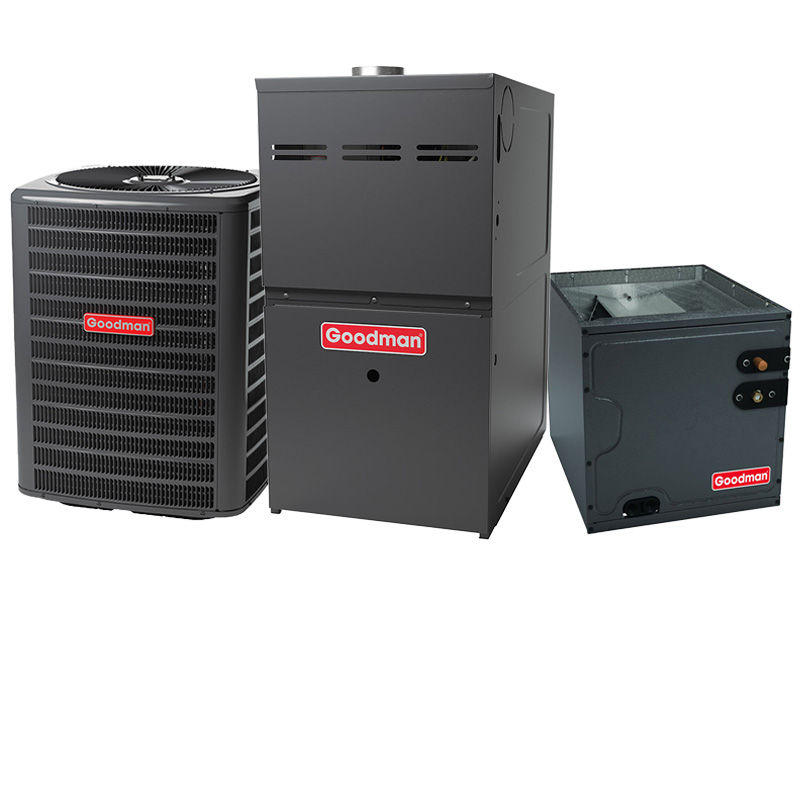
Goodman 4 Ton 14.5 SEER2 120000 BTU 80% AFUE Multi-Speed ECM Gas Furnace System – Upflow | R32
View on AC Direct see your lowest price →Check current price on AC Direct →
Key features
- 4-ton cooling capacity with 14.5 SEER2 efficiency rating
- 120,000 BTU 80% AFUE single-stage gas furnace, upflow configuration
- Multi-speed ECM blower motor for improved humidity control and lower blower energy use
- R-32 refrigerant with lower global warming potential than R-410A
- Compatible with standard straight-pipe flue venting, no condensate drain required
- Factory-matched system designed for simplified commissioning and warranty compliance
About this system
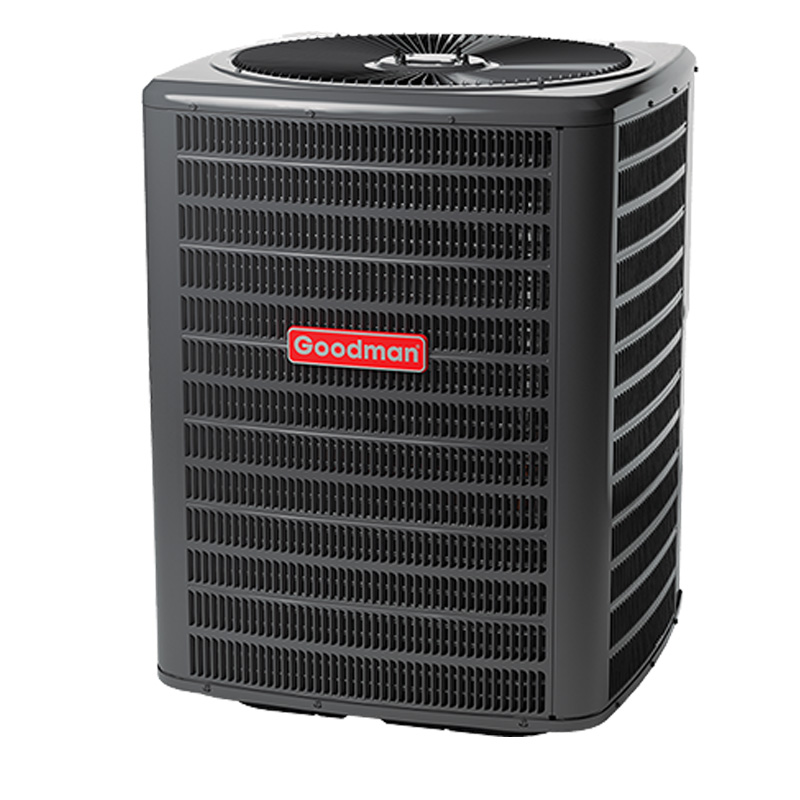
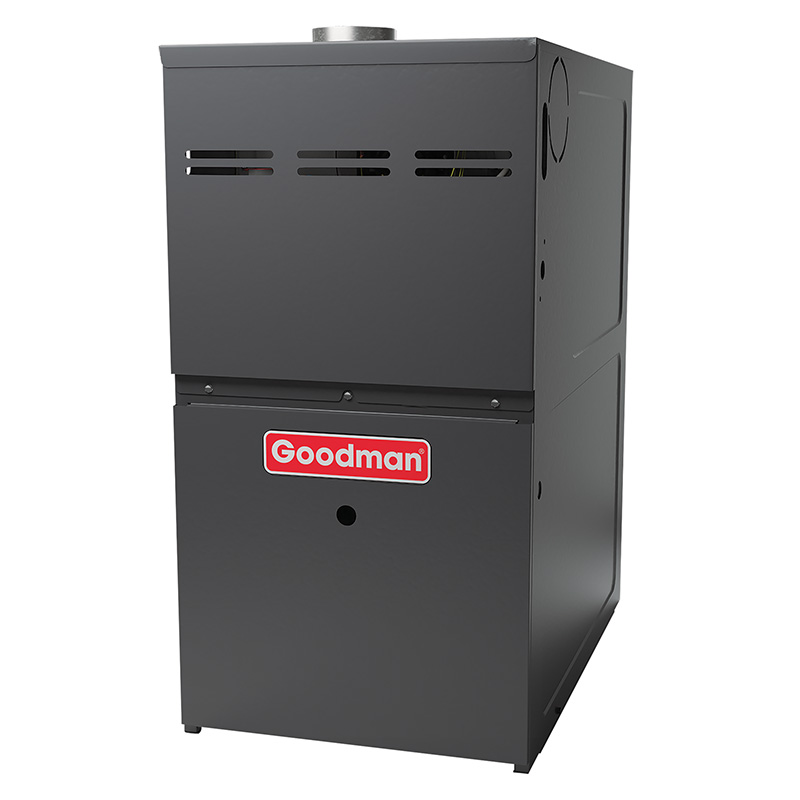
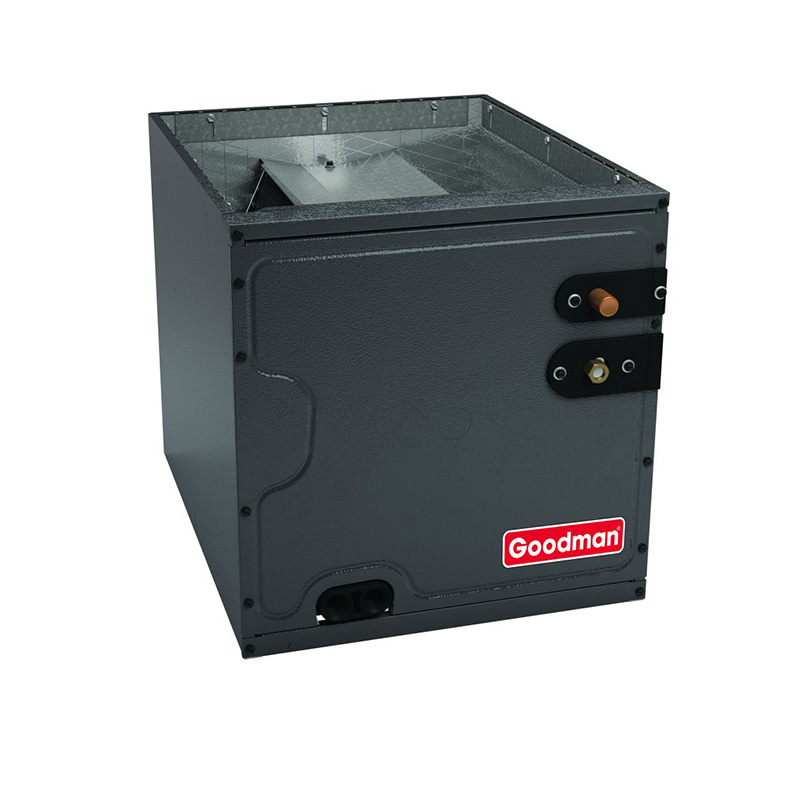
This Goodman package pairs a 4-ton, 14.5 SEER2 split-system air conditioner with a 120,000 BTU, 80% AFUE multi-speed ECM gas furnace in an upflow configuration, and it uses R-32 refrigerant rather than the older R-410A. The 4-ton cooling capacity suits homes in the 1,800 to 2,400 square foot range depending on insulation, climate zone, and ceiling height. At 14.5 SEER2, efficiency sits just above the current federal minimum for most northern and some southern regions, so it will not be the lowest-cost system to run, but it also is not far below mid-efficiency territory. The 80% AFUE furnace means roughly one in five BTUs of gas is lost up the flue, which is a real trade-off compared to a 96% AFUE condensing furnace, though the upflow cabinet is far simpler to vent and easier to retrofit into homes with existing straight-pipe flue runs.
The multi-speed ECM blower motor is a meaningful upgrade over a standard single-speed PSC motor. ECM motors ramp airflow up and down to match demand, which improves humidity control, reduces temperature swings, and cuts blower electricity use compared to a fixed-speed unit. R-32 refrigerant carries a lower global warming potential than R-410A and requires a smaller refrigerant charge by weight, though not all technicians in every market stock it yet, so it is worth confirming your installer is set up for R-32 before signing a service contract. This system is best understood as a cost-effective, workhorse package for homeowners who want a functional, modern system without paying a premium brand markup, and who are comfortable with the understood trade-offs on long-run reliability.
This Goodman system delivers a functional, code-compliant HVAC package at a price point that is hard to match among major brands, making it a reasonable choice for budget-conscious homeowners in moderate climates. Efficiency is adequate but not impressive, and long-term ownership costs will depend heavily on install quality and how quickly minor components like capacitors are serviced. Buyers who can afford to step up to a <a href="https://hvac.best/glossary/two-stage/">two-stage</a> or variable system, or who prioritize longevity over upfront cost, should weigh the options carefully.
Overall score is the average of the five ratings above.
What we like
- Purchase price typically 15 to 25 percent below comparable Carrier, Trane, and Lennox systems
- Multi-speed ECM blower improves comfort and humidity control over basic single-speed alternatives
- R-32 refrigerant is lower GWP and requires a smaller charge than R-410A
- Upflow furnace is straightforward to install and vent in most existing duct configurations
- Factory-matched system simplifies permitting and meets current federal minimum efficiency standards
Trade-offs
- 80% AFUE means roughly 20% of fuel energy is lost up the flue, raising long-term gas bills versus 90%+ alternatives
- Dual-run capacitors are a documented early failure point, and evaporator coil leaks appear in a meaningful share of owner reports
- Compressor lifespan averages 10 to 14 years versus 15 to 20 years for premium-brand compressors
- R-32 refrigerant is not yet universally stocked, so service availability should be confirmed with local technicians before purchase
What homeowners and pros say about Goodman
Homeowners who discuss Goodman online tend to split into two camps. Those who had a smooth install and caught small repairs early, such as a failed capacitor, report years of uneventful service and consistently point to the lower purchase price as the reason they chose the brand. That affordability praise shows up in Google dealer reviews, which average around 3.8 out of 5 across locations. The picture on ConsumerAffairs is harsher, sitting at roughly 2.5 out of 5, though that platform attracts a disproportionate share of owners who had a problem, which skews the sample. The recurring theme on that channel is repair costs that start to climb after about year seven, particularly evaporator coil leaks and compressor issues, which align with Goodman compressors averaging a 10 to 14 year lifespan compared to 15 to 20 years reported for premium-brand compressors.
HVAC professionals who work on Goodman equipment regularly are often candid about where the brand sits in the market. Dual-run capacitor failures are the most common service call they associate with these systems, a repair that usually runs 300 to 600 dollars and is straightforward to complete. Coil leaks draw more frustration because they are more involved and more expensive to resolve. Techs also note that a minority of systems show refrigerant issues in the first year, which they almost always attribute to the install rather than the unit itself. The consistent professional advice is that a Goodman system installed carefully by an experienced technician, on a house with a properly sized and sealed duct system, will perform reliably for a decade or more. One that is rushed through installation or paired with leaky ductwork will struggle regardless of what the spec sheet says.
Sources: ConsumerAffairs Goodman owner reviews, AHRI Directory of Certified Product Performance, U.S. DOE appliance and equipment efficiency standards, Goodman product specification sheets.
What it costs to run
At 14.5 SEER2, cooling this 4-ton system for a typical 1200-hour cooling season at the U.S. average electricity rate of $0.17/kWh works out to roughly $675 per year in cooling, about $56 less per year than a minimum-efficiency 13.4 SEER2 unit of the same size. Your real cost depends on your climate and local rate.
Method: (48,000 BTU/hr ÷ 14.5 SEER2) × 1200 hours ÷ 1000 × $0.17/kWh. Rate source: U.S. EIA average; cooling hours: moderate-climate estimate.
How it compares
| Brand | Comparable model | SEER2 | Stage | Price position |
|---|---|---|---|---|
| Goodman | 4-Ton 14.5 SEER2 / 120K BTU 80% AFUE Multi-Speed ECM Upflow R-32 | 14.5 | Single-stage cooling, multi-speed blower | Value pick |
| Carrier | Comfort 14 / 58CVA 80% AFUE series | 14.3 to 15.2 | Single-stage | Typically 15 to 25 percent more than this Goodman package |
| Trane | XR14 / S8X1 80% AFUE series | 14.3 to 15.1 | Single-stage | Typically 15 to 25 percent more than this Goodman package |
| Lennox | Merit ML14 / ML180 80% AFUE series | 14.3 to 15.0 | Single-stage | Typically 15 to 25 percent more than this Goodman package |
Competitor rows are comparable single-stage units at similar efficiency; price is relative position, not a quote.
Questions about this system
Is 14.5 SEER2 enough for a hot southern climate, or should I step up?
14.5 SEER2 meets federal minimums in most regions but sits at the low end of efficiency. In climates where cooling runs five or more months per year, stepping up to a 16 or 17 SEER2 system will reduce monthly utility bills enough to partially offset the higher purchase price over several years. If your summers are moderate, 14.5 SEER2 is acceptable.
Why does this furnace use 80% AFUE instead of 96% like some competitors?
An 80% AFUE furnace vents combustion gases through a standard metal flue pipe, which makes it a direct replacement in homes already set up for conventional venting without adding a condensate drain or PVC vent run. The trade-off is that roughly 20% of your gas input is exhausted rather than converted to heat. If your home already has a Category III or IV flue or you are doing a full renovation, a 96% AFUE unit would lower gas bills over time.
What should I know about R-32 refrigerant before buying this system?
R-32 is a single-component refrigerant with a lower global warming potential than R-410A, and it requires a smaller refrigerant charge by weight. The practical consideration for buyers is that not every HVAC technician in every market stocks R-32 yet, so you should ask your installer and any service providers you might use whether they are already working with it before committing.
What are the most common repair issues Goodman owners report on this type of system?
The most frequently documented failure is the dual-run capacitor, which typically costs 300 to 600 dollars to replace and is usually a quick fix. Evaporator coil leaks are reported in a meaningful share of owner reviews and can be more costly to address. A small number of owners report refrigerant leaks within the first year, which is generally traced back to install or initial charge problems rather than a product defect.
How important is installer quality with a Goodman system specifically?
Installer quality is critical with any HVAC system, but technicians consistently point to it as the single biggest factor in how long a Goodman unit lasts and how reliably it performs. Proper refrigerant charge, clean duct connections, and correct airflow setup have a direct impact on both efficiency and component lifespan. Choosing a certified, experienced installer matters as much as the equipment itself.
Specifications
| Cooling capacity | 4 Ton |
| Efficiency | 14.5 SEER2 |
| Furnace output | 120000 BTU |
| Furnace efficiency | 80% AFUE |
| Configuration | Upflow |
| Refrigerant | R-32 |