Goodman 4 Ton 14.5 SEER2 120000 BTU 80% AFUE Two Stage Multi-Speed ECM Gas Furnace System – Upflow | R32
View on AC Direct see your lowest price →Check current price on AC Direct →
Key features
- 4-ton, 14.5 SEER2 cooling matched with 120,000 BTU two-stage gas furnace
- 80% AFUE upflow furnace with multi-speed ECM blower motor
- Two-stage operation for longer run cycles and improved dehumidification
- R-32 refrigerant with lower global warming potential than R-410A
- Upflow configuration for basement or ground-level closet installations
- ECM motor reduces blower electricity consumption versus standard PSC motors
About this system
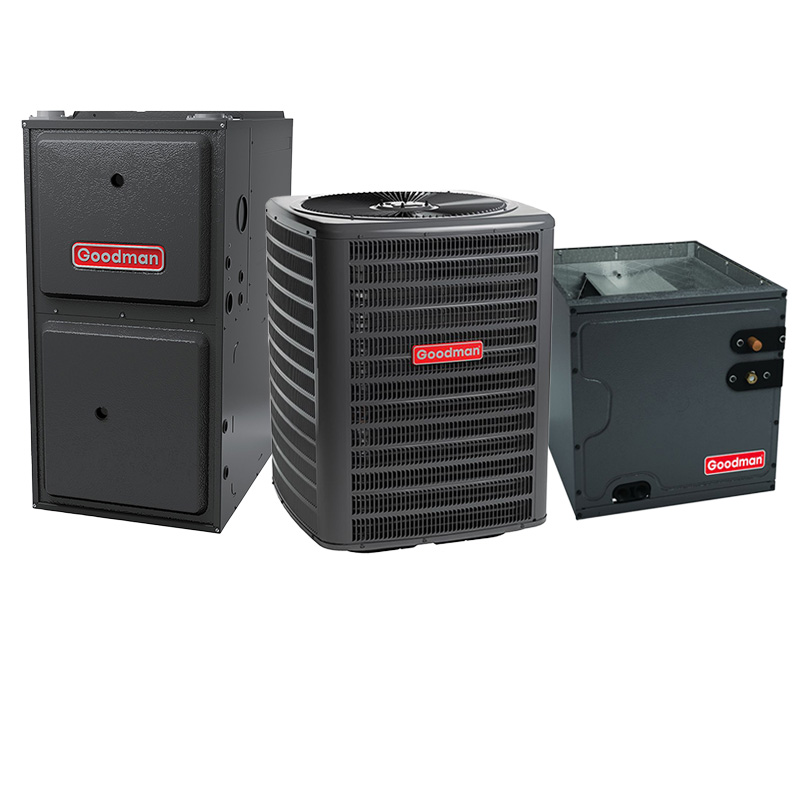
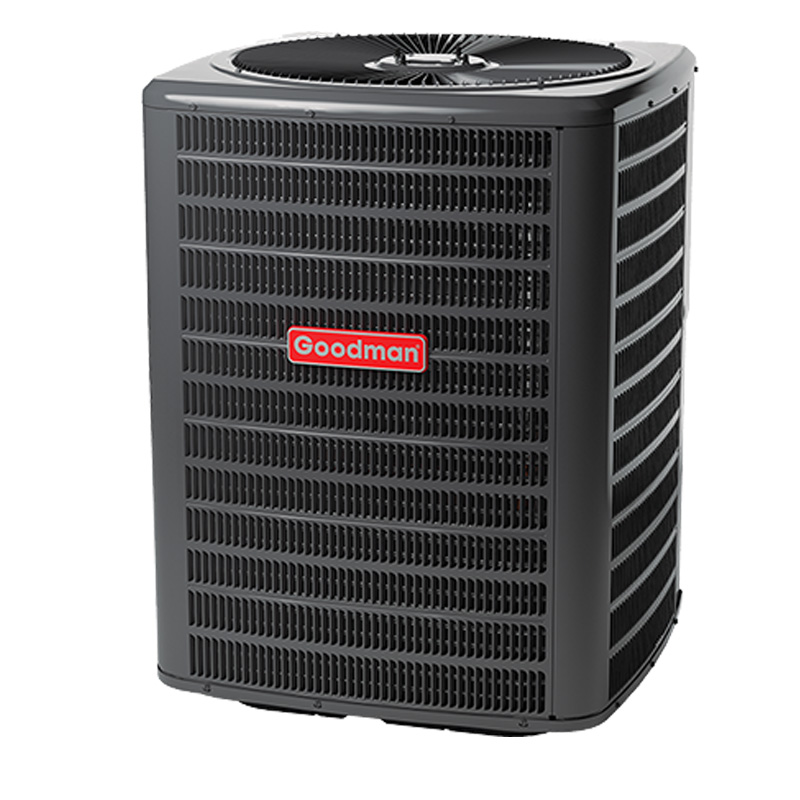
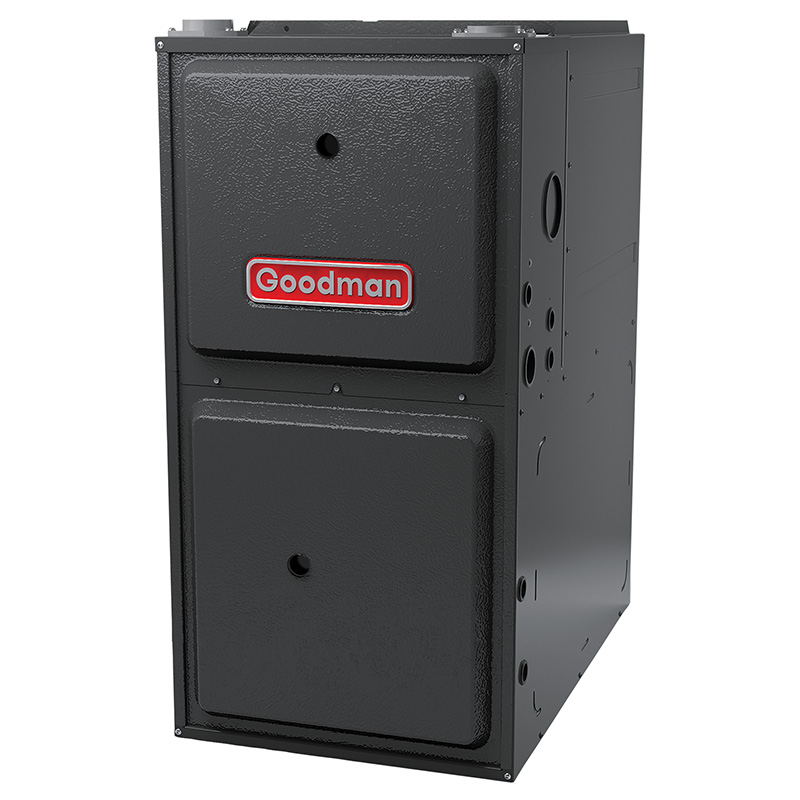
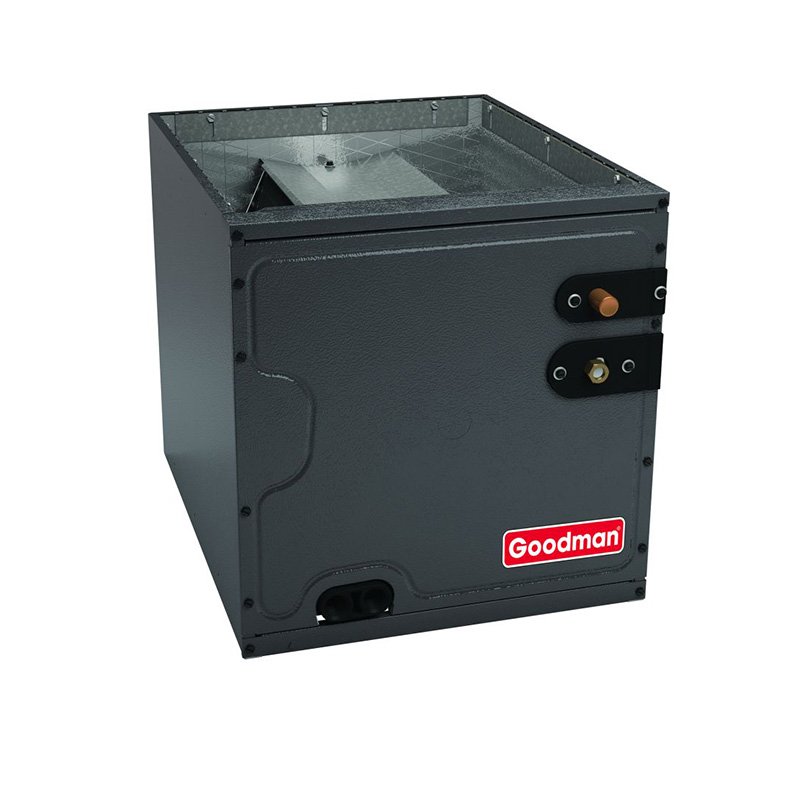
The Goodman GLXS4BA4810 pairs a 4-ton, 14.5 SEER2 R-32 air conditioner with a 120,000 BTU, 80% AFUE two-stage gas furnace in an upflow configuration. That combination addresses a common problem in larger homes: a single-stage system that blasts on at full capacity, overshoots the setpoint, and cycles off before humidity has time to drop. Two-stage operation lets the furnace and the matched cooling system run at a lower output during mild conditions, which means longer run cycles, steadier temperatures from room to room, and measurably better moisture removal compared with single-stage equipment at the same efficiency tier.
The 14.5 SEER2 rating sits at the federal minimum for many northern U.S. climate zones, so this is entry-level efficiency rather than a standout performer. The 80% AFUE furnace tells a similar story: one-fifth of every fuel dollar exits through the flue. Homeowners in cold climates who keep their heat running for five or more months a year will likely recover the cost of stepping up to a 96% AFUE unit within a few heating seasons. Where this system earns its keep is in mixed climates where cooling loads dominate and where budget matters more than peak efficiency. The multi-speed ECM blower motor does add meaningful value by reducing electricity draw at the air handler compared with PSC motors, and it supports better dehumidification by running longer at lower speeds.
R-32 refrigerant is a step forward from R-410A: it has a lower global warming potential and is slightly more efficient per charge weight. Installers are beginning to work with it routinely, though not every technician in every market has completed R-32 certification yet, which is worth confirming before you book a service call. The upflow configuration suits a basement or closet install where supply air rises through the ductwork above. This is not a system for a slab-on-grade home with ductwork in the attic; confirm your duct layout before ordering.
The GLXS4BA4810 is a competent, budget-conscious two-stage system that costs noticeably less than comparable Carrier, Trane, or Lennox setups while delivering honest mid-tier performance. Its real weak spots are a compressor lifespan that tends to trail premium brands and documented evaporator coil leak issues that make a solid parts warranty worth leaning on. If you have a skilled installer and realistic expectations about long-term maintenance costs, it represents fair value for the price.
Overall score is the average of the five ratings above.
What we like
- Two-stage operation improves comfort and humidity control over single-stage alternatives at this price point
- ECM blower motor reduces operating electricity costs compared with PSC motors
- R-32 refrigerant has a lower environmental footprint than R-410A
- Priced roughly 15 to 25 percent below comparable Trane, Carrier, and Lennox equipment
- Parts are widely available and most dealers stock common components like capacitors
Trade-offs
- 80% AFUE is the lowest efficiency tier; annual heating costs will be higher than with a 96% AFUE alternative
- Compressor longevity averages 10 to 14 years versus 15 to 20 years for premium brands, which matters at the 4-ton size where compressor replacement is expensive
- Evaporator coil leaks appear in a meaningful share of owner reports and can be a costly repair outside the warranty window
- R-32 certification is not yet universal, so finding a qualified service technician in rural or smaller markets may take extra effort
What homeowners and pros say about Goodman
Homeowners who have lived with Goodman equipment tend to split into two camps, and the difference usually traces back to who did the installation. On ConsumerAffairs, Goodman scores around 2.5 out of 5, a platform that skews heavily toward complaints, and the recurring theme is repair costs that begin climbing after roughly the seventh year of service. Capacitor failures come up most often and are generally described as a manageable, low-cost fix. Evaporator coil leaks and refrigerant loss within the first year are also documented failure modes, with early refrigerant issues most often traced to installer error or an improper charge at startup rather than a factory defect. Compressor longevity is a legitimate concern at the 4-ton size: Goodman compressors tend to average 10 to 14 years in real-world use, compared with 15 to 20 years reported for premium brands, which means owners of larger systems should plan for that cost before the warranty expires.
Among Google dealer reviews, Goodman averages closer to 3.8 out of 5 across hundreds of location-level reviews, where affordability and parts availability are the most common points of praise from both homeowners and the contractors who install the equipment. HVAC technicians tend to have a pragmatic view: Goodman is workable, parts are easy to source, and the two-stage furnace with an ECM blower is a genuine step up in comfort over the brand’s single-stage line. Where pros push back is on long-term durability expectations. They consistently note that installation quality is the single biggest factor in how long any Goodman unit lasts, and they tend to recommend building a service relationship with a reliable local dealer rather than treating the equipment as fully set-and-forget. For this particular 4-ton, two-stage R-32 system, the honest position is that you are getting a capable package at a real discount, with trade-offs in projected longevity that are worth factoring into your total cost of ownership calculation.
Sources: ConsumerAffairs Goodman owner reviews, AHRI Directory of Certified Product Performance, U.S. DOE appliance and equipment efficiency standards, Goodman product specification sheets.
What it costs to run
At 14.5 SEER2, cooling this 4-ton system for a typical 1200-hour cooling season at the U.S. average electricity rate of $0.17/kWh works out to roughly $675 per year in cooling, about $56 less per year than a minimum-efficiency 13.4 SEER2 unit of the same size. Your real cost depends on your climate and local rate.
Method: (48,000 BTU/hr ÷ 14.5 SEER2) × 1200 hours ÷ 1000 × $0.17/kWh. Rate source: U.S. EIA average; cooling hours: moderate-climate estimate.
How it compares
| Brand | Comparable model | SEER2 | Stage | Price position |
|---|---|---|---|---|
| Goodman | GLXS4BA4810 (this system) | 14.5 | two-stage | Value pick |
| Carrier | Performance 14 (24ACC4) with 58MVC furnace | 14.5 | single-stage | Typically 15 to 25 percent more than Goodman |
| Trane | XR14 (4TTR4) with S9V2 furnace | 14.5 | single-stage | Typically 15 to 25 percent more than Goodman |
| Lennox | Merit 14 (14ACX) with ML180 furnace | 14.5 | single-stage | Typically 15 to 25 percent more than Goodman |
Competitor rows are comparable single-stage units at similar efficiency; price is relative position, not a quote.
Questions about this system
Is 14.5 SEER2 enough, or should I pay more for a higher-efficiency condenser?
14.5 SEER2 meets federal minimums for most northern zones and is legal for installation nationwide, but it is the bottom of the efficiency range. In hot climates where the system runs four or more months a year, a 16 or 17 SEER2 unit will often recover its premium in utility savings within five to eight years. In mild climates with short cooling seasons, the payback period stretches out and the budget model makes more financial sense.
What does the two-stage furnace actually do differently from a single-stage?
A two-stage furnace fires at a lower output, typically around 65 percent of rated capacity, during moderate weather and only ramps to full 120,000 BTU output on the coldest days. The result is longer, steadier burn cycles that hold temperature more evenly and allow the ECM blower to run longer at lower speed, which removes more moisture from the air. Most homeowners notice fewer hot and cold spots compared with single-stage equipment.
What are the most common repairs I should budget for over time?
Dual-run capacitors are the most frequently reported failure on Goodman equipment and are generally a straightforward repair in the $300 to $600 range. Evaporator coil leaks show up in a meaningful share of owner reports and can cost significantly more, especially if refrigerant has to be recovered and recharged. Compressors on Goodman units average 10 to 14 years, so budgeting for that possibility at or before the warranty expiration is prudent at the 4-ton size.
Does my installer need special certification to work with R-32 refrigerant?
Yes. R-32 is an A2L refrigerant, meaning it is mildly flammable, and most jurisdictions require technicians to hold specific R-32 or A2L handling certification to install and service it legally. Before scheduling installation, confirm that your contractor holds the appropriate credential and that their equipment is rated for A2L refrigerants. In some smaller markets, finding a certified tech may require a bit more searching.
Can I install this in a garage or utility closet, or does it strictly need a basement?
The upflow configuration means conditioned air exits the top of the air handler and travels up through the supply plenum, so it suits any installation where the ductwork runs overhead, including basement mechanical rooms, interior closets on the ground floor, or utility rooms. It is not suitable for attic installations or applications where the ductwork runs below the unit. The space must also meet minimum clearance requirements and local codes for gas appliance ventilation, so have your installer verify the site before equipment is delivered.
Specifications
| Cooling capacity | 4 Ton |
| Efficiency | 14.5 SEER2 |
| Furnace output | 120000 BTU |
| Furnace efficiency | 80% AFUE |
| Configuration | Upflow |
| Refrigerant | R-32 |
| Model | GLXS4BA4810 |