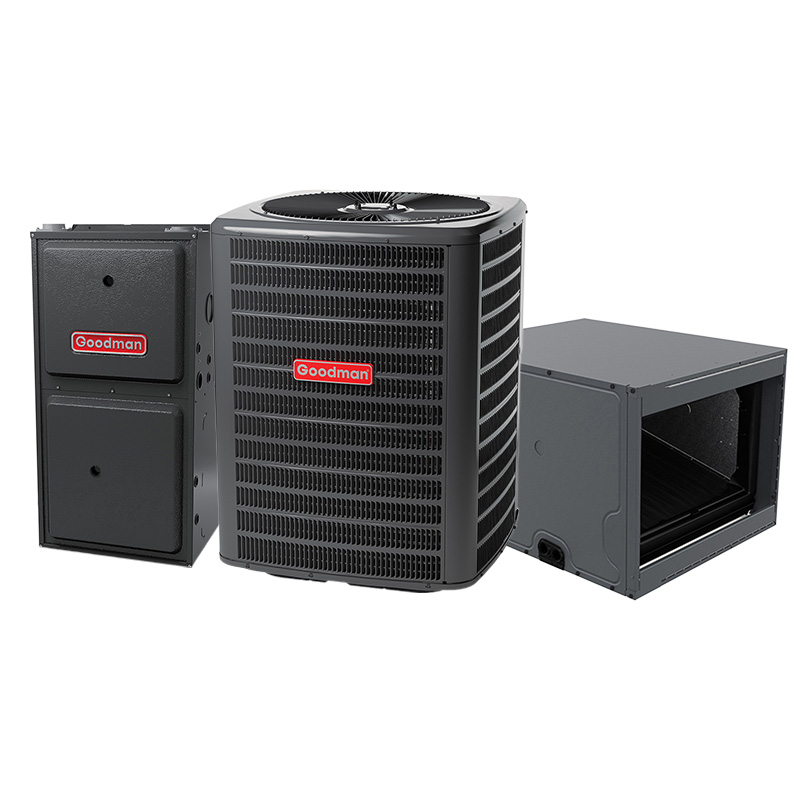
Goodman 4 Ton 14.5 SEER2 AC & Gas Furnace System – Multi-Speed, 100000 BTU Gas Furnace, 92% AFUE, Horizontal, R32
View on AC Direct see your lowest price →Check current price on AC Direct →
Key features
- 14.5 SEER2 single-stage cooling on a 4-ton platform using R-32 refrigerant
- 92% AFUE gas furnace rated at 100,000 BTU input for larger homes or colder climates
- Horizontal configuration designed for attic, closet, and tight-clearance installs
- Multi-speed blower motor improves airflow balance and humidity control vs. single-speed
- R-32 refrigerant: lower global-warming potential than legacy R-410A systems
- Goodman Lifetime Heat Exchanger Limited Warranty and 10-year parts warranty when registered
About this system
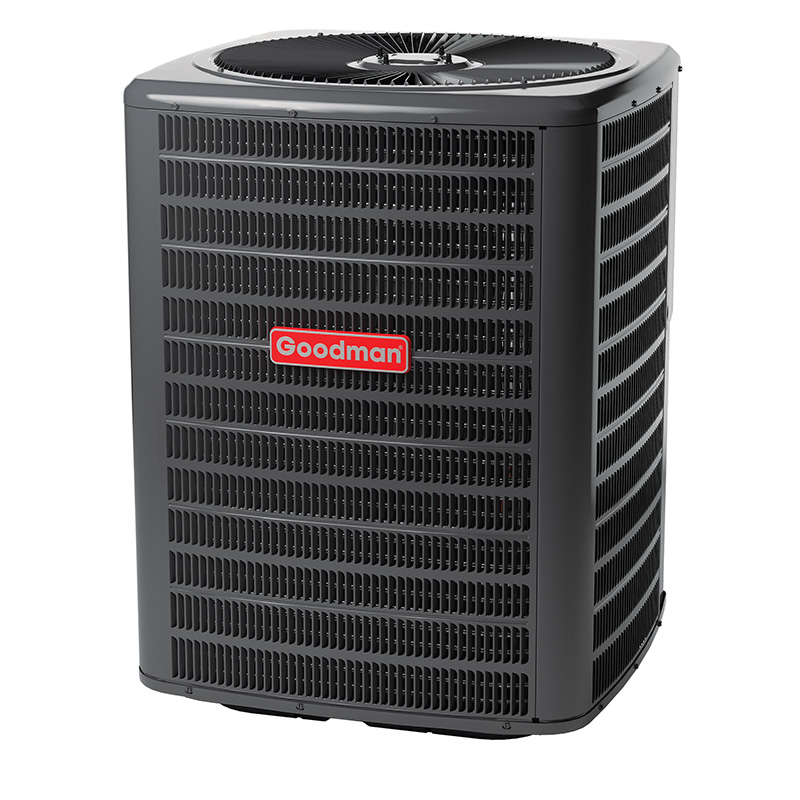
The Goodman GLXS5BA4810D pairs a 4-ton, 14.5 SEER2 single-stage air conditioner with a 100,000 BTU, 92% AFUE multi-speed gas furnace in a horizontal configuration, making it a practical choice for attic or crawlspace installations where vertical clearance is limited. The R-32 refrigerant charge reflects an industry shift toward lower global-warming-potential refrigerants, and the 14.5 SEER2 rating lands just above the federal minimums that took effect in 2023, meaning this system meets current efficiency standards without moving into the premium-efficiency tier.
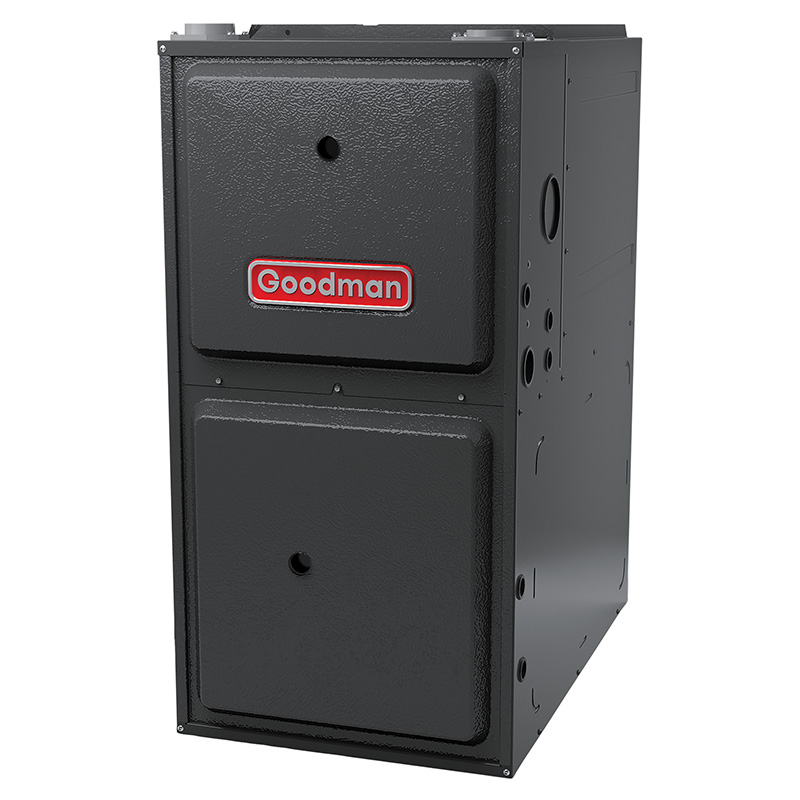
At 92% AFUE, the furnace converts 92 cents of every dollar of gas into usable heat, which is a solid mid-efficiency result. It will not cut heating bills as aggressively as a 96% or 98% modulating unit, but the gap narrows considerably in mild to moderate climates. The multi-speed blower on the furnace does help with airflow consistency and can improve dehumidification performance compared to a fixed-speed motor, a real benefit in humid regions. This bundle suits homeowners replacing an aging system who want a functional, code-compliant upgrade without paying for high-efficiency features they may not fully recover in energy savings before the equipment needs replacement.
The GLXS5BA4810D is a straightforward value buy for homeowners who need a dependable replacement system without a premium price tag, and who understand the efficiency sits at the lower end of the current market. It does what the specs promise, but owner satisfaction over the long run tracks closely with how carefully the system is commissioned at installation, and with how quickly minor component failures like capacitors are addressed.
Overall score is the average of the five ratings above.
What we like
- Priced roughly 15 to 25 percent below comparable Carrier, Trane, and Lennox equipment
- Horizontal configuration opens up install locations unavailable to upflow-only systems
- Multi-speed blower provides more even temperature distribution than basic single-speed alternatives
- 92% AFUE is a meaningful efficiency step above 80% furnaces common in older homes
- R-32 refrigerant meets current low-GWP regulatory direction and is widely serviceable
Trade-offs
- Single-stage cooling provides no part-load modulation, which can result in short cycling and humidity swings in shoulder seasons
- Compressor longevity averages 10 to 14 years versus 15 to 20 years typical of premium-brand compressors
- Dual-run capacitor failures and evaporator coil leaks are documented recurring issues across owner reports
- A minority of owners report refrigerant leaks in the first year, often tracing back to install or factory charge issues rather than component failure
What homeowners and pros say about Goodman
Homeowners who leave reviews about Goodman equipment on ConsumerAffairs give the brand roughly 2.5 out of 5 stars, and that channel skews toward people who had a problem worth writing about. The recurring theme in those complaints is repair costs that start climbing after about year seven, with dual-run capacitor failures and evaporator coil leaks appearing repeatedly. Google dealer reviews tell a more balanced story, averaging around 3.8 out of 5 across hundreds of location-level reviews, where affordability is the praise heard most often. For this horizontal 4-ton bundle, the feedback pattern is consistent with Goodman’s broader lineup: buyers who got a proper install and kept up with maintenance tend to report satisfaction; buyers who did not often report frustration that feels disproportionate to the price they paid.
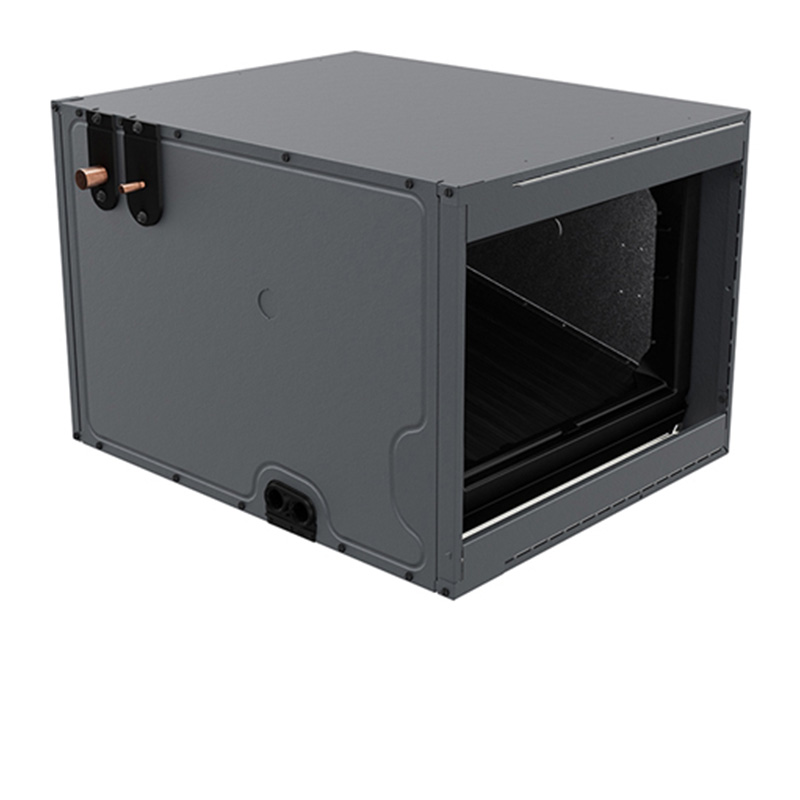
HVAC technicians have a nuanced view of Goodman. Many will install it without hesitation for price-sensitive customers and note that capacitor swaps and minor refrigerant fixes are routine, low-drama service calls. The concern they raise more seriously is compressor longevity, which on Goodman equipment tends to average 10 to 14 years compared to 15 to 20 years on premium-brand compressors. For this system specifically, the horizontal orientation adds one more variable: a furnace installed in an attic or crawlspace that never gets looked at is the one most likely to develop an unnoticed coil leak or loose fitting. The consistent advice from the trade is that Goodman rewards attentive ownership and penalizes neglect more than premium brands do.
Sources: ConsumerAffairs Goodman owner reviews, AHRI Directory of Certified Product Performance, U.S. DOE appliance and equipment efficiency standards, Goodman product specification sheets.
What it costs to run
At 14.5 SEER2, cooling this 4-ton system for a typical 1200-hour cooling season at the U.S. average electricity rate of $0.17/kWh works out to roughly $675 per year in cooling, about $56 less per year than a minimum-efficiency 13.4 SEER2 unit of the same size. Your real cost depends on your climate and local rate.
Method: (48,000 BTU/hr ÷ 14.5 SEER2) × 1200 hours ÷ 1000 × $0.17/kWh. Rate source: U.S. EIA average; cooling hours: moderate-climate estimate.
How it compares
| Brand | Comparable model | SEER2 | Stage | Price position |
|---|---|---|---|---|
| Goodman | GLXS5BA4810D | 14.5 | Single-stage | Value pick |
| Carrier | Comfort 14 (24ACC4) | 14.3 | Single-stage | Typically 15 to 25 percent more than Goodman |
| Trane | XR14c | 14.3 | Single-stage | Typically 15 to 25 percent more than Goodman |
| Lennox | Merit 14ACX | 14.3 | Single-stage | Typically 15 to 25 percent more than Goodman |
Competitor rows are comparable single-stage units at similar efficiency; price is relative position, not a quote.
Questions about this system
Is a horizontal furnace harder to find a technician to service than a standard upflow unit?
Most experienced HVAC technicians work on horizontal furnaces regularly since they are common in attic and manufactured-home installs, so service availability is generally not a concern. That said, clearance around the unit in tight attics can slow down a service call, so making sure the install leaves adequate working room matters for long-term maintenance costs.
Does R-32 refrigerant cost more to service or recharge than R-410A?
R-32 is increasingly stocked by HVAC wholesalers and pricing is currently comparable to R-410A in most markets, though that can vary by region and time of year. Your technician will need EPA Section 608 certification to handle it, which is standard for any licensed HVAC professional.
What does the 10-year parts warranty actually cover, and is there anything I need to do to activate it?
Goodman's 10-year parts limited warranty covers the compressor, coil, and most functional components, but it requires product registration within 60 days of installation to activate. Without registration, the default warranty on some parts drops to 5 years, so registering promptly at Goodman's website is worth doing immediately after install.
The system is 4 tons and 100,000 BTU. How do I know if that sizing is right for my home?
Sizing should be confirmed with a Manual J load calculation performed by your HVAC contractor before purchase, not estimated by square footage alone. An oversized system will short-cycle, reducing humidity control and accelerating wear, while an undersized one will struggle on peak days; neither outcome is covered by warranty.
Capacitor failures come up a lot in Goodman reviews. How expensive is that repair, and is it something I can plan for?
Dual-run capacitor replacement on Goodman equipment typically runs in the 300 to 600 dollar range including labor and is considered a routine, quick fix by most technicians. Adding a capacitor inspection to annual preventive maintenance visits is a straightforward way to catch a weakening capacitor before it causes a no-cool call in peak summer heat.
Specifications
| Cooling capacity | 4 Ton |
| Efficiency | 14.5 SEER2 |
| Furnace output | 100000 BTU |
| Furnace efficiency | 92% AFUE |
| Configuration | Horizontal |
| Refrigerant | R-32 |
| Model | GLXS5BA4810D |