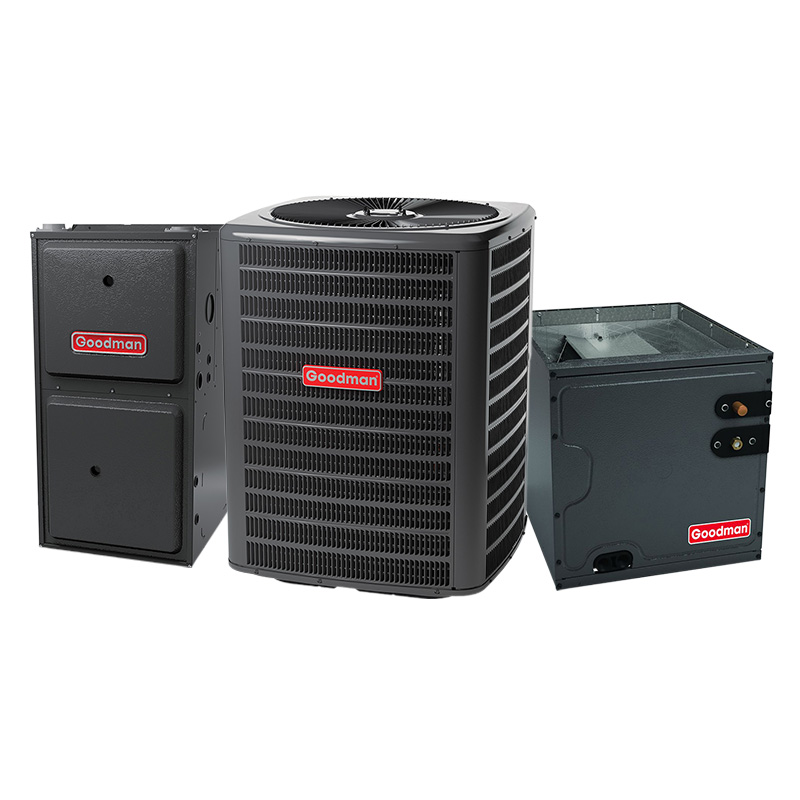
Goodman 4 Ton 14.5 SEER2 AC & Gas Furnace System – Multi-Speed, 120000 BTU Gas Furnace, 92% AFUE, Upflow, R32
View on AC Direct see your lowest price →Check current price on AC Direct →
Key features
- 4-ton cooling capacity with 14.5 SEER2 efficiency rating
- 120,000 BTU gas furnace at 92% AFUE for moderate-efficiency heating
- Multi-speed blower motor for more consistent airflow and comfort
- R-32 refrigerant, lower global warming potential than R-410A
- Upflow configuration suits basement and closet installations with supply air exiting the top
- Factory-matched system qualifies for Goodman's 10-year parts limited warranty when registered
About this system
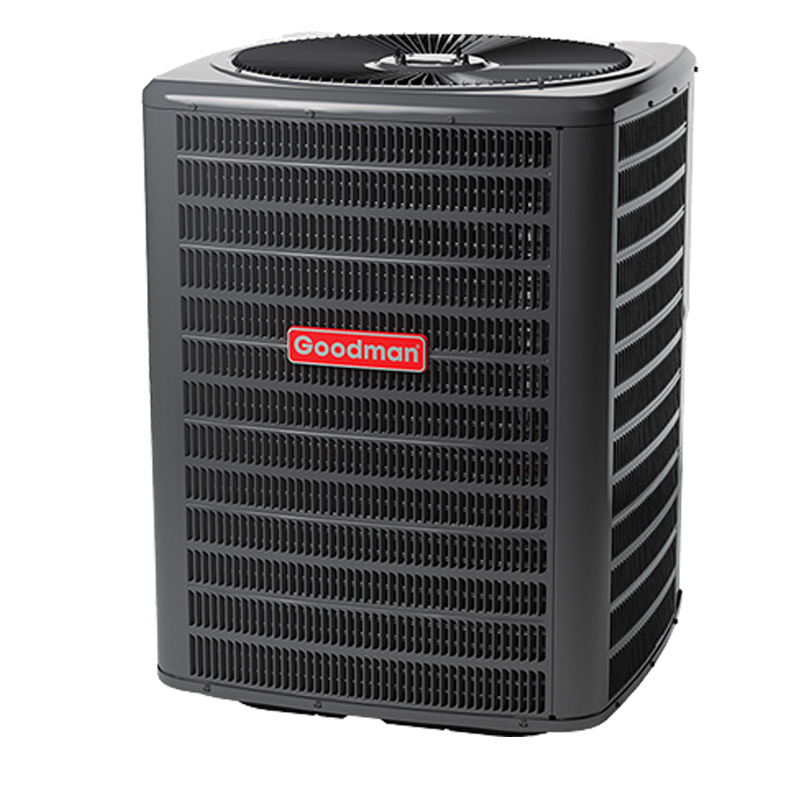
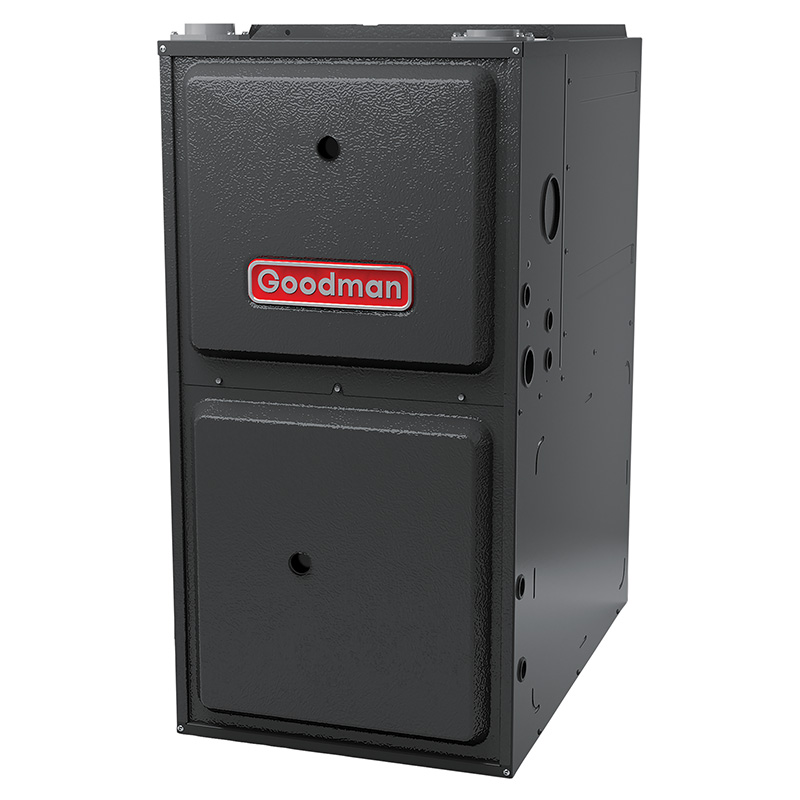
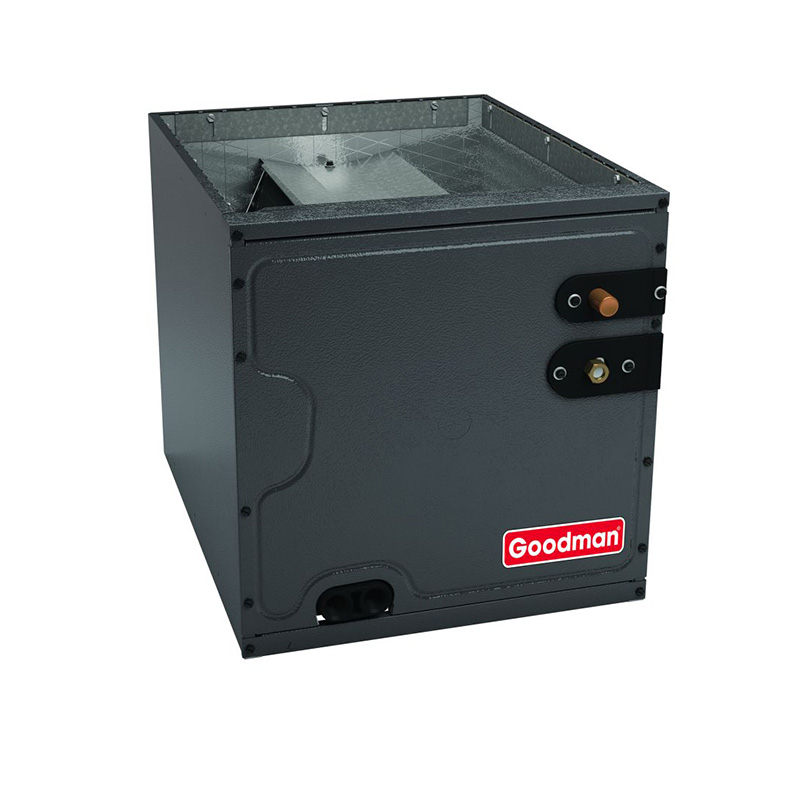
The Goodman GLXS4BA4810 pairs a 4-ton, 14.5 SEER2 central air conditioner with a 120,000 BTU, 92% AFUE upflow gas furnace in a split system designed for larger homes, typically in the 2,200 to 2,800 square foot range depending on climate and insulation. The R-32 refrigerant charge is a forward-looking choice: R-32 has a lower global warming potential than the R-410A it replaces and is increasingly the industry standard as R-410A is phased down. The multi-speed furnace blower improves airflow consistency and dehumidification versus a single-speed unit, which matters in humid climates where a 4-ton system is most commonly specified.
At 14.5 SEER2 and 92% AFUE, this system sits at the entry tier of modern efficiency requirements. It meets or exceeds 2023 federal minimums for most U.S. regions, but it is not a high-efficiency build. Homeowners with high energy costs or plans to stay in the home for 15-plus years may want to compare the operating cost savings of a 16+ SEER2 or 96% AFUE system against the upfront price difference. For buyers whose priority is replacing a failing system at a controlled budget, or who are equipping a rental property or new construction where first cost matters most, the value proposition here is straightforward.
The Goodman GLXS4BA4810 is a competent, budget-conscious system that does the job reliably when properly installed and maintained, but it carries real long-term risk around capacitor failures, potential coil leaks, and a compressor lifespan that typically runs shorter than premium brands. It is the right call for cost-focused buyers who go in with realistic expectations and choose a skilled installer.
Overall score is the average of the five ratings above.
What we like
- Priced 15 to 25 percent below comparable Carrier, Trane, and Lennox systems
- R-32 refrigerant is more future-proof than R-410A as regulations tighten
- Multi-speed blower improves comfort and dehumidification over single-speed alternatives
- 92% AFUE meets current federal efficiency standards and cuts heating waste vs. 80% units
- 10-year registered parts warranty is competitive for the value segment
Trade-offs
- Dual-run capacitors are the most commonly reported failure, usually within the first 7 to 10 years, adding 300 to 600 dollars in service costs
- Evaporator coil leaks appear in a meaningful share of owner reviews, a potentially expensive repair
- Compressor lifespan averages 10 to 14 years versus 15 to 20 for premium brands
- A minority of owners report refrigerant leaks in the first year, typically tied to install or initial charge issues rather than the unit itself
What homeowners and pros say about Goodman
On ConsumerAffairs, Goodman as a brand scores around 2.5 out of 5, though that platform skews heavily toward owners who had a problem and felt motivated to write about it. The recurring pattern in those reviews is not early catastrophic failure but rather repair costs that start climbing after roughly year seven, with dual-run capacitor replacements and evaporator coil leaks being the most cited culprits. Compressor longevity is another honest concern: Goodman compressors tend to average 10 to 14 years in the field, a shorter window than the 15 to 20 years more commonly seen with Trane, Carrier, and Lennox equipment. A smaller but real share of owners have reported refrigerant leaks within the first year, which HVAC technicians generally attribute to installation or initial charge errors rather than a defect in the equipment itself, underscoring how much this brand’s real-world performance depends on who installs it.
The more balanced picture comes from Google dealer reviews, where Goodman-installed systems earn around 3.8 out of 5 across hundreds of reviews per location, and affordability is consistently the most praised attribute. HVAC professionals who work on these systems frequently note that a well-installed, regularly maintained Goodman unit can serve a homeowner comfortably for a decade or more, while a poorly installed one can develop problems regardless of the brand on the cabinet. For this 4-ton, 14.5 SEER2 system specifically, the multi-speed blower and R-32 charge are genuine positives, and the 10-year registered parts warranty provides a meaningful backstop if issues emerge. The honest trade-off is that buyers are accepting a higher probability of mid-life service calls in exchange for a lower purchase price, and that is a reasonable trade for the right buyer.
Sources: ConsumerAffairs Goodman owner reviews, AHRI Directory of Certified Product Performance, U.S. DOE appliance and equipment efficiency standards, Goodman product specification sheets.
What it costs to run
At 14.5 SEER2, cooling this 4-ton system for a typical 1200-hour cooling season at the U.S. average electricity rate of $0.17/kWh works out to roughly $675 per year in cooling, about $56 less per year than a minimum-efficiency 13.4 SEER2 unit of the same size. Your real cost depends on your climate and local rate.
Method: (48,000 BTU/hr ÷ 14.5 SEER2) × 1200 hours ÷ 1000 × $0.17/kWh. Rate source: U.S. EIA average; cooling hours: moderate-climate estimate.
How it compares
| Brand | Comparable model | SEER2 | Stage | Price position |
|---|---|---|---|---|
| Goodman | GLXS4BA4810 | 14.5 | Single-stage | Value pick |
| Carrier | Comfort 14 Series (24ACC4) | 14.3 to 15 | Single-stage | Typically 15 to 25 percent more than Goodman |
| Trane | XR14 Series | 14.3 to 15 | Single-stage | Typically 15 to 25 percent more than Goodman |
| Lennox | Merit ML14XC1 Series | 14.3 to 15 | Single-stage | Typically 15 to 25 percent more than Goodman |
Competitor rows are comparable single-stage units at similar efficiency; price is relative position, not a quote.
Questions about this system
Is a 4-ton unit the right size for my house, or should I get a load calculation done first?
A proper Manual J load calculation is strongly recommended before purchasing any 4-ton system. Oversizing causes short cycling, poor dehumidification, and accelerated wear, while undersizing leaves the system running constantly in peak weather. Square footage alone is not a reliable sizing guide because insulation, window area, ceiling height, and climate all matter.
Will my existing ductwork work with this system's R-32 refrigerant?
The refrigerant type does not affect ductwork compatibility. However, R-32 requires that your installer use components and tools rated for R-32 service, including a manifold gauge set and recovery equipment designated for this refrigerant. Confirm your contractor has R-32-compatible equipment before scheduling the installation.
How do I register the warranty to get the full 10 years on parts?
Goodman requires online product registration within a specified window after installation, typically 60 days, to activate the 10-year limited parts warranty. Without registration, the default coverage drops to five years on parts. Keep your installation invoice and register promptly at Goodman's website using the model and serial numbers.
The dual-run capacitor failure rate sounds concerning. Can I do anything to reduce that risk?
Capacitor failures are largely a heat and voltage stress issue. Annual preventive maintenance that includes capacitor testing and replacement before failure, keeping the outdoor unit shaded if possible, and ensuring proper voltage at the unit can all extend capacitor life. Capacitors are relatively inexpensive to replace, typically 300 to 600 dollars including labor, so budgeting for one replacement in the system's lifetime is reasonable.
What does the upflow configuration mean, and is this the right orientation for my home?
Upflow means the furnace draws return air in at the bottom and discharges conditioned supply air out the top, making it the correct choice when the air handler sits in a basement or ground-level closet with ductwork running overhead. If your ductwork runs under the floor, you need a downflow unit instead. Confirm your existing duct configuration before ordering.
Specifications
| Cooling capacity | 4 Ton |
| Efficiency | 14.5 SEER2 |
| Furnace output | 120000 BTU |
| Furnace efficiency | 92% AFUE |
| Configuration | Upflow |
| Refrigerant | R-32 |
| Model | GLXS4BA4810 |