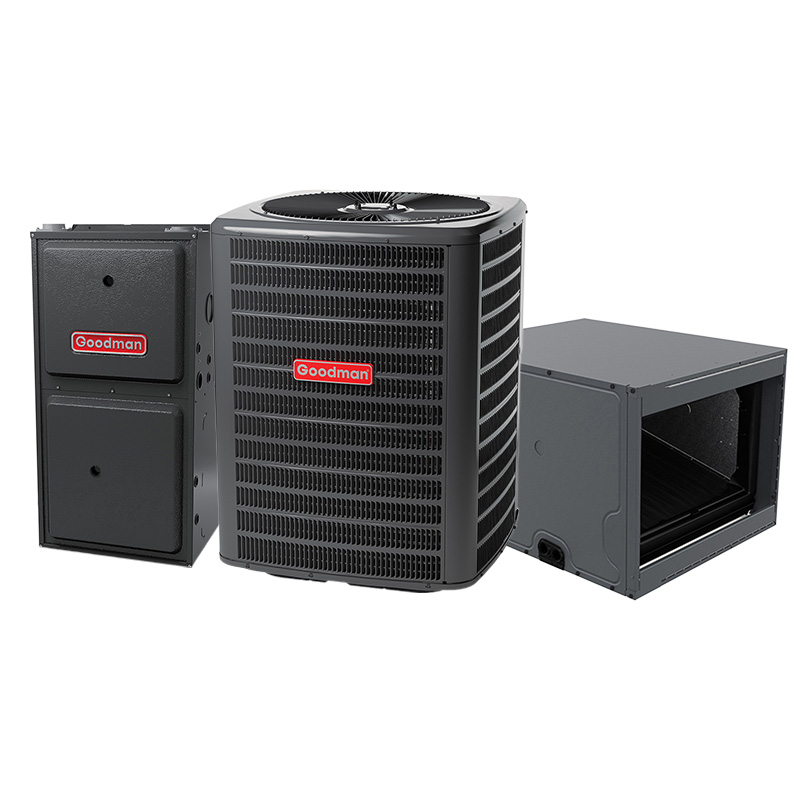
Goodman 4 Ton 14.5 SEER2 AC & Gas Furnace System – Multi-Speed, 80000 BTU Gas Furnace, 92% AFUE, Horizontal, R32
View on AC Direct see your lowest price →Check current price on AC Direct →
Key features
- 4-ton cooling capacity, 14.5 SEER2 efficiency rating
- 80,000 BTU, 92% AFUE multi-speed gas furnace, horizontal configuration
- R-32 refrigerant with lower global-warming potential than R-410A
- Multi-speed blower improves humidity control and reduces noise at partial loads
- 10-year parts and limited lifetime heat exchanger warranty when registered within 60 days
- Priced approximately 15 to 25 percent below comparable Carrier, Trane, and Lennox systems
About this system
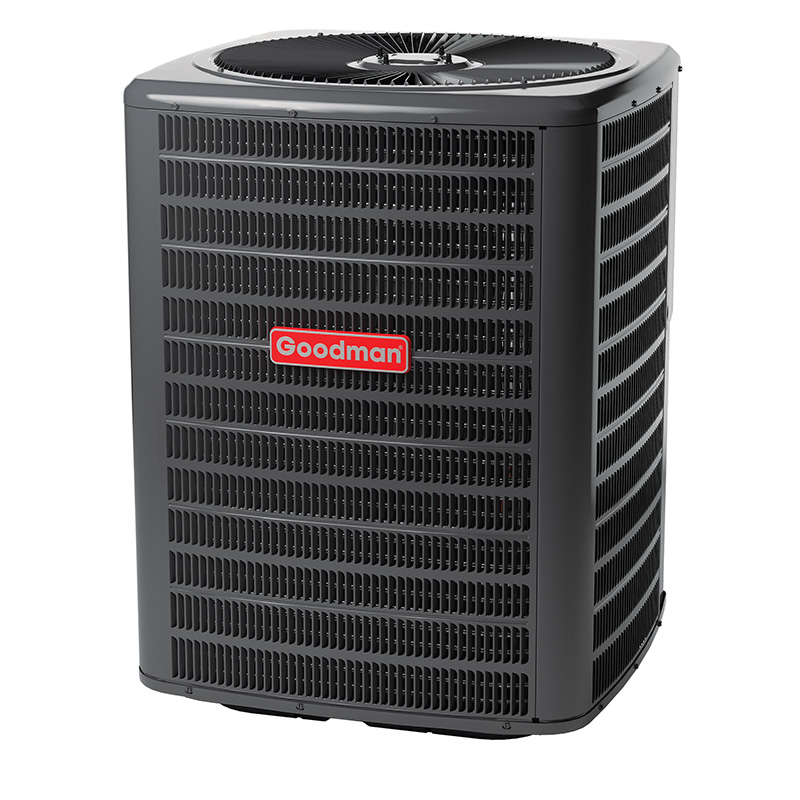
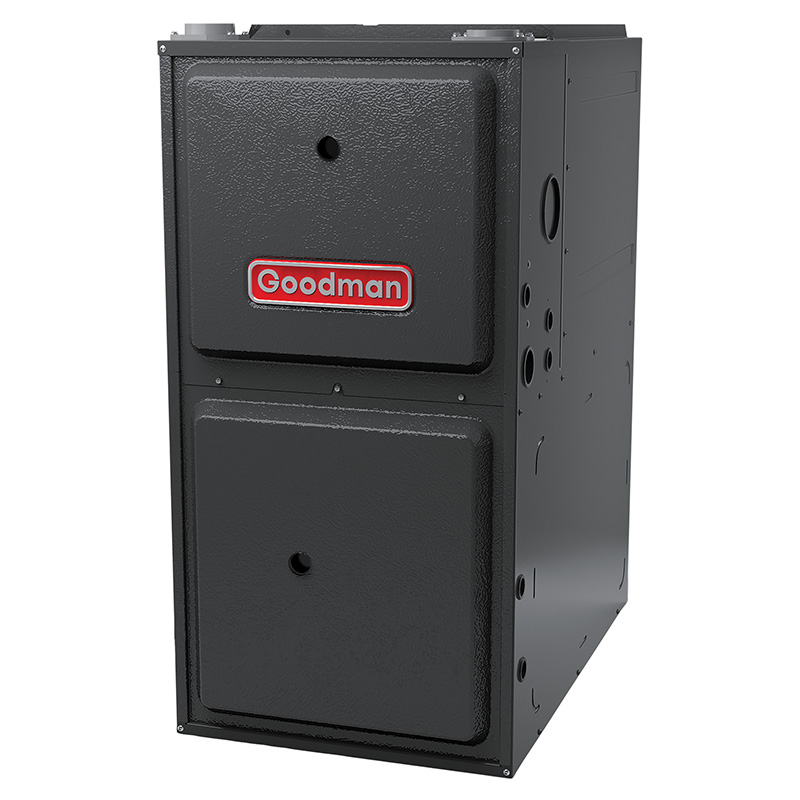
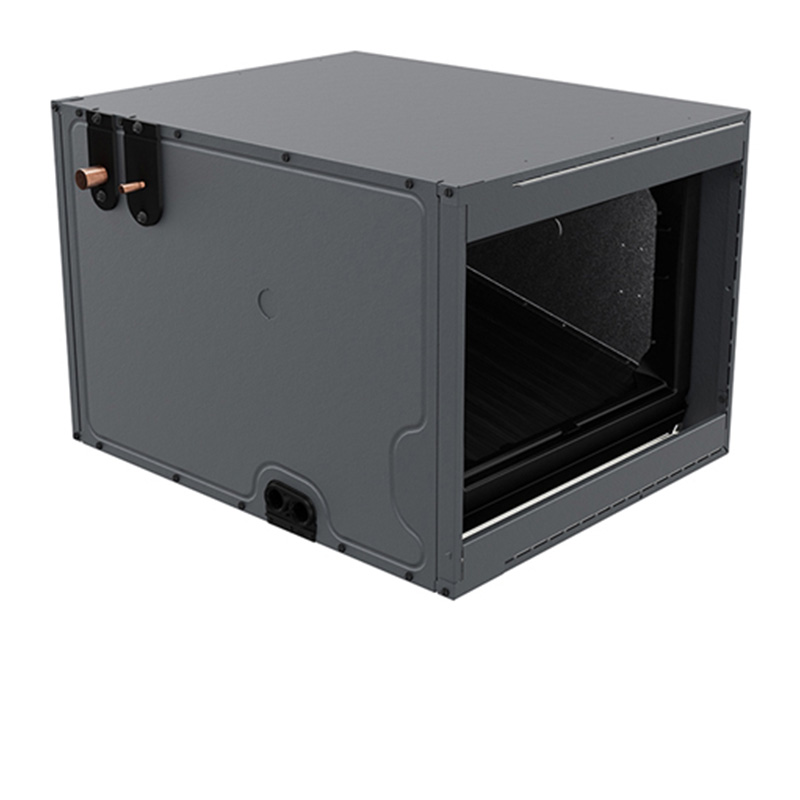
The Goodman GLXS5BA4810D pairs a 4-ton, 14.5 SEER2 split-system air conditioner with an 80,000 BTU, 92% AFUE multi-speed gas furnace configured for horizontal installation. That combination makes it a practical choice for homes with attic or crawlspace air handlers where upflow is not an option, and for climates where cooling demand is high but moderate heating efficiency is acceptable. R-32 refrigerant offers a lower global-warming potential than the R-410A it replaces, and most certified technicians are already equipped to handle it.
At 14.5 SEER2 the cooling side clears the federal minimum thresholds now in effect across most of the country, landing in the entry-level tier of modern efficiency. It will run noticeably cheaper than an older 10 or 12 SEER system but will not approach the operating savings of a 16 or 18 SEER2 variable-speed unit. The 92% AFUE furnace converts 92 cents of every gas dollar into usable heat, which is a solid mid-efficiency rating that avoids the condensate drain complexity of a 96-plus percent unit. Multi-speed blower operation provides quieter low-demand runs and marginally better humidity control compared to single-speed alternatives.
This system delivers a serviceable, code-compliant efficiency package at a price point that is hard to match among major brands, making it a reasonable choice for budget-conscious homeowners who understand the trade-off. Long-term ownership costs depend heavily on install quality, and documented failure modes including dual-run capacitors, evaporator coil leaks, and compressor longevity that trails premium brands should factor into any budget planning beyond year seven.
Overall score is the average of the five ratings above.
What we like
- Entry-level price point roughly 15 to 25 percent below Carrier, Trane, and Lennox equivalents
- 92% AFUE furnace delivers solid heating efficiency without the drain complexity of a 96-plus percent unit
- Multi-speed blower offers quieter operation and better moisture removal than single-speed alternatives
- R-32 refrigerant meets current regulatory direction and is widely serviceable by certified technicians
- Horizontal furnace configuration opens up installation in attics and crawlspaces where vertical units cannot fit
Trade-offs
- 14.5 SEER2 is entry-level efficiency; operating cost savings are modest compared to 16 SEER2 or higher systems
- Dual-run capacitor failures and evaporator coil leaks are documented recurring issues, adding to long-term service costs
- Compressor lifespan averages 10 to 14 years versus 15 to 20 years reported for premium brands
- ConsumerAffairs scores average around 2.5 out of 5, with repair cost complaints rising noticeably after roughly year seven
What homeowners and pros say about Goodman
Homeowners who track HVAC spending closely tend to frame Goodman equipment in straightforward terms: the upfront savings are real, and the brand’s Google dealer reviews average around 3.8 out of 5 across hundreds of location-level ratings, with affordability appearing as the most consistent point of praise. The friction shows up later. On ConsumerAffairs, where the audience skews toward people who have had problems, Goodman averages roughly 2.5 out of 5, and the complaints cluster around repair bills that start accumulating after about year seven. Dual-run capacitor failures are the most frequently cited issue, typically a 300 to 600 dollar fix that most homeowners can absorb, but evaporator coil leaks also appear with enough regularity to be a legitimate budget concern rather than a fringe event.
HVAC technicians who work on a variety of brands tend to describe Goodman systems as straightforward to diagnose and reasonably easy to source parts for, which matters for long-term serviceability. Their consistent caution is about compressor lifespan: Goodman compressors are broadly reported to average 10 to 14 years in the field, compared to 15 to 20 years from premium brands. For this horizontal system specifically, a minority of first-year refrigerant leak reports in owner reviews most often trace back to installation or initial charge issues rather than equipment defects, which reinforces the technician consensus that install quality is the single largest variable in how any Goodman unit actually performs over time.
Sources: ConsumerAffairs Goodman owner reviews, AHRI Directory of Certified Product Performance, U.S. DOE appliance and equipment efficiency standards, Goodman product specification sheets.
What it costs to run
At 14.5 SEER2, cooling this 4-ton system for a typical 1200-hour cooling season at the U.S. average electricity rate of $0.17/kWh works out to roughly $675 per year in cooling, about $56 less per year than a minimum-efficiency 13.4 SEER2 unit of the same size. Your real cost depends on your climate and local rate.
Method: (48,000 BTU/hr ÷ 14.5 SEER2) × 1200 hours ÷ 1000 × $0.17/kWh. Rate source: U.S. EIA average; cooling hours: moderate-climate estimate.
How it compares
| Brand | Comparable model | SEER2 | Stage | Price position |
|---|---|---|---|---|
| Goodman | GLXS5BA4810D | 14.5 | Single-stage | Value pick |
| Carrier | Comfort 14 Series (24ACC4) | 14.3 to 14.5 | Single-stage | Typically 15 to 25 percent more than Goodman |
| Trane | XR14c Series | 14.3 to 14.5 | Single-stage | Typically 15 to 25 percent more than Goodman |
| Lennox | Merit 14ACX Series | 14.3 to 14.5 | Single-stage | Typically 15 to 25 percent more than Goodman |
Competitor rows are comparable single-stage units at similar efficiency; price is relative position, not a quote.
Questions about this system
Is a horizontal-only furnace going to be a problem if I ever want to move or reconfigure my system?
Horizontal units are purpose-built for attic or side-load installations and cannot be converted to upflow or downflow without replacing the cabinet. If there is any chance you will move the air handler to a closet or basement in the future, a multi-position furnace would give you more flexibility, though it would come at a higher price.
How does R-32 affect service and refrigerant costs compared to R-410A?
R-32 requires EPA Section 608 certification, which most working technicians already hold, so finding service should not be difficult. R-32 is a mildly flammable refrigerant (A2L classification), meaning your installer must follow updated handling procedures, but it is not considered high-risk for residential use. Pricing for R-32 has been competitive with R-410A, though market availability will continue to evolve.
What is the realistic cost of ownership if the documented failure modes actually occur?
Dual-run capacitor replacement typically runs 300 to 600 dollars including labor and is one of the more common service calls on Goodman equipment. Evaporator coil leaks can cost considerably more depending on whether the coil requires replacement, and a compressor that fails outside the warranty window is a major expense. Budgeting a few hundred dollars per year for service after year seven is a reasonable precaution based on owner-reported patterns.
Does the 10-year parts warranty cover the compressor and evaporator coil?
Yes, the 10-year limited parts warranty covers the compressor, coil, and most major components when you register the unit within 60 days of installation. Without registration it typically drops to five years, so registering promptly is important. The warranty covers parts costs, but labor is not included, which means a coil or compressor claim can still result in a meaningful out-of-pocket labor bill.
How much will 14.5 SEER2 actually save me compared to my older system, and is it worth going higher?
If you are replacing a system rated at 10 to 12 SEER, 14.5 SEER2 will produce a noticeable reduction in cooling-season energy costs, often in the range of 15 to 25 percent depending on local electricity rates and usage hours. Stepping up to 16 or 18 SEER2 would improve those savings further but adds upfront cost, and the payback period depends on how many years you plan to own the home and how hot your summers are.
Specifications
| Cooling capacity | 4 Ton |
| Efficiency | 14.5 SEER2 |
| Furnace output | 80000 BTU |
| Furnace efficiency | 92% AFUE |
| Configuration | Horizontal |
| Refrigerant | R-32 |
| Model | GLXS5BA4810D |