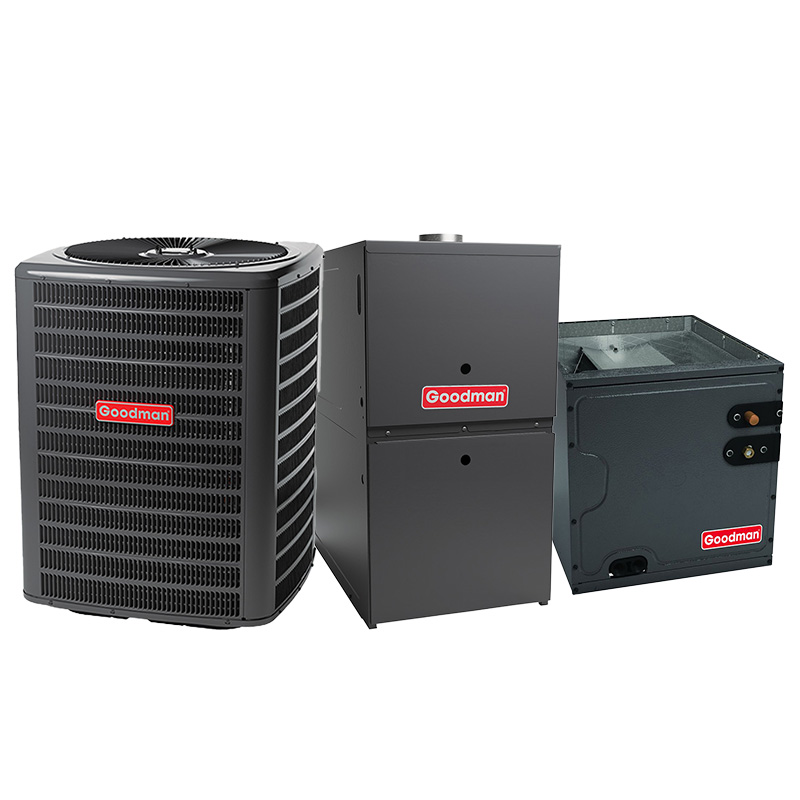
Goodman 4 Ton 14.5 SEER2 AC & Gas Furnace System – Two Stage Variable-Speed 100000 BTU Gas Furnace, 80% AFUE, Upflow, R32
View on AC Direct see your lowest price →Check current price on AC Direct →
Key features
- Two-stage scroll compressor runs at reduced capacity during mild conditions to cut short-cycling and improve humidity removal
- Variable-speed ECM furnace blower adjusts airflow continuously, reducing noise and evening out temperature swings
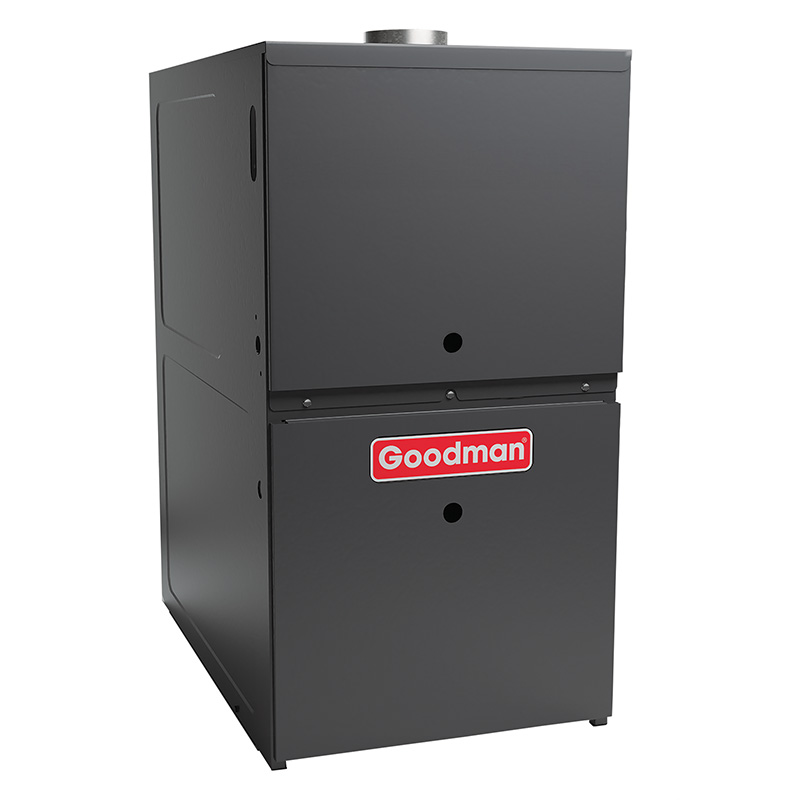
- 100,000 BTU, 80% AFUE upflow gas furnace for single-story and basement-to-main-floor duct configurations
- R-32 refrigerant with a lower global warming potential than R-410A and easier single-component recharge
- 14.5 SEER2 efficiency rating meets current federal minimums for most U.S. climate regions
- Goodman's 10-year parts warranty (registration required within 60 days of install) covers compressor and covered components
About this system
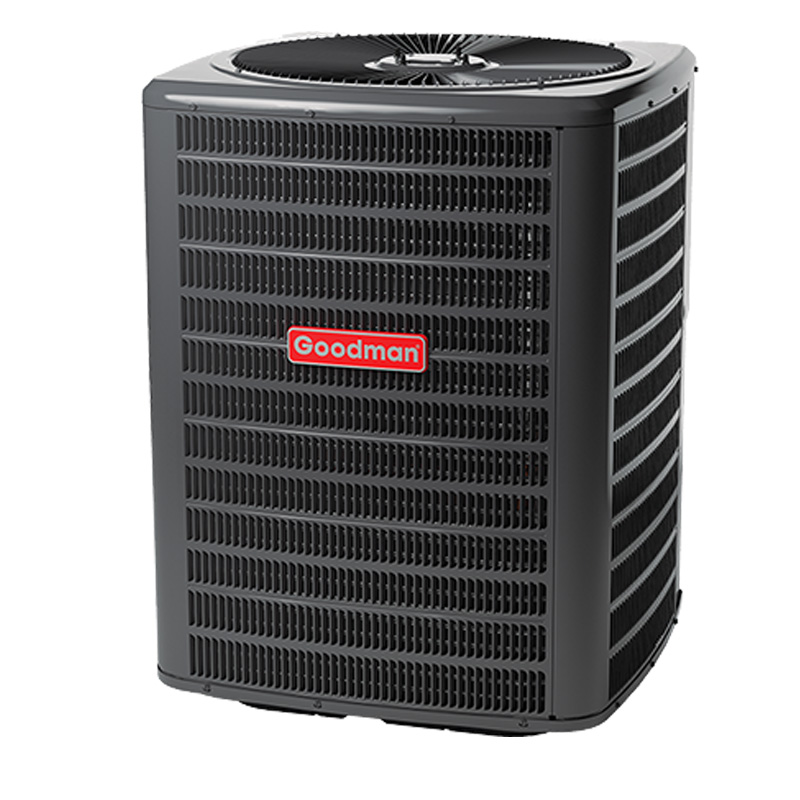
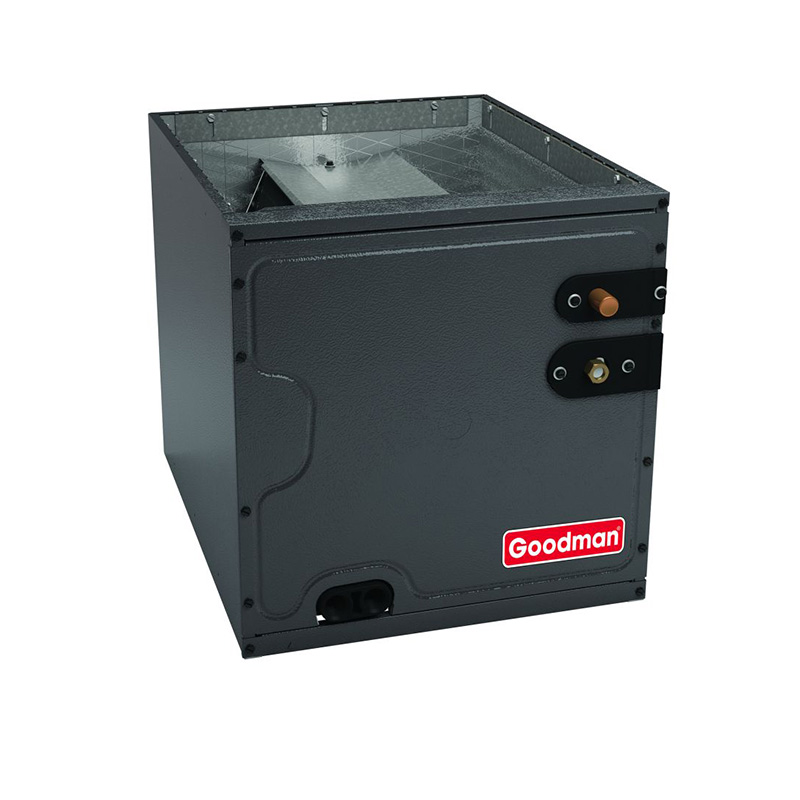
The Goodman 4-ton, 14.5 SEER2 air conditioning and gas furnace system pairs a two-stage cooling unit with a variable-speed, 100,000 BTU upflow gas furnace rated at 80% AFUE. The two-stage compressor runs at low capacity during mild weather and steps up only when demand is high, which reduces short-cycling, lowers humidity more effectively than a single-stage unit, and cuts operating noise compared to a compressor that hammers on and off at full power every time. R-32 refrigerant replaces older R-410A across new Goodman equipment; it carries a lower global warming potential and is easier to recharge in smaller quantities if service is ever needed.
At 14.5 SEER2, this system sits right at the federal minimum efficiency threshold for most U.S. climate zones, so it is not marketed on efficiency savings. What it offers instead is a lower purchase price relative to the Trane, Carrier, and Lennox equivalents, combined with a variable-speed furnace blower that improves comfort, quietness, and air circulation beyond what a PSC-motor furnace provides at a similar price point. The 80% AFUE furnace exhausts roughly 20% of combustion energy through the flue, which is an honest trade-off: it costs less upfront than a 96% AFUE condensing furnace but carries higher annual gas bills, particularly in colder climates where the furnace runs heavily from November through March.
This system suits homeowners replacing aging equipment on a defined budget, investors updating rental properties, or buyers in mild climates where the furnace runs only a few months a year and the efficiency gap between 80% and 96% AFUE translates into modest seasonal savings. It is not the best fit for a household planning a 20-plus-year ownership horizon or for anyone in a cold climate who wants to minimize heating costs over time.
This system delivers genuine comfort upgrades over a basic single-stage setup at a price that is meaningfully lower than comparable Carrier, Trane, or Lennox equipment. The honest trade-offs are a compressor lifespan that trends shorter than premium brands, documented coil and capacitor failure rates that show up in owner reviews, and an 80% AFUE furnace that costs more to operate in cold climates than a higher-efficiency alternative. For budget-conscious buyers with a good installer, it is a reasonable choice; for buyers prioritizing long-term cost of ownership, the math deserves a closer look.
Overall score is the average of the five ratings above.
What we like
- Purchase price runs roughly 15 to 25 percent below comparable Carrier, Trane, and Lennox systems
- Two-stage cooling improves humidity control and comfort over single-stage equipment at this price tier
- Variable-speed ECM blower motor reduces operating noise and provides more consistent airflow than a standard PSC motor
- R-32 refrigerant is a forward-looking choice with lower environmental impact and simpler field servicing
- 10-year parts warranty (with timely registration) provides meaningful coverage on compressor and major components
Trade-offs
- Compressor lifespan averages 10 to 14 years in owner data, notably shorter than the 15 to 20 years reported for premium-brand compressors
- Evaporator coil leaks appear in a meaningful share of owner reviews and can be a costly mid-life repair
- Dual-run capacitor failures are the most commonly reported issue, and while usually a 300 to 600 dollar fix, they signal a pattern of component quality below the premium tier
- 80% AFUE furnace loses about 20% of combustion energy to the flue, adding real cost in climates with long or severe heating seasons
What homeowners and pros say about Goodman
Homeowners who review Goodman equipment through ConsumerAffairs rate the brand at roughly 2.5 out of 5, a score shaped in part by the self-selecting nature of that platform, where frustrated owners are more likely to write than satisfied ones. The recurring pattern in those complaints centers on repair costs that start climbing after about year seven, with evaporator coil leaks and compressor replacements appearing frequently enough to be worth taking seriously. On Google dealer review pages, the picture is more balanced, averaging around 3.8 out of 5 across hundreds of reviews at individual HVAC locations, where affordability is the most consistent praise and most negative feedback traces back to installation problems rather than equipment defects. That distinction matters: HVAC technicians consistently cite install quality as the biggest variable in how long a Goodman system lasts, which means choosing an experienced, licensed installer is arguably more important with this brand than with a premium-tier alternative.
Among the documented failure modes, dual-run capacitor failure is the most commonly reported issue and is generally a straightforward 300 to 600 dollar fix when addressed quickly. More concerning are reports of evaporator coil leaks in a meaningful share of units and compressor lifespans that average 10 to 14 years rather than the 15 to 20 years associated with Trane, Carrier, and Lennox compressors. A small minority of owners also report refrigerant leaks within the first year, which technicians typically attribute to an installation or initial charge problem rather than a manufacturing defect. The two-stage and variable-speed features on this specific system do add comfort value that is genuine and not common at Goodman’s price point, but buyers should budget for possible mid-life component service and treat the 10-year parts warranty as a real asset worth protecting through timely registration.
Sources: ConsumerAffairs Goodman owner reviews, AHRI Directory of Certified Product Performance, U.S. DOE appliance and equipment efficiency standards, Goodman product specification sheets.
What it costs to run
At 14.5 SEER2, cooling this 4-ton system for a typical 1200-hour cooling season at the U.S. average electricity rate of $0.17/kWh works out to roughly $675 per year in cooling, about $56 less per year than a minimum-efficiency 13.4 SEER2 unit of the same size. Your real cost depends on your climate and local rate.
Method: (48,000 BTU/hr ÷ 14.5 SEER2) × 1200 hours ÷ 1000 × $0.17/kWh. Rate source: U.S. EIA average; cooling hours: moderate-climate estimate.
How it compares
| Brand | Comparable model | SEER2 | Stage | Price position |
|---|---|---|---|---|
| Goodman | GSZ2 / GMVC8 Series (this system) | 14.5 | Two-stage / Variable-speed furnace | Value pick |
| Carrier | Comfort 14 Series (24ACC4) | 14.3 to 15 | Single-stage | Typically 15 to 25 percent more than this Goodman system |
| Trane | XR14 Series | 14.3 to 15 | Single-stage | Typically 15 to 25 percent more than this Goodman system |
| Lennox | Merit 14 Series (ML14XC1) | 14.3 to 15 | Single-stage | Typically 15 to 25 percent more than this Goodman system |
Competitor rows are comparable single-stage units at similar efficiency; price is relative position, not a quote.
Questions about this system
Does the 10-year parts warranty cover the evaporator coil and compressor, and what do I need to do to activate it?
Yes, Goodman's 10-year parts limited warranty covers the compressor, coil, and other major components when the unit is registered with Goodman within 60 days of installation by a licensed HVAC contractor. If you miss that registration window, coverage typically drops to five years, so registering promptly matters. Labor costs are not included in the warranty regardless of registration status.
The specs say R-32 refrigerant. Can any HVAC technician service this, or does it require special certification?
R-32 is a mildly flammable (A2L) refrigerant, and technicians working with it need EPA Section 608 certification as well as training on A2L handling procedures. Most larger HVAC companies are already equipped for R-32 work as it becomes the industry standard, but it is worth confirming your service provider has the appropriate equipment and training before scheduling a repair.
How much can I expect to spend on a capacitor replacement if that failure mode hits my unit?
Dual-run capacitor replacement is the most commonly reported repair on Goodman equipment and typically runs between 300 and 600 dollars for parts and labor. It is a relatively quick repair when caught early, but capacitor failure can stress the compressor if the unit continues running with a weak capacitor, so addressing it promptly is important.
Is a 100,000 BTU furnace at 80% AFUE going to be enough for a 4-ton cooling load, and is that size matched correctly?
Furnace sizing is based on heating load, not cooling load, so a 4-ton AC system does not automatically require a specific furnace BTU output. A proper Manual J heat load calculation for your home is the correct way to confirm 100,000 BTU is right for your square footage, insulation, and climate zone. Oversized furnaces short-cycle and reduce comfort, while undersized ones cannot maintain setpoint on the coldest days.
Since Goodman and Daikin are related brands, is this unit the same hardware sold under both names?
Daikin acquired Goodman in 2012, and some manufacturing and component sourcing is shared across the two brands. However, Goodman is intentionally positioned as the value tier with a lower price point, while Daikin-branded equipment generally carries different efficiency ratings, feature sets, and pricing. They are not identical products despite the shared corporate ownership.
Specifications
| Cooling capacity | 4 Ton |
| Efficiency | 14.5 SEER2 |
| Furnace output | 100000 BTU |
| Furnace efficiency | 80% AFUE |
| Configuration | Upflow |
| Refrigerant | R-32 |