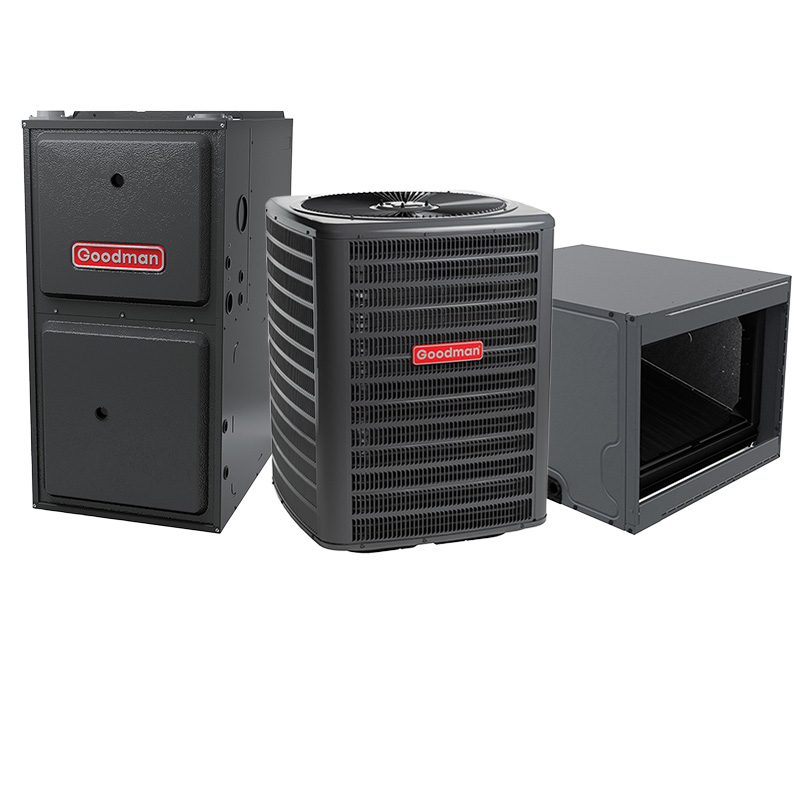
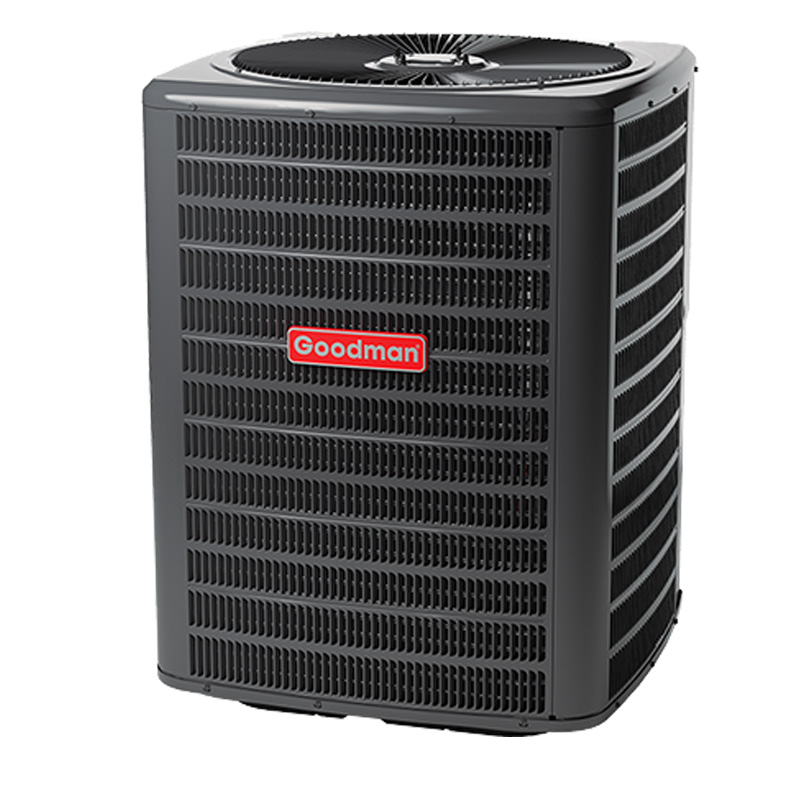
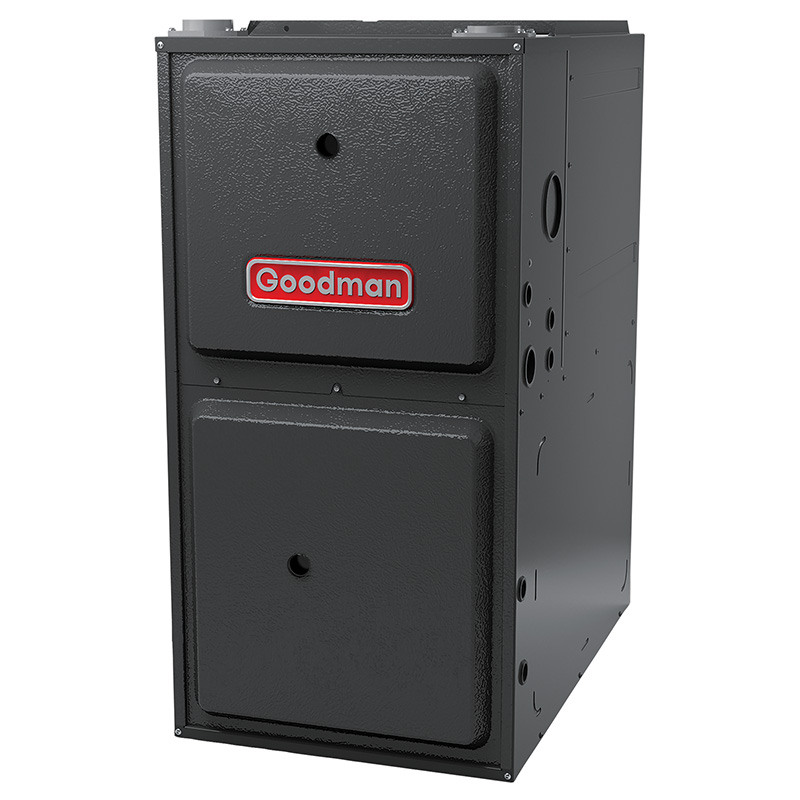
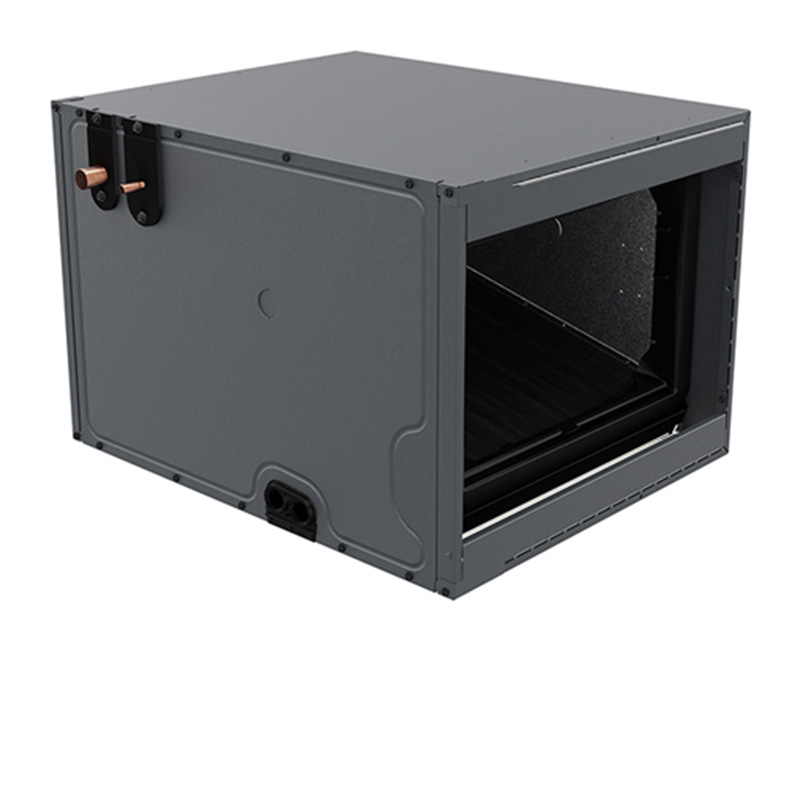
Goodman 4 Ton 14 SEER2 R32 AC System with 80,000 BTU 96% AFUE Gas Furnace – California & Colorado Ultra Low NOx, Horizontal, Multi-Speed ECM
View on AC Direct see your lowest price →Check current price on AC Direct →
Key features
- 14 SEER2 efficiency rating meets current federal minimum for most northern U.S. climate zones
- 96% AFUE gas furnace converts 96 cents of every gas dollar to usable heat
- R-32 refrigerant offers roughly two-thirds lower global warming potential than R-410A
- Ultra Low NOx certified for California and Colorado compliance
- Horizontal configuration suits attic and crawl-space installations
- Multi-speed ECM blower motor improves airflow control and dehumidification vs. PSC motors
About this system
The Goodman 4-ton 14 SEER2 R-32 air conditioner paired with an 80,000 BTU 96% AFUE gas furnace is a straightforward, code-compliant bundle built for homeowners in California and Colorado who need equipment that meets Ultra Low NOx emissions requirements. The horizontal configuration makes it the right fit for attic or crawl-space installations where vertical airflow is not an option, and the multi-speed ECM blower motor improves airflow efficiency and humidity control compared to a standard PSC motor. At 14 SEER2, this system sits at the current federal minimum efficiency threshold for most northern climate zones, meaning it is not a high-efficiency standout but it does meet modern standards without the price premium of 16 SEER2 or higher equipment.
The R-32 refrigerant is a meaningful forward-looking detail. R-32 has a global warming potential roughly two-thirds lower than the R-410A it replaces, and it is increasingly the industry standard as R-410A is phased down under federal regulations. On the heating side, 96% AFUE means 96 cents of every dollar spent on gas becomes usable heat, which puts this furnace near the top of the mid-efficiency range and well clear of the 80% AFUE baseline. Together these two units cover a 1,800 to 2,400 square foot home in most climates, though proper Manual J load calculation by your installer is the only reliable way to confirm sizing for your specific home.
This Goodman bundle delivers solid spec-sheet value for budget-conscious buyers who need Ultra Low NOx compliance and a horizontal install configuration. The 96% AFUE furnace and ECM blower are genuine strengths, but the 14 SEER2 cooling efficiency is baseline rather than impressive, and Goodman's documented repair history after year seven means this system rewards buyers who budget for maintenance and secure a quality installer from the start.
Overall score is the average of the five ratings above.
What we like
- 96% AFUE furnace is near the top of the mid-efficiency range and delivers real energy savings over an 80% unit
- Multi-speed ECM motor improves comfort and humidity management compared to single-speed PSC blowers
- R-32 refrigerant is forward-compatible as R-410A is phased out, reducing future recharge risk
- Ultra Low NOx certification satisfies California and Colorado air quality rules without an equipment upgrade
- Priced 15 to 25 percent below comparable Trane, Lennox, and Carrier systems, lowering the upfront barrier
Trade-offs
- 14 SEER2 is the regulatory minimum, not a high-efficiency system; energy costs will be higher than a 16 SEER2 or above alternative
- Dual-run capacitor failures and evaporator coil leaks are documented recurring failure modes, and compressor lifespan averages 10 to 14 years versus 15 to 20 for premium brands
- A minority of owners report refrigerant leaks within the first year, which points to install sensitivity; this system's performance depends heavily on technician quality
- Horizontal installs add complexity around condensate drainage and refrigerant line routing, raising the stakes for a careful, experienced installer
What homeowners and pros say about Goodman
Homeowners who have purchased Goodman equipment tend to split into two camps, and the dividing line is usually installation quality and what year it is in the system’s life. On Google dealer reviews, Goodman equipment scores around 3.8 out of 5 across hundreds of reviews per location, with affordability and straightforward operation being the most common praise in the early years. On ConsumerAffairs, where unhappy owners are overrepresented, the score drops to roughly 2.5 out of 5, and the recurring theme in the negative reviews is repair costs that begin climbing after about year seven. For this specific horizontal, Ultra Low NOx bundle, installers note that the ECM blower and 96% AFUE furnace are genuine quality components, but they consistently flag that horizontal attic installs raise the consequences of a rushed or inexperienced installation job.
HVAC technicians are candid about Goodman’s specific weak points. Dual-run capacitor failures are the most frequently cited repair call, and while the fix is typically quick and falls in the 300 to 600 dollar range, it is not rare. Evaporator coil leaks show up in a meaningful share of longer-term owner accounts and represent a more significant service event. Compressor longevity averaging 10 to 14 years, versus 15 to 20 years for Trane, Carrier, or Lennox compressors, is a real trade-off, not a myth. A minority of first-year owners have reported refrigerant leaks, which technicians generally attribute to install or initial charge issues rather than a factory defect. The honest summary from experienced contractors is that a well-installed Goodman is a serviceable and cost-effective system; a poorly installed one becomes the basis for the negative reviews.
Sources: ConsumerAffairs Goodman owner reviews, AHRI Directory of Certified Product Performance, U.S. DOE appliance and equipment efficiency standards, Goodman product specification sheets.
What it costs to run
At 14 SEER2, cooling this 4-ton system for a typical 1200-hour cooling season at the U.S. average electricity rate of $0.17/kWh works out to roughly $699 per year in cooling, about $32 less per year than a minimum-efficiency 13.4 SEER2 unit of the same size. Your real cost depends on your climate and local rate.
Method: (48,000 BTU/hr ÷ 14 SEER2) × 1200 hours ÷ 1000 × $0.17/kWh. Rate source: U.S. EIA average; cooling hours: moderate-climate estimate.
How it compares
| Brand | Comparable model | SEER2 | Stage | Price position |
|---|---|---|---|---|
| Goodman | GSX24 / GMVC96 series (R-32, Ultra Low NOx, Horizontal, ECM) | 14 | Single-stage | Value pick |
| Carrier | Comfort 14 series (24ACC / 58CVA) | 14 | Single-stage | Typically 15 to 25 percent more than this Goodman bundle |
| Trane | XR14 series (4TTR4 / S9X2) | 14 | Single-stage | Typically 15 to 25 percent more than this Goodman bundle |
| Lennox | Merit 14 series (ML14XC1 / ML96V) | 14 | Single-stage | Typically 15 to 25 percent more than this Goodman bundle |
Competitor rows are comparable single-stage units at similar efficiency; price is relative position, not a quote.
Questions about this system
Does this system actually meet California and Colorado air quality rules, or do I need additional equipment?
Yes. The Ultra Low NOx certification on this furnace satisfies current California Air Resources Board (CARB) requirements and Colorado's comparable rules. No additional hardware is required, but you should confirm your local jurisdiction's current NOx threshold with your installer before purchasing, as local rules can be stricter than state minimums.
Why does the system use R-32 refrigerant and does that affect service costs?
R-32 is replacing R-410A as the industry standard because it has a significantly lower global warming potential and will remain available as R-410A is phased down under EPA regulations. Service costs today are broadly similar to R-410A, and availability is improving. The main practical note is that R-32 is mildly flammable, so your technician needs to be trained and equipped specifically for it.
What does 'horizontal configuration' mean for my installation, and are there complications I should know about?
Horizontal means the air handler or furnace lies on its side rather than standing upright, which is standard for attic and crawl-space installs where headroom is limited. The main complications are condensate drainage (water must drain correctly even with the unit on its side) and ensuring refrigerant line sets are routed without sharp kinks. These are manageable by an experienced installer but are not a simple drop-in job.
How long should I realistically expect this system to last, and what are the most likely repair costs?
Based on Goodman's documented track record, the compressor typically averages 10 to 14 years, compared to 15 to 20 years for premium brands. The most common early repair is a dual-run capacitor failure, which usually costs 300 to 600 dollars and is a quick fix. Evaporator coil leaks are also a documented failure mode and are more expensive to address. Budgeting for a preventive maintenance agreement from year one is a reasonable strategy.
Is 4 tons the right size for my home, and what happens if the system is oversized?
Four tons is a common size for homes roughly 1,800 to 2,400 square feet in moderate climates, but actual sizing depends on your climate zone, insulation levels, window area, and home orientation. An oversized system short-cycles, which wears components faster and leaves humidity high in summer. The only reliable way to confirm sizing is a Manual J load calculation performed by your installer before equipment is ordered.
Specifications
| Cooling capacity | 4 Ton |
| Efficiency | 14 SEER2 |
| Furnace output | 80,000 BTU |
| Furnace efficiency | 96% AFUE |
| Configuration | Horizontal |
| Refrigerant | R-32 |