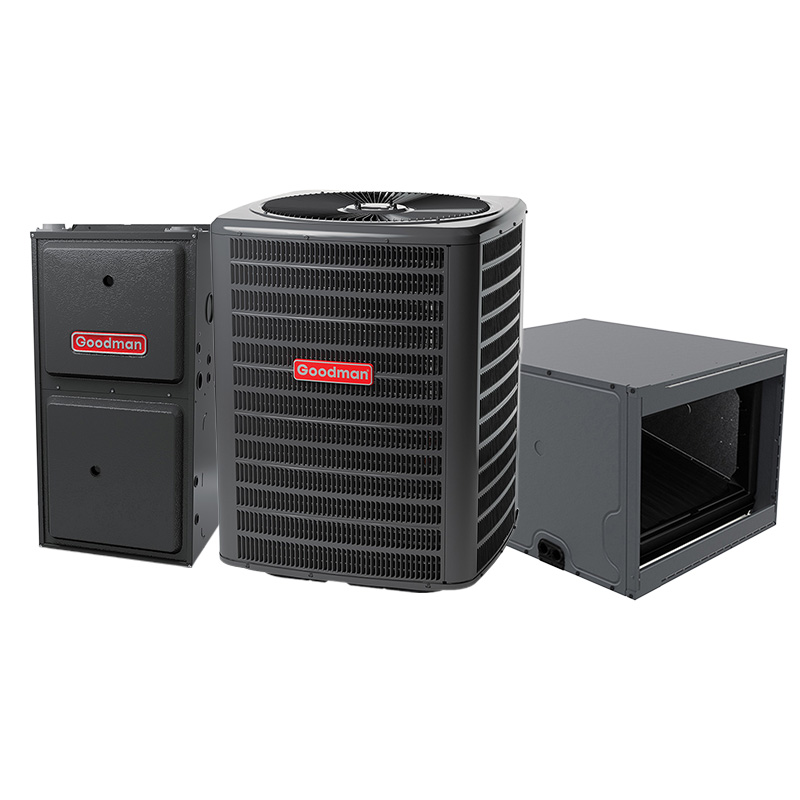
Goodman 4 Ton 14 SEER2 AC & Gas Furnace System – Multi-Speed, 120000 BTU Gas Furnace, 92% AFUE, Horizontal, R32
View on AC Direct see your lowest price →Check current price on AC Direct →
Key features
- 4-ton cooling capacity with 14 SEER2 efficiency rating
- 120,000 BTU gas furnace at 92% AFUE, horizontal configuration
- Multi-speed blower motor for improved airflow and comfort balance
- R-32 refrigerant with lower global-warming potential than R-410A
- Goodman 10-year parts limited warranty (registration required within 60 days)
- Built for attic, crawlspace, and manufactured-home horizontal installations
About this system
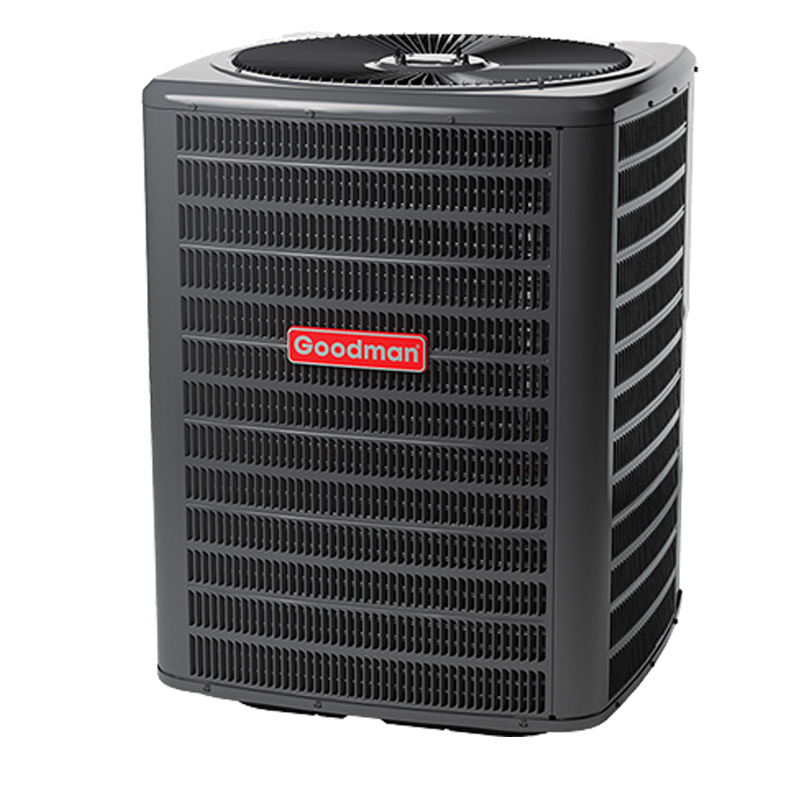
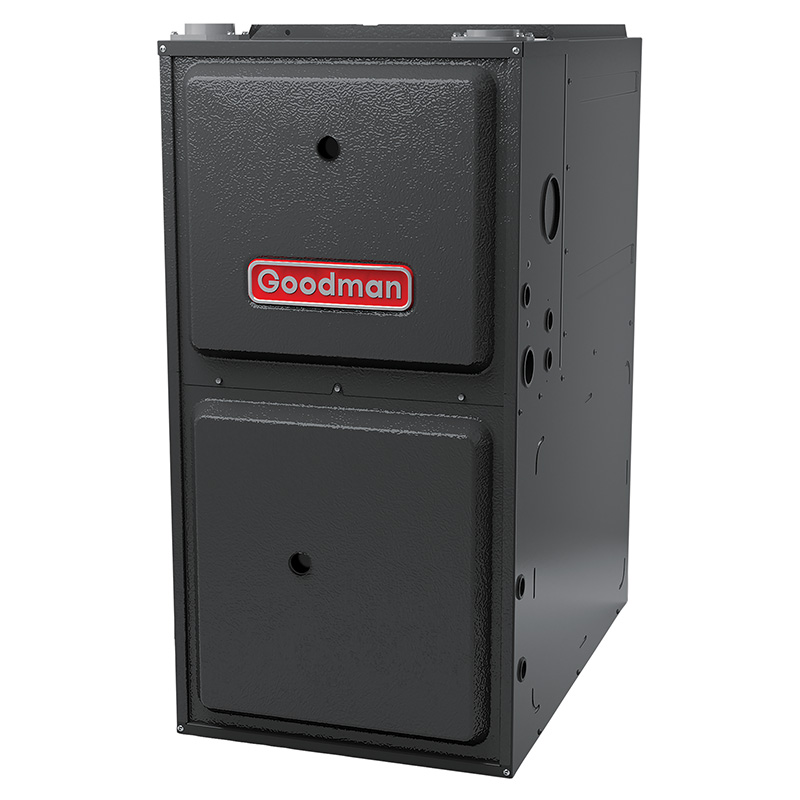
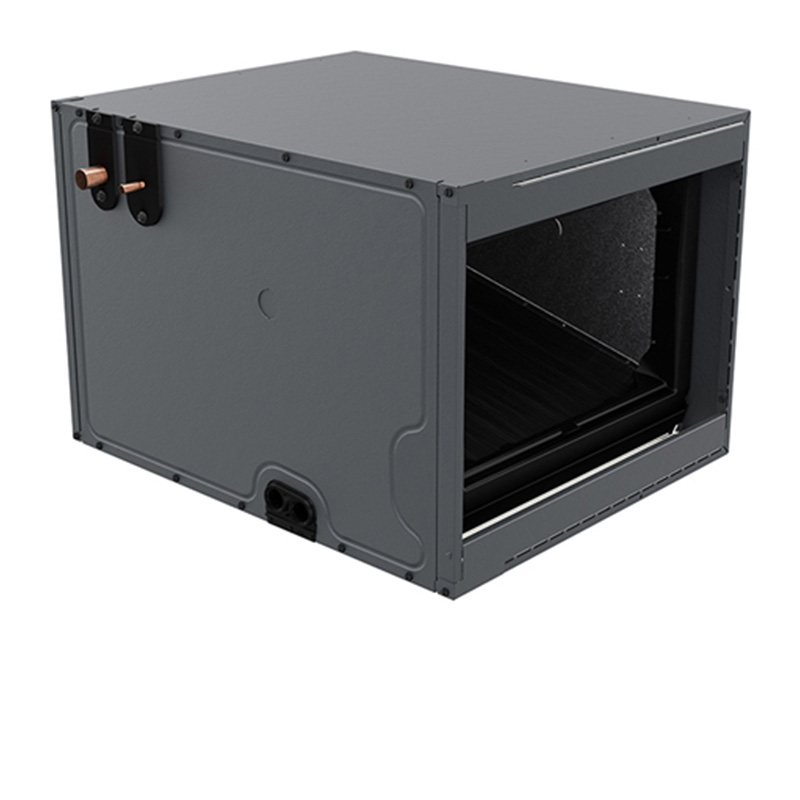
The Goodman GLXS4BA4810 pairs a 4-ton, 14 SEER2 central air conditioner with a 120,000 BTU horizontal gas furnace rated at 92% AFUE. That efficiency tier sits just above the federal minimum, meaning most of the fuel you pay for becomes heat rather than exhaust, though it stops short of the 96-plus AFUE condensing furnaces that command a higher price. The horizontal cabinet orientation makes this a purpose-built choice for attic installs, crawlspace applications, and manufactured homes where a vertical unit simply will not fit. R-32 refrigerant replaces the older R-410A and carries a lower global-warming potential, which is increasingly relevant as EPA phasedown rules tighten.
At 4 tons and 120,000 BTU, this system is sized for larger homes, roughly 2,000 to 2,800 square feet depending on climate zone, insulation quality, and local design temperatures. A proper Manual J load calculation is not optional here: oversizing a 4-ton system in a home that only needs 3 tons will cause short-cycling, humidity problems, and accelerated wear on the compressor. The multi-speed blower motor gives the system some flexibility in airflow matching, which helps comfort and can reduce energy bills compared to a fixed single-speed fan, though it is not the same as a true variable-speed or two-stage compressor setup.
The Goodman GLXS4BA4810 delivers solid baseline efficiency at a price point 15 to 25 percent below comparable Trane, Lennox, and Carrier systems, making it a legitimate option for budget-conscious homeowners who can secure a skilled installer. The trade-off is a documented history of component failures after year 7 and compressor lifespans that tend to run shorter than premium alternatives. It earns its place as a value buy, not a premium one.
Overall score is the average of the five ratings above.
What we like
- Priced 15 to 25 percent below comparable Carrier, Trane, and Lennox systems
- Horizontal cabinet is purpose-built for attic and manufactured-home installs where vertical units cannot be used
- 92% AFUE furnace meaningfully cuts fuel waste versus 80% AFUE alternatives
- Multi-speed blower improves humidity control and comfort over fixed single-speed fans
- R-32 refrigerant is forward-compatible with tightening EPA regulations
Trade-offs
- Consumer complaints cluster around rising repair costs after roughly year 7, consistent with its value-tier build
- Dual-run capacitors are the most commonly reported failure and, while a low-cost fix, they do mean service calls
- Evaporator coil leaks appear in a meaningful share of owner reports and can be a more expensive repair
- Compressor lifespan averages 10 to 14 years versus 15 to 20 years for premium-brand compressors
What homeowners and pros say about Goodman
Owners and dealers who leave Google reviews give Goodman equipment around 3.8 out of 5 stars, with affordability cited most often as the reason for the purchase. That positive sentiment does have a time component to it, though. On ConsumerAffairs, a channel that skews toward owners with complaints, Goodman scores closer to 2.5 out of 5, and the recurring pattern in those complaints is repair costs climbing after roughly year 7. For the GLXS4BA4810 specifically, the failure modes that show up most consistently in the ownership record are dual-run capacitor failures, which are typically a quick repair in the 300 to 600 dollar range, and evaporator coil leaks, which are more involved. Compressor longevity is also a real consideration: Goodman compressors tend to average 10 to 14 years in real-world service, which is meaningfully shorter than the 15 to 20 years owners of premium-brand equipment more often report.
HVAC technicians are generally straightforward about where Goodman fits in the market. The units are not considered unreliable out of the box, but technicians consistently point to install quality as the single biggest factor in how long one lasts. Refrigerant leaks reported in the first year, for instance, almost always trace back to line set handling or charging errors rather than factory problems. That puts real weight on choosing an experienced installer who works with Goodman systems regularly, rather than defaulting to whoever quotes the lowest labor rate. For a horizontal application like an attic install where access is already limited, that installer selection matters even more than it does for a standard closet or basement setup.
Sources: ConsumerAffairs Goodman owner reviews, AHRI Directory of Certified Product Performance, U.S. DOE appliance and equipment efficiency standards, Goodman product specification sheets.
What it costs to run
At 14 SEER2, cooling this 4-ton system for a typical 1200-hour cooling season at the U.S. average electricity rate of $0.17/kWh works out to roughly $699 per year in cooling, about $32 less per year than a minimum-efficiency 13.4 SEER2 unit of the same size. Your real cost depends on your climate and local rate.
Method: (48,000 BTU/hr ÷ 14 SEER2) × 1200 hours ÷ 1000 × $0.17/kWh. Rate source: U.S. EIA average; cooling hours: moderate-climate estimate.
How it compares
| Brand | Comparable model | SEER2 | Stage | Price position |
|---|---|---|---|---|
| Goodman | GLXS4BA4810 | 14 | Single-stage | Value pick |
| Carrier | Comfort Series (24ACC4) | 14 | Single-stage | Typically 15 to 25 percent more than Goodman |
| Trane | XR14 Series | 14 | Single-stage | Typically 15 to 25 percent more than Goodman |
| Lennox | Merit ML14XC1 Series | 14 | Single-stage | Typically 15 to 25 percent more than Goodman |
Competitor rows are comparable single-stage units at similar efficiency; price is relative position, not a quote.
Questions about this system
Why does this system have a horizontal configuration and can I install it vertically?
Horizontal units are built with drain pans and coil orientations designed specifically for sideways airflow, typically in attics, crawlspaces, or under-floor applications. Installing a horizontal unit vertically voids the warranty and will cause drainage and performance problems. If you need an upflow or downflow install, this is not the right cabinet.
Is 14 SEER2 going to be efficient enough, or should I pay more for a higher-rated unit?
14 SEER2 meets current federal minimums in most regions and will cut energy use compared to an aging 10 to 12 SEER system. However, the payback on stepping up to 16 or 18 SEER2 depends on your local electricity rates and how many cooling hours your climate delivers annually. In hotter climates with high utility rates, a higher SEER2 unit often pays back the cost difference within a few years.
What does the Goodman warranty actually cover and what do I need to do to activate it?
Goodman offers a 10-year parts limited warranty, but you must register the unit online within 60 days of installation or the warranty defaults to a shorter 5-year term. The warranty covers parts only, not labor, so out-of-pocket repair costs after the first year depend entirely on your installer's labor rates and any extended service plan you purchase separately.
I've read about refrigerant leaks on Goodman units in the first year. How common is that and what causes it?
A minority of owners report refrigerant leaks within the first year, and in most documented cases the cause is an installation or charging error rather than a factory defect. Proper flare connections, line set handling, and vacuum procedures by a licensed technician significantly reduce this risk, which is why installer quality is the single biggest variable in Goodman system performance.
Is a 120,000 BTU furnace going to be too large for my home?
Possibly, yes. 120,000 BTU is at the high end of residential furnace sizing, and a furnace that is significantly oversized for a home will short-cycle, wear out heat exchangers faster, and deliver uneven heat. A Manual J load calculation by your HVAC contractor before purchase is the only reliable way to confirm this furnace matches your actual heating load.
Specifications
| Cooling capacity | 4 Ton |
| Efficiency | 14 SEER2 |
| Furnace output | 120000 BTU |
| Furnace efficiency | 92% AFUE |
| Configuration | Horizontal |
| Refrigerant | R-32 |
| Model | GLXS4BA4810 |