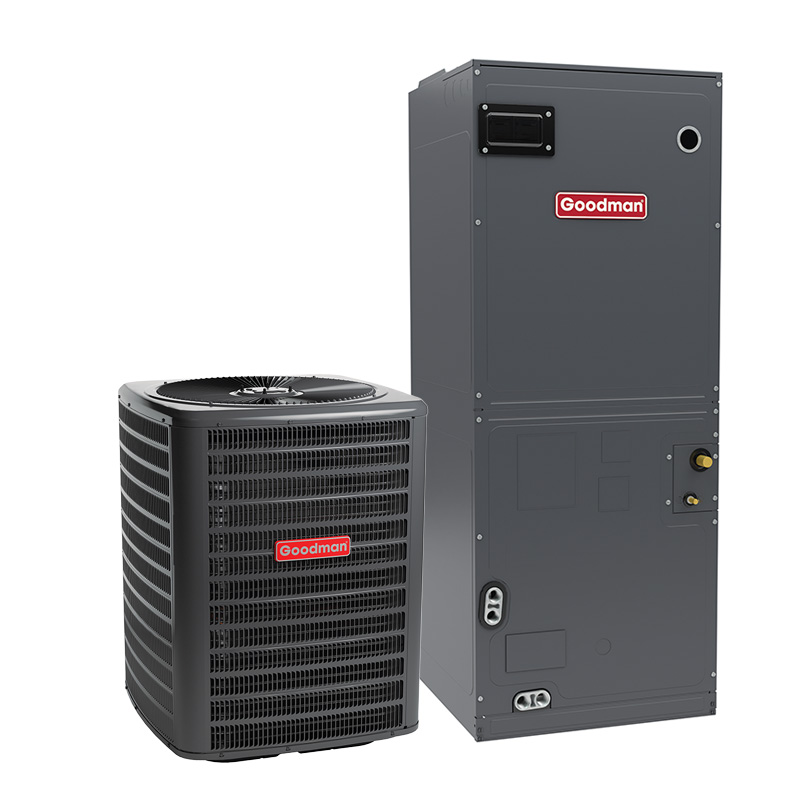
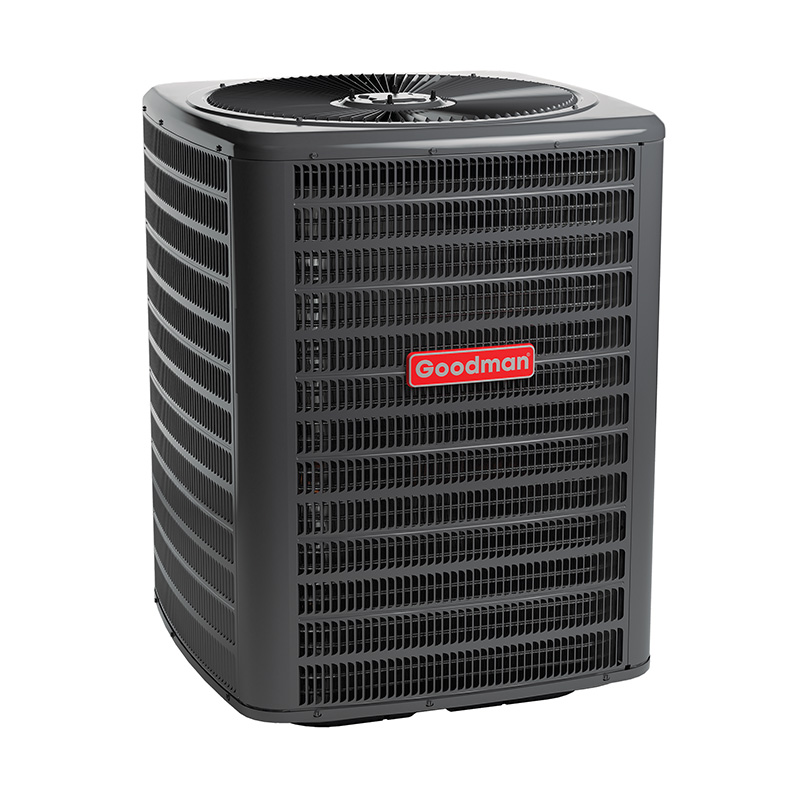
Goodman 4 Ton 14 SEER2 R32 Cooling Only Split System
View on AC Direct see your lowest price →Check current price on AC Direct →
Key features
- 4-ton cooling capacity sized for larger residential applications
- 14 SEER2 efficiency rating meets current federal minimum standards
- R-32 refrigerant with lower global warming potential than R-410A
- Cooling-only configuration pairs with a separate furnace or air handler
- Single-stage scroll compressor operation
- Factory-tested refrigerant charge before shipment
About this system
The Goodman 4 Ton 14 SEER2 R-32 Cooling Only Split System is a straightforward, single-stage air conditioner sized for larger homes, typically in the 2,000 to 2,600 square foot range depending on local climate, insulation, and layout. At 14 SEER2, it sits at the federal minimum efficiency threshold for most U.S. regions, which means it passes the compliance bar without premium pricing. It is a cooling-only unit, so it pairs with a separate gas furnace or air handler rather than functioning as part of a heat pump setup.
The switch to R-32 refrigerant is a meaningful spec detail. R-32 has a lower global warming potential than the R-410A it replaces and is increasingly the industry standard for new residential equipment. Practically speaking, it requires technicians certified to handle it, and not every older service tech in smaller markets will have immediate familiarity with it. That is worth confirming with your installer before purchase. As a 4-ton unit, proper load calculation matters more than it might for a smaller system since oversizing at this capacity leads to short cycling, humidity problems, and faster wear on components.
This Goodman unit delivers adequate baseline cooling at a price point that is genuinely hard to argue with for budget-conscious buyers. The trade-off is a compressor lifespan and reliability track record that trails premium brands, and long-term ownership costs can narrow the upfront savings if repair issues arise after year seven. It performs best when installed precisely and maintained consistently.
Overall score is the average of the five ratings above.
What we like
- Purchase price typically 15 to 25 percent below comparable Carrier, Trane, or Lennox equipment
- R-32 refrigerant is a forward-looking choice that aligns with evolving industry standards
- 14 SEER2 efficiency meets compliance requirements across all U.S. climate regions
- Widely available parts network means capacitors and minor components are easy to source
- Dual-run capacitor failures, the most common documented issue, are generally low-cost repairs in the $300 to $600 range
Trade-offs
- Compressor lifespan averages 10 to 14 years versus 15 to 20 years on premium brands, reducing long-term value
- Evaporator coil leaks appear in a meaningful share of owner reviews and represent a more costly repair
- A minority of owners report refrigerant leaks in the first year, typically tied to installation quality
- Single-stage operation provides no humidity or comfort fine-tuning that two-stage or variable-speed systems offer
What homeowners and pros say about Goodman
Homeowners who post about Goodman equipment online tend to cluster at the extremes. The brand’s ConsumerAffairs score sits around 2.5 out of 5, a platform that disproportionately captures frustrated owners, and the recurring complaint there is repair costs that begin adding up after roughly year seven. Google dealer reviews tell a more mixed story, averaging around 3.8 out of 5, where the most common praise is affordability and the most common criticism is inconsistent longevity. Neither score reflects a brand that inspires strong confidence, but neither suggests a product that fails immediately out of the box.
HVAC technicians who work on Goodman equipment regularly point to two predictable patterns. The dual-run capacitor is the unit’s most common failure point and is generally considered a minor, low-cost fix. More consequential are evaporator coil leaks, which appear often enough in owner accounts to treat as a realistic possibility, and compressor lifespans that average 10 to 14 years rather than the 15 to 20 years seen on premium brands. A minority of owners also report refrigerant leaks within the first year, which technicians attribute primarily to installation quality rather than the equipment itself. For this specific 4-ton R-32 system, that installation variable carries extra weight given that R-32 requires properly trained handling.
Sources: ConsumerAffairs Goodman owner reviews, AHRI Directory of Certified Product Performance, U.S. DOE appliance and equipment efficiency standards, Goodman product specification sheets.
What it costs to run
At 14 SEER2, cooling this 4-ton system for a typical 1200-hour cooling season at the U.S. average electricity rate of $0.17/kWh works out to roughly $699 per year in cooling, about $32 less per year than a minimum-efficiency 13.4 SEER2 unit of the same size. Your real cost depends on your climate and local rate.
Method: (48,000 BTU/hr ÷ 14 SEER2) × 1200 hours ÷ 1000 × $0.17/kWh. Rate source: U.S. EIA average; cooling hours: moderate-climate estimate.
How it compares
| Brand | Comparable model | SEER2 | Stage | Price position |
|---|---|---|---|---|
| Goodman | 4 Ton 14 SEER2 R-32 Cooling Only Split System | 14 | Single-stage | Value pick |
| Carrier | Comfort Series (24ACC4) | 14-15 | Single-stage | Typically 15 to 25 percent more than Goodman |
| Trane | XR14c | 14 | Single-stage | Typically 15 to 25 percent more than Goodman |
| Lennox | Merit Series (ML14XC1) | 14 | Single-stage | Typically 15 to 25 percent more than Goodman |
Competitor rows are comparable single-stage units at similar efficiency; price is relative position, not a quote.
Questions about this system
Is a 4-ton unit the right size for my home, or should I go up or down?
Tonnage should be determined by a Manual J load calculation, not square footage alone. A 4-ton unit is commonly appropriate for homes in the 2,000 to 2,600 square foot range in moderate climates, but ceiling height, insulation level, window area, and local climate all shift that number. Oversizing a 4-ton unit causes short cycling, poor humidity removal, and faster component wear, so get a load calc done before purchasing.
What does the switch to R-32 refrigerant mean for me as an owner?
R-32 is mildly flammable, which means technicians must be trained and equipped to handle it safely. Most licensed HVAC contractors in larger markets will have that training, but it is worth confirming with your service provider before installation. On the upside, R-32 is more environmentally friendly than R-410A and is expected to remain widely available for the foreseeable future.
What are the most likely repairs I should budget for over the life of this unit?
The most commonly reported failure on Goodman equipment is the dual-run capacitor, which typically runs $300 to $600 to replace and is a quick fix. Evaporator coil leaks show up in a notable share of owner reviews and carry a higher repair cost. Compressors on Goodman units tend to average 10 to 14 years, so budgeting for a compressor replacement or full system swap within that window is realistic.
How does install quality actually affect how long this system lasts?
HVAC technicians consistently cite installation as the single biggest factor in Goodman longevity. Improper refrigerant charge, poor airflow setup, or incorrect electrical connections directly contribute to the early failures, including first-year refrigerant leaks, that appear in owner reviews. Using a licensed, experienced installer and having the system commissioned properly is the most important step you can take to protect your investment.
This is a cooling-only system. What does it need to actually work in my home?
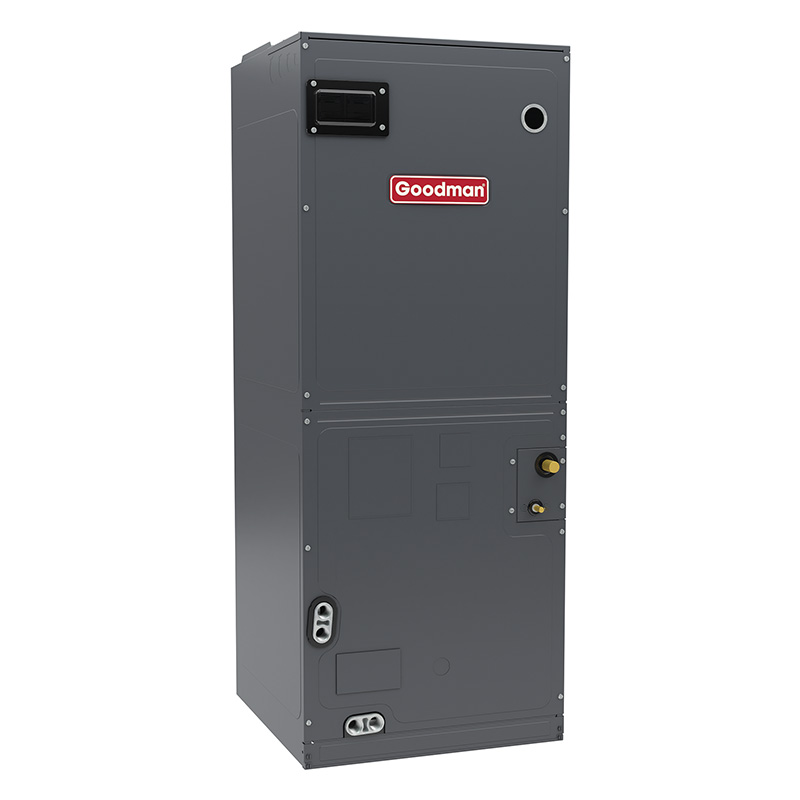
A cooling-only split system requires a separate indoor air handler or gas furnace with a compatible coil to move conditioned air through your ductwork. You will also need a matched evaporator coil, proper refrigerant line sets, and a thermostat compatible with cooling-only operation. If you currently have a heat pump, switching to this configuration means your heating will come from a different source, so confirm your existing equipment is compatible before purchasing.
Specifications
| Cooling capacity | 4 Ton |
| Efficiency | 14 SEER2 |
| Refrigerant | R-32 |