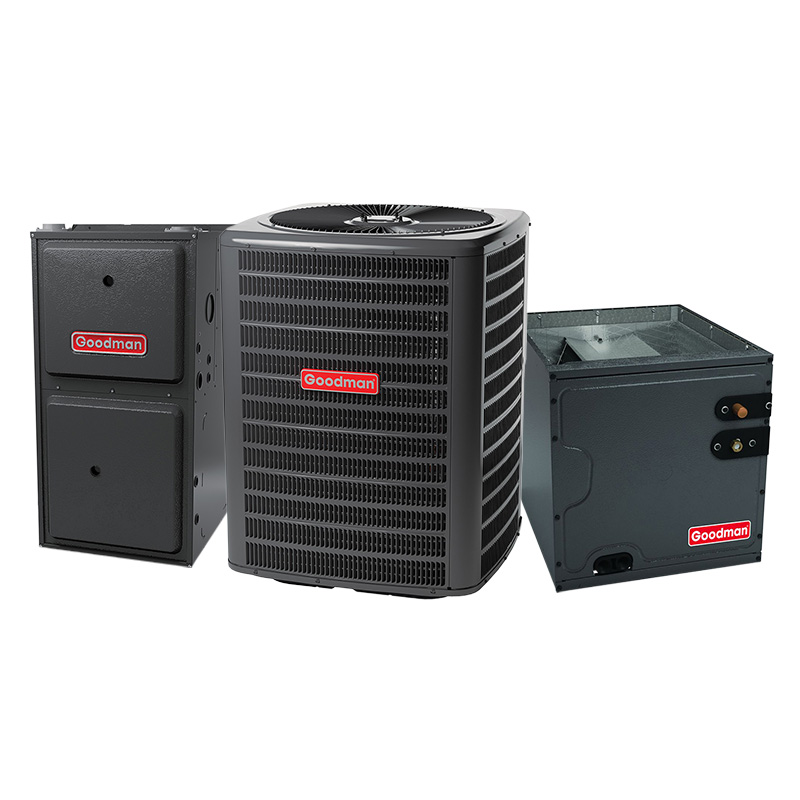
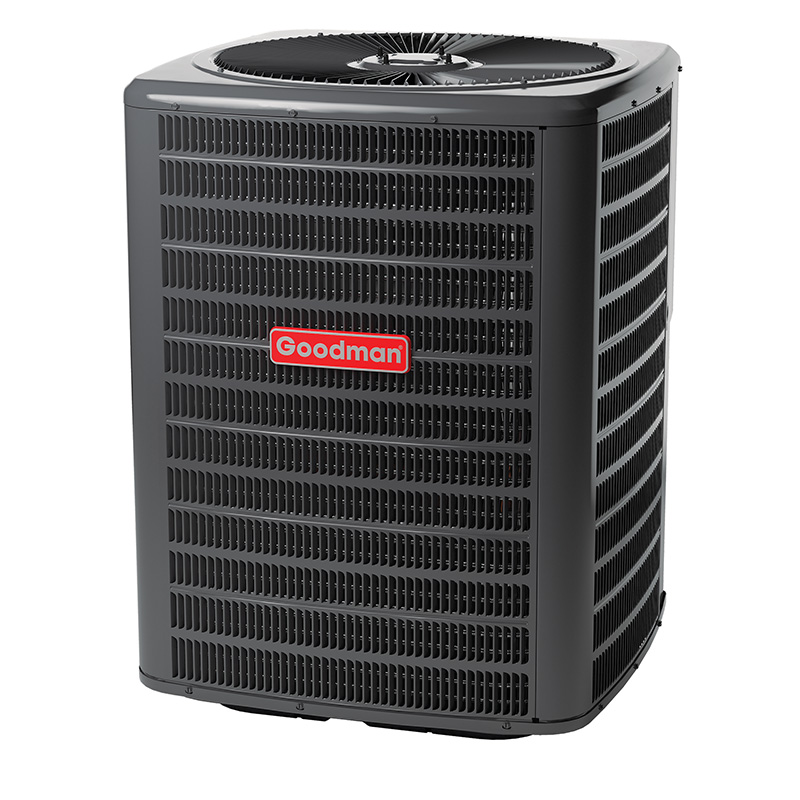
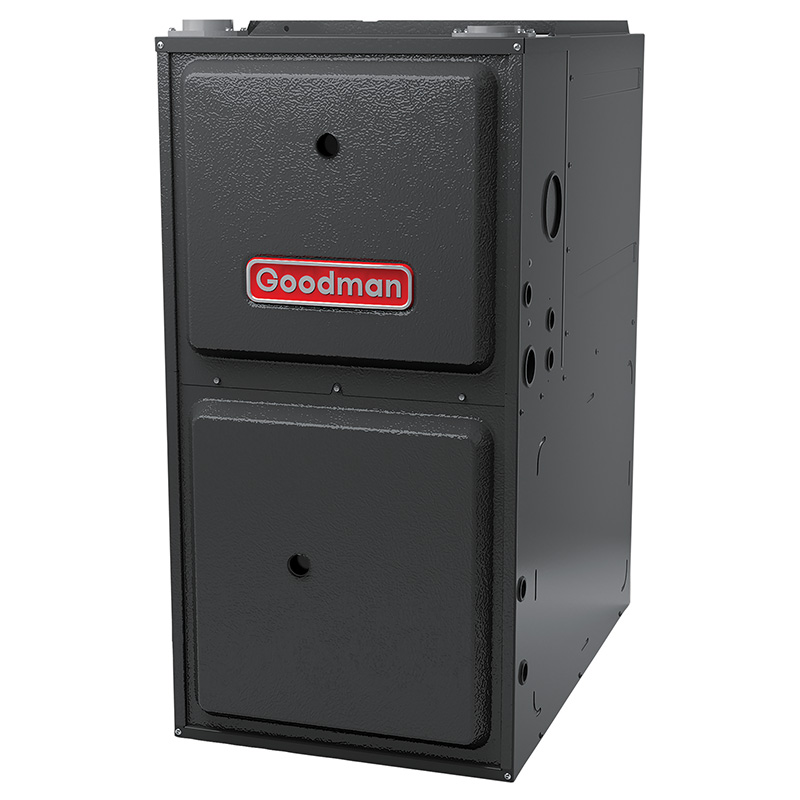
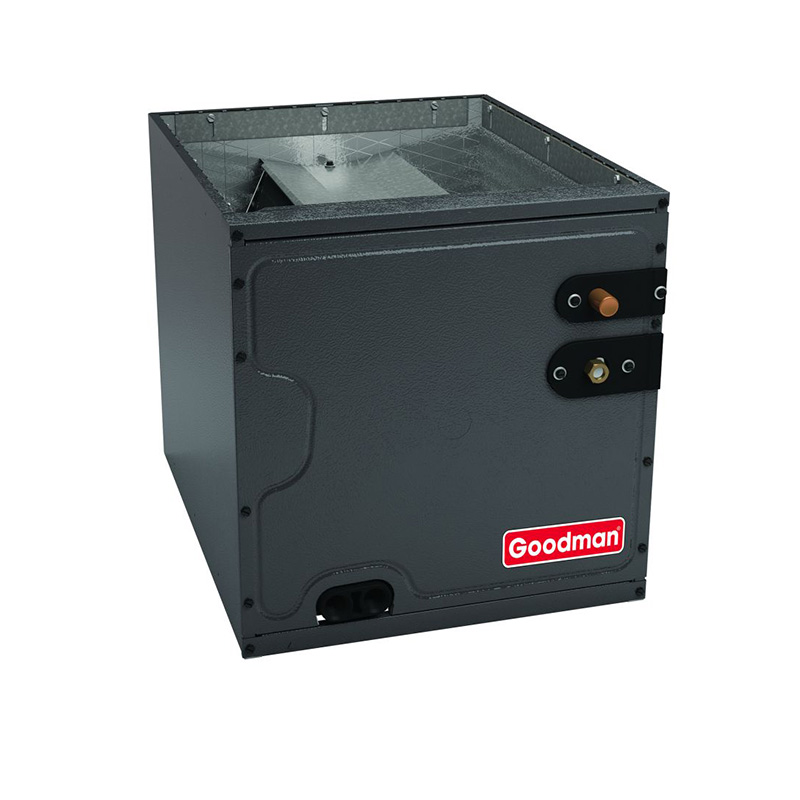
Goodman 4 Ton 15.2 SEER2 AC & Gas Furnace System – Modulating Variable-Speed, 120000 BTU Gas Furnace, 97% AFUE, Upflow, R32
View on AC Direct see your lowest price →Check current price on AC Direct →
Key features
- 97% AFUE modulating gas furnace with 120,000 BTU output for high-efficiency heating
- 15.2 SEER2 variable-speed cooling rated for 4 tons of capacity
- R-32 refrigerant with roughly one-third the global warming potential of R-410A
- Modulating burner adjusts in small increments for steadier temperatures and reduced cycling
- Variable-speed blower motor improves humidity control and lowers fan operating costs
- Upflow configuration suits basement or closet installs where air discharges upward through supply ducts
About this system
The Goodman GLXS5BA4810D pairs a 4-ton, 15.2 SEER2 variable-speed air conditioner with a 120,000 BTU, 97% AFUE modulating gas furnace in an upflow configuration. That AFUE rating sits at the top tier of residential gas heating efficiency, meaning roughly 97 cents of every dollar spent on gas goes directly to heating your home rather than out the flue. The modulating burner adjusts output in small increments rather than firing at full blast and cutting off, which keeps indoor temperatures steadier and reduces the short-cycling that wears out heat exchangers over time.
The variable-speed air handler and R-32 refrigerant are the other headlines here. Variable-speed blowers ramp up and down to match actual load conditions, which translates to quieter operation, better humidity control, and lower fan electricity costs compared with single-speed or two-stage equipment. R-32 has a global warming potential roughly one-third that of R-410A, so this system is better positioned for upcoming refrigerant regulations. At 4 tons and 120,000 BTU, it suits larger homes in the 2,200 to 3,000 square-foot range in moderate climates, or somewhat smaller homes in cold northern regions where the high-BTU furnace earns its keep. Proper Manual J load calculation before purchase is important because oversizing a modulating system still wastes money and accelerates wear.
This is a value-tier system in the premium-efficiency tier of specs, which is an unusual combination. You get near-top-of-market efficiency numbers at a price point that is typically 15 to 25 percent below comparable equipment from Trane, Lennox, or Carrier. The trade-off is that Goodman’s long-term reliability track record is not at the same level as those brands, and the gap between what this system can do and what it actually does in the field depends heavily on the installer who sets it up.
This system delivers genuinely top-tier efficiency specs at a price well below premium brands, making it an attractive option for budget-conscious buyers who want high AFUE and variable-speed performance. The catch is that Goodman's real-world reliability leans harder on installer quality and routine maintenance than brands like Trane or Carrier, and documented failure modes including capacitor failures, evaporator coil leaks, and shorter average compressor lifespan are real considerations over a 10-plus-year ownership horizon. It is a reasonable buy when paired with a skilled installer and a clear-eyed expectation that some repair costs are likely after year seven.
Overall score is the average of the five ratings above.
What we like
- 97% AFUE is among the highest efficiency ratings available for residential gas furnaces, cutting heating fuel costs meaningfully vs. standard 80% units
- 15.2 SEER2 with variable-speed operation provides better humidity control and quieter performance than single-stage or two-stage alternatives
- R-32 refrigerant future-proofs the system against tightening environmental regulations on high-GWP refrigerants
- Modulating burner reduces temperature swings and short-cycling, which is easier on the heat exchanger over time
- Purchase price is typically 15 to 25 percent lower than comparable-spec Trane, Lennox, or Carrier systems, freeing budget for a quality install or extended service contract
Trade-offs
- Goodman scores approximately 2.5 out of 5 on ConsumerAffairs, with recurring complaints about repair costs rising after roughly year seven of ownership
- Evaporator coil leaks appear in a meaningful share of owner reports, a failure that can be expensive and disruptive to fix
- Compressor lifespan averages 10 to 14 years in the field, shorter than the 15 to 20 years more commonly seen with premium-brand compressors
- A minority of owners report refrigerant leaks within the first year, most often traced to install or initial charge issues, which underscores the importance of choosing an experienced R-32 technician
What homeowners and pros say about Goodman
Homeowners who research Goodman online encounter a split picture. On ConsumerAffairs, the brand sits at roughly 2.5 out of 5 stars, a score shaped heavily by owners who sought out a review platform specifically because something went wrong. The recurring theme in those complaints is repair costs that climb after about year seven, with evaporator coil leaks and compressor issues cited most often. Google dealer reviews tell a somewhat different story, averaging around 3.8 out of 5 across hundreds of reviews per location, where the most common praise is straightforward: the equipment cost less than competing brands and it works. The truth for this specific modulating variable-speed system likely sits somewhere between those two data points.
HVAC technicians generally have a consistent view of Goodman: the equipment is acceptable for the price, but it is less forgiving of a rushed or imprecise install than Trane or Carrier products. For a complex configuration like the GLXS5BA4810D, which combines an R-32 refrigerant circuit, a modulating furnace, and a variable-speed blower, that observation carries real weight. The documented failure modes worth knowing going in are dual-run capacitor failures, which are common but inexpensive to fix; evaporator coil leaks, which are less common but more disruptive; and a compressor lifespan that averages 10 to 14 years rather than the 15 to 20 years owners of premium-brand equipment tend to see. A small share of first-year refrigerant leaks also appear in owner reports, almost always linked to the initial install or refrigerant charge rather than a product defect. Annual maintenance and a strong relationship with a qualified installer are the practical ways to get the most out of this system over its life.
Sources: ConsumerAffairs Goodman owner reviews, AHRI Directory of Certified Product Performance, U.S. DOE appliance and equipment efficiency standards, Goodman product specification sheets.
What it costs to run
At 15.2 SEER2, cooling this 4-ton system for a typical 1200-hour cooling season at the U.S. average electricity rate of $0.17/kWh works out to roughly $644 per year in cooling, about $87 less per year than a minimum-efficiency 13.4 SEER2 unit of the same size. Your real cost depends on your climate and local rate.
Method: (48,000 BTU/hr ÷ 15.2 SEER2) × 1200 hours ÷ 1000 × $0.17/kWh. Rate source: U.S. EIA average; cooling hours: moderate-climate estimate.
How it compares
| Brand | Comparable model | SEER2 | Stage | Price position |
|---|---|---|---|---|
| Goodman | GLXS5BA4810D | 15.2 | Variable-speed / Modulating | Value pick |
| Carrier | Infinity 26 (24VNA) series | 15.2 to 16+ | Variable-speed | Typically 15 to 25 percent more than Goodman |
| Trane | XV18 / XV20i series | 15+ (varies by config) | Variable-speed | Typically 15 to 25 percent more than Goodman |
| Lennox | XC21 / SLP99V series | 15.2 to 16+ | Variable-speed / Modulating | Typically 15 to 25 percent more than Goodman |
Competitor rows are comparable single-stage units at similar efficiency; price is relative position, not a quote.
Questions about this system
Is R-32 refrigerant safe to service, and will I have trouble finding a technician who can work on it?
R-32 is mildly flammable, which means technicians need specific training and certification to handle it safely. It is becoming more common in residential equipment, but you should confirm before hiring that your HVAC contractor has experience with R-32 systems. In some rural areas, finding a qualified tech may take a bit more effort than with R-410A equipment.
What is covered under Goodman's warranty on this system, and for how long?
Goodman typically offers a 10-year parts warranty on registered equipment, including the compressor, heat exchanger, and other covered components, provided you register the unit within a set window after installation. The warranty does not cover labor costs, which can be substantial, so a service agreement or extended labor warranty from your installer is worth considering separately.
Is 120,000 BTU too much furnace for most homes, and does oversizing matter with a modulating unit?
A modulating furnace can turn down significantly from its maximum output, so moderate oversizing is less harmful than it would be with a single-stage unit. That said, substantial oversizing still shortens equipment life and wastes money, so a Manual J heat load calculation by your installer before purchase is the right way to confirm this BTU rating suits your specific home.
How often do dual-run capacitors fail on Goodman equipment, and what does that repair typically cost?
Capacitor failure is the most commonly reported repair issue across Goodman air conditioners. It is generally a straightforward fix that falls in the $300 to $600 range including a service call, and most units experience it at least once over their life. Keeping an annual maintenance contract in place means a technician can catch a weakening capacitor before it fails mid-summer.
How important is installer quality for this specific system compared with a simpler single-stage unit?
It matters more here than with basic equipment. A variable-speed modulating system has more control wiring, refrigerant charge sensitivity with R-32, and setup parameters that require proper commissioning to operate as designed. Technicians cite install quality as the single biggest factor in how long a Goodman system lasts, and that is especially true for a more complex modulating configuration like this one.
Specifications
| Cooling capacity | 4 Ton |
| Efficiency | 15.2 SEER2 |
| Furnace output | 120000 BTU |
| Furnace efficiency | 97% AFUE |
| Configuration | Upflow |
| Refrigerant | R-32 |
| Model | GLXS5BA4810D |