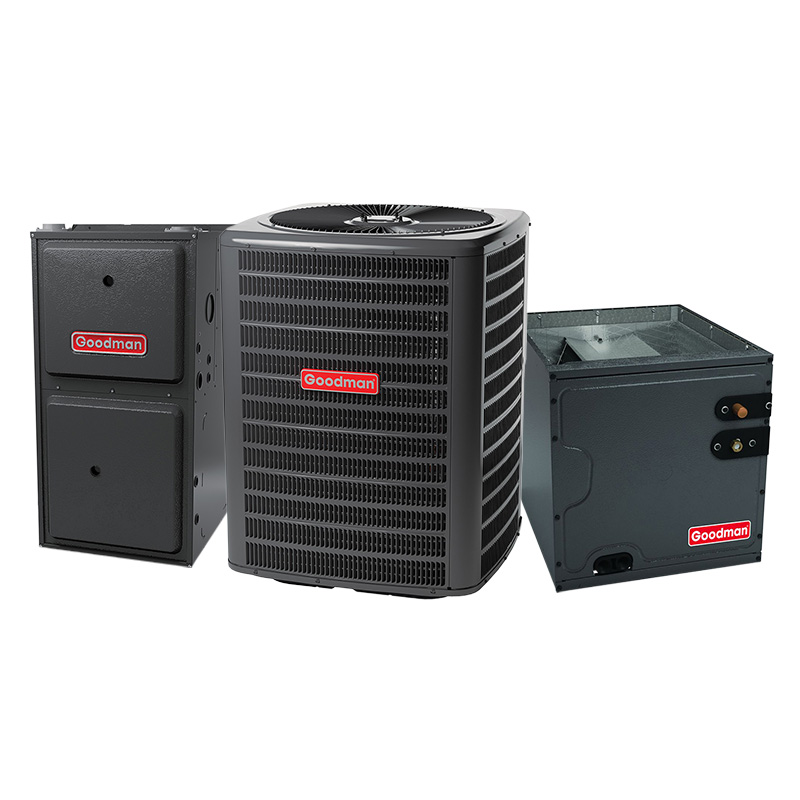
Goodman 4 Ton 15.2 SEER2 AC & Gas Furnace System – Modulating Variable-Speed, 80000 BTU Gas Furnace, 97% AFUE, Upflow, R32
View on AC Direct see your lowest price →Check current price on AC Direct →
Key features
- 15.2 SEER2 variable-speed cooling with R-32 refrigerant for lower environmental impact
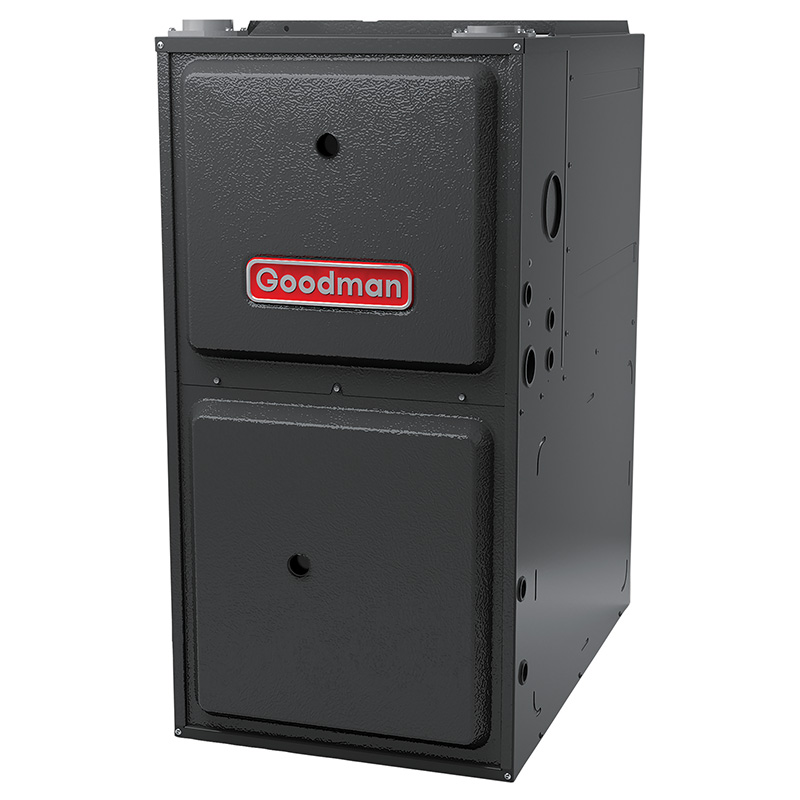
- 97% AFUE modulating gas furnace rated at 80,000 BTU output
- Upflow configuration designed for basement, utility closet, or ground-level installs
- Modulating gas valve adjusts heat output in small increments for consistent comfort
- Variable-speed ECM blower motor reduces airflow noise and energy use at partial load
- R-32 refrigerant charge requires EPA 608-certified technicians for service and recovery
About this system
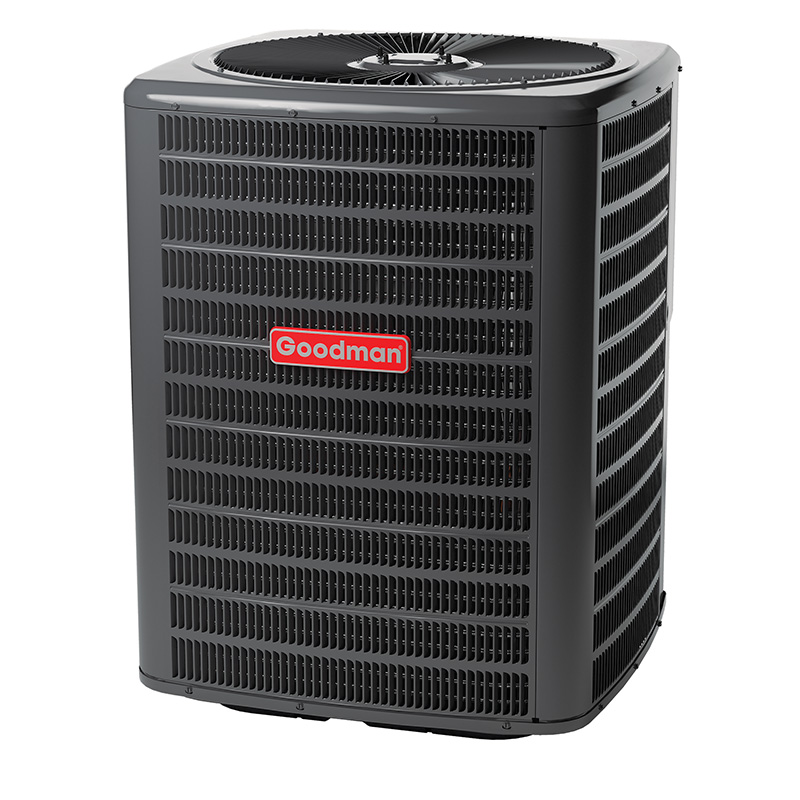
The Goodman GLXS5BA4810D pairs a 4-ton, 15.2 SEER2 variable-speed air conditioner with an 80,000 BTU, 97% AFUE modulating gas furnace in an upflow configuration. That 97% AFUE rating means the furnace converts 97 cents of every dollar of gas into usable heat, putting it squarely in the top tier of gas heating efficiency and making it eligible for federal tax credits under current energy-efficiency incentive programs. The R-32 refrigerant used in the cooling side has a lower global-warming potential than the R-410A it replaces, which is increasingly relevant as regulations tighten around refrigerant handling and disposal.
Variable-speed and modulating technology are the real differentiators here. The air handler fan ramps up and down to match actual load rather than cycling on at full blast, which does three things: it smooths out temperature swings, it runs quietly at lower speeds most of the time, and it reduces short-cycling wear on components. The modulating furnace works the same way, adjusting its flame in small increments rather than toggling between fully on and fully off. For a 4-ton system serving a home in the roughly 2,200 to 2,800 square foot range, that level of control is genuinely useful and not just a spec-sheet item. This configuration suits homes with existing upflow ductwork where the furnace sits in a basement, utility room, or closet and air rises up through the distribution system.
This Goodman system delivers genuinely high-tier efficiency at a price point noticeably below comparable Carrier, Trane, and Lennox configurations, and the modulating variable-speed technology is real, not a rebadged single-stage unit. The trade-off is a brand reliability record that is honest-to-middling, with documented failure points that buyers should budget for after the warranty period ends.
Overall score is the average of the five ratings above.
What we like
- 97% AFUE furnace is among the most efficient gas heating options available and qualifies for federal tax credits
- Variable-speed ECM blower and modulating gas valve provide quieter operation and more even temperatures than single-stage or two-stage systems
- 15.2 SEER2 rating meaningfully lowers cooling operating costs compared to minimum-efficiency equipment
- R-32 refrigerant has roughly 30% lower global-warming potential than R-410A, aligning with tightening refrigerant regulations
- Purchase price runs 15 to 25 percent below comparable configurations from Trane, Carrier, and Lennox
Trade-offs
- Dual-run capacitors are the most commonly reported failure point, typically surfacing within the first decade and costing $300 to $600 to repair
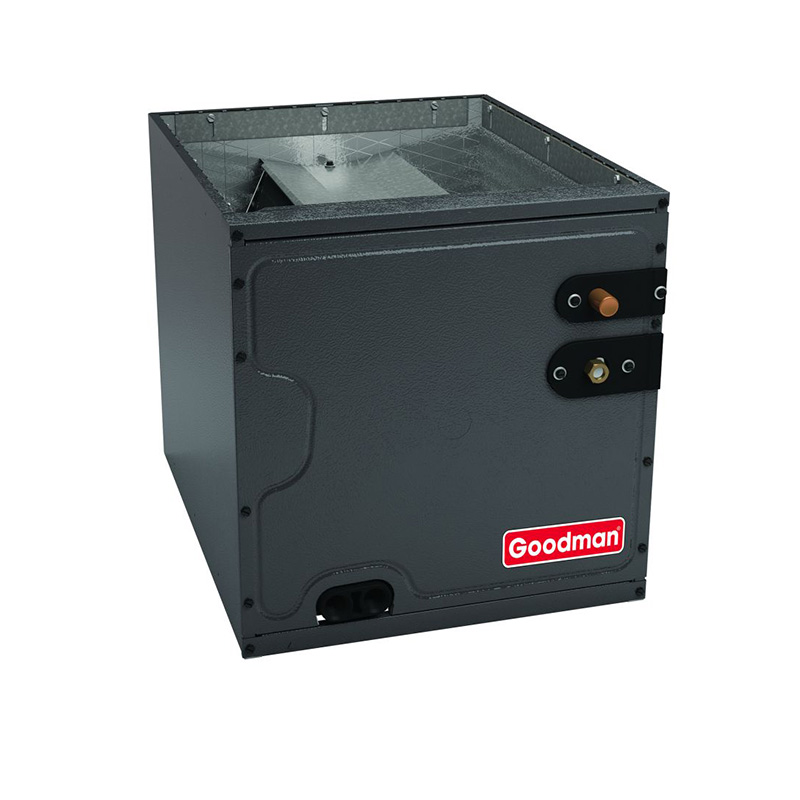
- Evaporator coil leaks appear in a meaningful share of owner reviews and can be expensive depending on refrigerant recovery costs with R-32
- Compressor longevity averages 10 to 14 years based on documented patterns, shorter than the 15 to 20 years seen more often with premium brands
- A minority of owners report refrigerant leaks within the first year, most tied to install quality rather than the unit itself, which underscores how heavily this brand's performance depends on technician skill
What homeowners and pros say about Goodman
Homeowners who review Goodman equipment land in two camps that rarely overlap. Those who had a careful, experienced installer and who stay on top of annual maintenance report years of uneventful service and frequently point to the lower purchase price as the decision they would make again. Those who did not get a thorough install often encounter problems sooner, and because Goodman’s ConsumerAffairs score sits at roughly 2.5 out of 5, a complaint-heavy channel, those frustrated voices are easy to find online. The recurring theme in those negative reviews is repair costs climbing after around year seven, particularly around dual-run capacitor failures and, less commonly, evaporator coil leaks. Google dealer reviews, where satisfied customers are more proportionally represented, average around 3.8 out of 5 across hundreds of location reviews, with affordability cited most often as the reason buyers chose the brand.
HVAC technicians tend to have a practical, unsentimental view of Goodman. Most will say it is a serviceable unit when properly installed and maintained, not the equipment they would choose for a customer who wants to forget the system exists for 20 years, but a reasonable choice for someone who understands the trade-off. The compressor longevity documented in field reports averages 10 to 14 years on Goodman equipment, compared to 15 to 20 years more commonly seen with Trane, Carrier, and Lennox at similar efficiency tiers. For this specific system, the 97% AFUE modulating furnace and variable-speed technology represent a genuine step up in design complexity from Goodman’s entry-level line, but those advantages are only fully realized with a clean install, a properly sized duct system, and a technician who knows the platform.
Sources: ConsumerAffairs Goodman owner reviews, AHRI Directory of Certified Product Performance, U.S. DOE appliance and equipment efficiency standards, Goodman product specification sheets.
What it costs to run
At 15.2 SEER2, cooling this 4-ton system for a typical 1200-hour cooling season at the U.S. average electricity rate of $0.17/kWh works out to roughly $644 per year in cooling, about $87 less per year than a minimum-efficiency 13.4 SEER2 unit of the same size. Your real cost depends on your climate and local rate.
Method: (48,000 BTU/hr ÷ 15.2 SEER2) × 1200 hours ÷ 1000 × $0.17/kWh. Rate source: U.S. EIA average; cooling hours: moderate-climate estimate.
How it compares
| Brand | Comparable model | SEER2 | Stage | Price position |
|---|---|---|---|---|
| Goodman | GLXS5BA4810D | 15.2 | Variable | Value pick |
| Carrier | Infinity 16 (24ACC636) | 15.2 | Two-stage | Typically 15 to 25 percent more than this Goodman |
| Trane | XR15 series | 15.0–15.6 | Single-stage | Typically 15 to 25 percent more than this Goodman |
| Lennox | Merit ML14XC1 series | 15.2 | Single-stage | Typically 15 to 25 percent more than this Goodman |
Competitor rows are comparable single-stage units at similar efficiency; price is relative position, not a quote.
Questions about this system
Does R-32 refrigerant cost more to service than R-410A, and will any technician be able to work on it?
R-32 requires EPA 608 certification for handling, which most licensed HVAC technicians already hold, but not all service vans carry R-32 recovery equipment yet. In some markets you may need to confirm availability before scheduling service. Refrigerant cost per pound for R-32 is currently similar to R-410A, though pricing can vary by region and supplier.
What is the actual warranty on this system, and what does it require to stay valid?
Goodman offers a 10-year parts warranty and a lifetime compressor warranty on this unit when the system is registered within 60 days of installation by a licensed contractor. Failure to register typically drops coverage to 5 years on parts. The lifetime compressor warranty is on the unit itself, not labor, so out-of-pocket costs for a compressor replacement still include diagnostic fees and technician time.
My house is 2,600 square feet. Is a 4-ton system the right size?
Tonnage should never be chosen by square footage alone. Climate zone, insulation quality, window area, ceiling height, and duct condition all affect the load calculation. A licensed technician should perform a Manual J load calculation before installation. Oversizing a variable-speed system wastes money upfront and can cause humidity issues even with the modulating furnace running.
How often do Goodman capacitors fail, and is that something I should worry about?
Dual-run capacitor failure is the single most commonly reported repair issue in Goodman owner feedback. It is a relatively low-cost fix, typically $300 to $600 including a service call, and it is a known wear item across most AC brands. Keeping a maintenance contract with your installer so a technician checks capacitor health annually is a practical way to catch this before it becomes an emergency no-cool call on a hot day.
Will the modulating furnace pair with a smart thermostat like an Ecobee or Nest?
Full modulating control requires a communicating thermostat compatible with Goodman's communication protocol, which standard Ecobee and Nest models do not support in communicating mode. Those thermostats can still control the system in conventional on-off mode, but you lose the fine-grained modulation benefits. Check with your installer about compatible communicating thermostats if maximizing the modulating furnace's capability matters to you.
Specifications
| Cooling capacity | 4 Ton |
| Efficiency | 15.2 SEER2 |
| Furnace output | 80000 BTU |
| Furnace efficiency | 97% AFUE |
| Configuration | Upflow |
| Refrigerant | R-32 |
| Model | GLXS5BA4810D |