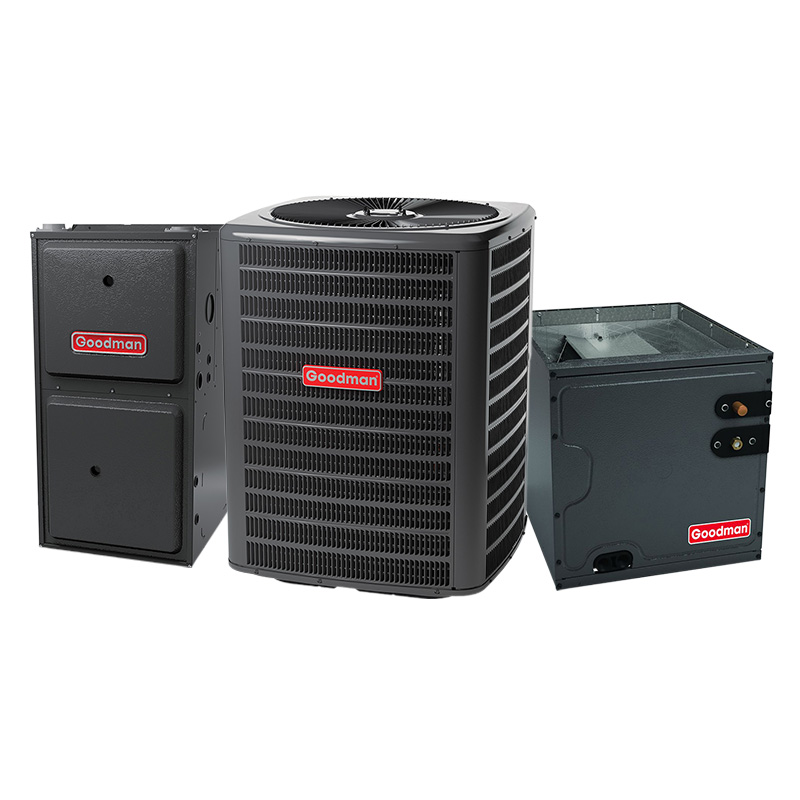
Goodman 4 Ton 15.2 SEER2 AC & Gas Furnace System – Multi-Speed, 100000 BTU Gas Furnace, 92% AFUE, Upflow, R32
View on AC Direct see your lowest price →Check current price on AC Direct →
Key features
- 4-ton, 15.2 SEER2 single-stage cooling meets current federal efficiency minimums
- 100,000 BTU gas furnace rated at 92% AFUE for above-baseline heating efficiency
- Multi-speed blower motor for quieter operation and improved airflow balance
- Upflow configuration suits basement, utility room, and closet installations
- R-32 refrigerant with a lower global-warming potential than legacy R-410A
- Factory-matched system designed for straightforward commissioning by a licensed contractor
About this system
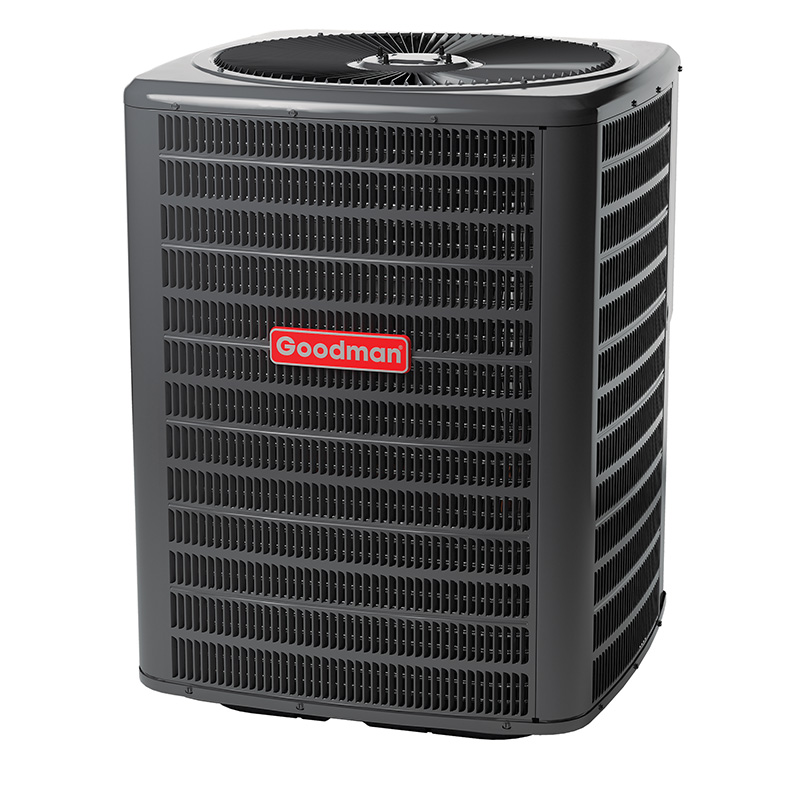
The Goodman GLXS5BA4810D pairs a 4-ton, 15.2 SEER2 single-stage air conditioner with a 100,000 BTU, 92% AFUE upflow gas furnace to cover larger homes typically in the 2,000 to 2,800 square-foot range, depending on local climate and insulation. The system runs on R-32 refrigerant, a lower global-warming-potential option that is becoming more common in residential equipment and is fully supported by most licensed HVAC technicians. The 15.2 SEER2 rating sits at the entry tier of current federal efficiency standards, which means it satisfies regional minimums without reaching mid- or high-efficiency territory.
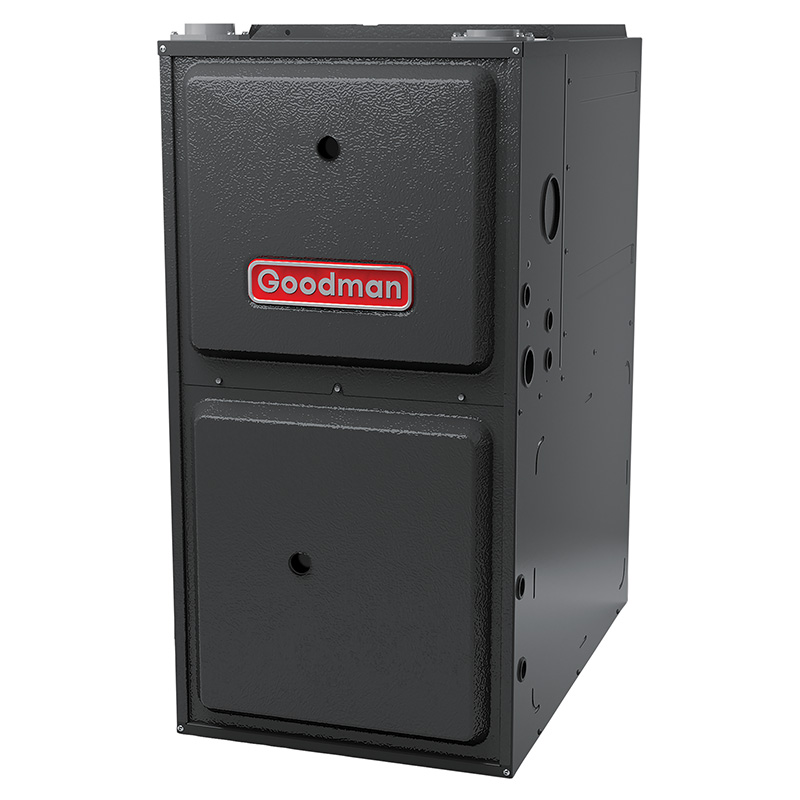
The 92% AFUE furnace recovers 92 cents of heat energy from every dollar of gas burned, a meaningful step above the federal 80% floor but noticeably short of 96% or 98% condensing units that can cut annual heating costs further. The upflow configuration requires the air handler to sit below the duct system and discharge air upward, which is the most common residential arrangement and works well in basement or closet installations. Multi-speed furnace fan operation helps the system move air more quietly at lower demand and can improve humidity management compared to a fixed-speed blower. Buyers who want reliable whole-home comfort at a lower purchase price, and who are willing to invest in a quality installation and routine maintenance, are the primary audience for this system.
The Goodman GLXS5BA4810D delivers solid entry-level efficiency and generous BTU capacity at a price point that is hard to argue with for budget-conscious homeowners. Trade-offs are real: single-stage cooling is less precise than <a href="https://hvac.best/glossary/two-stage/">two-stage</a> or variable systems, and Goodman's documented history of capacitor failures and shorter average compressor life should factor into long-term cost expectations. It is a reasonable choice when installation quality is prioritized and a maintenance fund is kept in reserve.
Overall score is the average of the five ratings above.
What we like
- Purchase price is typically 15 to 25 percent below comparable Carrier, Trane, and Lennox equipment
- 92% AFUE furnace exceeds the federal 80% minimum and reduces annual gas consumption meaningfully
- Multi-speed blower improves comfort and humidity control over fixed-speed alternatives
- R-32 refrigerant has lower environmental impact and is widely serviceable by licensed technicians
- Factory-matched pairing simplifies system commissioning and warranty coverage
Trade-offs
- Single-stage compressor cycles fully on or off, which can cause temperature swings and humidity spikes in humid climates
- Dual-run capacitors are the most commonly reported failure point, typically after several years of operation
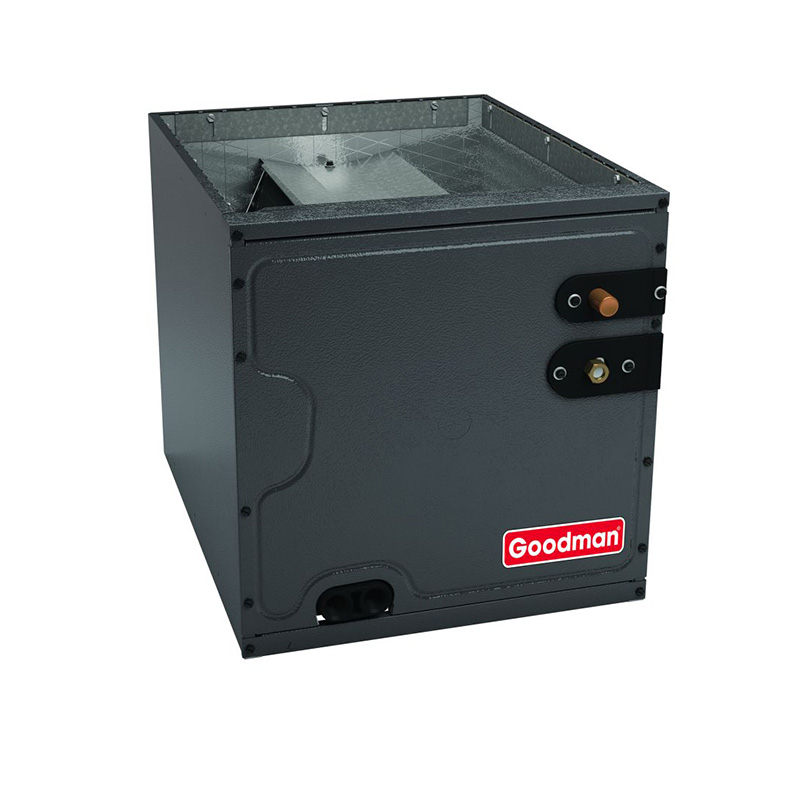
- Evaporator coil leaks appear in a meaningful share of owner reviews and can be a costly mid-life repair
- Average compressor lifespan of 10 to 14 years trails the 15 to 20 years more commonly reported for premium brands
What homeowners and pros say about Goodman
Feedback on Goodman equipment follows a recognizable pattern that applies directly to this system. On Google dealer review pages, where scores cluster around 3.8 out of 5, the most consistent theme from homeowners is that the lower purchase price made a replacement system financially possible when a premium brand was not. Technicians working on Goodman units regularly point to dual-run capacitor failures as the most routine service call they see, a repair that is quick and inexpensive but tends to repeat over the life of the unit. Evaporator coil leaks are a more serious concern that appears in a notable share of owner accounts and can mean a significant mid-life repair bill.
On ConsumerAffairs, Goodman scores roughly 2.5 out of 5, though that platform skews toward owners motivated to write about problems rather than satisfied customers. The recurring complaint there centers on repair costs climbing after the seven-year mark, which aligns with the documented compressor lifespan of roughly 10 to 14 years, shorter on average than the 15 to 20 years reported more frequently for Trane, Carrier, and Lennox compressors. Experienced installers consistently note that Goodman performance is highly dependent on the quality of the installation itself: a well-charged, properly sized, carefully commissioned Goodman system in a maintained home performs considerably better than the same equipment installed carelessly. Budget for professional installation and annual tune-ups, and keep a maintenance reserve for the capacitor and coil issues that the brand’s track record flags as realistic possibilities.
Sources: ConsumerAffairs Goodman owner reviews, AHRI Directory of Certified Product Performance, U.S. DOE appliance and equipment efficiency standards, Goodman product specification sheets.
What it costs to run
At 15.2 SEER2, cooling this 4-ton system for a typical 1200-hour cooling season at the U.S. average electricity rate of $0.17/kWh works out to roughly $644 per year in cooling, about $87 less per year than a minimum-efficiency 13.4 SEER2 unit of the same size. Your real cost depends on your climate and local rate.
Method: (48,000 BTU/hr ÷ 15.2 SEER2) × 1200 hours ÷ 1000 × $0.17/kWh. Rate source: U.S. EIA average; cooling hours: moderate-climate estimate.
How it compares
| Brand | Comparable model | SEER2 | Stage | Price position |
|---|---|---|---|---|
| Goodman | GLXS5BA4810D | 15.2 | Single-stage | Value pick |
| Carrier | Comfort 14 Series (24ACC636) | 14.3 to 15.2 | Single-stage | Typically 15 to 25 percent more than Goodman |
| Trane | XR15 Series (4TTR5048) | 15.0 to 15.6 | Single-stage | Typically 15 to 25 percent more than Goodman |
| Lennox | Merit 14ACX Series (14ACX-048) | 14.3 to 15.2 | Single-stage | Typically 15 to 25 percent more than Goodman |
Competitor rows are comparable single-stage units at similar efficiency; price is relative position, not a quote.
Questions about this system
Is 15.2 SEER2 going to pass inspection in my state or region?
15.2 SEER2 meets current federal minimums for most U.S. climate regions as of 2023 regulations. Check your local jurisdiction's requirements before purchasing, because a small number of states or utility programs have higher thresholds for incentive eligibility or code compliance.
What does the R-32 refrigerant mean for my service costs?
R-32 is increasingly stocked by HVAC distributors and is serviceable by any EPA 608-certified technician, so it should not create unusual service hurdles. Because R-32 operates at different pressures than R-410A, your technician will need gauges and equipment compatible with R-32, which most current-generation service sets already support.
How often do the capacitors actually fail on Goodman units, and what does it cost to fix?
Dual-run capacitor failure is the most frequently documented repair issue on Goodman condensers and can show up anywhere from year three onward. A replacement capacitor is typically a straightforward repair in the 300 to 600 dollar range including labor, making it annoying but not catastrophic.
Will a 4-ton, 100,000 BTU system be right for my house, or do I need a Manual J load calculation?
A Manual J load calculation performed by your installer is the only reliable way to confirm that this capacity is correct for your home. Oversizing a furnace or air conditioner is a common and costly mistake that causes short cycling, higher energy bills, and accelerated wear, so the calculation is worth requesting before purchase.
What does the Goodman warranty cover and for how long on this system?
Goodman typically offers a 10-year parts limited warranty when the system is registered online within a set window after installation, covering major components including the compressor, heat exchanger, and coil. Labor is not covered by the manufacturer warranty, so a separate labor warranty or extended service contract from your installer is worth asking about.
Specifications
| Cooling capacity | 4 Ton |
| Efficiency | 15.2 SEER2 |
| Furnace output | 100000 BTU |
| Furnace efficiency | 92% AFUE |
| Configuration | Upflow |
| Refrigerant | R-32 |
| Model | GLXS5BA4810D |