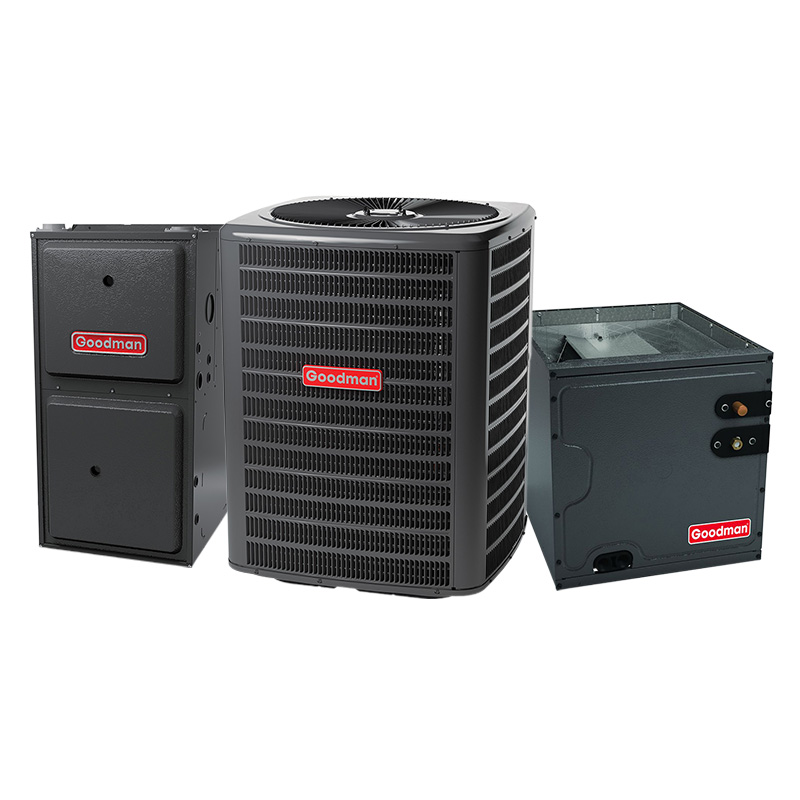
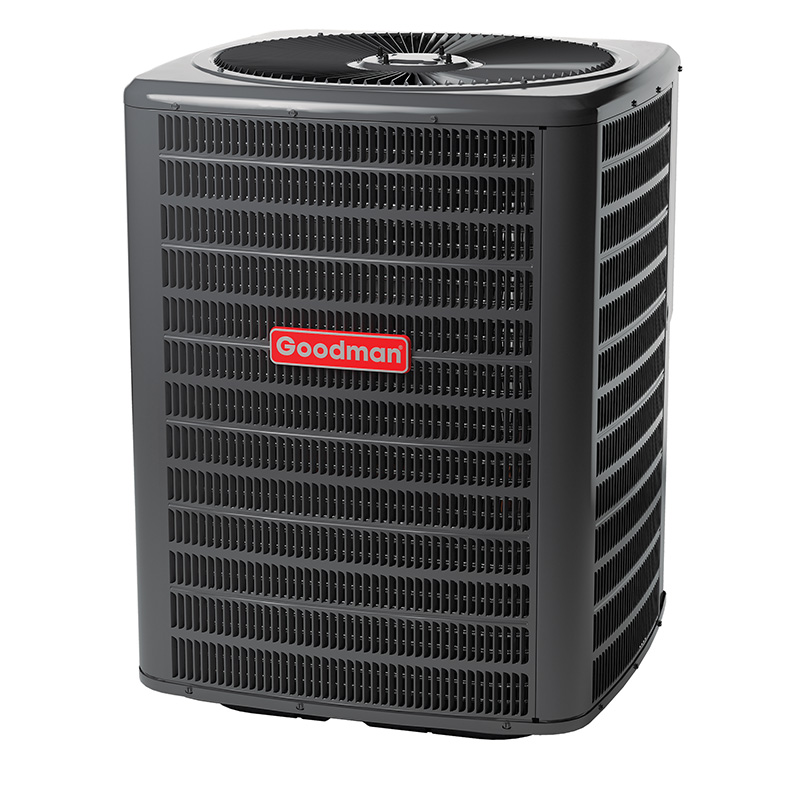
Goodman 4 Ton 15.2 SEER2 AC & Gas Furnace System – Multi-Speed, 80000 BTU Gas Furnace, 92% AFUE, Upflow, R32
View on AC Direct see your lowest price →Check current price on AC Direct →
Key features
- 4-ton single-stage cooling rated at 15.2 SEER2
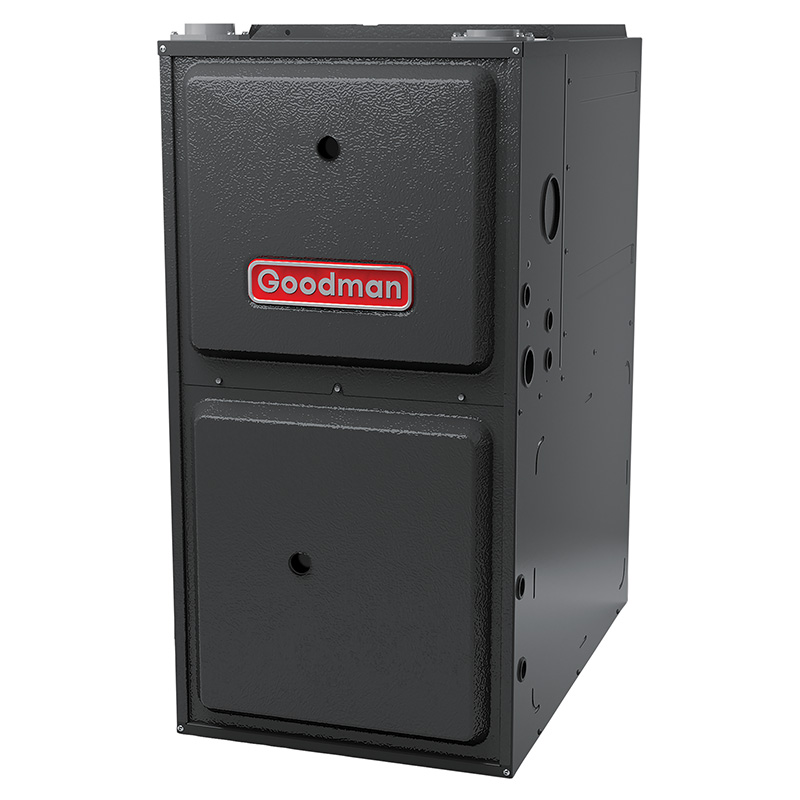
- 80,000 BTU upflow gas furnace with 92% AFUE
- R-32 refrigerant with lower global warming potential than R-410A
- Multi-speed furnace blower for quieter operation and better airflow balance
- Upflow configuration suits basements and utility closets with supply air exiting the top
- 10-year parts warranty when registered within 60 days of installation
About this system
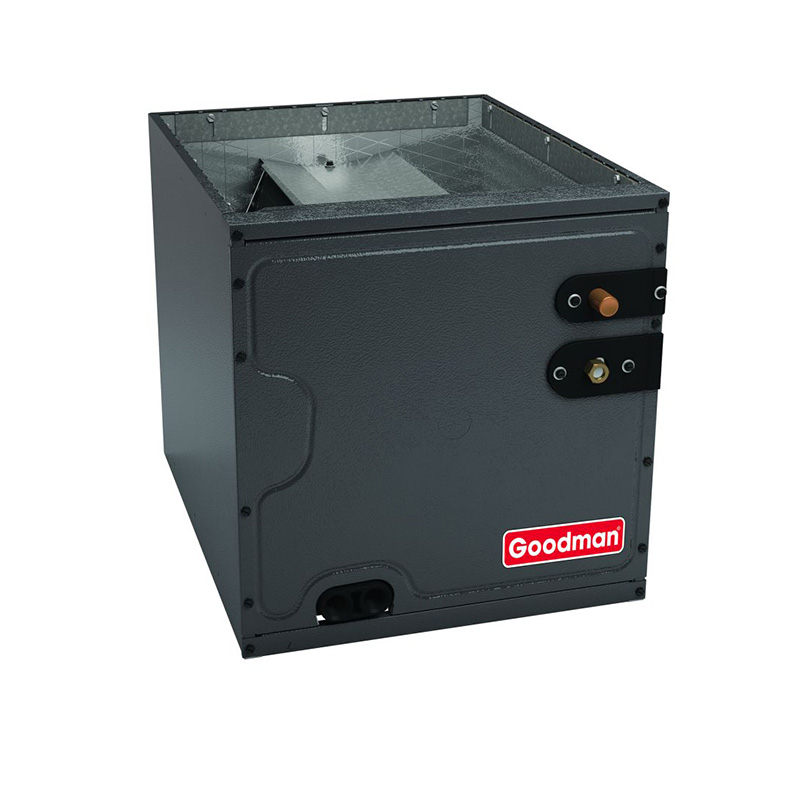
The Goodman GLXS5BA4810D pairs a 4-ton, 15.2 SEER2 single-stage air conditioner with an 80,000 BTU, 92% AFUE upflow gas furnace running on R-32 refrigerant. At 4 tons, this system is sized for homes roughly in the 2,000 to 2,600 square foot range depending on local climate, insulation quality, and window area. The 15.2 SEER2 rating lands just above the federal minimum for most U.S. regions, meaning it is an entry-level-efficiency system rather than a high-efficiency one, though real-world energy bills will still be noticeably lower than running equipment from the early 2000s.
The 92% AFUE furnace captures 92 cents of every dollar of gas burned, which is a solid mid-efficiency figure. It will not match the 96% to 98% AFUE of condensing furnaces, but it avoids the secondary heat exchanger, PVC venting, and condensate drainage those units require, making it a more straightforward upflow installation in homes already set up for metal flue venting. R-32 refrigerant carries a lower global warming potential than the R-410A it replaces, and it operates at slightly higher efficiency in warm conditions, though most homeowners will never notice the difference day to day. This package suits budget-conscious buyers in moderate climates who want a reliable replacement system without paying a premium brand markup.
The Goodman GLXS5BA4810D delivers a functional, code-compliant HVAC package at a price point that is genuinely hard to match from premium brands. Its efficiency is adequate rather than impressive, and long-term ownership costs depend heavily on installation quality and a willingness to budget for repairs after the first decade. Buyers who prioritize low upfront cost over long-term peace of mind will find it a reasonable fit.
Overall score is the average of the five ratings above.
What we like
- Priced roughly 15 to 25 percent below comparable Carrier, Trane, and Lennox systems
- 92% AFUE furnace keeps heating costs reasonable without the complexity of condensing venting
- R-32 refrigerant is more environmentally responsible and increasingly the industry standard
- Multi-speed blower improves comfort and airflow distribution compared to single-speed alternatives
- 10-year registered parts warranty is competitive at this price tier
Trade-offs
- Dual-run capacitor failures are the most commonly reported issue, typically surfacing in years 4 through 8 and costing $300 to $600 to fix
- Compressor lifespan averages 10 to 14 years, shorter than the 15 to 20 years reported for premium brands
- A minority of owners report evaporator coil refrigerant leaks, an expensive repair that can approach or exceed the cost of a new coil
- 15.2 SEER2 is near the regulatory floor, so energy savings are modest compared to 17 or 18 SEER2 alternatives
What homeowners and pros say about Goodman
Owners and HVAC technicians tend to split when discussing Goodman. On Google dealer review pages, the brand averages around 3.8 out of 5 stars across hundreds of reviews per location, with affordability showing up as the most consistent reason buyers chose it and feel satisfied. The picture shifts on ConsumerAffairs, where Goodman sits at roughly 2.5 out of 5, a channel that skews heavily toward people motivated to write by a negative experience. The theme that repeats in those lower-scored reviews is repair costs accumulating after year 7, which aligns with the documented pattern of dual-run capacitor failures becoming more frequent in the second half of the system’s life and, more seriously, evaporator coil refrigerant leaks appearing in a meaningful share of long-term owner accounts.
Technicians who work on Goodman equipment regularly point out that the brand’s reputation for reliability is difficult to separate from installer quality. A properly charged, correctly sized, and cleanly installed Goodman system tends to run without major drama for the first several years. The documented weak points are the dual-run capacitor, which is a low-cost fix when caught early, and the compressor, which averages 10 to 14 years of service life compared to the 15 to 20 years often reported for premium brands. A small but real share of first-year refrigerant leak reports, including some R-32 units, are traced back to installation or factory charge issues rather than component defects, reinforcing the point that who installs this system matters as much as the system itself. For a 4-ton package at this price point, the trade-off is a real one: lower upfront cost in exchange for a somewhat shorter expected service life and a higher probability of at least one moderate repair before year 10.
Sources: ConsumerAffairs Goodman owner reviews, AHRI Directory of Certified Product Performance, U.S. DOE appliance and equipment efficiency standards, Goodman product specification sheets.
What it costs to run
At 15.2 SEER2, cooling this 4-ton system for a typical 1200-hour cooling season at the U.S. average electricity rate of $0.17/kWh works out to roughly $644 per year in cooling, about $87 less per year than a minimum-efficiency 13.4 SEER2 unit of the same size. Your real cost depends on your climate and local rate.
Method: (48,000 BTU/hr ÷ 15.2 SEER2) × 1200 hours ÷ 1000 × $0.17/kWh. Rate source: U.S. EIA average; cooling hours: moderate-climate estimate.
How it compares
| Brand | Comparable model | SEER2 | Stage | Price position |
|---|---|---|---|---|
| Goodman | GLXS5BA4810D | 15.2 | Single-stage | Value pick |
| Carrier | Comfort 24ACC636 series with 58MXB furnace | 15.2 | Single-stage | Typically 15 to 25 percent more than this Goodman package |
| Trane | XR15 with S8X1 furnace | 15.2 | Single-stage | Typically 15 to 25 percent more than this Goodman package |
| Lennox | Merit ML14XC1 with ML180 furnace | 15.2 | Single-stage | Typically 15 to 25 percent more than this Goodman package |
Competitor rows are comparable single-stage units at similar efficiency; price is relative position, not a quote.
Questions about this system
Is 4 tons the right size for my house, or should I go up to 5?
Tonnage should be determined by a Manual J load calculation, not square footage alone. A 4-ton unit is commonly appropriate for homes between roughly 2,000 and 2,600 square feet in moderate climates, but ceiling height, insulation, window area, and local design temperatures all matter. Oversizing causes short cycling, humidity problems, and premature wear, so insist your installer performs the calculation rather than guessing.
Does the 92% AFUE furnace require PVC venting or can it use my existing metal flue?
At 92% AFUE this is a non-condensing furnace, so it can vent through existing single- or double-wall metal flue pipe in most cases. You do not need to run new PVC lines or add a condensate drain, which simplifies and lowers the cost of installation compared to a 96% or higher condensing unit.
What does the capacitor failure issue actually mean for my maintenance costs?
Dual-run capacitors are the single most commonly reported failure on Goodman AC units and typically fail somewhere between years 4 and 8. The part and labor usually run $300 to $600, and the fix takes under an hour for most technicians. It is not a catastrophic failure, but it is worth budgeting for and is a good reason to keep an annual maintenance agreement.
How does R-32 refrigerant affect service costs compared to R-410A?
R-32 is still readily available and many technicians already work with it, so service costs are comparable to R-410A systems today. R-32 does require technicians to be aware of its mildly flammable classification (A2L), which means some older or improperly equipped shops may charge a modest premium, though this is becoming less common as the industry transitions.
How do I get the 10-year parts warranty, and what does it actually cover?
You must register the equipment with Goodman online within 60 days of the original installation date. The warranty covers parts only, not labor, so a compressor replacement inside the warranty window could still cost $800 to $1,500 or more in labor charges. Without registration, coverage drops to a 5-year parts warranty, so registration is worth doing immediately after install.
Specifications
| Cooling capacity | 4 Ton |
| Efficiency | 15.2 SEER2 |
| Furnace output | 80000 BTU |
| Furnace efficiency | 92% AFUE |
| Configuration | Upflow |
| Refrigerant | R-32 |
| Model | GLXS5BA4810D |