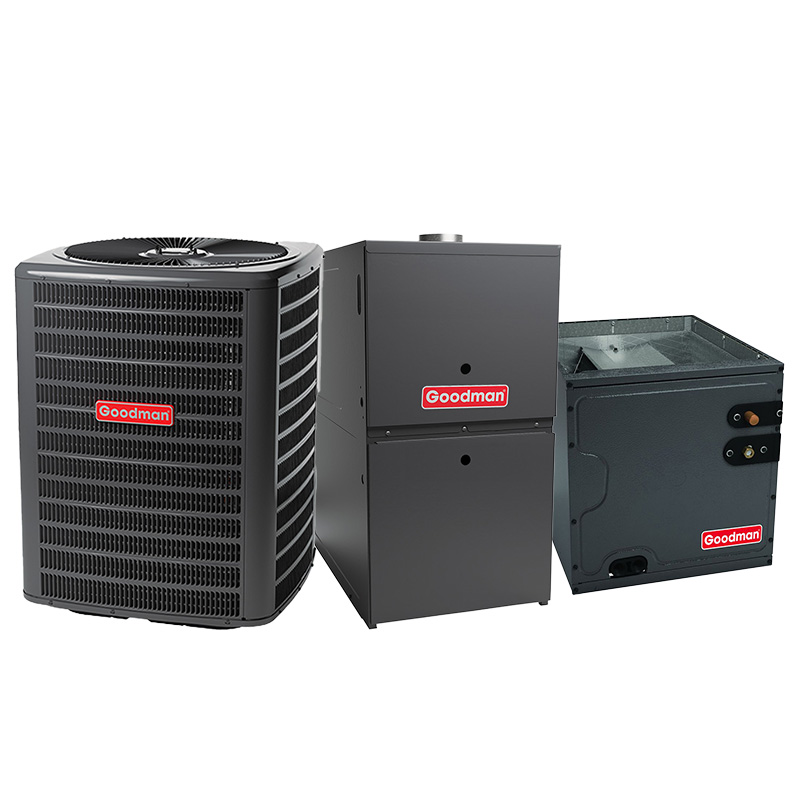
Goodman 4 Ton 15.2 SEER2 AC & Gas Furnace System – Two Stage Variable-Speed, 100000 BTU Gas Furnace, 80% AFUE, Upflow, R32
View on AC Direct see your lowest price →Check current price on AC Direct →
Key features
- Two-stage compressor reduces short-cycling and improves humidity control in shoulder seasons
- Variable-speed ECM blower motor for quieter, more consistent airflow and lower fan energy use
- 15.2 SEER2 efficiency meets current federal minimums with moderate operating-cost savings
- 80% AFUE upflow gas furnace rated at 100,000 BTU heating capacity
- R-32 refrigerant with lower global-warming potential than R-410A
- Goodman price point typically 15 to 25 percent below Trane, Carrier, and Lennox equivalents
About this system
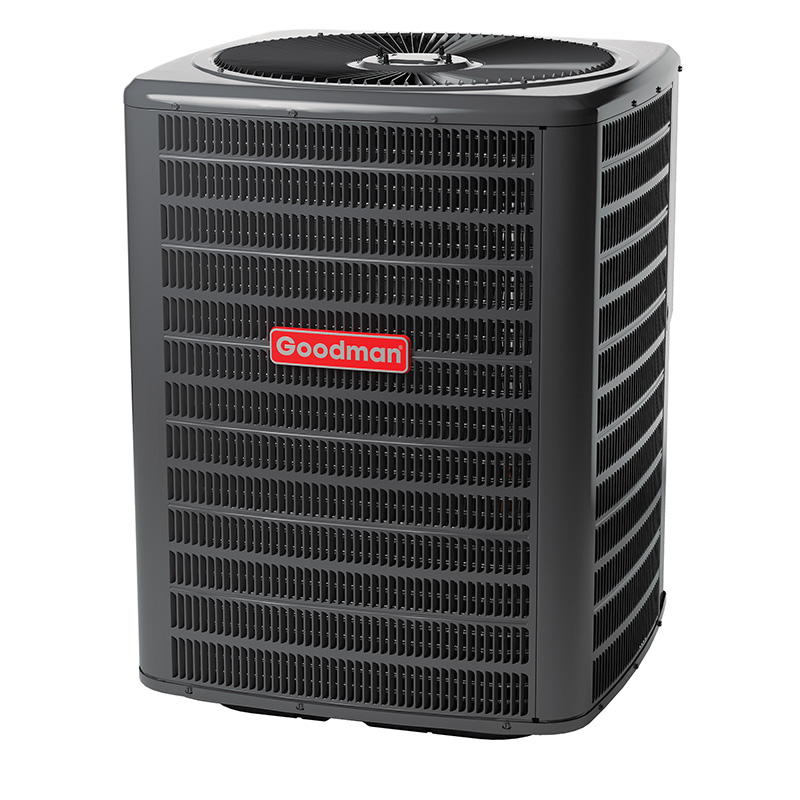
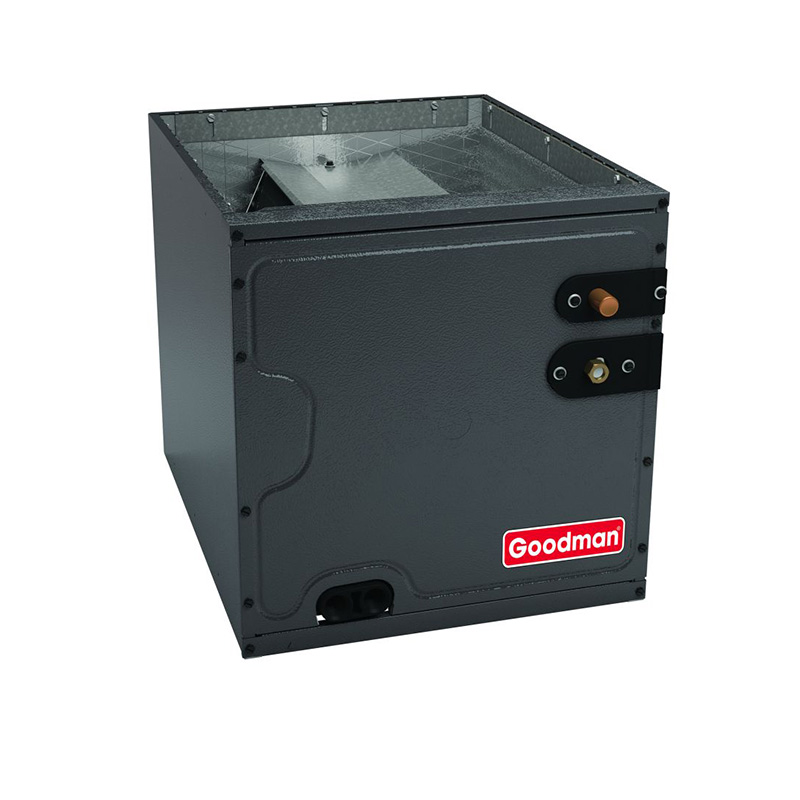
The Goodman 4-ton, 15.2 SEER2 split system pairs a two-stage, variable-speed air conditioner with a 100,000 BTU upflow gas furnace rated at 80% AFUE. The two-stage compressor runs at low capacity during mild weather, reducing short-cycling, lowering humidity in the conditioned space, and cutting electricity consumption compared with a single-stage unit. The variable-speed air handler fan adds another layer of comfort control, ramping up gradually rather than blasting on at full force. Together, these features make the system a reasonable fit for climates where summers demand serious cooling capacity and winters call for a full gas heating load.
At 15.2 SEER2, this system sits at the lower boundary of what qualifies as mid-efficiency under current federal standards, which replaced the old SEER scale in 2023. It comfortably clears the minimum efficiency threshold for most U.S. climate zones, though it will not deliver the operating-cost savings of a 17 or 18 SEER2 unit over the long run. The 80% AFUE furnace means roughly 20 cents of every dollar in gas is lost up the flue, making it a cost-effective choice upfront but less economical than a 96% AFUE unit in a heating-heavy climate. The system uses R-32 refrigerant, which has a lower global-warming potential than the R-410A it replaces, and is increasingly common in new equipment as the industry transitions away from older refrigerants.
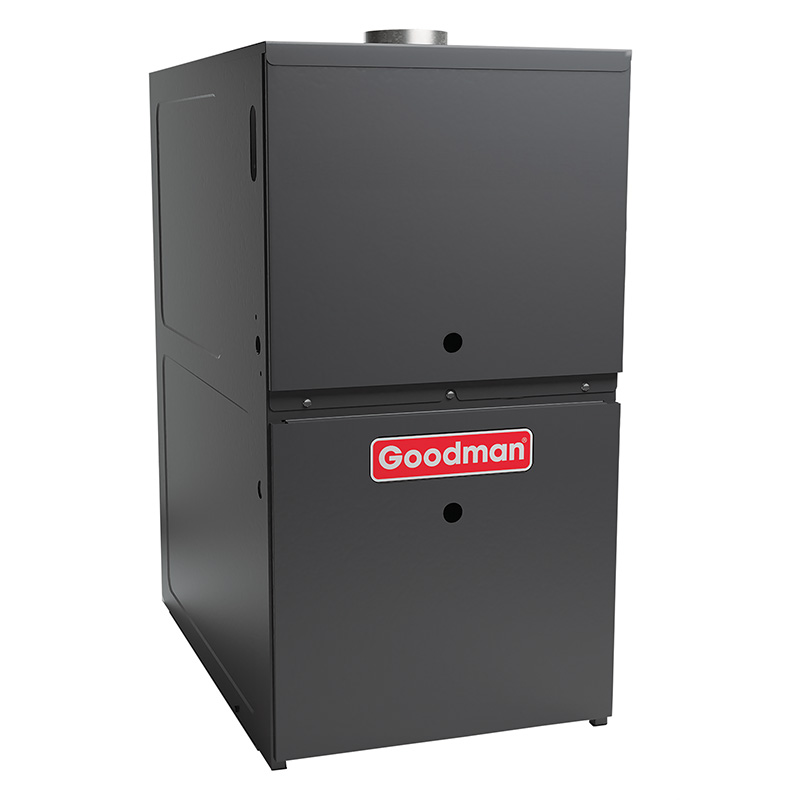
The upflow configuration is the most common residential furnace orientation, designed for installations where the furnace sits in a basement, crawl space, or first-floor utility closet and air moves upward into the duct system. Buyers in homes with attic-based air handlers or downflow requirements should confirm compatibility before purchasing. As a package from Goodman, the system is priced meaningfully below comparable configurations from Trane, Carrier, and Lennox, making it attractive for budget-conscious homeowners or rental property owners who want two-stage comfort without a premium-brand price tag.
This system delivers genuine two-stage comfort and a variable-speed blower at a price point that undercuts the major premium brands by a noticeable margin, which is its clearest selling point. Efficiency sits at a functional but not exceptional level, and Goodman's real-world reliability record shows more variability than premium competitors, particularly after the seven-year mark. Buyers who invest in quality installation and stay current on maintenance can get solid service life from this equipment, but those expecting set-it-and-forget-it durability may want to budget for a repair or two down the road.
Overall score is the average of the five ratings above.
What we like
- Two-stage cooling and variable-speed blower provide comfort performance above what single-stage systems at this price typically offer
- R-32 refrigerant is a forward-looking choice as the industry moves away from higher-GWP refrigerants
- Upflow configuration is the most installer-friendly orientation, keeping labor costs predictable
- Priced 15 to 25 percent below comparable Carrier, Trane, and Lennox systems, freeing budget for quality installation
- 100,000 BTU furnace output gives adequate heating headroom for large or poorly insulated 4-ton homes
Trade-offs
- 80% AFUE means roughly one-fifth of gas is exhausted unused, a real cost disadvantage in cold-climate, high-heating-use households
- Dual-run capacitors are the most commonly reported failure point, and compressor lifespan averages 10 to 14 years versus 15 to 20 for premium brands
- Evaporator coil leaks appear in a meaningful share of owner reviews, and a minority of owners report refrigerant leaks in year one, often tied to install or initial charge quality
- 15.2 SEER2 is a minimum-compliance efficiency rating; utility rebate eligibility and long-term savings lag behind higher-SEER2 alternatives
What homeowners and pros say about Goodman
Homeowners who have lived with Goodman equipment offer a split picture that lines up closely with the brand’s documented track record. On Google dealer review aggregates, Goodman-installed systems sit at around 3.8 out of 5, where the most repeated praise is that the equipment delivered reliable cooling or heating at a price point that made a new system financially possible. The complaints that do surface tend to cluster around year seven and beyond, a pattern consistent with the ConsumerAffairs score of roughly 2.5 out of 5, a channel where dissatisfied owners are more likely to write. The specific failure modes owners mention most often are dual-run capacitor failures and evaporator coil leaks, both of which are documented across Goodman AC lines broadly, not just this configuration.
HVAC technicians who work on Goodman equipment regularly tend to say the same thing: the units are not bad, but they are less forgiving of a mediocre install than a Trane or Carrier of comparable spec, and they are more likely to need a capacitor or coil visit somewhere in the second half of their service life. Compressor longevity averaging 10 to 14 years versus 15 to 20 for premium brands is the trade-off that shows up most clearly in the long-run math. For this specific 4-ton, two-stage R-32 system, the variable-speed blower and two-stage compressor add mechanical complexity relative to a basic single-stage Goodman, which means both more comfort upside and slightly more components that could eventually need attention. The consistent professional advice is to spend the money saved on the unit itself to secure a skilled installer and a multi-year labor warranty from a reputable dealer.
Sources: ConsumerAffairs Goodman owner reviews, AHRI Directory of Certified Product Performance, U.S. DOE appliance and equipment efficiency standards, Goodman product specification sheets.
What it costs to run
At 15.2 SEER2, cooling this 4-ton system for a typical 1200-hour cooling season at the U.S. average electricity rate of $0.17/kWh works out to roughly $644 per year in cooling, about $87 less per year than a minimum-efficiency 13.4 SEER2 unit of the same size. Your real cost depends on your climate and local rate.
Method: (48,000 BTU/hr ÷ 15.2 SEER2) × 1200 hours ÷ 1000 × $0.17/kWh. Rate source: U.S. EIA average; cooling hours: moderate-climate estimate.
How it compares
| Brand | Comparable model | SEER2 | Stage | Price position |
|---|---|---|---|---|
| Goodman | GSXH504810 + GMVC8 / GMVC96 Series (this system) | 15.2 | two-stage | Value pick |
| Carrier | Comfort 16 (24ACC6) with 80% AFUE 59SC2 Series furnace | 15.2–16 | single-stage | Typically 15 to 25 percent more than this Goodman system |
| Trane | XR15 (4TTR5) with S8X1 80% AFUE furnace | 15–15.5 | single-stage | Typically 15 to 25 percent more than this Goodman system |
| Lennox | Merit ML15XC1 with ML195 80% AFUE furnace | 15–15.5 | single-stage | Typically 15 to 25 percent more than this Goodman system |
Competitor rows are comparable single-stage units at similar efficiency; price is relative position, not a quote.
Questions about this system
Is 15.2 SEER2 going to qualify for utility rebates or federal tax credits?
Most utility rebate programs and the federal 25C tax credit require a minimum of 15.2 SEER2 for split systems in northern climate zones and 15 SEER2 in southern zones, so this unit sits right at the threshold. Check your specific utility program requirements before purchasing, because some programs set the bar higher, at 16 or 17 SEER2, for maximum rebate tiers.
How much does it matter who installs this system?
It matters a great deal. Goodman technicians and independent HVAC reviewers consistently cite install quality as the biggest variable in how long this equipment lasts. Improper refrigerant charge, for example, is the most common cause of the first-year refrigerant leak issue documented in owner reviews. Hiring an experienced, licensed contractor and having them verify the charge and airflow at startup is worth the extra cost.
Will this furnace work in my attic or in a horizontal application?
No. This is an upflow-only configuration, meaning it is designed for installations where the furnace sits below the duct system and air moves upward. For attic or crawl-space horizontal installs you would need a different furnace model. Confirm the airflow orientation with your installer before ordering.
What are the most likely repair costs I should budget for over the life of this system?
Dual-run capacitor replacement is the most frequently reported repair on Goodman AC units and typically runs 300 to 600 dollars including labor. Evaporator coil leaks are documented in a meaningful share of owner reviews and can run significantly higher depending on whether the coil needs replacement. Budgeting for an extended labor warranty or a service contract from a local dealer is a reasonable hedge given these patterns.
Why does this system use R-32 instead of R-410A, and does that affect servicing?
R-32 has a substantially lower global-warming potential than R-410A and is the direction most manufacturers are moving following EPA phasedown rules for high-GWP refrigerants. From a service standpoint, R-32 requires technicians with the proper recovery equipment and certification, and not every service company in every market is fully equipped yet. Confirming your local servicing contractors are set up for R-32 before you buy is a practical step.
Specifications
| Cooling capacity | 4 Ton |
| Efficiency | 15.2 SEER2 |
| Furnace output | 100000 BTU |
| Furnace efficiency | 80% AFUE |
| Configuration | Upflow |
| Refrigerant | R-32 |