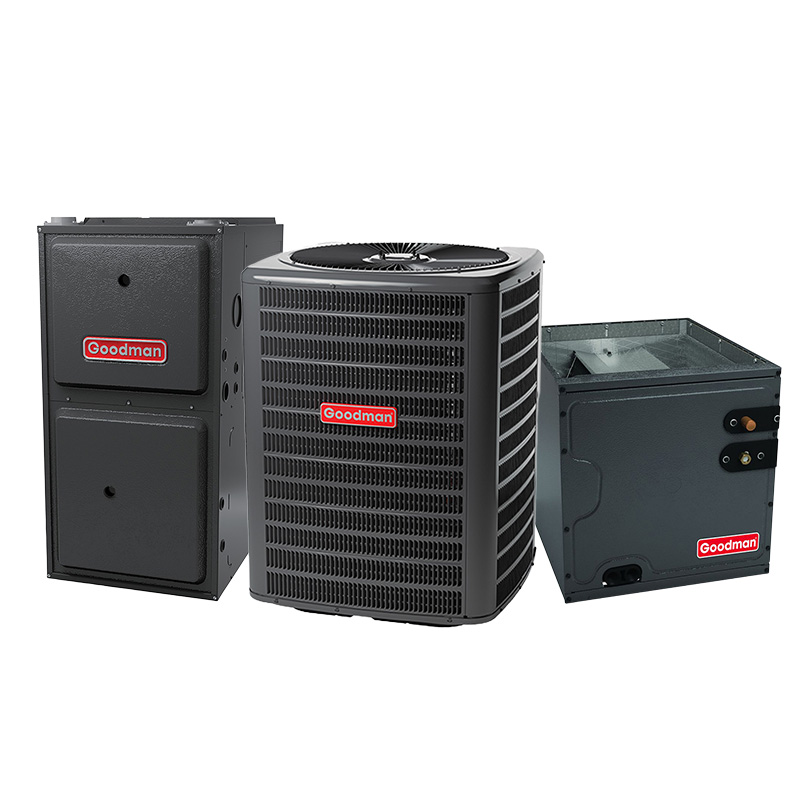
Goodman 4 Ton 15.2 SEER2 AC & Gas Furnace System – Two Stage Variable-Speed, 120000 BTU Gas Furnace, 96% AFUE, Upflow, R32
View on AC Direct see your lowest price →Check current price on AC Direct →
Key features
- Two-stage compressor reduces short-cycling and improves humidity removal on mild days
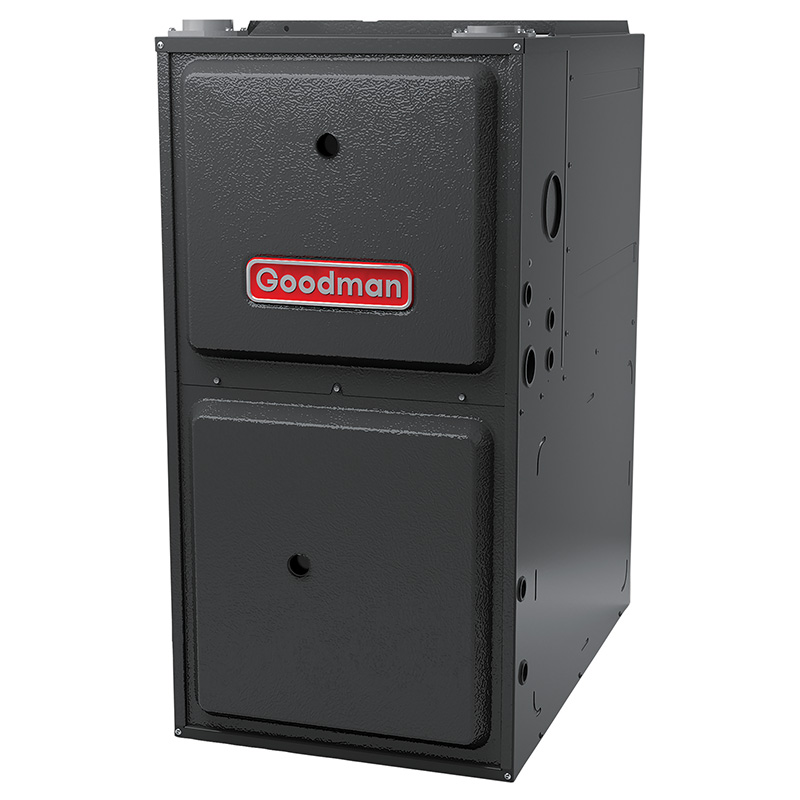
- 96% AFUE upflow gas furnace rated at 120,000 BTU for larger heating loads
- Variable-speed blower motor runs quietly and maintains more even temperature distribution
- R-32 refrigerant offers a lower global warming potential than R-410A
- 15.2 SEER2 efficiency meets current federal minimums for most U.S. climate zones
- Goodman limited parts warranty (10 years with required registration) covers key components
About this system
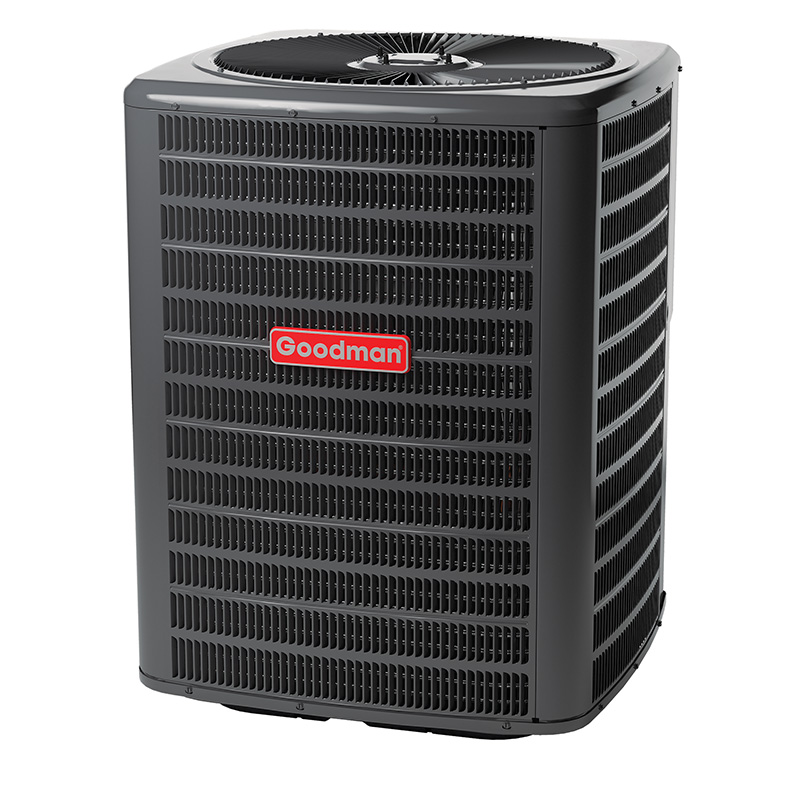
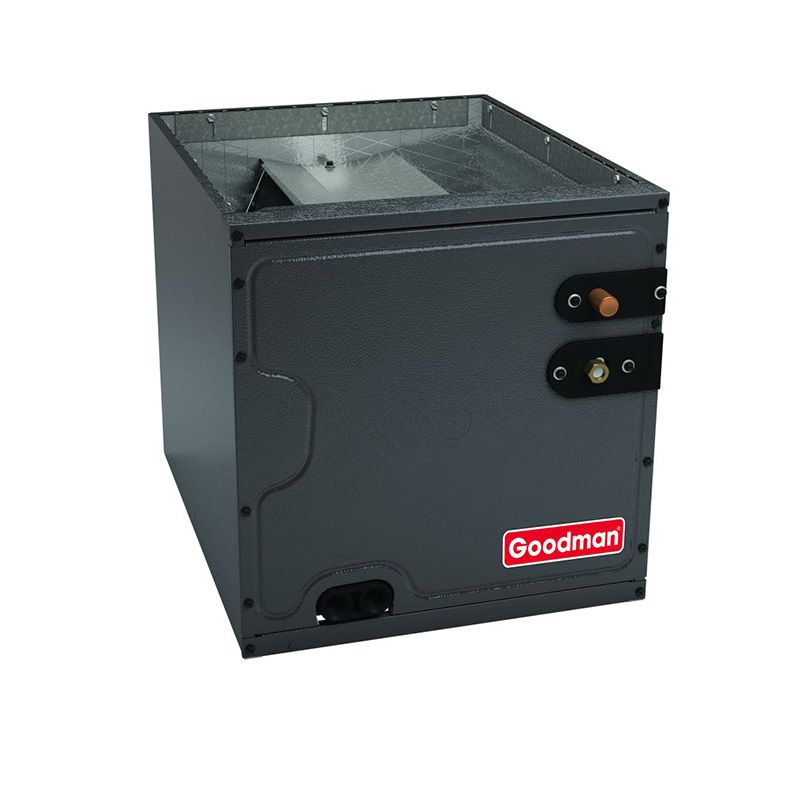
The Goodman 4-ton 15.2 SEER2 two-stage AC and gas furnace system pairs a mid-efficiency cooling unit with a high-efficiency 96% AFUE upflow gas furnace rated at 120,000 BTU. The two-stage compressor runs on a lower capacity setting during mild weather, cutting back on short-cycling and reducing indoor humidity more effectively than a single-stage unit can. The variable-speed air handler moves air quietly and consistently, which homeowners in larger homes often notice as a meaningful comfort improvement over basic on-off blower motors.
R-32 refrigerant is a step forward from R-410A: it carries a lower global warming potential and is increasingly favored as the industry moves away from older blends. At 15.2 SEER2, this system sits just above the federal minimum threshold for most U.S. climate zones, meaning it qualifies for the new efficiency standards without reaching the premium tier that 18-SEER2 and above equipment occupies. The 120,000 BTU furnace is sized for larger homes, open floor plans, or regions with severe winters, though proper load calculations by your installer remain essential to avoid oversizing problems. The upflow configuration suits homes with the air handler in a basement or utility closet blowing upward into the duct system.
This package makes practical sense for budget-conscious buyers replacing aging equipment in a home they plan to own for another 8 to 12 years. It is not the most efficient or most durable system available, but it closes much of the comfort gap between entry-level and premium equipment at a noticeably lower purchase price. Long-term costs hinge significantly on installation quality and whether you maintain the capacitors and coils on a regular schedule.
This system delivers genuine comfort upgrades over single-stage equipment at a price point that undercuts Carrier, Trane, and Lennox by a meaningful margin. The trade-off is a shorter average compressor lifespan and a documented pattern of component failures after year 7 that owners of premium brands are less likely to encounter. If you have a skilled installer and budget for periodic maintenance, it is a reasonable choice; if you are counting on 18-plus years of low-hassle operation, the savings may not hold up.
Overall score is the average of the five ratings above.
What we like
- Two-stage cooling noticeably improves humidity control and reduces temperature swings compared to single-stage alternatives
- 96% AFUE furnace keeps heating fuel costs near the top of what gas equipment can deliver without modulating technology
- Variable-speed blower cuts operating noise and circulates air more evenly across larger floor plans
- Purchase price runs roughly 15 to 25 percent below comparable Trane, Lennox, and Carrier systems
- R-32 refrigerant is a more environmentally responsible choice and aligns with where the industry is heading
Trade-offs
- Dual-run capacitors are the most commonly reported failure point, typically appearing within 5 to 10 years and costing $300 to $600 per incident
- Evaporator coil leaks appear in a meaningful share of owner reviews, a potential mid-life expense not as frequently reported on premium brands
- Compressor lifespan averages 10 to 14 years versus 15 to 20 years for premium-brand compressors, raising the likelihood of a costly repair or early replacement
- A minority of first-year owners have reported refrigerant leaks, usually traceable to installation or initial charge issues rather than manufacturing defects
What homeowners and pros say about Goodman
Goodman earns a Google dealer review score of around 3.8 out of 5, where the most consistent praise is affordability relative to what the equipment actually delivers. Homeowners who had their system professionally installed and who keep up with seasonal maintenance tend to report reasonable satisfaction through the first several years. HVAC technicians generally describe Goodman as a workhorse brand: acceptable build quality, widely available parts, and straightforward to service when something does go wrong. The dual-run capacitor is the failure mode technicians flag most often, typically becoming an issue somewhere between years 5 and 10 and running $300 to $600 to fix. It is annoying but not catastrophic, and a good technician will often catch a weakening capacitor during a tune-up before it causes a breakdown.
ConsumerAffairs tells a more sobering story, with Goodman sitting at roughly 2.5 out of 5 on that platform. That channel skews heavily toward owners who had problems, so it is not a representative sample, but the recurring theme is worth noting: repair costs that climb noticeably after year 7, sometimes driven by evaporator coil leaks or compressor wear. Compressors on this brand tend to average 10 to 14 years in real-world reports, a shorter window than the 15 to 20 years premium brands typically achieve. A minority of owners have also reported refrigerant leaks in the first year, which most HVAC professionals attribute to installation or charge issues rather than factory defects. The clearest takeaway from both review channels is that Goodman’s outcome variance is wide: a careful install and consistent maintenance push results toward the positive end, while shortcuts on either front tend to surface in the complaint columns.
Sources: ConsumerAffairs Goodman owner reviews, AHRI Directory of Certified Product Performance, U.S. DOE appliance and equipment efficiency standards, Goodman product specification sheets.
What it costs to run
At 15.2 SEER2, cooling this 4-ton system for a typical 1200-hour cooling season at the U.S. average electricity rate of $0.17/kWh works out to roughly $644 per year in cooling, about $87 less per year than a minimum-efficiency 13.4 SEER2 unit of the same size. Your real cost depends on your climate and local rate.
Method: (48,000 BTU/hr ÷ 15.2 SEER2) × 1200 hours ÷ 1000 × $0.17/kWh. Rate source: U.S. EIA average; cooling hours: moderate-climate estimate.
How it compares
| Brand | Comparable model | SEER2 | Stage | Price position |
|---|---|---|---|---|
| Goodman | 4-Ton 15.2 SEER2 Two-Stage AC + 96% AFUE Gas Furnace (this system) | 15.2 | Two-stage | Value pick |
| Carrier | Performance 16 Series (24ACC6) | ~15-16 SEER2 | Single-stage | Typically 15 to 25 percent more than this Goodman system |
| Trane | XR15 Series | ~15 SEER2 | Single-stage | Typically 15 to 25 percent more than this Goodman system |
| Lennox | Merit 16ACX Series | ~15-16 SEER2 | Single-stage | Typically 15 to 25 percent more than this Goodman system |
Competitor rows are comparable single-stage units at similar efficiency; price is relative position, not a quote.
Questions about this system
Is a 120,000 BTU furnace too large for a 4-ton cooling system?
Not necessarily, but it depends on your home's actual heating load, not just square footage. A proper Manual J load calculation is essential before assuming this BTU rating is appropriate. Oversizing a furnace causes short-cycling that wears components faster and reduces comfort.
How long can I realistically expect this Goodman system to last?
The furnace, with regular maintenance, commonly reaches 15 to 20 years. The air conditioning compressor averages 10 to 14 years based on documented Goodman performance data, which is shorter than the 15 to 20-year range often cited for premium brands. Capacitor replacements along the way are likely.
What does registering the equipment actually do for my warranty?
Goodman requires registration within a set window after installation to receive the full 10-year parts limited warranty. Failure to register typically drops coverage to 5 years. Keep your installation records and register promptly through Goodman's website.
My installer mentioned R-32 requires special handling. Is that a real concern?
R-32 is mildly flammable and does require technicians to use tools and procedures rated for A2L refrigerants. Most up-to-date service professionals are already equipped for this, but it is worth confirming your installer is certified and familiar with R-32 before scheduling the job.
Will this system qualify for the federal energy efficiency tax credit?
The 96% AFUE furnace qualifies for the 25C federal tax credit as of current IRS guidance. For the AC portion, eligibility under 25C depends on the combined system efficiency meeting the required thresholds for your climate zone. Confirm the specific credit amount with a tax professional, as rules and limits can change.
Specifications
| Cooling capacity | 4 Ton |
| Efficiency | 15.2 SEER2 |
| Furnace output | 120000 BTU |
| Furnace efficiency | 96% AFUE |
| Configuration | Upflow |
| Refrigerant | R-32 |