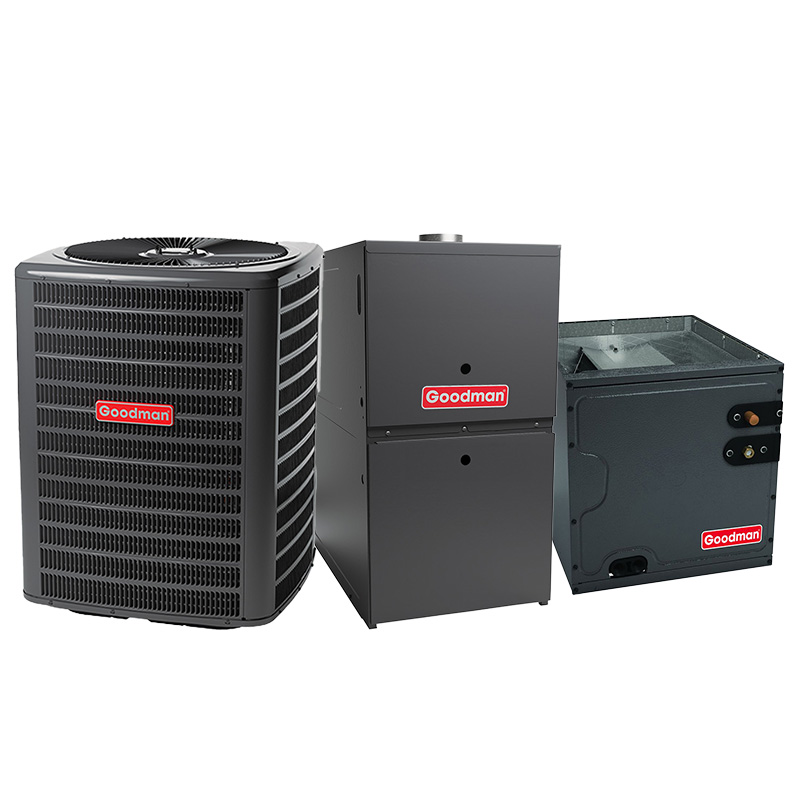
Goodman 4 Ton 15.2 SEER2 AC & Gas Furnace System – Two Stage Variable-Speed, 80000 BTU Gas Furnace, 80% AFUE, Upflow, R32
View on AC Direct see your lowest price →Check current price on AC Direct →
Key features
- Two-stage compressor reduces short-cycling and improves humidity control on mild days
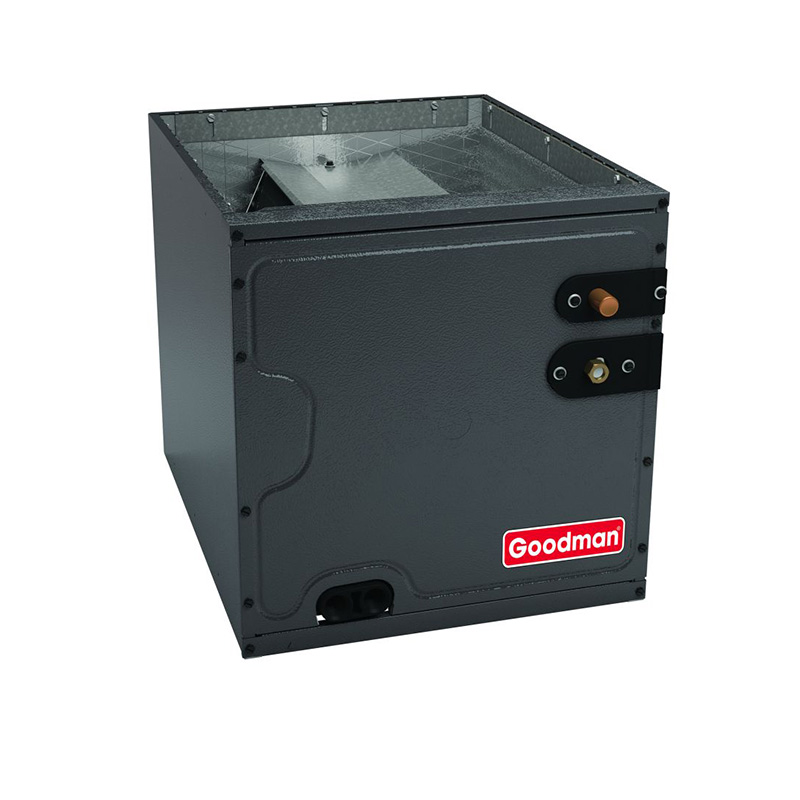
- Variable-speed ECM blower motor for quieter operation and more even air distribution
- R-32 refrigerant with lower global-warming potential than outgoing R-410A
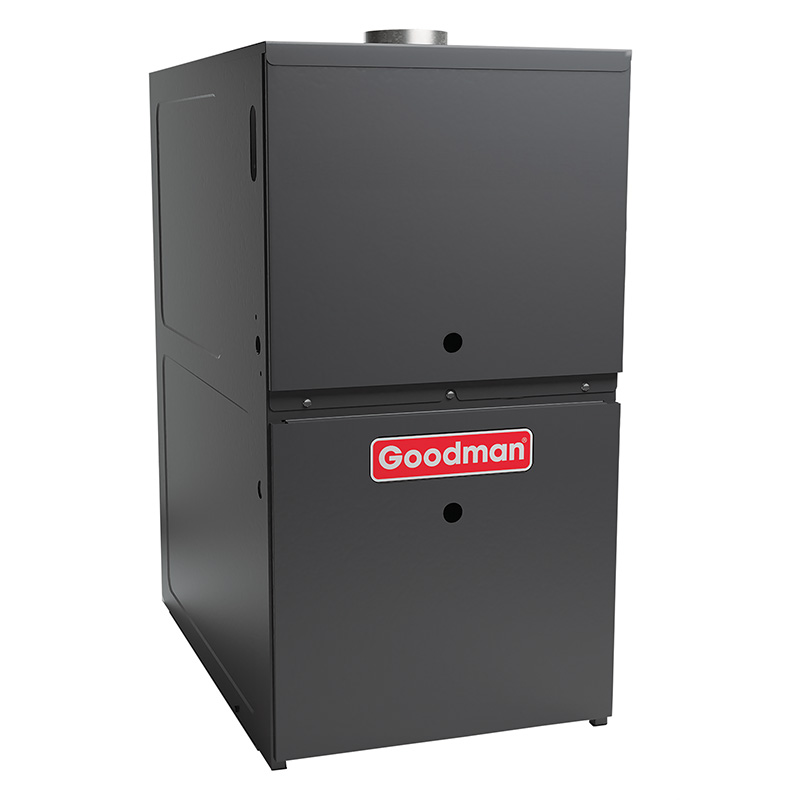
- 80,000 BTU upflow gas furnace rated at 80% AFUE for ground-level or basement installs
- 15.2 SEER2 efficiency rating meets current federal minimums with moderate energy savings
- Priced 15 to 25 percent below comparable Trane, Lennox, and Carrier equipment
About this system
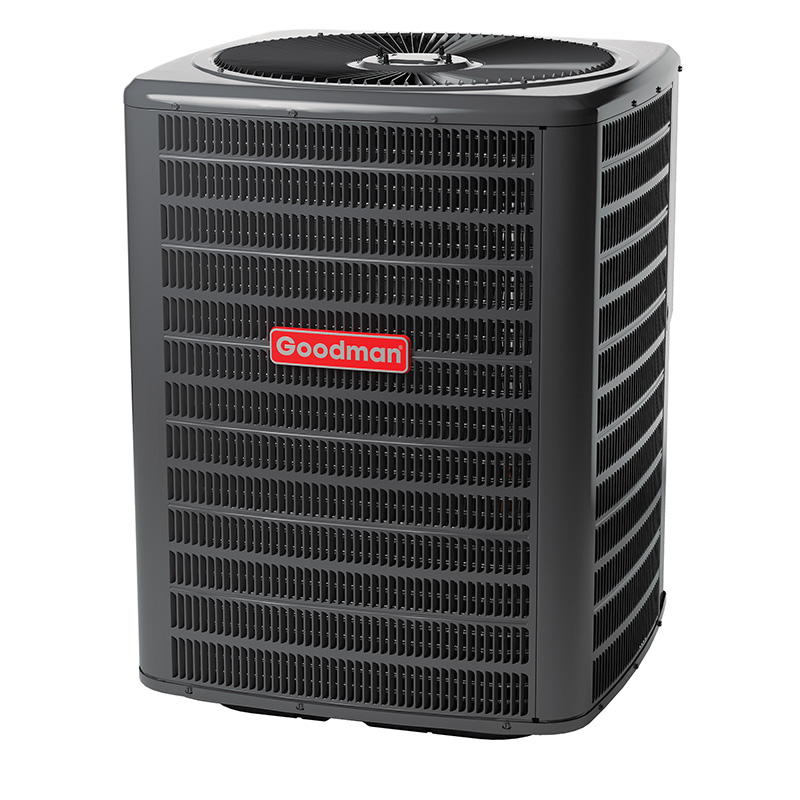
The Goodman 4-Ton 15.2 SEER2 AC and Gas Furnace System pairs a two-stage, variable-speed cooling unit with an 80,000 BTU, 80% AFUE upflow gas furnace. At 4 tons, it is sized for homes roughly in the 2,000 to 2,600 square foot range, though a proper Manual J load calculation should always confirm the right size before purchase. The two-stage compressor runs at a lower capacity on milder days, reducing short-cycling, cutting humidity better than single-stage equipment, and easing wear on components over time. The variable-speed air handler further improves air distribution and quiet operation compared to single-speed blowers.
This system uses R-32 refrigerant, a lower global-warming-potential option that is becoming standard in new residential equipment as the industry moves away from R-410A. The upflow configuration means supply air exits through the top of the furnace, making it the correct choice for basement or ground-level utility closet installations where ductwork runs up through the floor system. The 80% AFUE furnace recovers 80 cents of every dollar of gas burned as usable heat, which is the federal minimum for new equipment in most northern climate regions and a reasonable choice for mild-to-moderate heating climates where a high-efficiency 96% AFUE unit may not pencil out on payback.
Buyers choosing this system are generally prioritizing upfront cost savings over premium-brand pedigree. Goodman sits 15 to 25 percent below comparable Trane, Lennox, and Carrier systems, and the two-stage, variable-speed feature set delivers noticeably better comfort than a basic single-stage bundle at a similar price point. The trade-off is that long-term reliability sits below what premium brands typically deliver, and how well this system performs over its lifetime depends heavily on who installs it and how carefully they commission it.
This system delivers a real comfort upgrade over basic single-stage bundles at a price point that is hard to match from premium brands. Efficiency and feature set are solid for the money, but Goodman's documented track record of capacitor failures, evaporator coil leaks, and compressor lifespans that trail premium brands means buyers should budget for repairs after year seven and prioritize finding an experienced installer above all else.
Overall score is the average of the five ratings above.
What we like
- Two-stage cooling meaningfully outperforms single-stage units on comfort and humidity control
- Variable-speed blower reduces noise and improves airflow consistency throughout the home
- R-32 refrigerant is future-facing and avoids the phase-out timeline of R-410A equipment
- Upfront cost is 15 to 25 percent lower than comparable Carrier, Trane, or Lennox systems
- 15.2 SEER2 clears current federal efficiency standards with a feature set typically found at higher price tiers
Trade-offs
- Dual-run capacitor failures are the most commonly reported issue and typically appear within the first several years of ownership
- Evaporator coil leaks appear in a meaningful share of owner reports and can be a costly mid-life repair
- Compressor lifespan averages 10 to 14 years versus 15 to 20 years seen more often with premium brands
- 80% AFUE is the federal minimum and will result in noticeably higher heating bills than a 96% AFUE furnace in colder climates
What homeowners and pros say about Goodman
Homeowners who have gone the Goodman route most often point to the upfront savings as the main reason they chose it, and that sentiment shows up clearly in Google dealer review aggregates that sit around 3.8 out of 5, where the word affordable appears repeatedly. The comfort improvement from the two-stage compressor and variable-speed blower in this bundle gets real-world praise from owners who previously had single-stage equipment. On the other side of the ledger, ConsumerAffairs reviews average around 2.5 out of 5, and while that platform overrepresents dissatisfied owners, the recurring pattern is worth noting: complaints tend to cluster around year seven and beyond, driven by repair costs that owners say caught them off guard. The most frequently cited issues in those accounts align with Goodman’s documented failure modes, particularly dual-run capacitor failures and evaporator coil leaks.
HVAC technicians tend to have a pragmatic view of Goodman. Many will install it without hesitation and point out that a dual-run capacitor swap, the brand’s most common reported failure, is a straightforward repair typically running 300 to 600 dollars. Where pros get more cautious is around compressor lifespan, which documented patterns place in the 10 to 14 year range for Goodman versus 15 to 20 years more often seen with Carrier, Trane, or Lennox equipment. Installers consistently emphasize that a Goodman system commissioned carefully, with correct refrigerant charge, proper airflow, and leak-checked line sets, will outperform a premium-brand system installed sloppily. For this R-32 system specifically, finding a technician already certified to handle R-32 refrigerant before committing to the purchase is a practical first step many buyers overlook.
Sources: ConsumerAffairs Goodman owner reviews, AHRI Directory of Certified Product Performance, U.S. DOE appliance and equipment efficiency standards, Goodman product specification sheets.
What it costs to run
At 15.2 SEER2, cooling this 4-ton system for a typical 1200-hour cooling season at the U.S. average electricity rate of $0.17/kWh works out to roughly $644 per year in cooling, about $87 less per year than a minimum-efficiency 13.4 SEER2 unit of the same size. Your real cost depends on your climate and local rate.
Method: (48,000 BTU/hr ÷ 15.2 SEER2) × 1200 hours ÷ 1000 × $0.17/kWh. Rate source: U.S. EIA average; cooling hours: moderate-climate estimate.
How it compares
| Brand | Comparable model | SEER2 | Stage | Price position |
|---|---|---|---|---|
| Goodman | GSZ2 / GMVC8 Series Bundle | 15.2 | two-stage/variable | Value pick |
| Carrier | Comfort 16 (24ACC6) Series | 15.2–16 | single-stage | Typically 15 to 25 percent more than this Goodman system |
| Trane | XR15 Series | 15.2–16 | single-stage | Typically 15 to 25 percent more than this Goodman system |
| Lennox | Merit 16ACX Series | 15.2–16 | single-stage | Typically 15 to 25 percent more than this Goodman system |
Competitor rows are comparable single-stage units at similar efficiency; price is relative position, not a quote.
Questions about this system
Is 80% AFUE good enough, or should I pay more for a 96% AFUE furnace?
80% AFUE is the federal minimum for new furnaces in most U.S. regions, meaning one dollar in five is lost as exhaust heat. In mild climates with short heating seasons, the payback on a higher-efficiency unit can take a decade or more, making 80% a reasonable choice. In colder northern climates where the furnace runs hard for five or six months, a 96% AFUE unit often pays back within five to seven years and is worth the upgrade.
What does two-stage cooling actually mean for comfort in my home?
A two-stage compressor runs at a lower output level on mild days and ramps up to full capacity only when the load demands it. This means longer, slower cooling cycles that remove more humidity from the air and reduce the temperature swings that single-stage systems can create. Most homeowners with two-stage equipment report more consistent room-to-room comfort compared to single-stage systems.
R-32 is new to me. Is it safe and will parts be available?
R-32 is a single-component refrigerant with a lower global-warming potential than R-410A, and it is already the standard refrigerant in most new residential equipment being manufactured today. It is mildly flammable, which means technicians need to be certified to handle it, but it is not considered a significant safety risk in normal residential use. Parts and refrigerant availability are not expected to be an issue as the industry has broadly adopted it.
Goodman has mixed reviews online. Should I be worried about reliability?
Goodman scores around 2.5 out of 5 on ConsumerAffairs, a channel that skews toward complaints, and about 3.8 out of 5 across Google dealer reviews where affordability is frequently praised. The most documented failure points are dual-run capacitors, which are typically a low-cost fix in the 300 to 600 dollar range, and evaporator coil leaks, which are more expensive. Compressors tend to average 10 to 14 years rather than the 15 to 20 years more common with premium brands. Technicians consistently cite install quality as the single biggest factor in how long any Goodman system lasts.
How important is it to register the warranty, and what does Goodman actually cover on this system?
Registration is important because Goodman's full parts warranty period is only activated when the homeowner registers the equipment with Goodman within a specific window after installation, typically within 60 days. Failing to register usually reduces the warranty to a shorter baseline period. The warranty covers parts but not labor, which means a covered compressor replacement can still result in a significant out-of-pocket labor bill, so asking your installer about a labor warranty or service agreement is worth doing at the time of install.
Specifications
| Cooling capacity | 4 Ton |
| Efficiency | 15.2 SEER2 |
| Furnace output | 80000 BTU |
| Furnace efficiency | 80% AFUE |
| Configuration | Upflow |
| Refrigerant | R-32 |