Goodman 4 Ton 15.2 SEER2 R32 Heat Pump Condenser (GLZS4BA4810)
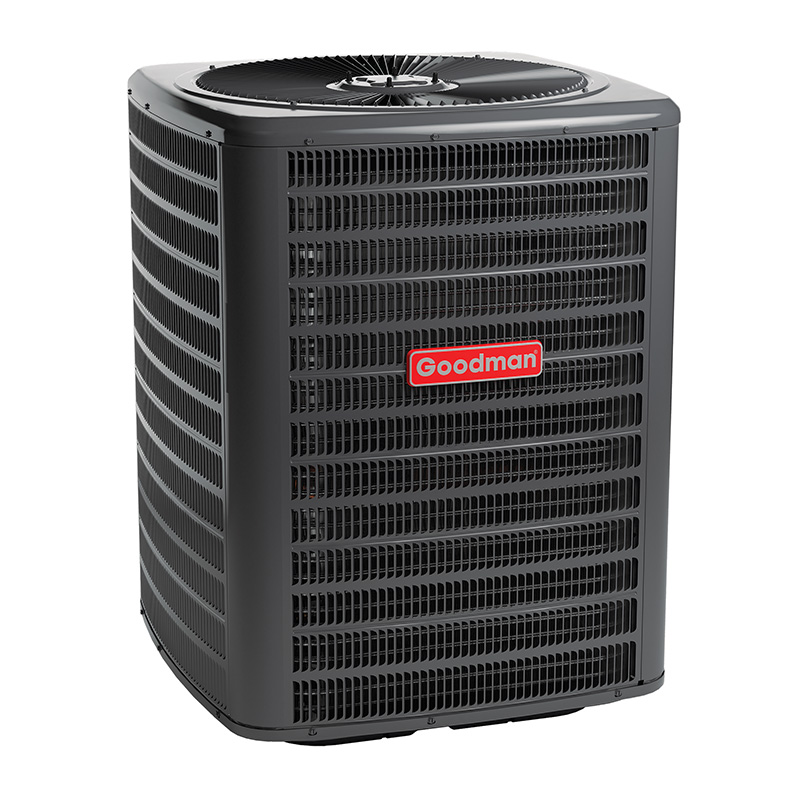
View on AC Direct see your lowest price →Check current price on AC Direct →
Key features
- 4-ton capacity, suited for homes roughly 1,800 to 2,400 sq ft depending on load calculation
- 15.2 SEER2 efficiency rating, meeting or exceeding current federal minimums in most regions
- R-32 refrigerant, a lower global-warming-potential alternative to R-410A
- Single-stage scroll compressor operation for mechanical simplicity
- Condenser-only unit requiring a matched air handler or coil for a complete system
- Goodman factory 10-year parts warranty when registered within 60 days of installation
About this system
The Goodman GLZS4BA4810 is a 4-ton heat pump condenser running on R-32 refrigerant and rated at 15.2 SEER2, placing it just above the current federal minimum efficiency threshold for most U.S. climate zones. At 4 tons, it is sized for homes roughly in the 1,800 to 2,400 square foot range, though actual sizing depends heavily on insulation, window area, and local climate. R-32 is a lower-GWP refrigerant replacing the older R-410A, which means this unit is positioned for longer-term regulatory compliance as the industry moves away from higher-impact refrigerants.
This condenser is a straightforward single-stage unit, meaning the compressor runs at full capacity or not at all. That design keeps the purchase price down and the mechanical simplicity relatively high, but it does mean the system cycles on and off more frequently than a two-stage or variable-speed unit, which can affect both humidity control and comfort consistency in mixed climates. It pairs as a condenser-only component, so buyers will need a compatible air handler or furnace coil, refrigerant line set, and electrical connections to complete the system. Who it suits best: homeowners replacing an aging system on a defined budget who want a code-compliant, R-32-ready unit without paying a premium-brand markup.
The GLZS4BA4810 delivers entry-level heat pump performance at a price point that undercuts premium brands by a meaningful margin, making it a reasonable choice for budget-conscious buyers who accept some trade-offs in long-term reliability and comfort sophistication. Single-stage operation and Goodman's documented compressor and coil failure history mean owners should budget for potential mid-life repairs. The value proposition holds up best when a skilled installer does the work correctly from day one.
Overall score is the average of the five ratings above.
What we like
- Purchase price typically 15 to 25 percent below comparable Trane, Lennox, and Carrier units
- R-32 refrigerant future-proofs the system against near-term regulatory changes affecting R-410A
- 15.2 SEER2 meets current efficiency minimums, keeping operating costs competitive at the entry level
- Single-stage design means fewer control components and generally straightforward diagnostics
- 10-year parts warranty (registered) is competitive for this price tier
Trade-offs
- Single-stage operation cycles on and off more frequently, which can leave humidity control less consistent than two-stage or variable-speed alternatives
- Compressor lifespan averages 10 to 14 years based on owner history, noticeably shorter than the 15 to 20 years commonly seen with premium brands
- Dual-run capacitor failures are the most frequently reported repair issue, and evaporator coil leaks show up in a meaningful share of long-term owner accounts
- A minority of early owners have reported refrigerant leaks within the first year, typically traced back to install or initial charge quality rather than a factory defect, which underscores how much this brand's outcome depends on the installing contractor
What homeowners and pros say about Goodman
Homeowners who post about Goodman equipment on forums and review platforms tend to split into two camps: those who got a proper installation and have run the system for years without major issues, and those who faced repair bills that eroded the original savings. ConsumerAffairs scores Goodman at roughly 2.5 out of 5, though that channel skews heavily toward frustrated owners, and the recurring pattern in those complaints is repair costs climbing after around year seven. Google dealer reviews land closer to 3.8 out of 5 across hundreds of location-level reviews, where the most common praise is straightforward: the price was lower than competitors and the system cools and heats as expected.
HVAC technicians tend to have a pragmatic view of Goodman. They point to dual-run capacitor failures as the most predictable service call on these units, a repair that usually runs 300 to 600 dollars and is not unique to Goodman but appears more frequently in owner accounts than with premium brands. Evaporator coil leaks show up in a notable share of longer-term reports, and technicians note that Goodman compressors tend to average 10 to 14 years versus the 15 to 20 years they expect from Trane or Carrier equipment. On the R-32 GLZS4BA4810 specifically, the R-32 charge is one more reason pros emphasize getting the installation right the first time, since a minority of early Goodman owners across model lines have reported refrigerant leaks in year one that traced back to charging errors rather than factory problems. The consistent professional takeaway: Goodman can represent genuine value, but only when paired with a contractor who takes the startup seriously.
Sources: ConsumerAffairs Goodman owner reviews, AHRI Directory of Certified Product Performance, U.S. DOE appliance and equipment efficiency standards, Goodman product specification sheets.
What it costs to run
At 15.2 SEER2, cooling this 4-ton system for a typical 1200-hour cooling season at the U.S. average electricity rate of $0.17/kWh works out to roughly $644 per year in cooling, about $87 less per year than a minimum-efficiency 13.4 SEER2 unit of the same size. Your real cost depends on your climate and local rate.
Method: (48,000 BTU/hr ÷ 15.2 SEER2) × 1200 hours ÷ 1000 × $0.17/kWh. Rate source: U.S. EIA average; cooling hours: moderate-climate estimate.
How it compares
| Brand | Comparable model | SEER2 | Stage | Price position |
|---|---|---|---|---|
| Goodman | GLZS4BA4810 | 15.2 | Single-stage | Value pick |
| Carrier | Performance 15 (25HCE648A003) | 15.2 | Single-stage | Moderately higher than Goodman, mid-range for Carrier's lineup |
| Trane | XR15 (4TWR5048H) | 15.0-15.6 | Single-stage | Notably higher than Goodman, consistent with Trane's premium positioning |
| Lennox | Merit ML15XP1 (ML15XP1-048) | 15.0-15.5 | Single-stage | Higher than Goodman, slightly above Carrier at this efficiency tier |
Competitor rows are comparable single-stage units at similar efficiency; price is relative position, not a quote.
Questions about this system
Does this unit work as a standalone purchase, or do I need to buy other components too?
This is a condenser-only unit. You will also need a compatible indoor air handler or furnace with a matching coil, refrigerant line sets, a thermostat, and electrical disconnect hardware. Your HVAC contractor should verify that the indoor coil matches Goodman's published rated combinations to maintain the 15.2 SEER2 rating and warranty coverage.
What does switching to R-32 refrigerant actually mean for me as an owner?
R-32 has a lower global warming potential than R-410A and is being adopted industry-wide as regulations tighten on higher-GWP refrigerants. As an owner, the practical difference is that your technician will need R-32 certification and equipment to service it, which is becoming standard but is worth confirming with your service provider before you commit.
What repairs should I set money aside for over the life of this system?
The most commonly reported issue on Goodman heat pumps is dual-run capacitor failure, typically a 300 to 600 dollar repair that most technicians can complete quickly. Evaporator coil leaks are a documented concern further into the system's life, and compressor replacement becomes a realistic possibility in the 10 to 14 year range based on owner history.
How important is installer quality for a Goodman unit specifically?
It matters more than with premium brands. Technicians consistently cite install quality as the single biggest factor in how long a Goodman system lasts, and the small share of owners reporting first-year refrigerant leaks almost always trace the problem to installation rather than a factory defect. Choosing a licensed, experienced contractor is not optional if you want to reach the upper end of the expected service life.
Is the 10-year parts warranty actually useful, or is there fine print that limits it?
The 10-year parts warranty requires product registration within 60 days of installation and applies to parts only, not labor. Labor costs on a compressor replacement, for example, can easily equal or exceed the part value itself, so the warranty covers material costs but leaves you responsible for the technician's time. Without registration, coverage drops to five years.
Specifications
| Cooling capacity | 4 Ton |
| Efficiency | 15.2 SEER2 |
| Refrigerant | R-32 |
| Model | GLZS4BA4810 |