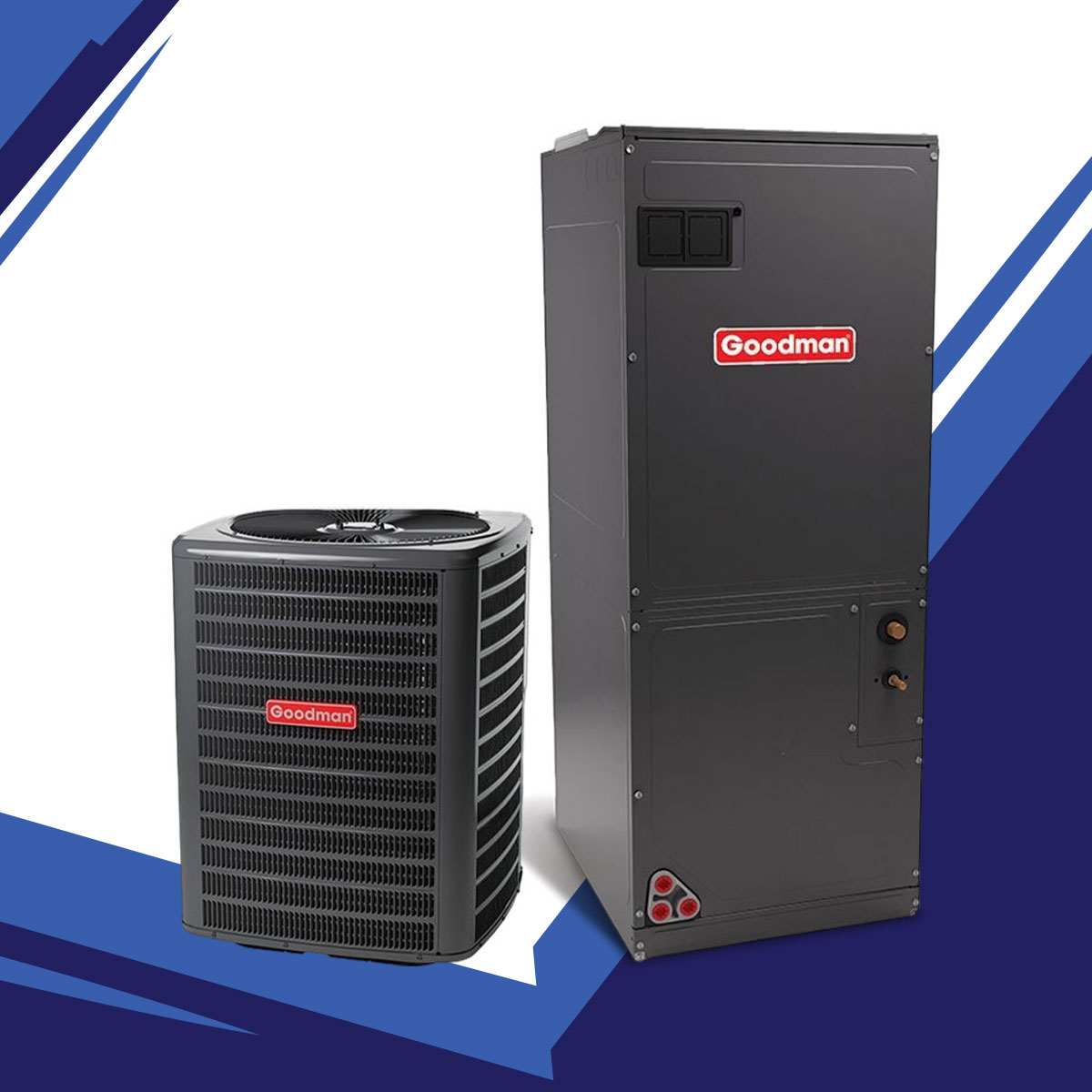
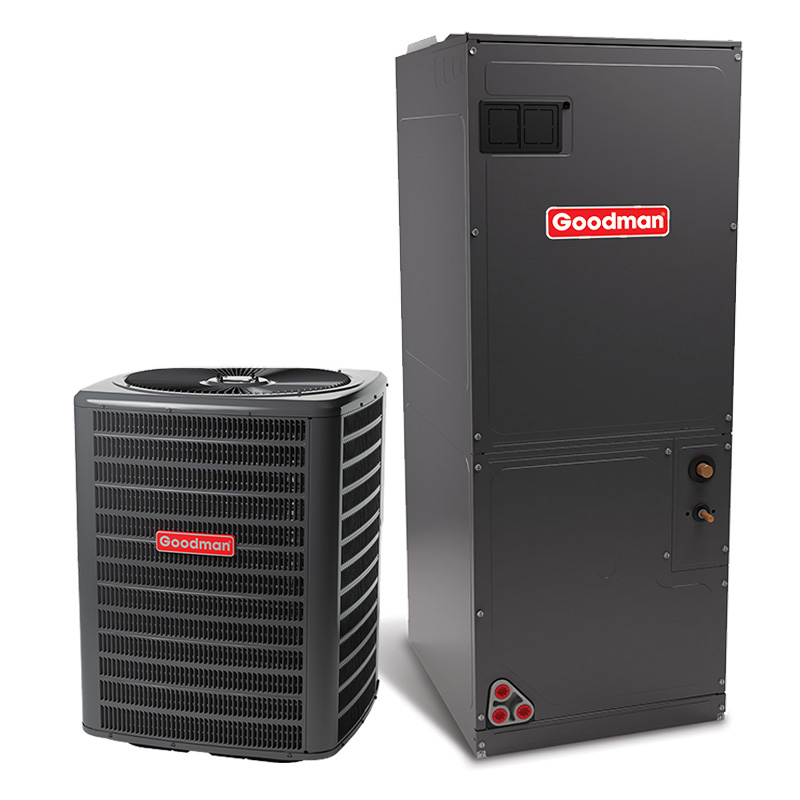
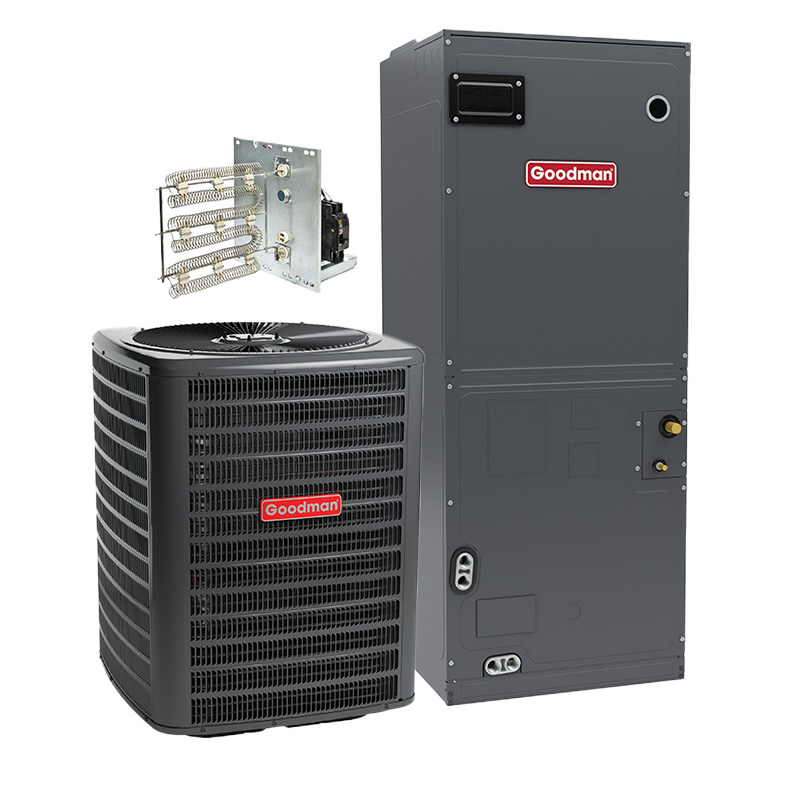
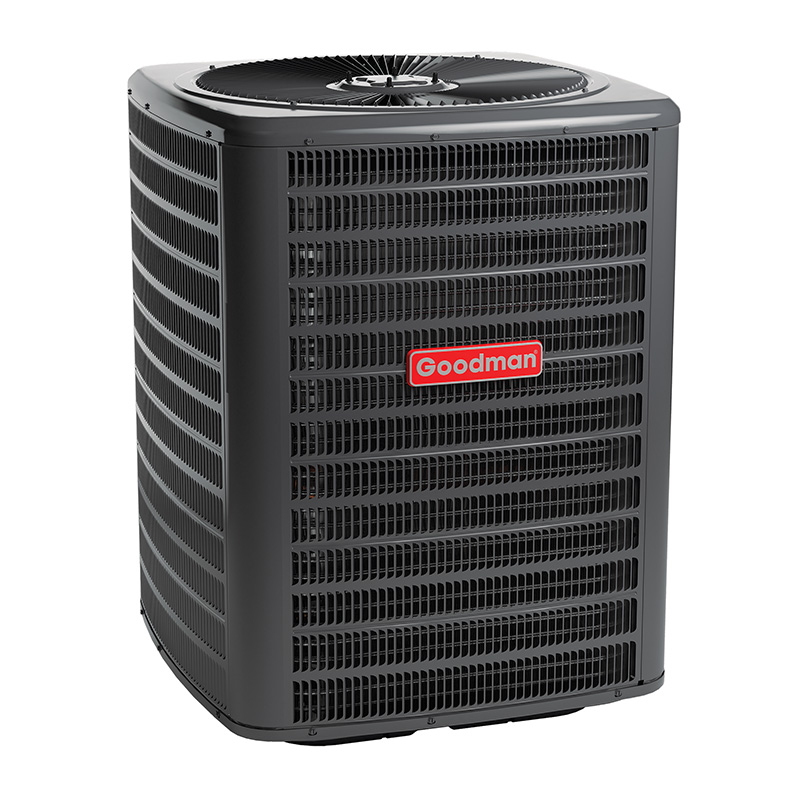
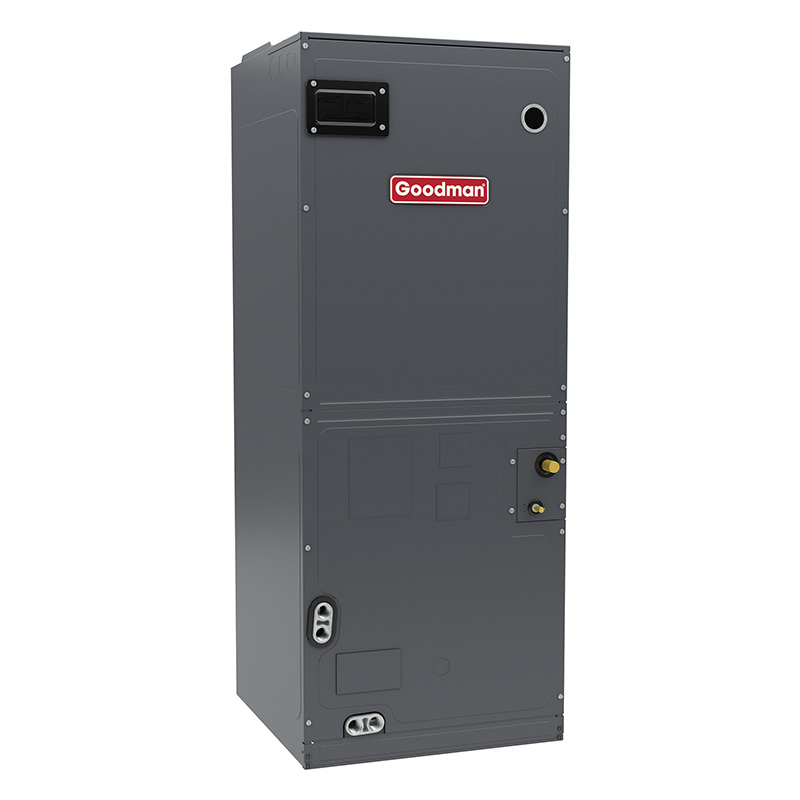
Goodman 4 Ton 15.2 SEER2 R32 Heat Pump Split System ***PREMIUM SEASONAL SPECIALS***
View on AC Direct see your lowest price →Check current price on AC Direct →
Key features
- 4-ton capacity suited for larger homes, roughly 2,000 to 2,600 sq ft depending on load calculation
- 15.2 SEER2 efficiency rating meets current federal minimums and sits in the mid-efficiency tier
- R-32 refrigerant replaces R-410A with a significantly lower global warming potential
- Single-stage scroll compressor provides reliable all-or-nothing cooling and heating output
- Heat pump configuration delivers both heating and cooling from one outdoor unit
- Compatible with Goodman's parts network, which technicians generally describe as accessible and affordable
About this system
The Goodman 4-ton 15.2 SEER2 heat pump split system is a straightforward, single-stage cooling and heating solution sized for larger homes, typically in the 2,000 to 2,600 square foot range depending on climate and insulation. At 15.2 SEER2, it clears the federal minimum efficiency threshold that took effect in 2023 without reaching the upper tier of high-efficiency equipment, which means operating costs land in the middle of the market rather than at the premium end. The switch to R-32 refrigerant is a genuine forward step: R-32 has a global warming potential roughly 68 percent lower than the R-410A it replaces, and its slightly higher efficiency as a heat transfer fluid can support modest real-world performance gains.
This system suits homeowners who need a dependable, code-compliant replacement or new installation and want to keep upfront costs down without stepping into discount-tier equipment. It is a reasonable fit for moderate heating climates where a heat pump can handle most of the load without a heavy supplemental heat burden. Buyers should be aware that single-stage operation means the compressor runs at full capacity or not at all, which is less precise for humidity control than two-stage or variable-speed alternatives. Professional installation quality matters more with Goodman equipment than with some premium brands, and that is worth factoring into the total budget.
The Goodman 4-ton 15.2 SEER2 R-32 heat pump gives cost-conscious buyers a code-compliant, properly sized system at a price meaningfully below Trane, Carrier, and Lennox equivalents. The trade-off is a shorter expected compressor lifespan, documented vulnerability to capacitor failures and coil leaks over time, and performance that depends heavily on the quality of the installer you choose. It is a fair deal for the budget, not a premium one.
Overall score is the average of the five ratings above.
What we like
- Upfront cost runs 15 to 25 percent below comparable Carrier, Trane, and Lennox systems
- R-32 refrigerant is lower-GWP and supported by a growing number of technicians
- 15.2 SEER2 meets current federal efficiency standards across applicable climate regions
- Replacement parts, especially capacitors, are widely stocked and relatively inexpensive
- 4-ton sizing covers a broad range of larger homes when paired with a proper Manual J load calculation
Trade-offs
- Compressor lifespan averages 10 to 14 years versus 15 to 20 years typical of premium brands
- Evaporator coil leaks appear in a meaningful share of long-term owner reports
- Single-stage operation offers less humidity control precision than two-stage or variable-speed systems
- A minority of owners report refrigerant leaks in the first year, most traceable to installation or charging errors
What homeowners and pros say about Goodman
Homeowners who discuss Goodman equipment online tend to split sharply. On ConsumerAffairs, Goodman scores around 2.5 out of 5, a channel where frustrated owners are more likely to post than satisfied ones, and the repeating theme is repair bills that start stacking up after roughly year seven. The specific failure modes that come up most often are dual-run capacitor replacements, which are low-cost fixes in the 300 to 600 dollar range, and evaporator coil leaks, which are more disruptive and expensive. Compressor longevity is the longer-term concern: Goodman compressors tend to average 10 to 14 years in owner reports, compared to the 15 to 20 years more commonly cited for Trane, Carrier, and Lennox equipment. A smaller but real share of owners also report refrigerant leaks within the first year, which most HVAC technicians attribute to installation or initial charge errors rather than the unit itself.
Google dealer reviews tell a softer story, landing around 3.8 out of 5 across locations, where the most consistent praise is affordability and the observation that when something does go wrong, parts are easy to find and not expensive. HVAC technicians who work on Goodman regularly tend to say the same thing: the equipment is serviceable, parts availability is good, and outcomes are closely tied to how well the system was installed and commissioned. For a 4-ton single-stage heat pump at the 15.2 SEER2 tier, Goodman competes on price in a way that premium brands simply do not, and for buyers whose priority is keeping the upfront number down and who plan to stay on top of annual maintenance, that trade-off can make sense.
Sources: ConsumerAffairs Goodman owner reviews, AHRI Directory of Certified Product Performance, U.S. DOE appliance and equipment efficiency standards, Goodman product specification sheets.
What it costs to run
At 15.2 SEER2, cooling this 4-ton system for a typical 1200-hour cooling season at the U.S. average electricity rate of $0.17/kWh works out to roughly $644 per year in cooling, about $87 less per year than a minimum-efficiency 13.4 SEER2 unit of the same size. Your real cost depends on your climate and local rate.
Method: (48,000 BTU/hr ÷ 15.2 SEER2) × 1200 hours ÷ 1000 × $0.17/kWh. Rate source: U.S. EIA average; cooling hours: moderate-climate estimate.
How it compares
| Brand | Comparable model | SEER2 | Stage | Price position |
|---|---|---|---|---|
| Goodman | 4-Ton 15.2 SEER2 R-32 Heat Pump Split System | 15.2 | Single-stage | Value pick |
| Carrier | Performance Series 24PAA (comparable 4-ton tier) | 15.2 to 16 | Single-stage | Typically 15 to 25 percent more than Goodman |
| Trane | XR15 (4-ton tier) | 15 to 16 | Single-stage | Typically 15 to 25 percent more than Goodman |
| Lennox | Merit ML14XP1 (4-ton tier) | 15 to 16 | Single-stage | Typically 15 to 25 percent more than Goodman |
Competitor rows are comparable single-stage units at similar efficiency; price is relative position, not a quote.
Questions about this system
Will this 4-ton unit handle a 2,400 square foot home in a hot southern climate?
Possibly, but square footage alone does not determine the right size. A Manual J load calculation accounts for insulation, window area, orientation, and local design temperatures. In a poorly insulated southern home, 4 tons may be appropriate; in a well-sealed modern build, it could be oversized, which hurts humidity removal. Have your installer run the calculation before purchasing.
How does R-32 affect servicing and what do I need to know as an owner?
R-32 requires technicians to hold an EPA 608 certification, which most licensed HVAC contractors already have. It is mildly flammable (classified A2L), so servicing near open flames or sparks requires standard precautions. Availability is growing quickly, and because R-32 is a single-component refrigerant, it can be topped off rather than requiring a full recharge if a leak is repaired properly.
What is the most common repair I should budget for over the first 10 years?
Dual-run capacitor failure is the most frequently reported issue with Goodman heat pumps. The part itself is inexpensive, and a service call to replace one typically runs in the 300 to 600 dollar range. Keeping a service contract or setting aside a small repair reserve is a practical approach given this documented pattern.
Does Goodman's warranty on this unit require registration, and what does it actually cover?
Yes, Goodman generally requires product registration within a set window after installation to activate the full parts warranty, which is typically 10 years on covered components. Failure to register usually reduces coverage to a shorter base period. The warranty covers parts but not labor, so factor in labor costs for any warranty repair when comparing total ownership cost against premium brands that sometimes include labor coverage.
Should I be concerned about refrigerant leaks in the first year, and how do I protect myself?
A minority of Goodman owners do report refrigerant leaks within the first year, and documented evidence points to installation or charging errors rather than a systemic factory defect. The best protection is choosing an installer with verifiable experience on R-32 systems, confirming they perform a leak check and standing pressure test at startup, and getting a written record of the initial refrigerant charge.
Specifications
| Cooling capacity | 4 Ton |
| Efficiency | 15.2 SEER2 |
| Refrigerant | R-32 |