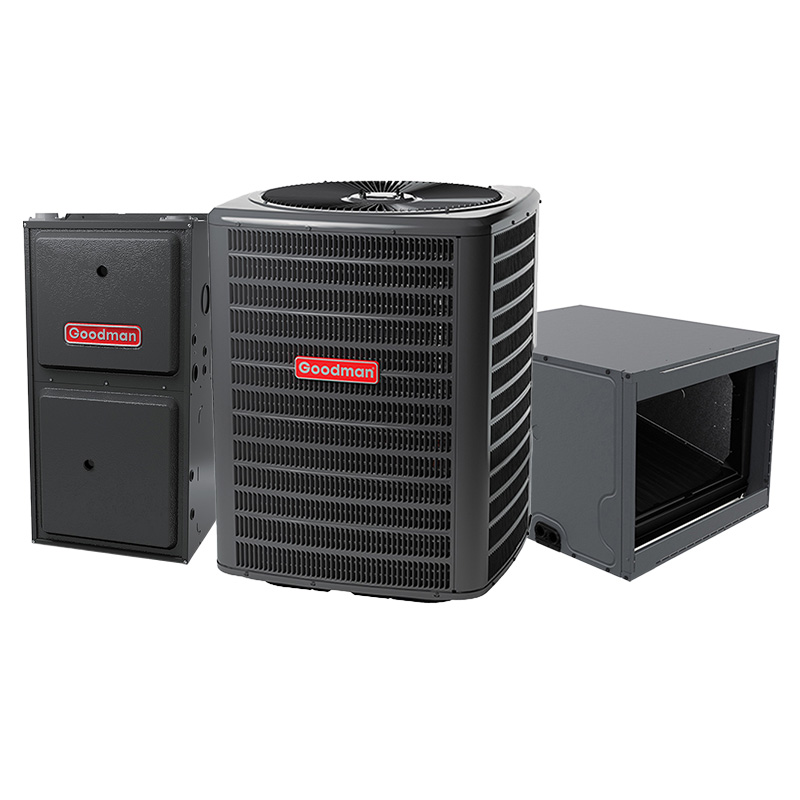
Goodman 4 Ton 16.7 SEER2 AC With 120000 BTU 96% AFUE 2-Stage Variable-Speed ECM Gas Furnace System – Horizontal | 2-Stage High Efficiency AC | R32
View on AC Direct see your lowest price →Check current price on AC Direct →
Key features
- 16.7 SEER2 two-stage compressor for part-load efficiency and improved humidity control
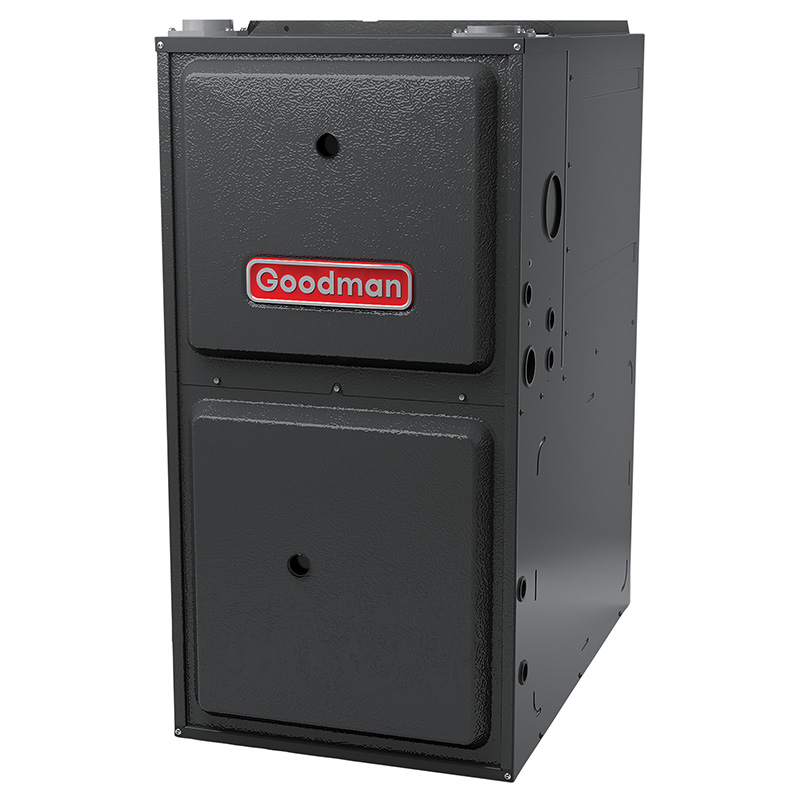
- 120,000 BTU 96% AFUE condensing gas furnace with two-stage heat output
- Variable-speed ECM blower motor for quieter operation and steady airflow
- R-32 refrigerant with lower global warming potential than R-410A
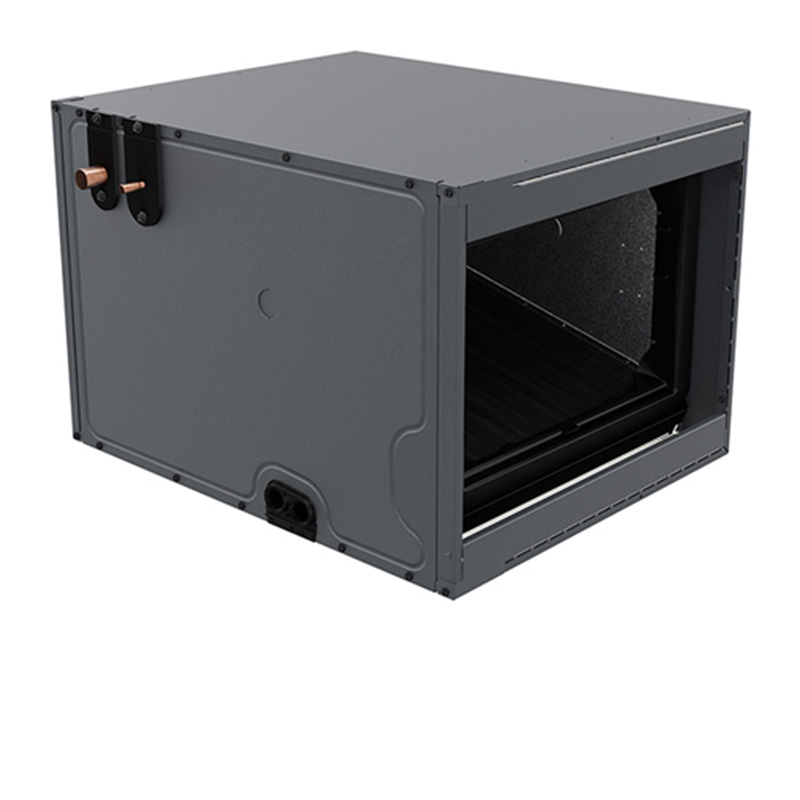
- Horizontal configuration designed for attic, crawl space, or side-discharge installs
- Qualifies for federal energy efficiency tax credits under current ENERGY STAR tiers
About this system
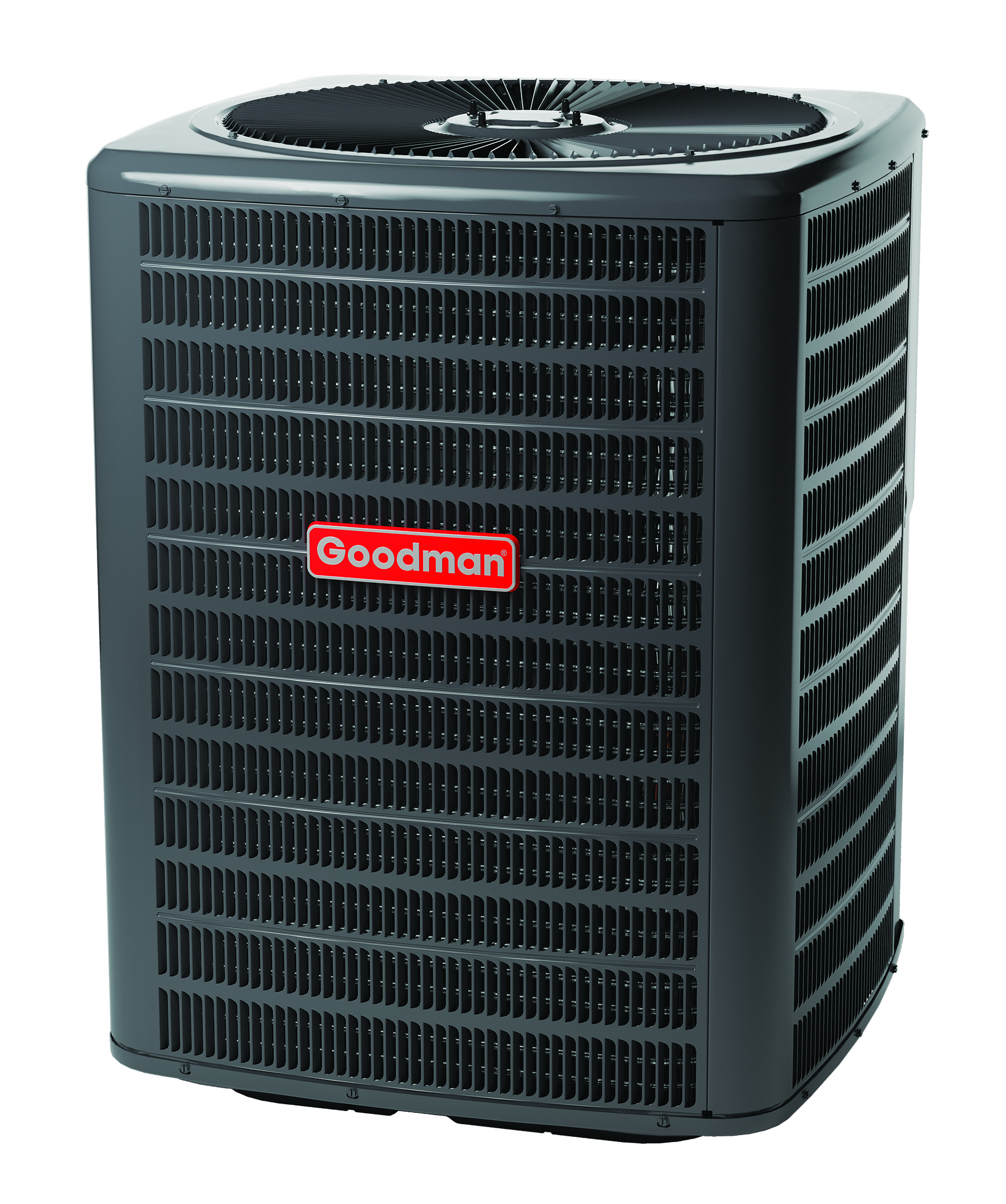
The Goodman GLXT7CA4810 pairs a 4-ton, 16.7 SEER2 two-stage air conditioner with a 120,000 BTU, 96% AFUE two-stage variable-speed ECM gas furnace in a horizontal configuration, making it a strong candidate for homes where the air handler sits in a crawl space, attic, or tight mechanical room. The R-32 refrigerant charge is a forward-looking choice: R-32 has a lower global warming potential than the R-410A it replaces, and it tends to operate at slightly better efficiency in warm conditions. The two-stage compressor lets the system run at low capacity on mild days, which improves humidity control and lowers energy bills compared to a single-stage unit cycling on and off all day.
The 96% AFUE furnace rating means 96 cents of every dollar spent on gas goes toward heat, which puts this system near the top of the condensing-furnace efficiency tier and makes it eligible for federal tax credits in many filing years. The variable-speed ECM blower motor adjusts airflow continuously, reducing static noise and improving air circulation throughout the home. That said, a 4-ton, 120,000 BTU combination is a large system, and oversizing is a real risk: it suits a well-insulated home in the 2,200 to 3,000 square foot range depending on climate, load calculations, and duct layout. Skipping a proper Manual J load calculation with this package is a shortcut that will cost comfort and efficiency regardless of the equipment’s specs.
This Goodman bundle delivers genuinely high-efficiency heating and solid two-stage cooling at a price point that undercuts Trane, Carrier, and Lennox by a meaningful margin, and the R-32 refrigerant keeps it relevant for years ahead. The trade-off is Goodman's documented repair history after year 7, a compressor lifespan that trails premium brands, and performance that is heavily dependent on who installs it. Buyers willing to invest in a skilled installer and keep up with annual maintenance will get real value here; buyers expecting set-it-and-forget-it reliability should weigh the premium-brand options carefully.
Overall score is the average of the five ratings above.
What we like
- 16.7 SEER2 efficiency rating clears federal high-efficiency thresholds and can lower cooling bills noticeably versus older 14 SEER equipment
- 96% AFUE two-stage furnace is among the most fuel-efficient gas heating options available at this price tier
- Variable-speed ECM blower reduces energy use and evening noise compared to single-speed motors
- R-32 refrigerant is more environmentally responsible and is becoming the industry standard, reducing future service complications
- Purchase price typically runs 15 to 25 percent below comparable Trane, Lennox, and Carrier systems, leaving room in the budget for a quality installation
Trade-offs
- Dual-run capacitors are the most commonly reported failure point across Goodman equipment, typically requiring a 300 to 600 dollar service call
- Evaporator coil leaks appear in a notable share of owner reviews and can become an expensive mid-life repair
- Compressor longevity averages 10 to 14 years based on documented experience, shorter than the 15 to 20 years typical of premium brands
- A minority of owners report refrigerant leaks within the first year, generally traced to install or initial charge quality rather than the unit itself
What homeowners and pros say about Goodman
Homeowners who share feedback on Goodman equipment tend to split along a clear fault line. Early in ownership, the most common praise mirrors what dealer Google reviews reflect at around 3.8 out of 5: the system works, the upfront cost was manageable, and the efficiency numbers show up on energy bills. Complaints tend to arrive later. ConsumerAffairs scores Goodman at roughly 2.5 out of 5, and the recurring pattern in those reviews is repair costs rising after year 7, often tied to the dual-run capacitors that are Goodman’s most documented failure point, or to evaporator coil leaks that become costly once the parts warranty period is scrutinized for labor exclusions. Neither failure is unique to Goodman, but both appear with enough frequency across owner accounts to be worth budgeting for.
HVAC technicians who work on Goodman equipment regularly offer a more nuanced view. Many will install it without hesitation for cost-conscious customers, but they are quick to flag that the margin for installation error is thinner than with some premium brands. Refrigerant leaks showing up in the first year are almost always traced back to charge quality or connection work, not a factory defect. Compressor lifespan in the 10 to 14 year range, shorter than the 15 to 20 years technicians associate with Trane or Carrier compressors, is the trade-off that most experienced installers will mention unprompted. The honest takeaway for this specific horizontal system is that the specs are legitimate and the value is real, but the long-term outcome depends heavily on who connects the refrigerant lines, sets the static pressure, and confirms the drain pitch on day one.
Sources: ConsumerAffairs Goodman owner reviews, AHRI Directory of Certified Product Performance, U.S. DOE appliance and equipment efficiency standards, Goodman product specification sheets.
What it costs to run
At 16.7 SEER2, cooling this 4-ton system for a typical 1200-hour cooling season at the U.S. average electricity rate of $0.17/kWh works out to roughly $586 per year in cooling, about $145 less per year than a minimum-efficiency 13.4 SEER2 unit of the same size. Your real cost depends on your climate and local rate.
Method: (48,000 BTU/hr ÷ 16.7 SEER2) × 1200 hours ÷ 1000 × $0.17/kWh. Rate source: U.S. EIA average; cooling hours: moderate-climate estimate.
How it compares
| Brand | Comparable model | SEER2 | Stage | Price position |
|---|---|---|---|---|
| Goodman | GLXT7CA4810 | 16.7 | Two-stage | Value pick |
| Carrier | Performance 16 (24ACC6) | 16+ | Two-stage | Typically 15 to 25 percent more than Goodman |
| Trane | XR16 (4TTR6) | 16+ | Single-stage | Typically 15 to 25 percent more than Goodman |
| Lennox | Merit 16 (14ACX) | 16+ | Single-stage | Typically 15 to 25 percent more than Goodman |
Competitor rows are comparable single-stage units at similar efficiency; price is relative position, not a quote.
Questions about this system
Why is this system rated for horizontal installation only, and can it be converted to upflow or downflow?
The GLXT7CA4810 is factory-configured for horizontal airflow, meaning the cabinet and drain pan are oriented for side-discharge applications like attic or crawl space installs. It is not field-convertible to upflow or downflow without a different cabinet assembly, so confirm your existing duct and equipment orientation before purchasing.
Does R-32 refrigerant require special handling or tools that my HVAC technician might not have?
R-32 is mildly flammable (classified A2L), so technicians are required to use certified tools and follow updated EPA handling procedures. Most licensed HVAC contractors in 2024 and 2025 are already equipped for A2L refrigerants as the industry transitions away from R-410A, but it is worth confirming with your technician before scheduling service.
Is 120,000 BTU too much furnace for a typical 2,500 square foot home?
Possibly, yes. Proper sizing depends on climate zone, insulation, window area, and infiltration rates, not just square footage. A Manual J load calculation is the only reliable way to confirm the right BTU output; an oversized furnace will short-cycle, wear faster, and deliver uneven heating regardless of its efficiency rating.
What does the Goodman warranty cover on this system, and are there registration requirements?
Goodman typically offers a 10-year parts warranty when the unit is registered within 60 days of installation; without registration it generally drops to 5 years. The warranty covers parts replacement but does not include labor costs, which can be significant if a coil or compressor needs replacement after the first year.
How much does install quality actually affect this system's lifespan?
HVAC technicians consistently identify installation quality as the single largest factor in Goodman equipment longevity, more so than with some premium brands that are more forgiving of minor setup variations. Proper refrigerant charge, correct duct static pressure, accurate drain pitch for horizontal units, and verified airflow across the coil all directly affect how long the compressor and coil hold up.
Specifications
| Cooling capacity | 4 Ton |
| Efficiency | 16.7 SEER2 |
| Furnace output | 120000 BTU |
| Furnace efficiency | 96% AFUE |
| Configuration | Horizontal |
| Refrigerant | R-32 |
| Model | GLXT7CA4810 |