Goodman 4 Ton 17.2 SEER2 AC With 100000 BTU 96% AFUE 2-Stage Variable-Speed ECM Gas Furnace System – Upflow | 2-Stage High Efficiency AC | R32
View on AC Direct see your lowest price →Check current price on AC Direct →
Key features
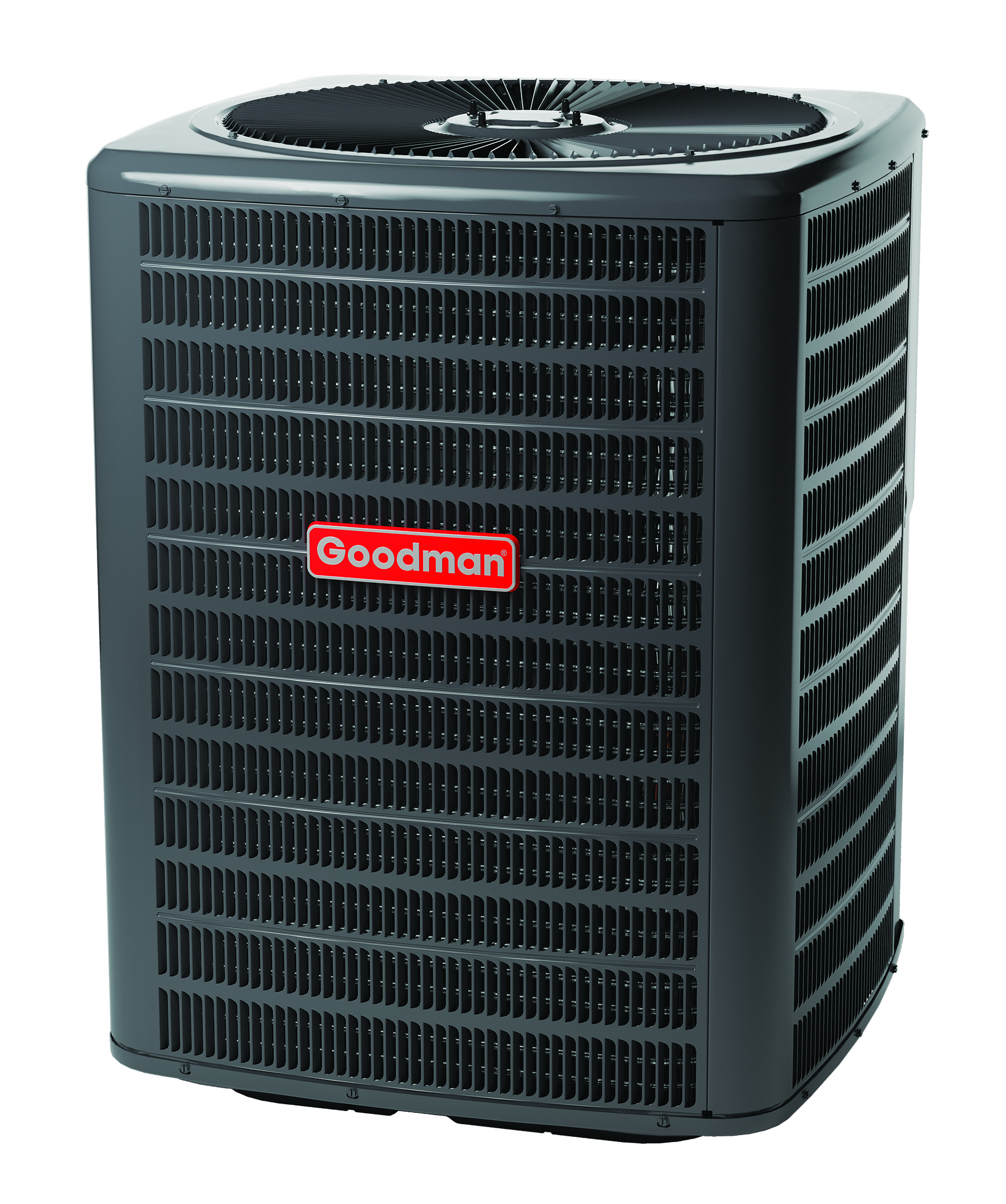
- 4-ton two-stage compressor reduces short-cycling and improves dehumidification on part-load days
- 17.2 SEER2 efficiency rating meets or exceeds current DOE regional minimums for most U.S. climate zones
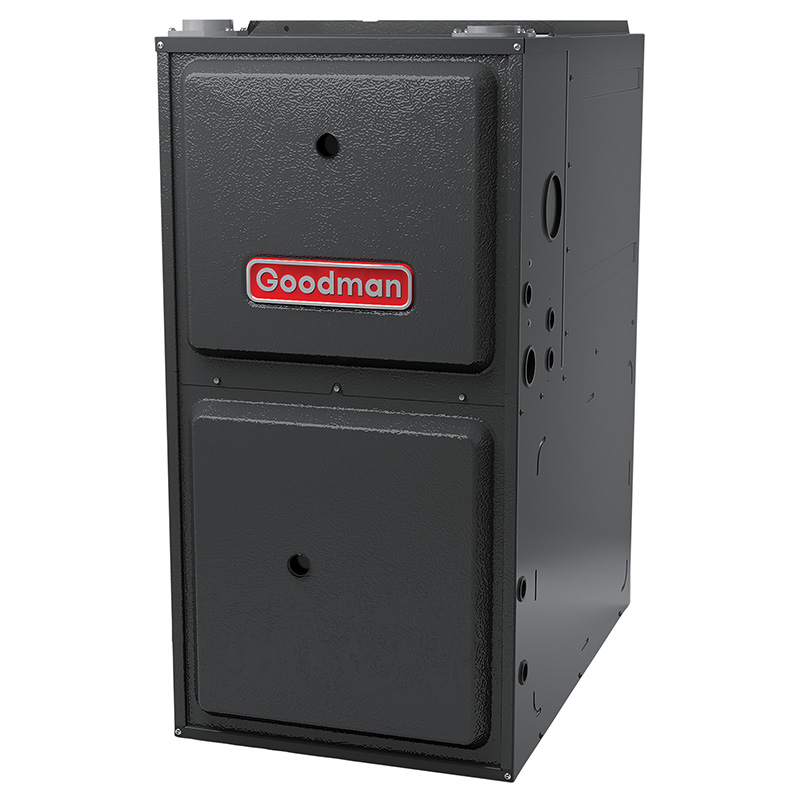
- 96% AFUE gas furnace keeps heat loss to 4 cents per dollar of fuel consumed
- Variable-speed ECM blower motor cuts blower electricity use compared with standard PSC motors
- R-32 refrigerant offers lower global warming potential than outgoing R-410A and is a single-component fluid
- Upflow cabinet configuration compatible with the majority of residential duct layouts
About this system
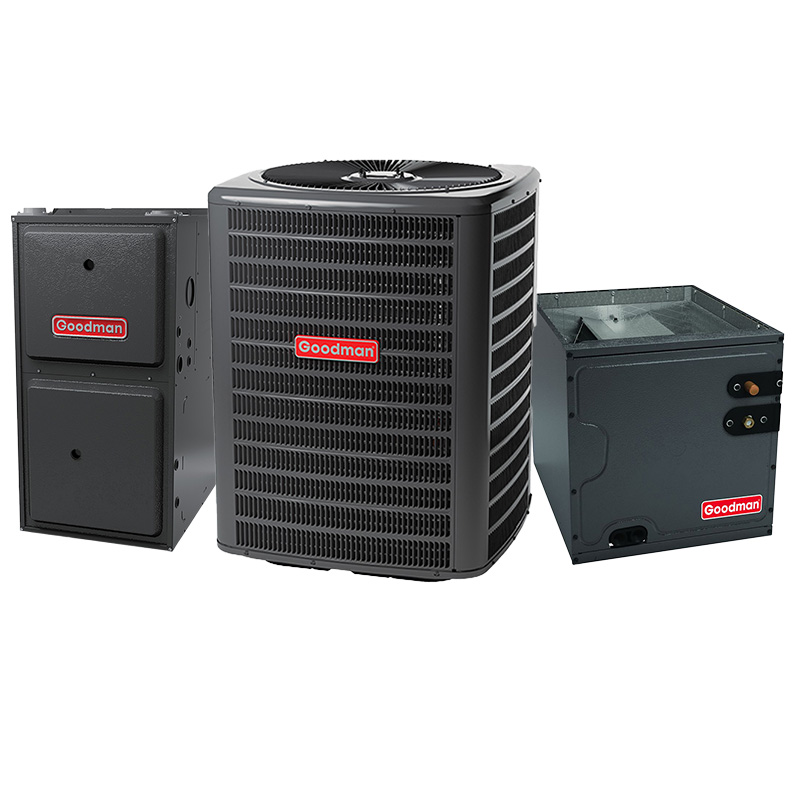
The Goodman GLXT7CA4810 pairs a 4-ton, 17.2 SEER2 two-stage air conditioner with a 100,000 BTU 96% AFUE variable-speed ECM gas furnace in an upflow configuration. The two-stage compressor runs at a lower capacity on mild days, which reduces short-cycling, keeps humidity more consistently in check, and trims operating costs compared with a single-stage system. The variable-speed ECM blower motor amplifies those comfort gains by modulating airflow continuously rather than slamming on and off, and it draws significantly less electricity than a standard PSC motor.
R-32 refrigerant is the forward-looking choice here. It has a lower global warming potential than the R-410A it replaces, and because it is a single-component refrigerant it is easier to recover and recharge in the field. On the heating side, 96% AFUE means 96 cents of every dollar spent on gas goes toward heat, putting this furnace in the high-efficiency tier without the condensate complexity of a 97-98% modulating unit. The upflow cabinet is the most common residential orientation, suited to basements, utility rooms, and crawl-space installations where supply air rises into the living space.
This system is a strong fit for homeowners in climates that see both hot summers and cold winters, who want meaningful efficiency gains over a builder-grade system but are unwilling to pay the premium that Trane, Carrier, or Lennox charge for comparable two-stage performance. It is worth noting that Goodman’s reputation leans heavily on installation quality, so pairing this equipment with an experienced, licensed contractor is not optional, it is the single biggest variable in how well and how long this system performs.
The GLXT7CA4810 delivers a genuinely capable two-stage, high-efficiency combo system at a price point 15 to 25 percent below premium brands, making it one of the more compelling value plays in its efficiency tier. The trade-off is a documented history of repair costs that climb after year 7, compressor longevity that trails premium competitors, and real-world performance that depends heavily on installer skill. Buyers who prioritize upfront savings and hire a careful contractor will likely be satisfied; those who want maximum long-term peace of mind may prefer to spend more at the outset.
Overall score is the average of the five ratings above.
What we like
- Two-stage cooling and ECM blower genuinely improve comfort and humidity control versus single-stage equipment
- 96% AFUE puts heating efficiency near the top of non-modulating furnace options
- R-32 refrigerant is more field-serviceable than blended refrigerants and is environmentally preferable to R-410A
- Priced 15 to 25 percent below comparable Trane, Lennox, and Carrier systems, freeing budget for professional installation
- Widely available replacement parts and a large national service network mean technicians are familiar with the equipment
Trade-offs
- ConsumerAffairs scores average around 2.5 out of 5, with repair cost escalation after roughly year 7 a recurring theme
- Dual-run capacitors are the most commonly reported failure point, and evaporator coil leaks appear in a meaningful share of owner reviews
- Compressor lifespan averages 10 to 14 years versus 15 to 20 years for premium-brand compressors at similar usage levels
- A minority of owners report refrigerant leaks within the first year, typically tied to installation or initial charge quality rather than the equipment itself
What homeowners and pros say about Goodman
Homeowner feedback on Goodman equipment lands in two distinct camps, and this system is unlikely to be an exception. On Google dealer review pages, where scores average around 3.8 out of 5, the most consistent praise centers on affordability and the accessibility of parts. Owners who had a careful installation and kept up with filter changes and annual tune-ups tend to report solid satisfaction in the early years. The concern voiced repeatedly on ConsumerAffairs, where Goodman averages closer to 2.5 out of 5, is that repair frequency and cost climb noticeably after the 7-year mark. The two documented failure modes that come up most often are dual-run capacitor failures, which are relatively inexpensive to fix, and evaporator coil leaks, which are not. A smaller but real share of owners report refrigerant leaks within the first year, and HVAC technicians consistently attribute those early-failure cases to installation or initial charging errors rather than a defect in the equipment itself.
Experienced HVAC contractors tend to describe Goodman as equipment that performs at or near its rated specs when installed with care, but that has less tolerance for sloppy workmanship than premium brands. They note the compressor lifespan averages 10 to 14 years on Goodman units compared with the 15 to 20 years more commonly seen on Trane, Carrier, and Lennox compressors. For a two-stage system with a variable-speed ECM motor, pros emphasize that commissioning matters more than it does on a basic single-stage unit: static pressure has to be set correctly, the refrigerant charge has to be dialed in precisely, and the staging controls need to be configured to the home’s actual load. Get those steps right, and the GLXT7CA4810 represents a genuine efficiency and comfort upgrade at a price that is hard to argue with. Skip them, and neither the warranty nor the efficiency rating will make the owner whole.
Sources: ConsumerAffairs Goodman owner reviews, AHRI Directory of Certified Product Performance, U.S. DOE appliance and equipment efficiency standards, Goodman product specification sheets.
What it costs to run
At 17.2 SEER2, cooling this 4-ton system for a typical 1200-hour cooling season at the U.S. average electricity rate of $0.17/kWh works out to roughly $569 per year in cooling, about $162 less per year than a minimum-efficiency 13.4 SEER2 unit of the same size. Your real cost depends on your climate and local rate.
Method: (48,000 BTU/hr ÷ 17.2 SEER2) × 1200 hours ÷ 1000 × $0.17/kWh. Rate source: U.S. EIA average; cooling hours: moderate-climate estimate.
How it compares
| Brand | Comparable model | SEER2 | Stage | Price position |
|---|---|---|---|---|
| Goodman | GLXT7CA4810 | 17.2 | Two-stage | Value pick |
| Carrier | Performance 17 (24ACC7) | 17 | Two-stage | Typically 15 to 25 percent more than Goodman |
| Trane | XR17 | 17 | Two-stage | Typically 15 to 25 percent more than Goodman |
| Lennox | Merit ML17XC2 | 17 | Two-stage | Typically 15 to 25 percent more than Goodman |
Competitor rows are comparable single-stage units at similar efficiency; price is relative position, not a quote.
Questions about this system
Is R-32 refrigerant harder to service than R-410A in the field?
R-32 is actually simpler to handle than blended refrigerants like R-410A because it is a single-component fluid, meaning it can be topped off without a full recovery and recharge. Most certified HVAC technicians can work with it, though they need to confirm their equipment is rated for R-32 before proceeding.
What maintenance does the dual-run capacitor need, and how much does replacement cost?
Capacitors do not require scheduled maintenance, but they are the most commonly reported failure point on Goodman equipment and can degrade over time, especially in hot climates. Replacement typically costs between $300 and $600 including labor, and it is one of the faster HVAC repairs a technician performs.
Does the 17.2 SEER2 rating apply to this specific coil and furnace combination, or just the condenser?
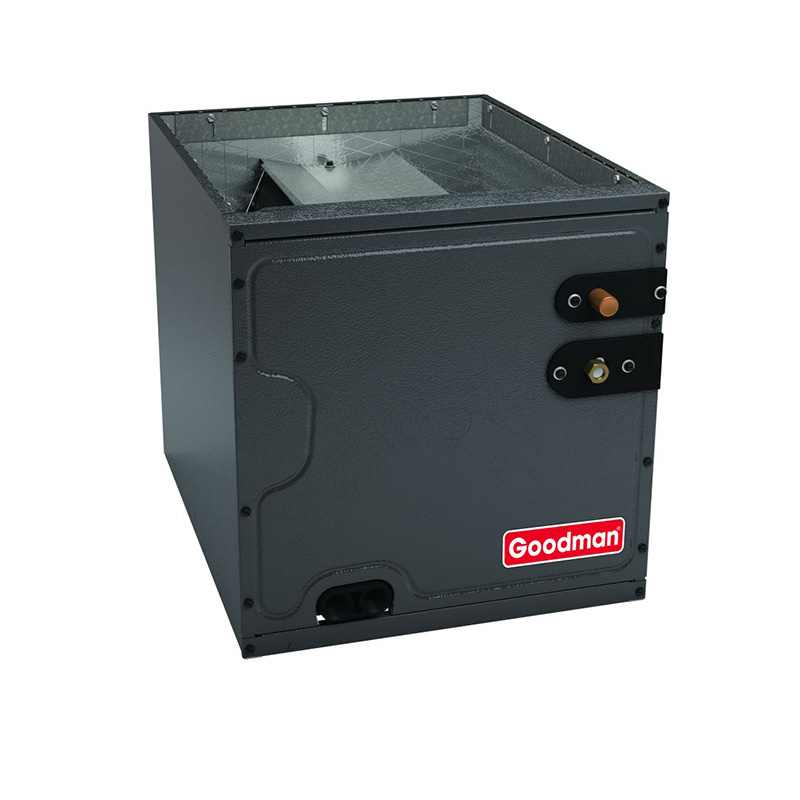
SEER2 ratings are system ratings, meaning the condenser, coil, and air handler or furnace must be matched per the manufacturer's published combination data to achieve the rated efficiency. Installing a non-matched coil can reduce efficiency and may affect warranty coverage.
What does Goodman's warranty cover on this system, and does it require registration?
Goodman typically offers a 10-year parts warranty on registered equipment; failure to register within a specified window commonly reduces coverage to 5 years. The compressor is usually covered under the parts warranty, but labor costs are not included, which is where post-warranty repair bills accumulate.
How important is installer quality for this specific system compared with a simpler single-stage unit?
More important than with single-stage equipment. A two-stage system with a variable-speed ECM blower requires correct static pressure calculations, precise refrigerant charging, and proper thermostat configuration to operate as designed. Technicians who work primarily with lower-cost single-stage installs may not set up the two-stage staging controls correctly, which erases the comfort and efficiency advantages.
Specifications
| Cooling capacity | 4 Ton |
| Efficiency | 17.2 SEER2 |
| Furnace output | 100000 BTU |
| Furnace efficiency | 96% AFUE |
| Configuration | Upflow |
| Refrigerant | R-32 |
| Model | GLXT7CA4810 |