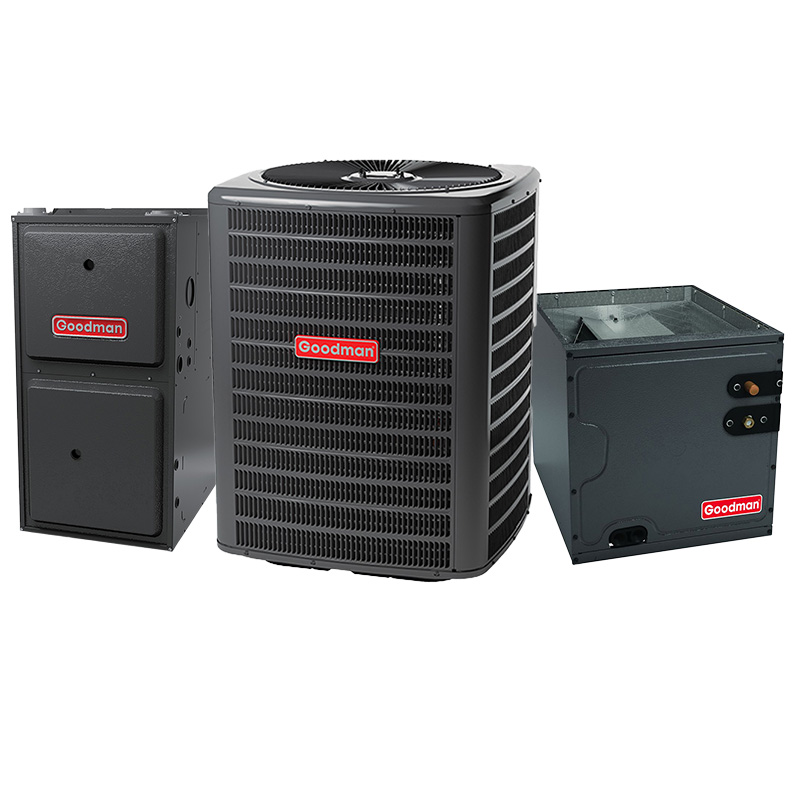
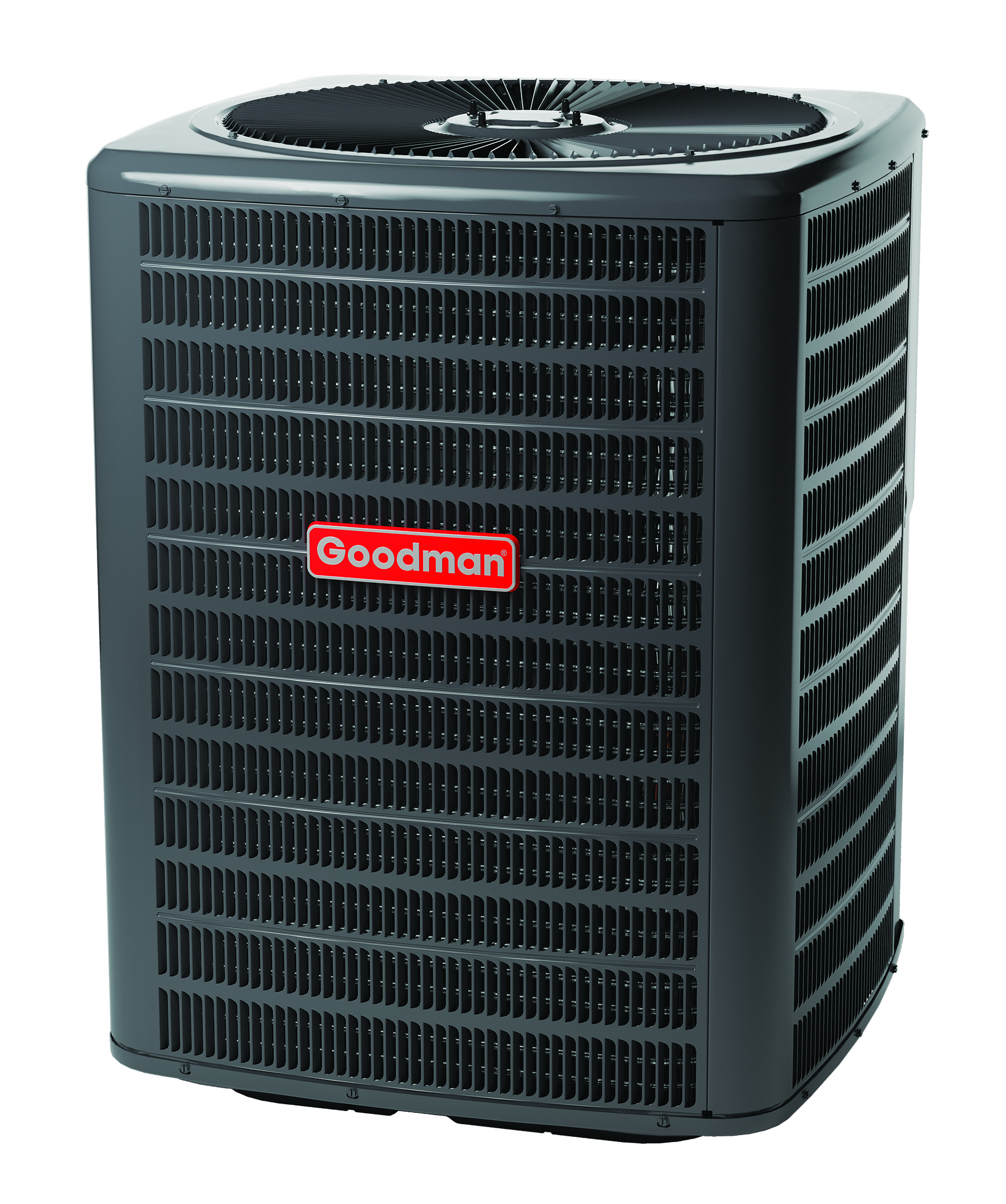
Goodman 4 Ton 17.2 SEER2 AC With 120000 BTU 96% AFUE 2-Stage Variable-Speed ECM Gas Furnace System – Upflow | 2-Stage High Efficiency AC | R32
View on AC Direct see your lowest price →Check current price on AC Direct →
Key features
- 4-ton two-stage AC rated at 17.2 SEER2 using R-32 refrigerant
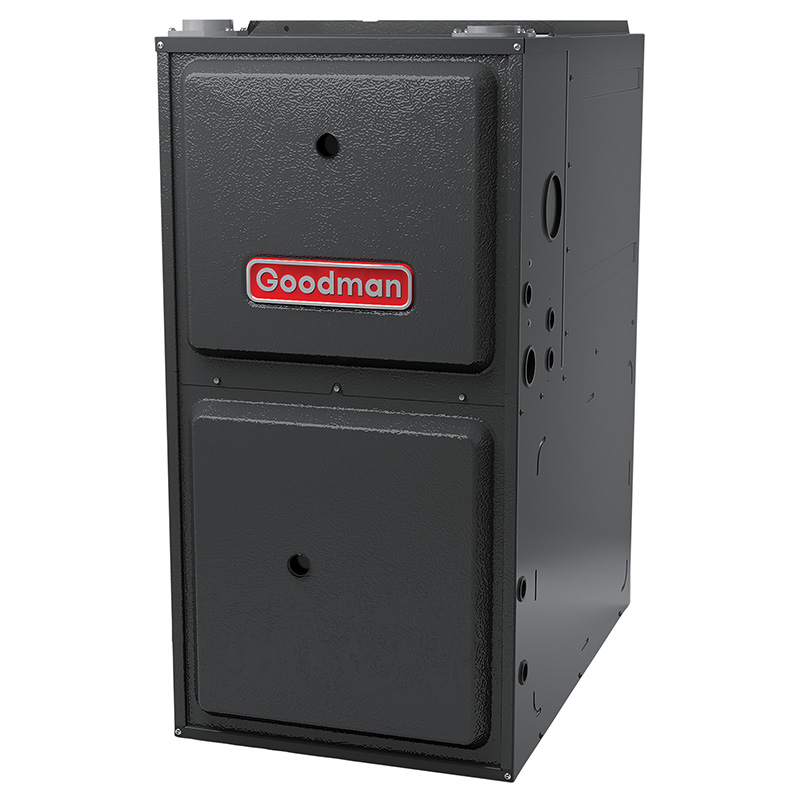
- 120,000 BTU two-stage gas furnace with 96% AFUE for high-efficiency heating
- Variable-speed ECM blower motor reduces electricity use and improves airflow consistency
- Upflow configuration for basement or closet installations with supply air directed upward
- Two-stage operation on both units allows partial-capacity run during mild conditions
- R-32 refrigerant offers a significantly lower global warming potential than R-410A
About this system
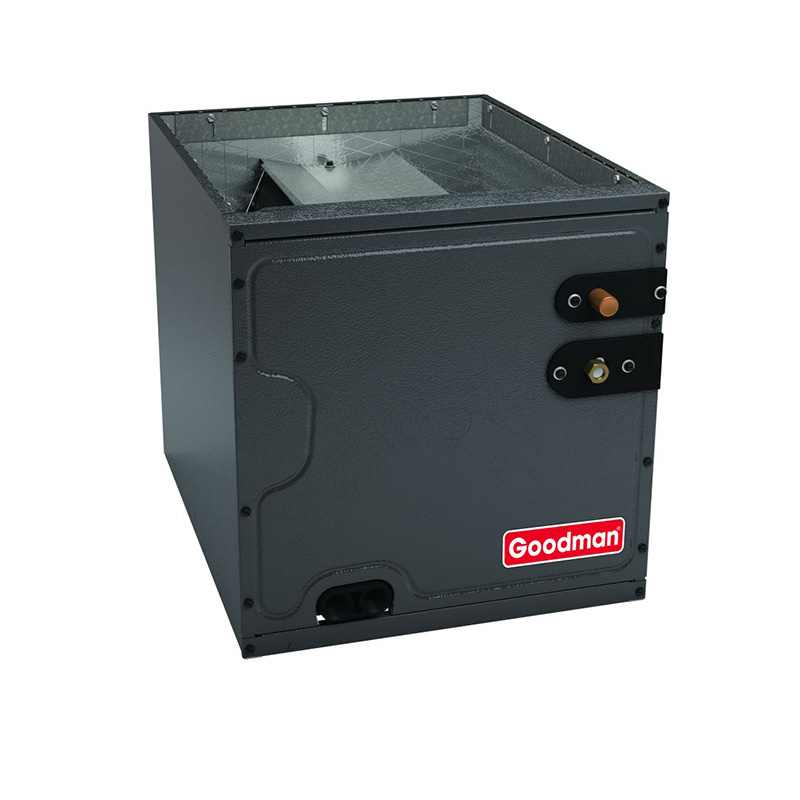
The Goodman GLXT7CA4810 pairs a 4-ton, 17.2 SEER2 two-stage central air conditioner with a 120,000 BTU, 96% AFUE two-stage variable-speed ECM gas furnace in an upflow configuration. That combination covers larger homes, typically in the 2,400 to 3,200 square foot range depending on climate and insulation, and the two-stage cooling and heating hardware means the system runs at partial capacity during mild weather rather than cycling on and off at full blast. The result is more consistent room temperatures, quieter operation, and better humidity control compared to single-stage equipment. The variable-speed ECM blower motor amplifies those comfort gains further and draws significantly less electricity than a standard PSC motor.
R-32 refrigerant is a notable spec here. It carries a global warming potential roughly 68 percent lower than R-410A, which positions this unit ahead of the regulatory curve as the industry moves away from older refrigerants. On the efficiency side, 17.2 SEER2 sits solidly in the high-efficiency tier without reaching the premium-tier pricing of variable-capacity inverter systems. Paired with 96% AFUE, this bundle offers real year-round operating cost savings over standard 80% furnaces and 14 SEER2 cooling-only upgrades. This system suits homeowners who want meaningfully better efficiency and comfort than entry-level equipment at a price point that still undercuts the major premium brands by a noticeable margin.
This Goodman bundle delivers a genuinely capable combination of high-efficiency cooling and heating at a price that meaningfully undercuts Trane, Carrier, and Lennox equivalents. The two-stage and ECM hardware is real and works as described, but Goodman's documented track record of repair costs rising after year seven and a compressor lifespan that trails premium brands means the long-term value calculation depends heavily on how well it is installed and maintained. Buyers who get a quality installation and budget for eventual capacitor or coil service will find this a solid system; those expecting premium-brand durability on a value-brand budget may be disappointed.
Overall score is the average of the five ratings above.
What we like
- 17.2 SEER2 and 96% AFUE together produce real operating cost savings over entry-level equipment
- Two-stage operation on both units improves comfort and humidity control over single-stage alternatives
- Variable-speed ECM blower motor cuts fan electricity use substantially compared to standard motors
- R-32 refrigerant is lower-GWP and positions the system well ahead of coming regulatory changes
- Priced 15 to 25 percent below comparable Trane, Carrier, and Lennox bundles, lowering the upfront investment
Trade-offs
- Compressor lifespan averages 10 to 14 years versus 15 to 20 years for premium-brand compressors
- Dual-run capacitor failures are the most commonly reported issue, typically arising within the first decade
- Evaporator coil leaks appear in a meaningful share of owner reports and can be costly to address
- A minority of owners report refrigerant leaks within the first year, most often traced to installation or charge quality rather than factory defects
What homeowners and pros say about Goodman
Owners and technicians tend to land in two camps on Goodman. On Google dealer reviews, which aggregate to around 3.8 out of 5 across hundreds of reviews per location, affordability is consistently the most praised attribute. Buyers who compared quotes appreciate that this system delivers two-stage cooling and heating with an ECM blower at a price well below what Trane, Carrier, or Lennox charge for similar hardware. On ConsumerAffairs, where the score sits at roughly 2.5 out of 5, the picture is less flattering, though that channel draws a disproportionate share of frustrated owners rather than satisfied ones. The recurring theme there is repair costs climbing after roughly year seven, which aligns with the documented compressor lifespan of 10 to 14 years versus 15 to 20 for premium brands.
HVAC technicians who work on Goodman equipment regularly point to two specific failure modes worth knowing about before you buy. Dual-run capacitors are the most commonly reported component failure and are generally a quick, low-cost fix in the 300 to 600 dollar range, but they do show up. Evaporator coil leaks appear in a meaningful share of owner reports and are more involved to repair. Technicians also note that a minority of first-year refrigerant leaks trace back to installation or charge quality rather than factory defects, which reinforces the point that who installs this system matters as much as which system you choose. For the GLXT7CA4810 specifically, the two-stage and ECM hardware raises the complexity of that installation slightly compared to a basic single-stage setup, so verifying your contractor’s experience with this equipment tier is worth the conversation before work begins.
Sources: ConsumerAffairs Goodman owner reviews, AHRI Directory of Certified Product Performance, U.S. DOE appliance and equipment efficiency standards, Goodman product specification sheets.
What it costs to run
At 17.2 SEER2, cooling this 4-ton system for a typical 1200-hour cooling season at the U.S. average electricity rate of $0.17/kWh works out to roughly $569 per year in cooling, about $162 less per year than a minimum-efficiency 13.4 SEER2 unit of the same size. Your real cost depends on your climate and local rate.
Method: (48,000 BTU/hr ÷ 17.2 SEER2) × 1200 hours ÷ 1000 × $0.17/kWh. Rate source: U.S. EIA average; cooling hours: moderate-climate estimate.
How it compares
| Brand | Comparable model | SEER2 | Stage | Price position |
|---|---|---|---|---|
| Goodman | GLXT7CA4810 | 17.2 | Two-stage | Value pick |
| Carrier | Comfort 17 (24ACC7) with 59MN7 furnace | 17 | Two-stage | Typically 15 to 25 percent more than Goodman |
| Trane | XR17 (4TTR7) with S9V2 furnace | 17 | Two-stage | Typically 15 to 25 percent more than Goodman |
| Lennox | Merit 17 (ML17XC2) with ML196 furnace | 17 | Two-stage | Typically 15 to 25 percent more than Goodman |
Competitor rows are comparable single-stage units at similar efficiency; price is relative position, not a quote.
Questions about this system
Is a 4-ton unit the right size for my home, or should I get a load calculation first?
A Manual J load calculation from your installer is strongly recommended before purchasing any 4-ton system. Oversizing leads to short cycling, poor humidity removal, and accelerated wear, while undersizing leaves you uncomfortable on peak days. Square footage alone is not a reliable sizing method given differences in insulation, windows, ceilings, and climate.
What does two-stage operation actually mean for day-to-day comfort compared to a single-stage system?
Two-stage means the AC and furnace each run at a lower capacity setting during mild conditions, cycling on for longer and more gradual runs rather than blasting at full output and shutting off quickly. This smooths out temperature swings, keeps humidity lower in summer, and generally runs quieter than single-stage equipment. On the hottest or coldest days, both units ramp up to full capacity.
Why does Goodman use R-32 refrigerant, and does that affect serviceability?
R-32 has a global warming potential significantly lower than R-410A, and the refrigerant industry is broadly moving in this direction ahead of regulatory deadlines. Most HVAC technicians are already certified to handle R-32, but you should confirm your service contractor has the correct equipment and certification before scheduling maintenance or repairs on this system.
What is the most likely repair I should budget for over the first ten years?
Dual-run capacitor failure is the most commonly documented issue on Goodman equipment and is generally a straightforward repair costing roughly 300 to 600 dollars when handled by a licensed technician. Evaporator coil leaks are a secondary concern that can be more expensive to address. Keeping up with annual maintenance, including coil cleaning and refrigerant charge checks, reduces the risk of both.
Does the upflow configuration affect whether this system works in my house?
Upflow means the furnace pulls return air from the bottom and discharges heated or cooled air from the top into the supply duct system, which suits installations in basements, utility rooms, or lower-level closets where ductwork runs overhead. If your ductwork is below the unit or the system needs to sit in an attic, you would need a downflow or horizontal configuration instead. Confirm the orientation with your installer before purchasing.
Specifications
| Cooling capacity | 4 Ton |
| Efficiency | 17.2 SEER2 |
| Furnace output | 120000 BTU |
| Furnace efficiency | 96% AFUE |
| Configuration | Upflow |
| Refrigerant | R-32 |
| Model | GLXT7CA4810 |