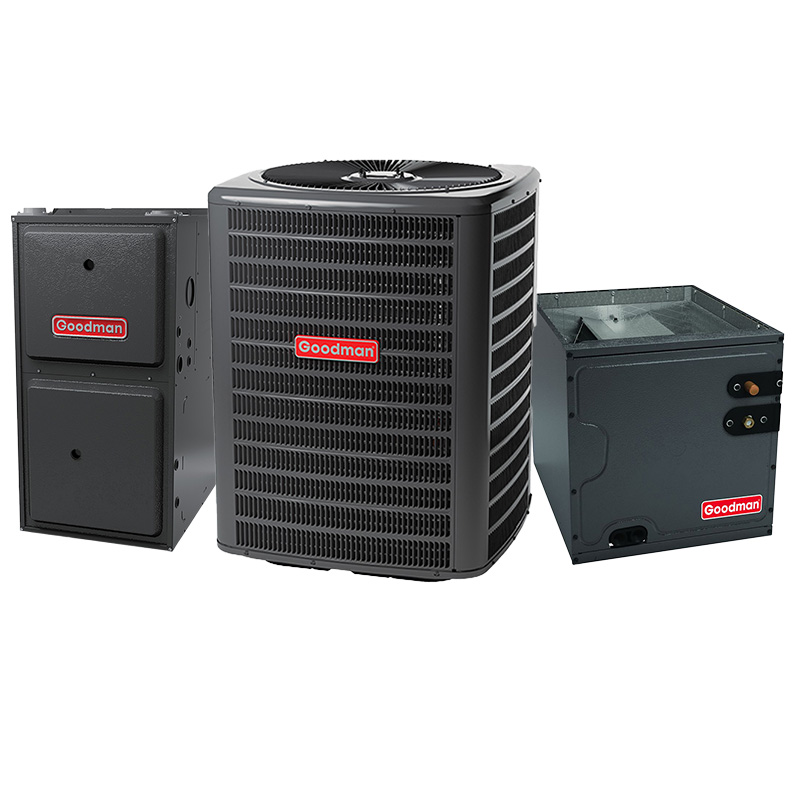
Goodman 4 Ton 17.2 SEER2 AC With 80000 BTU 96% AFUE 2-Stage Variable-Speed ECM Gas Furnace System – Upflow | 2-Stage High Efficiency AC | R32
View on AC Direct see your lowest price →Check current price on AC Direct →
Key features
- 17.2 SEER2 two-stage cooling with R-32 refrigerant (lower GWP than R-410A)
- 96% AFUE two-stage gas furnace reduces fuel waste to 4% per heating cycle
- Variable-speed ECM blower motor for consistent airflow and lower blower energy draw
- Upflow configuration suits basement or closet installs where supply air exits the top
- Two-stage operation on both units extends run cycles for better humidity removal
- 80,000 BTU heating capacity sized for mid-to-large homes in moderate cold climates
About this system
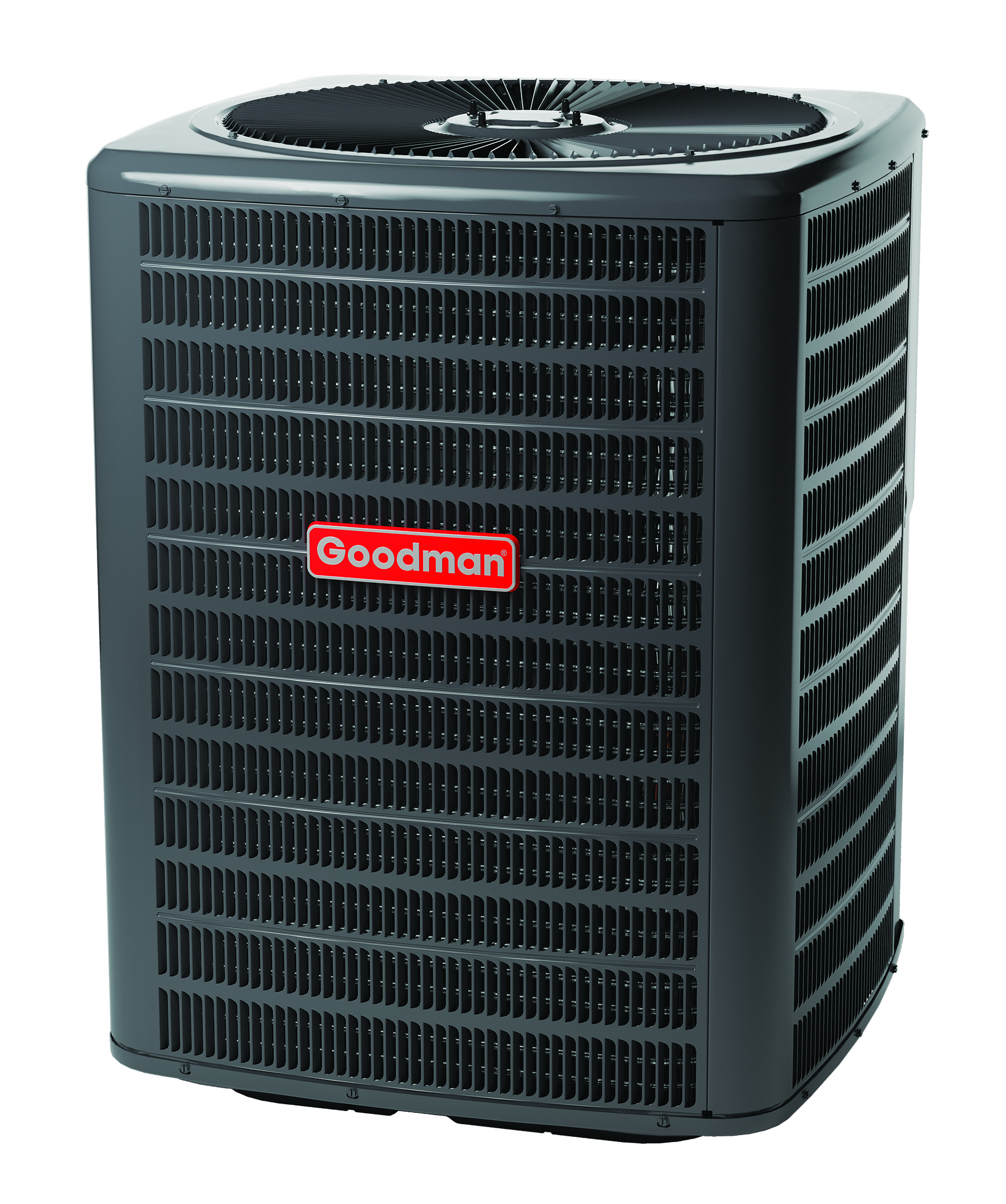
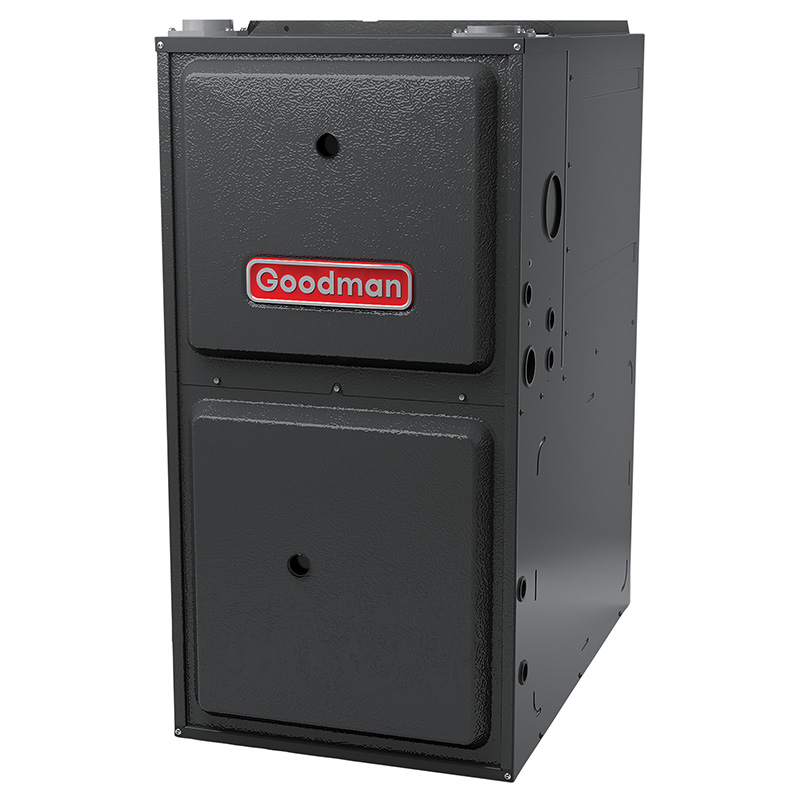
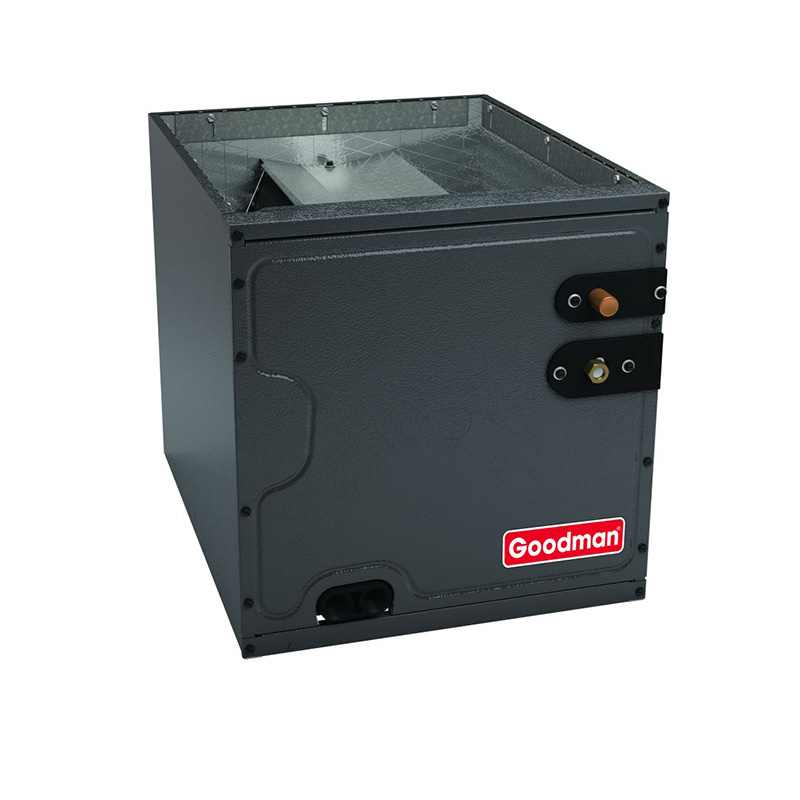
The Goodman GLXT7CA4810 pairs a 4-ton, 17.2 SEER2 two-stage air conditioner with an 80,000 BTU, 96% AFUE two-stage gas furnace in an upflow configuration. The cooling side uses R-32 refrigerant, a lower global-warming-potential refrigerant that is becoming the new baseline as R-410A is phased out. The furnace’s variable-speed ECM blower motor adjusts airflow continuously, which reduces temperature swings, lowers electricity use during blower operation, and improves humidity control compared to a fixed-speed motor. At 96% AFUE, only 4 cents of every heating dollar goes up the flue, putting this unit in the upper tier of gas efficiency without stepping all the way up to a modulating furnace.
Two-stage operation on both the AC and the furnace means each unit runs at a lower capacity most of the time, cycling on high only when conditions demand it. In practice, longer low-stage run cycles distribute conditioned air more evenly, reduce hot and cold spots, and pull more moisture out of indoor air during humid weather. A 4-ton system is sized for roughly 1,800 to 2,400 square feet in a moderate climate, though actual load calculations should always drive final sizing. This combo suits homeowners in mixed heating and cooling climates who want meaningfully better efficiency than a standard 14 or 15 SEER2 single-stage system without paying Trane or Lennox prices for it.
The GLXT7CA4810 delivers genuine two-stage, high-efficiency performance at a price point that undercuts comparable Carrier, Trane, and Lennox systems by 15 to 25 percent. That savings comes with real trade-offs in long-term reliability expectations and compressor longevity. For budget-conscious buyers who use a qualified installer and stay current on maintenance, this system offers solid value; for those who want to install and forget for 18-plus years, a premium brand is the more defensible choice.
Overall score is the average of the five ratings above.
What we like
- 17.2 SEER2 clears the high-efficiency threshold without a variable-speed compressor price premium
- 96% AFUE furnace keeps heating operating costs low across most U.S. climates
- Variable-speed ECM blower cuts fan electricity use and improves air distribution
- R-32 refrigerant is forward-compatible as EPA phase-down of R-410A progresses
- Typically 15 to 25 percent less expensive than Trane, Carrier, or Lennox equivalents
Trade-offs
- Dual-run capacitors are a known weak point and a likely service call within the first decade
- Compressor lifespan averages 10 to 14 years versus 15 to 20 years for premium brands
- Evaporator coil leaks appear in a meaningful share of owner reviews, especially after year 7
- A minority of owners report refrigerant leaks in year one, typically tied to install or charge quality rather than the equipment itself
What homeowners and pros say about Goodman
Homeowners who have lived with Goodman equipment tend to split into two camps. Those with good installs and proactive maintenance often report years of trouble-free operation and appreciate the lower upfront cost. Those who ran into problems point to repair bills climbing after roughly year 7, a pattern reflected in Goodman’s ConsumerAffairs rating of about 2.5 out of 5, a channel that skews toward complaints but where the consistent theme is mid-life component failures. Google dealer reviews average around 3.8 out of 5 across locations, with affordability showing up as the most repeated compliment. The two most documented hardware issues with Goodman systems are dual-run capacitor failures, usually a straightforward 300 to 600 dollar repair, and evaporator coil leaks, which are more disruptive and show up in a meaningful share of long-term owner accounts. Compressor lifespan is another honest distinction: Goodman compressors average roughly 10 to 14 years in practice, versus 15 to 20 years that premium brands tend to see.
HVAC technicians who work on Goodman equipment regularly are generally not dismissive of it, but they are consistent on one point: the brand performs best when a skilled installer sets it up correctly the first time. Improper refrigerant charge and airflow issues account for a disproportionate share of early service calls, and a minority of owners report refrigerant leaks within the first year that trace back to install quality rather than the equipment itself. For the GLXT7CA4810 specifically, the two-stage ECM configuration adds some complexity relative to a basic single-stage unit, which reinforces the case for choosing an experienced installer over the lowest bidder. The bottom line from both camps is that Goodman is a capable system when treated as a value product with realistic maintenance expectations, not as a set-it-and-forget-it premium appliance.
Sources: ConsumerAffairs Goodman owner reviews, AHRI Directory of Certified Product Performance, U.S. DOE appliance and equipment efficiency standards, Goodman product specification sheets.
What it costs to run
At 17.2 SEER2, cooling this 4-ton system for a typical 1200-hour cooling season at the U.S. average electricity rate of $0.17/kWh works out to roughly $569 per year in cooling, about $162 less per year than a minimum-efficiency 13.4 SEER2 unit of the same size. Your real cost depends on your climate and local rate.
Method: (48,000 BTU/hr ÷ 17.2 SEER2) × 1200 hours ÷ 1000 × $0.17/kWh. Rate source: U.S. EIA average; cooling hours: moderate-climate estimate.
How it compares
| Brand | Comparable model | SEER2 | Stage | Price position |
|---|---|---|---|---|
| Goodman | GLXT7CA4810 | 17.2 | two-stage | Value pick |
| Carrier | Performance 17 (24ACC7) | 17 | two-stage | Typically 15 to 25 percent more than Goodman |
| Trane | XR17 series | 17 | two-stage | Typically 15 to 25 percent more than Goodman |
| Lennox | Merit ML17XC2 series | 17 | two-stage | Typically 15 to 25 percent more than Goodman |
Competitor rows are comparable single-stage units at similar efficiency; price is relative position, not a quote.
Questions about this system
What warranty does the Goodman GLXT7CA4810 come with, and what do I need to do to activate it?
Goodman offers a 10-year parts limited warranty when the system is registered within 60 days of installation by a licensed contractor. Without registration it typically drops to 5 years on parts. The compressor and heat exchanger often carry their own coverage terms, so review the specific warranty document for this model before signing off on the install.
Is R-32 refrigerant a concern for existing HVAC technicians, or will it be hard to service?
R-32 requires technicians to use equipment rated for A2L refrigerants and to follow updated handling procedures, since it is mildly flammable unlike R-410A. Most professional HVAC technicians are already acquiring A2L certification as the industry transitions. It should not be difficult to find qualified service in the near future, but it is worth confirming your local tech is up to date before your first service call.
How much will the dual-run capacitor issue actually cost me if it fails?
A dual-run capacitor replacement is one of the more affordable HVAC repairs, typically running between 300 and 600 dollars including labor. It is a quick fix, but it does mean a service call and some downtime, so keeping a maintenance contract or a trusted technician on call is worthwhile with this brand.
Will a 4-ton unit at 80,000 BTU be correctly sized for my home?
Ton for ton and BTU for BTU are starting points, not guarantees. The only reliable way to confirm sizing is a Manual J load calculation that accounts for your home's square footage, insulation levels, window area, local climate data, and duct condition. Oversizing either side of this system leads to short-cycling, poor humidity control, and accelerated wear.
Does install quality really matter this much, or is that just something contractors say?
With Goodman specifically, technicians consistently cite installation as the single biggest factor in how long a unit lasts, and the brand's own complaint patterns reflect this. Issues like improper refrigerant charge, poorly sealed duct connections, and incorrect airflow setup are behind a notable share of first-year problems. Paying for a licensed, experienced installer and verifying they pull a permit is one of the highest-return decisions you can make with this purchase.
Specifications
| Cooling capacity | 4 Ton |
| Efficiency | 17.2 SEER2 |
| Furnace output | 80000 BTU |
| Furnace efficiency | 96% AFUE |
| Configuration | Upflow |
| Refrigerant | R-32 |
| Model | GLXT7CA4810 |