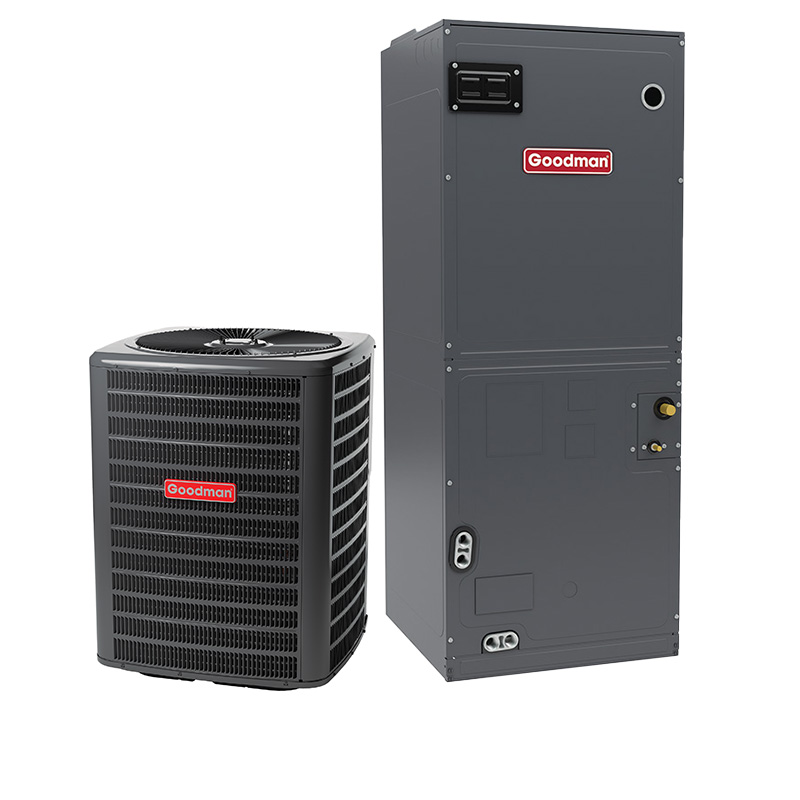
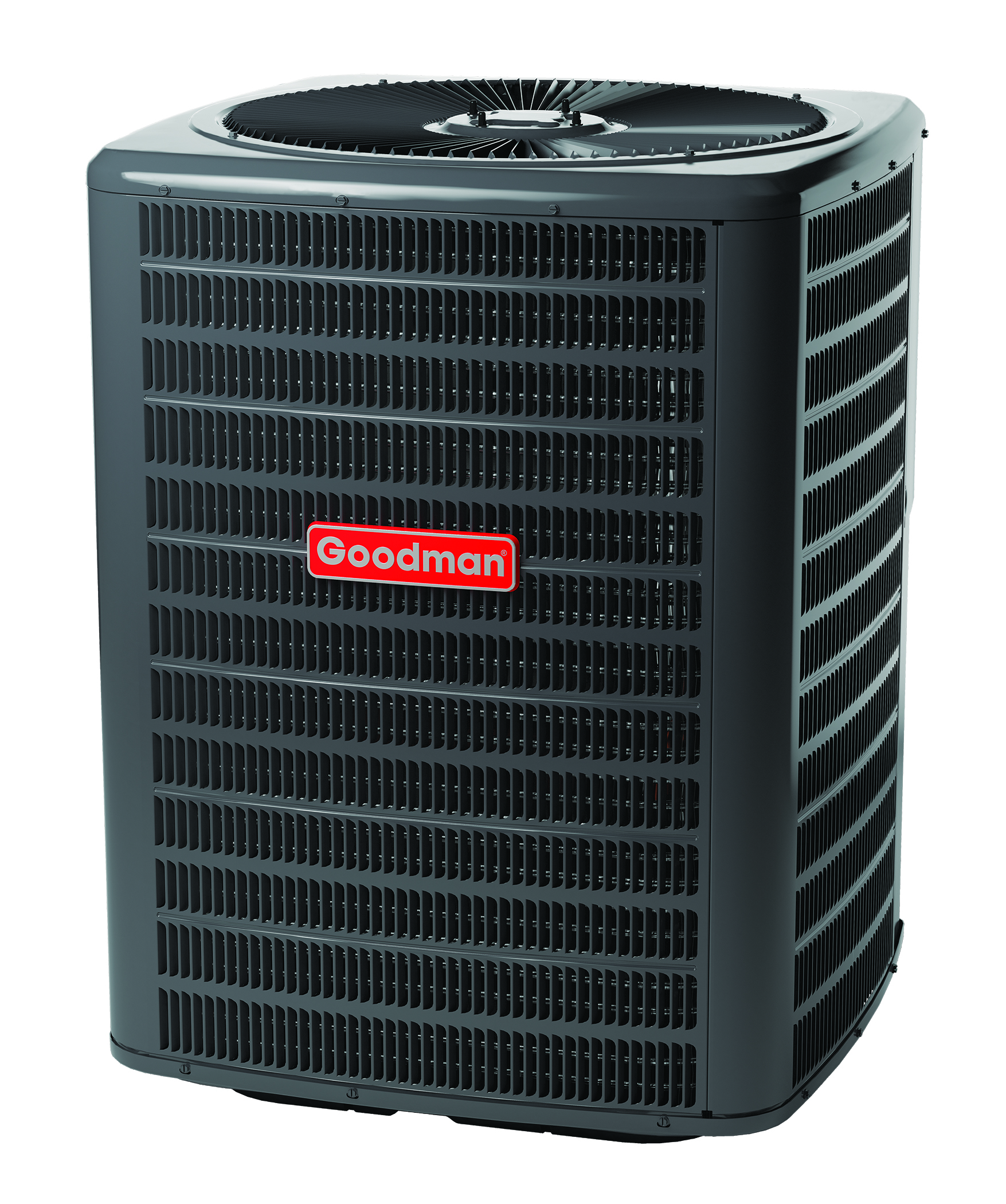
Goodman 4 Ton 17.2 SEER2 R32 High-Efficiency Two Stage Cooling Only System
View on AC Direct see your lowest price →Check current price on AC Direct →
Key features
- 17.2 SEER2 two-stage compressor for improved humidity control and part-load efficiency
- R-32 refrigerant with lower global warming potential than R-410A
- 4-ton capacity suited to larger homes with properly sized ductwork
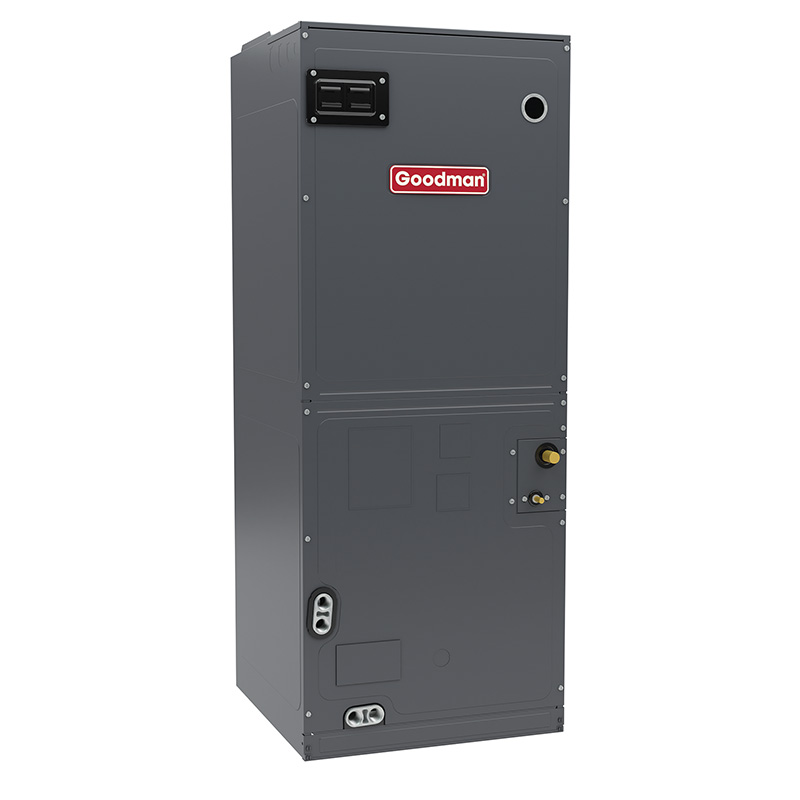
- Cooling-only configuration pairs with a separate air handler or coil
- Two-stage operation reduces short-cycling and extends average run times
- Priced 15 to 25 percent below comparable premium-brand units
About this system
The Goodman 4-ton 17.2 SEER2 two-stage cooling-only system is built for homeowners who want meaningful efficiency gains over a standard unit without paying premium-brand prices. At 17.2 SEER2, it clears the federal minimum by a comfortable margin and qualifies as a high-efficiency system under current rating standards. The two-stage compressor is the headline feature: it runs at a reduced capacity most of the time, cycling up to full output only during peak afternoon heat. That behavior translates to longer, quieter run cycles, better humidity removal, and steadier indoor temperatures compared with a single-stage unit that simply turns on at full blast and shuts off.
The R-32 refrigerant is worth noting for buyers in states with evolving refrigerant regulations. R-32 has a lower global warming potential than the R-410A it replaces and is the direction the industry is moving, so parts and service availability should remain strong over this unit’s lifespan. At 4 tons, this system suits homes roughly in the 2,000-to-2,600-square-foot range depending on insulation, ceiling height, ductwork condition, and local climate. A proper Manual J load calculation from your installer is essential before committing to any tonnage. This is a cooling-only condensing unit and requires a matched indoor air handler or furnace coil, which are sold separately.
Goodman positions this product as a value-tier option, typically priced 15 to 25 percent below comparable Trane, Lennox, and Carrier equipment. That gap is real money on a system of this size, but it comes with trade-offs in long-term reliability and compressor longevity that buyers should weigh honestly before purchasing.
The Goodman 4-ton 17.2 SEER2 two-stage system delivers genuine efficiency and comfort improvements over entry-level single-stage units at a price that is hard to argue with on day one. The honest caveat is that long-term ownership costs can erode that upfront savings, particularly if capacitor or evaporator coil issues arise after the base warranty period. For buyers who choose a skilled installer and plan to stay in the home 8 to 10 years, it represents a reasonable value; for buyers expecting 15-plus years of low-maintenance operation, a premium brand deserves serious consideration.
Overall score is the average of the five ratings above.
What we like
- 17.2 SEER2 rating delivers meaningful energy savings over minimum-efficiency systems
- Two-stage operation improves humidity control and reduces temperature swings
- R-32 refrigerant positions the unit well for upcoming regulatory requirements
- Upfront cost is substantially lower than comparable Carrier, Trane, or Lennox equipment
- Capacitor failures, the most common repair issue, are typically low-cost and quick to fix
Trade-offs
- Compressor lifespan averages 10 to 14 years, notably shorter than the 15 to 20 years typical of premium brands
- Evaporator coil leaks appear in a meaningful share of owner reports and can be expensive repairs
- A minority of owners report refrigerant leaks within the first year, often linked to installation quality
- Overall reliability ratings are modest: roughly 2.5 out of 5 on ConsumerAffairs, with repair costs climbing after year 7 as the most common complaint theme
What homeowners and pros say about Goodman
Homeowners who post about Goodman equipment tend to sort into two distinct camps. Those who had a skilled, careful installer often report years of uneventful service and point to the lower purchase price as a genuine win. Those who ran into problems frequently mention repair bills that arrived sooner than expected and customer service that offered limited help once the equipment was installed. On ConsumerAffairs, Goodman scores around 2.5 out of 5, and the recurring complaint pattern is repair costs climbing after roughly year 7, which is a reasonable signal that budgeting for service after the warranty period is not optional. Google dealer reviews, which capture a broader and less complaint-skewed sample, land closer to 3.8 out of 5, where affordability is the praise most frequently offered.
HVAC technicians who service Goodman equipment regularly tend to view it pragmatically. They note that dual-run capacitor failures are the most common call they get on these units, and that it is generally a quick, inexpensive repair in the 300-to-600-dollar range. They are more cautious about evaporator coil leaks, which appear in a meaningful share of owner reports and involve more labor and parts cost to address. Compressor longevity is the other honest concern: Goodman compressors tend to average 10 to 14 years, compared with 15 to 20 years for premium-brand equipment, and for a 4-ton two-stage unit that is a meaningful gap over a long ownership window. For this specific system, the R-32 refrigerant and two-stage compressor represent genuine technical upgrades over a basic single-stage Goodman, and pros generally agree those features are worth having if the budget does not stretch to a premium brand.
Sources: ConsumerAffairs Goodman owner reviews, AHRI Directory of Certified Product Performance, U.S. DOE appliance and equipment efficiency standards, Goodman product specification sheets.
What it costs to run
At 17.2 SEER2, cooling this 4-ton system for a typical 1200-hour cooling season at the U.S. average electricity rate of $0.17/kWh works out to roughly $569 per year in cooling, about $162 less per year than a minimum-efficiency 13.4 SEER2 unit of the same size. Your real cost depends on your climate and local rate.
Method: (48,000 BTU/hr ÷ 17.2 SEER2) × 1200 hours ÷ 1000 × $0.17/kWh. Rate source: U.S. EIA average; cooling hours: moderate-climate estimate.
How it compares
| Brand | Comparable model | SEER2 | Stage | Price position |
|---|---|---|---|---|
| Goodman | 4-Ton 17.2 SEER2 Two-Stage Cooling-Only System | 17.2 | Two-stage | Value pick |
| Carrier | Performance 17 (24ACC7) | 17 | Single-stage | Typically 15 to 25 percent more than Goodman |
| Trane | XR17 | 17 | Single-stage | Typically 15 to 25 percent more than Goodman |
| Lennox | Merit ML17XC1 | 17 | Single-stage | Typically 15 to 25 percent more than Goodman |
Competitor rows are comparable single-stage units at similar efficiency; price is relative position, not a quote.
Questions about this system
Is this a complete system, or do I need to buy other components?
This is a cooling-only condensing unit and does not include an air handler, furnace, or evaporator coil. You will need a compatible matched indoor unit to complete the system, and Goodman recommends using matched components to protect efficiency ratings and warranty coverage.
Why does the two-stage compressor matter for a 4-ton unit specifically?
A 4-ton single-stage system running at full capacity in mild weather frequently short-cycles, which removes less humidity and creates hot and cold spots. Two-stage operation lets the unit run longer at reduced output, which improves dehumidification and comfort in larger homes where a single-stage unit might be over-capacity much of the season.
What does the switch to R-32 refrigerant mean for service costs?
R-32 requires technicians with the appropriate certification and equipment, which most modern HVAC shops already carry as the industry transitions away from R-410A. Service costs should be comparable to R-410A work in most markets, and R-32 availability is expected to be strong for the foreseeable future.
How important is installer choice for a Goodman system?
Critically important. HVAC technicians consistently cite installation quality as the single biggest factor in how long a Goodman unit lasts, and the documented first-year refrigerant leak issue is most often traced to improper charging or connection work. Spending time vetting your installer matters as much as the equipment decision itself.
What are the most likely repair costs I should budget for over the life of this unit?
Dual-run capacitor replacement is the most commonly reported failure and typically costs 300 to 600 dollars including labor. Evaporator coil leaks appear in a meaningful share of owner reports and can run considerably higher depending on coil cost and labor rates in your area. Budgeting for at least one capacitor replacement over a 10-to-12-year ownership period is a reasonable expectation.
Specifications
| Cooling capacity | 4 Ton |
| Efficiency | 17.2 SEER2 |
| Refrigerant | R-32 |