Goodman 4 Ton 17.2 SEER2 Two Stage Cooling Only Split System Upflow With MBVC2001
View on AC Direct see your lowest price →Check current price on AC Direct →
Key features
- Two-stage compressor runs at reduced capacity for improved humidity control and quieter part-load operation
- 17.2 SEER2 rating meets high-efficiency criteria under the current DOE testing standard
- Paired MBVC2001 variable-speed air handler modulates airflow to match compressor staging
- Upflow configuration designed for basement or closet installs with overhead supply duct systems
- Factory-installed filter drier helps protect the refrigerant circuit from moisture contamination
- Single-piece basepan with corner post design for cabinet rigidity and easier field servicing
About this system
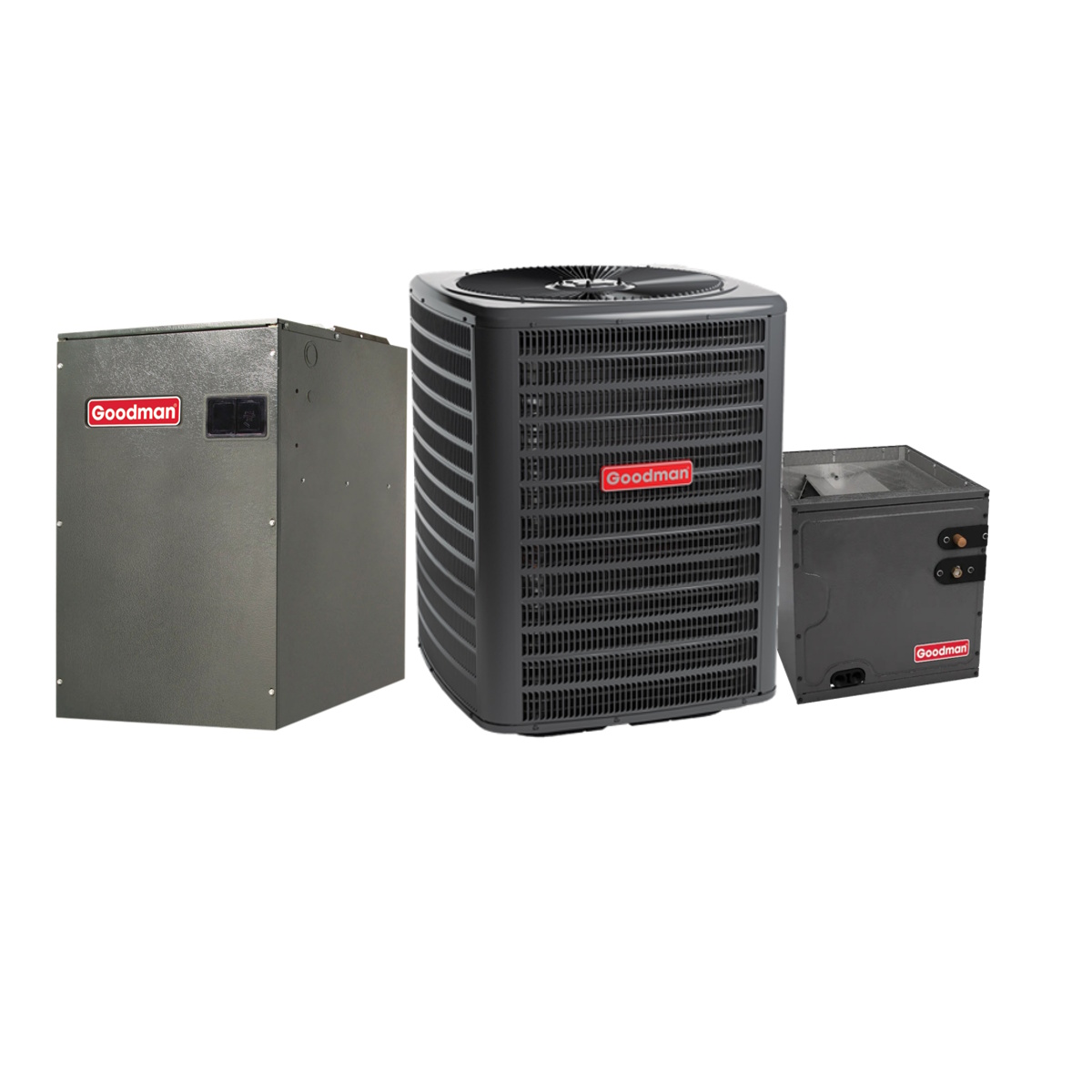
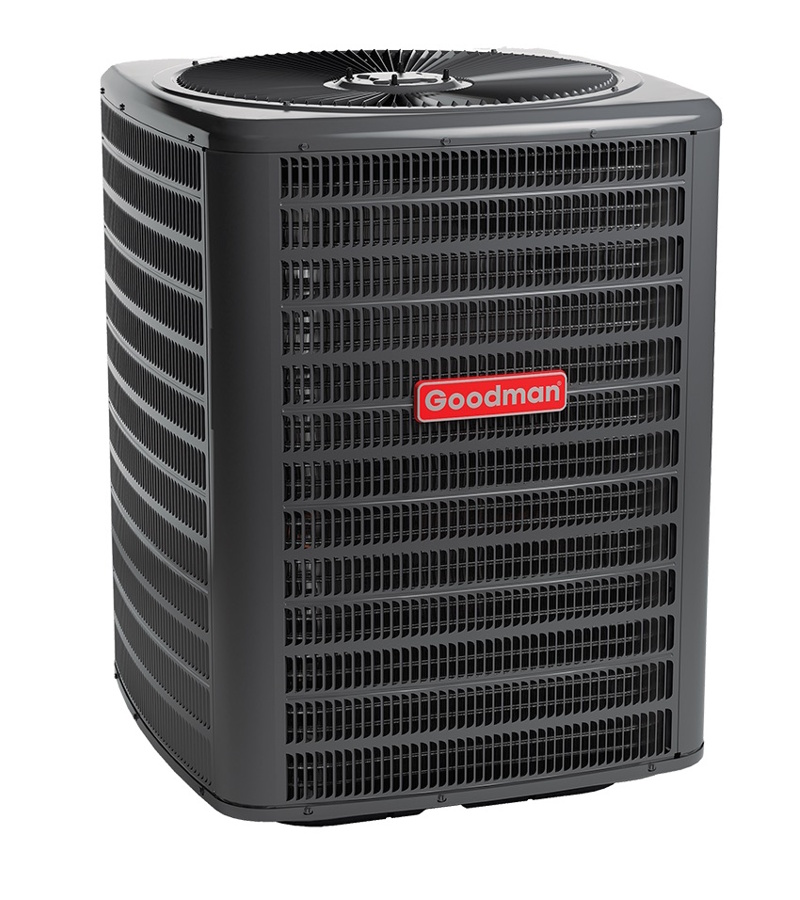
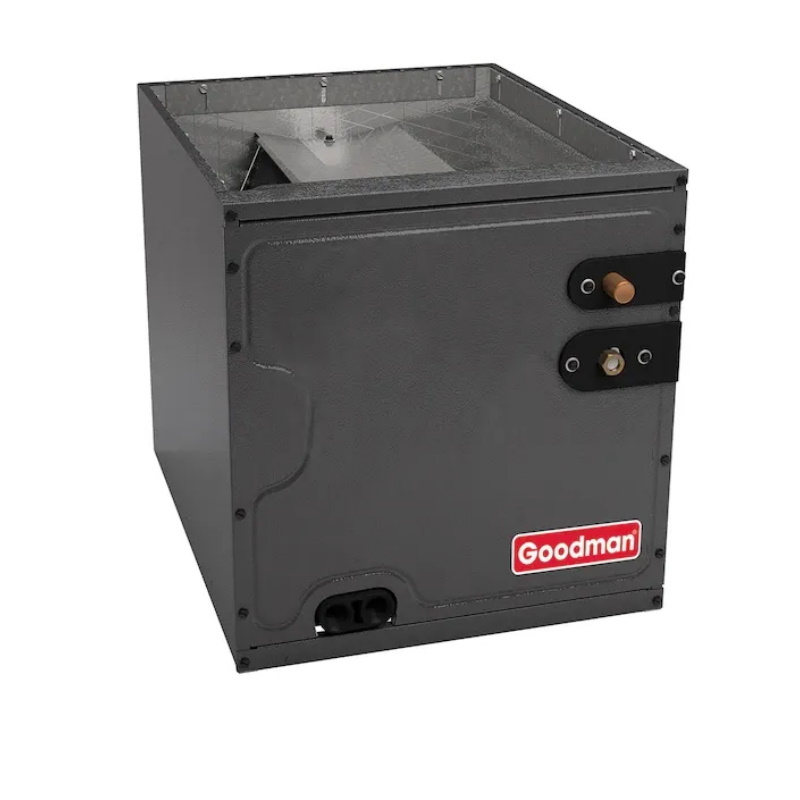
The Goodman GSXC704810 is a 4-ton, 17.2 SEER2 two-stage cooling-only split system paired with the MBVC2001 variable-speed air handler. At 4 tons it targets medium-to-large homes in the 2,000 to 2,800 square foot range, depending on insulation, climate zone, and duct layout. The two-stage compressor runs at a reduced capacity most of the time, ramping up only on the hottest days, which cuts humidity better than a single-stage unit and reduces the on-off cycling that ages components faster.
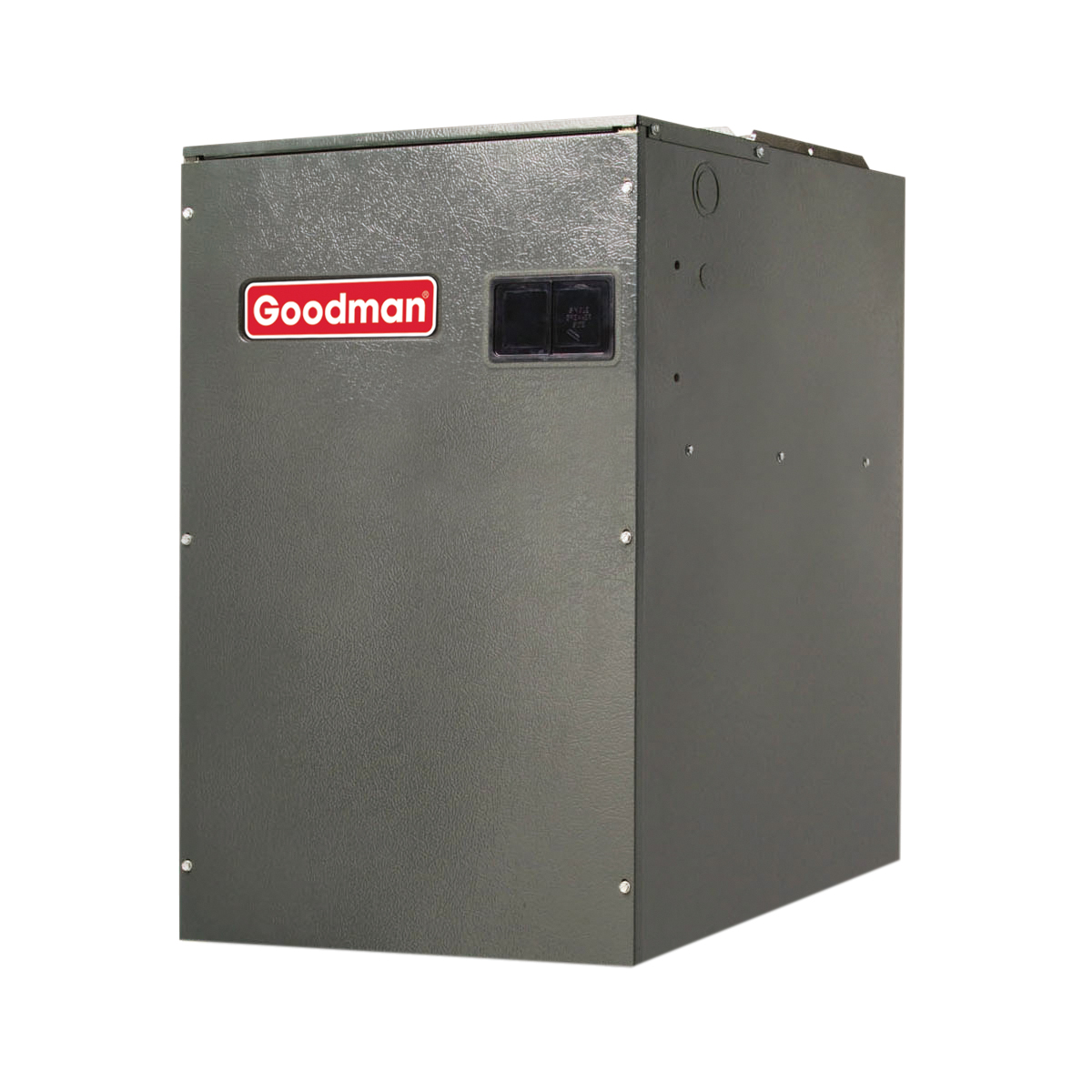
A 17.2 SEER2 rating puts this system solidly in the high-efficiency tier under the newer DOE testing standard. That number is not inflated marketing language; it reflects real-world part-load performance that homeowners in hot climates will notice on their utility bills compared to older 14 or 15 SEER equipment. The upflow configuration means the air handler pulls air in from the bottom and discharges it upward, which suits basement or closet installations with supply ducts running overhead. If your current system is a downflow or horizontal application, this specific configuration will not fit without significant duct rework.
This system suits budget-conscious homeowners who want genuine efficiency gains without paying the premium that Trane, Carrier, or Lennox command, and who are willing to prioritize the quality of the installation contractor over the brand name on the cabinet. Goodman’s value proposition is real, but so is its dependence on a clean, properly charged, and correctly sized install to reach its rated performance and full service life.
The GSXC704810 delivers genuine two-stage efficiency at a price point that undercuts premium brands by 15 to 25 percent, making it a defensible choice for cost-focused buyers who hire a skilled installer. Its weak spots are real: compressor longevity trails premium competitors, and dual-run capacitors and evaporator coil leaks are documented recurring issues. If you go in with clear expectations and budget for a service call around year 7 or 8, this system can perform well for its price tier.
Overall score is the average of the five ratings above.
What we like
- Two-stage operation provides noticeably better dehumidification than single-stage alternatives at this price
- 17.2 SEER2 efficiency is competitive and will deliver meaningful energy savings versus aging 14 SEER or lower equipment
- Upfront cost is typically 15 to 25 percent below comparable Carrier, Trane, or Lennox two-stage systems
- Variable-speed air handler pairing allows precise airflow matching that further improves comfort and efficiency
- Dual-run capacitor failures, the most common documented issue, are a low-cost repair in the 300 to 600 dollar range when they occur
Trade-offs
- Compressor lifespan averages 10 to 14 years versus 15 to 20 years reported for premium-brand compressors
- Evaporator coil leaks appear in a meaningful share of owner reports and can become expensive repairs outside warranty
- A minority of owners report refrigerant leaks within the first year, pointing to install or factory charge quality concerns
- ConsumerAffairs rating sits around 2.5 out of 5, with repair costs after year 7 as the most repeated complaint theme
What homeowners and pros say about Goodman
Homeowners who post about Goodman online tend to cluster at the extremes. On Google dealer review pages, where ratings average around 3.8 out of 5 across hundreds of reviews per location, affordability and accessible parts availability come up most often as positives. The picture on ConsumerAffairs is harsher, with an average around 2.5 out of 5, and the recurring complaint is not early catastrophic failure but a steady accumulation of repair bills starting around year 7 or 8. The two failure modes that appear most consistently in owner accounts are dual-run capacitor replacements, which are a nuisance but not a budget emergency, and evaporator coil leaks, which are more disruptive and more expensive to address. Compressor longevity is the longer-term concern: Goodman compressors in real-world reports tend to average 10 to 14 years, a noticeably shorter window than the 15 to 20 years often cited for Trane, Carrier, and Lennox compressors.
HVAC technicians who work on Goodman equipment regularly tend to say something similar to what the numbers reflect: the equipment is straightforward to service, parts are available and reasonably priced, and a clean, well-charged install can produce solid results for a decade or more. The same technicians are consistent in saying that Goodman is more sensitive to install quality than premium brands, and that a rushed or improperly commissioned job accelerates the timeline on every failure mode listed above. For the GSXC704810 specifically, the two-stage compressor and variable-speed air handler combination adds commissioning complexity compared to a basic single-stage system, which makes contractor selection at least as important as the equipment decision itself.
Sources: ConsumerAffairs Goodman owner reviews, AHRI Directory of Certified Product Performance, U.S. DOE appliance and equipment efficiency standards, Goodman product specification sheets.
What it costs to run
At 17.2 SEER2, cooling this 4-ton system for a typical 1200-hour cooling season at the U.S. average electricity rate of $0.17/kWh works out to roughly $569 per year in cooling, about $162 less per year than a minimum-efficiency 13.4 SEER2 unit of the same size. Your real cost depends on your climate and local rate.
Method: (48,000 BTU/hr ÷ 17.2 SEER2) × 1200 hours ÷ 1000 × $0.17/kWh. Rate source: U.S. EIA average; cooling hours: moderate-climate estimate.
How it compares
| Brand | Comparable model | SEER2 | Stage | Price position |
|---|---|---|---|---|
| Goodman | GSXC704810 with MBVC2001 | 17.2 | Two-stage | Value pick |
| Carrier | Comfort 17 (24ACC636 series) | 17 | Two-stage | Typically 15 to 25 percent more than Goodman |
| Trane | XR17 (4TTR7048 series) | 17 | Two-stage | Typically 15 to 25 percent more than Goodman |
| Lennox | XC17 (XC17-048 series) | 17 | Two-stage | Typically 15 to 25 percent more than Goodman |
Competitor rows are comparable single-stage units at similar efficiency; price is relative position, not a quote.
Questions about this system
Can I use this upflow air handler in a horizontal or downflow application?
No. The MBVC2001 paired here is configured for upflow only, meaning it draws return air from the bottom and pushes supply air upward. Installing it in a horizontal attic or downflow closet application would require a different air handler model entirely, and forcing it into the wrong orientation voids the warranty and creates safety risks.
How much can I realistically expect to save on electricity compared to my old 14 SEER system?
Moving from a 14 SEER to a 17.2 SEER2 system (which is roughly equivalent to about 19 SEER under the older rating standard) can reduce cooling energy consumption by 20 to 30 percent in practice, depending on your climate, runtime hours, and how well the new system is commissioned. Actual savings vary, but in a hot southern climate running 1,500 or more hours per year, the difference is noticeable on monthly bills.
What are the most likely repairs I should budget for over the life of this system?
Based on Goodman's documented failure pattern, the dual-run capacitor is the most common failure and typically runs 300 to 600 dollars to replace including labor. Evaporator coil leaks show up in a meaningful share of owner reports and are more expensive to address, often running 1,000 to 2,500 dollars depending on refrigerant cost and labor. Planning a maintenance contract that includes annual capacitor checks can catch that issue early.
Does Goodman's warranty require professional registration, and what does it actually cover?
Yes, Goodman requires the system to be registered online within a specified window after installation to activate the full parts warranty period. Without registration, the coverage period is shorter. The warranty covers parts but not labor, which means a compressor failure inside the warranty window still leaves you paying for the technician's time, which can run several hundred to over a thousand dollars.
My house is 2,600 square feet in a humid southeastern climate. Is 4 tons the right size?
Possibly, but square footage alone is not a reliable sizing method. A proper Manual J load calculation is the only way to confirm correct tonnage for your specific home's insulation, window area, duct leakage, and local design temperatures. Oversizing a two-stage system in a humid climate is a common mistake that causes short cycling, poor dehumidification, and premature wear, so push your contractor to show you the load calculation before signing off on equipment size.
Specifications
| Cooling capacity | 4 Ton |
| Efficiency | 17.2 SEER2 |
| Configuration | Upflow |
| Model | GSXC704810 |