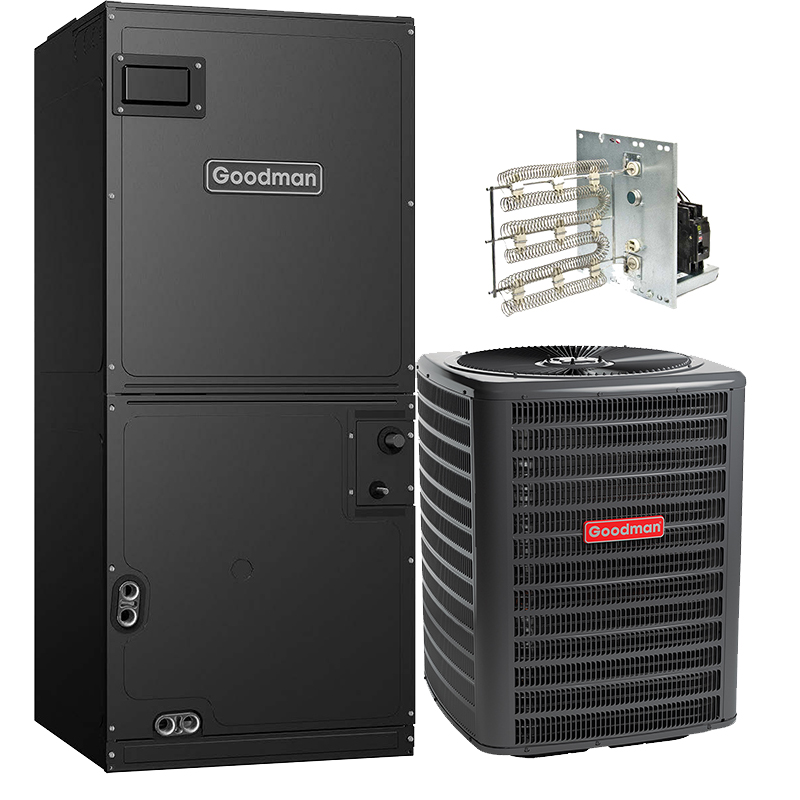
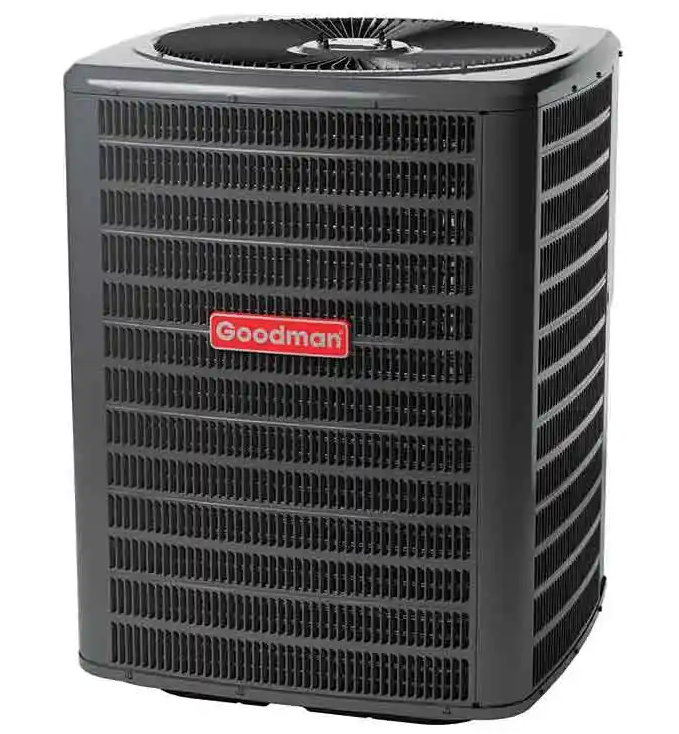
Goodman 2 Ton 17.2 SEER2 Two Stage Variable Speed Heat Pump Split System
View on AC Direct see your lowest price →Check current price on AC Direct →
Key features
- 17.2 SEER2 efficiency rating, upper-mid tier under current DOE standards
- Two-stage compressor reduces cycling and improves humidity control on mild days
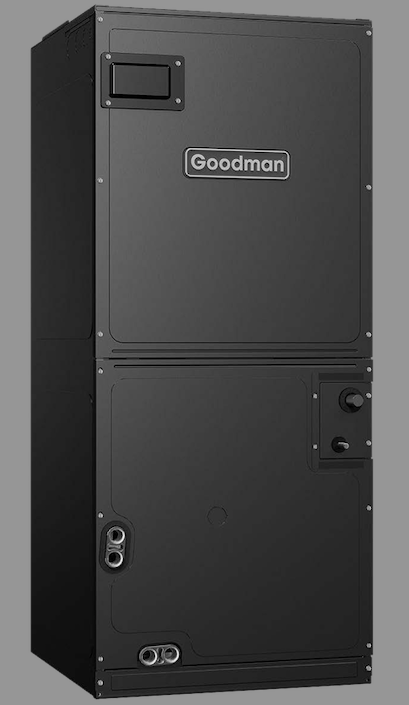
- Variable-speed ECM indoor blower for quieter, steadier airflow
- 2-ton capacity suited to smaller conditioned spaces in moderate climates
- Compatible with Goodman's ComfortBridge technology for communicating system diagnostics
- Copeland scroll compressor with factory sound insulation on the outdoor cabinet
About this system
The Goodman GSZC702410 is a 2-ton, 17.2 SEER2 two-stage heat pump split system built for smaller homes, conditioned apartments, or zone-specific additions where budget matters but efficiency still counts. At 17.2 SEER2, it sits in the upper-mid tier of the current market, comfortably above the federal minimum and close enough to premium-tier ratings that monthly operating costs should be meaningfully lower than a single-stage or base-efficiency system. Two-stage compression means the unit runs on a lower capacity setting during mild weather and only ramps to full output on the hottest or coldest days, which improves dehumidification, reduces temperature swings, and cuts compressor cycling compared to single-stage alternatives.
The variable-speed indoor blower works with the two-stage compressor to keep airflow steady and quiet, a real comfort difference versus fixed-speed setups in bedrooms or open living areas. For a 2-ton application, this configuration is a reasonable match for conditioned spaces roughly in the 700 to 1,000 square foot range depending on local climate, insulation, and ceiling height. Buyers should be aware that Goodman’s performance profile, including efficiency and longevity, is closely tied to installation quality. A properly charged system with correctly sized ductwork will behave very differently from one that is undercharged or paired with restrictive ducts, and that is worth discussing with any installer before signing a contract.
The GSZC702410 offers a legitimate efficiency and comfort upgrade over single-stage systems at a price point that undercuts comparable Trane, Carrier, and Lennox hardware by 15 to 25 percent. The trade-off is a brand track record that shows higher-than-average repair activity after the seven-year mark and a compressor lifespan that typically falls short of premium competitors. For budget-conscious buyers who vet their installer carefully and understand the long-term cost picture, it is a reasonable choice; for buyers who prioritize minimizing lifetime repair risk, the price gap may not fully offset the difference.
Overall score is the average of the five ratings above.
What we like
- 17.2 SEER2 efficiency reduces operating costs compared to single-stage or base-efficiency heat pumps
- Two-stage operation improves dehumidification and comfort consistency during part-load conditions
- Variable-speed blower runs quieter and holds tighter temperature tolerances than fixed-speed alternatives
- Purchase price sits 15 to 25 percent below comparable Carrier, Trane, and Lennox models
- Dual-run capacitor failures, the most common documented repair, are typically low-cost fixes in the $300 to $600 range
Trade-offs
- Compressor lifespan averages 10 to 14 years versus 15 to 20 years for premium-brand competitors
- Evaporator coil leaks appear in a meaningful share of owner reviews, a potential mid-life repair cost
- ConsumerAffairs scores average around 2.5 out of 5, with repair costs after year 7 as the recurring complaint
- A minority of owners report refrigerant leaks in the first year, generally linked to install or charge issues rather than the unit itself
What homeowners and pros say about Goodman
Homeowners who track their experience with Goodman equipment tend to split along a familiar line: buyers who had a careful installation and kept up with annual maintenance generally report satisfaction with comfort and utility bills, while those who encountered problems after year seven or eight cite repair costs as the main frustration. Goodman’s ConsumerAffairs score sits at roughly 2.5 out of 5, a number that reflects the complaint-heavy nature of that platform but also surfaces a real pattern: repair frequency and cost tend to climb in the second half of the system’s life. Google dealer reviews land higher, around 3.8 out of 5, where affordability is the most frequently mentioned positive. For this two-stage, variable-speed configuration specifically, owners should be aware that the added complexity of staging controls and the ECM blower introduces more components that can require service compared to a basic single-stage unit.
HVAC technicians generally describe Goodman as reliable enough when installed correctly, but they are consistent about one point: installation quality is the single biggest factor in how long one lasts and how efficiently it runs. The documented failure modes most worth knowing are dual-run capacitor failure, which is common but inexpensive to address; evaporator coil leaks, which appear in a meaningful share of owner accounts and can be a more substantial repair; and a compressor lifespan that averages 10 to 14 years, shorter than the 15 to 20 years technicians associate with Trane, Carrier, and Lennox compressors. A small share of owners also report refrigerant leaks within the first year, which technicians generally attribute to install or charge issues rather than a factory defect. Asking prospective installers about their commissioning process and whether they perform a standing pressure test before startup is a reasonable step for any buyer of this system.
Sources: ConsumerAffairs Goodman owner reviews, AHRI Directory of Certified Product Performance, U.S. DOE appliance and equipment efficiency standards, Goodman product specification sheets.
What it costs to run
At 17.2 SEER2, cooling this 2-ton system for a typical 1200-hour cooling season at the U.S. average electricity rate of $0.17/kWh works out to roughly $285 per year in cooling, about $80 less per year than a minimum-efficiency 13.4 SEER2 unit of the same size. Your real cost depends on your climate and local rate.
Method: (24,000 BTU/hr ÷ 17.2 SEER2) × 1200 hours ÷ 1000 × $0.17/kWh. Rate source: U.S. EIA average; cooling hours: moderate-climate estimate.
How it compares
| Brand | Comparable model | SEER2 | Stage | Price position |
|---|---|---|---|---|
| Goodman | GSZC702410 | 17.2 | Two-stage | Value pick |
| Carrier | Comfort 18 (25HCE6) | 17 to 18 | Two-stage | Typically 15 to 25 percent more than Goodman |
| Trane | XR17 (4TWR7) | 17 | Two-stage | Typically 15 to 25 percent more than Goodman |
| Lennox | Merit Series (ML18XP1) | 17 to 18 | Two-stage | Typically 15 to 25 percent more than Goodman |
Competitor rows are comparable single-stage units at similar efficiency; price is relative position, not a quote.
Questions about this system
What warranty does the GSZC702410 come with, and are there conditions I should know about?
Goodman offers a 10-year parts limited warranty on registered units, including the compressor and covered components. Registration must be completed within 60 days of installation to receive the full term; unregistered units typically receive a shorter coverage period. The warranty covers parts but not labor, so out-of-pocket repair costs can still be significant if a component fails outside the initial labor warranty your contractor provides.
Is a 2-ton unit the right size for my home, or should I go up to 2.5 tons?
Tonnage should be determined by a Manual J load calculation, not square footage alone. Factors like ceiling height, insulation level, window area, local climate, and duct condition all affect the correct size. An oversized unit short-cycles, which hurts dehumidification and accelerates wear on the compressor, so resisting the impulse to upsize without a proper calculation is important.
How often do the dual-run capacitors fail, and what does that repair typically cost?
Dual-run capacitors are the most commonly reported failure point across Goodman heat pumps and air conditioners, and they can fail within the first few years in some cases. The repair is generally straightforward for a qualified technician and typically runs in the $300 to $600 range depending on labor rates in your area. Keeping a service contract active makes this kind of call less of a budget surprise.
Can I pair this outdoor unit with any air handler, or does it need a specific match?
For the two-stage and variable-speed features to function correctly, this unit should be matched with a compatible Goodman or Amana air handler that supports communicating or two-stage operation. Using a mismatched or single-stage air handler can reduce efficiency, prevent proper staging, and in some cases void parts of the warranty. Your installer should confirm matched-system specifications before ordering equipment.
What refrigerant does this system use, and will that affect future service costs?
The GSZC702410 uses R-410A refrigerant. R-410A is being phased down under EPA regulations, and newer equipment is transitioning to R-454B. Refrigerant availability and pricing for R-410A systems may increase over time as production tapers, which is worth considering if this system needs a recharge or has a refrigerant leak down the road.
Specifications
| Cooling capacity | 2 Ton |
| Efficiency | 17.2 SEER2 |
| Model | GSZC702410 |