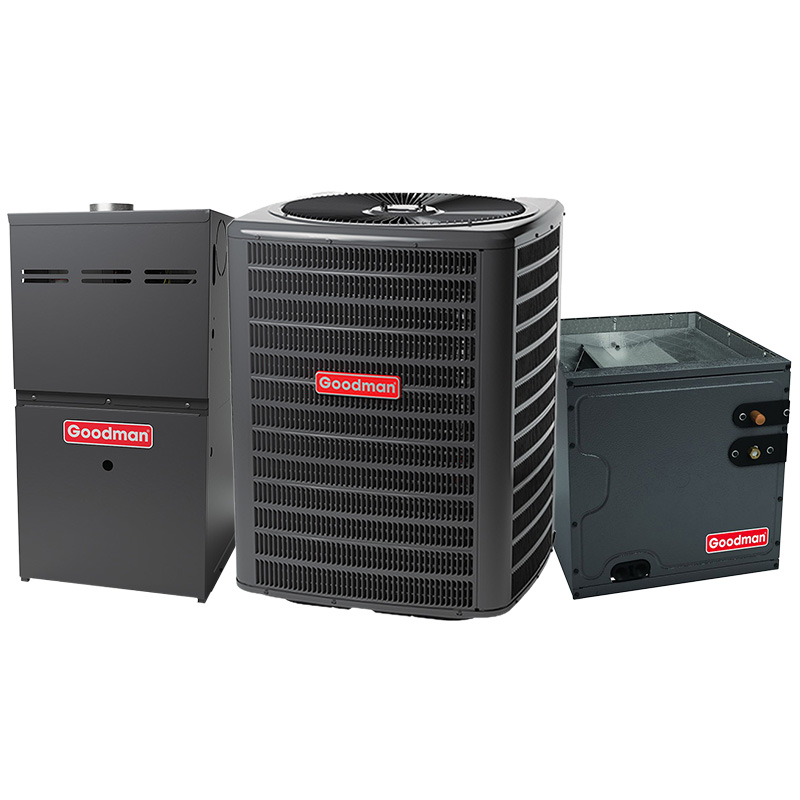
Goodman 4 Ton AC And 100000 BTU 80% AFUE Gas Furnace System | 14.5 SEER2 AC | Multi-Speed ECM Low NOx Furnace | Upflow | R32
View on AC Direct see your lowest price →Check current price on AC Direct →
Key features
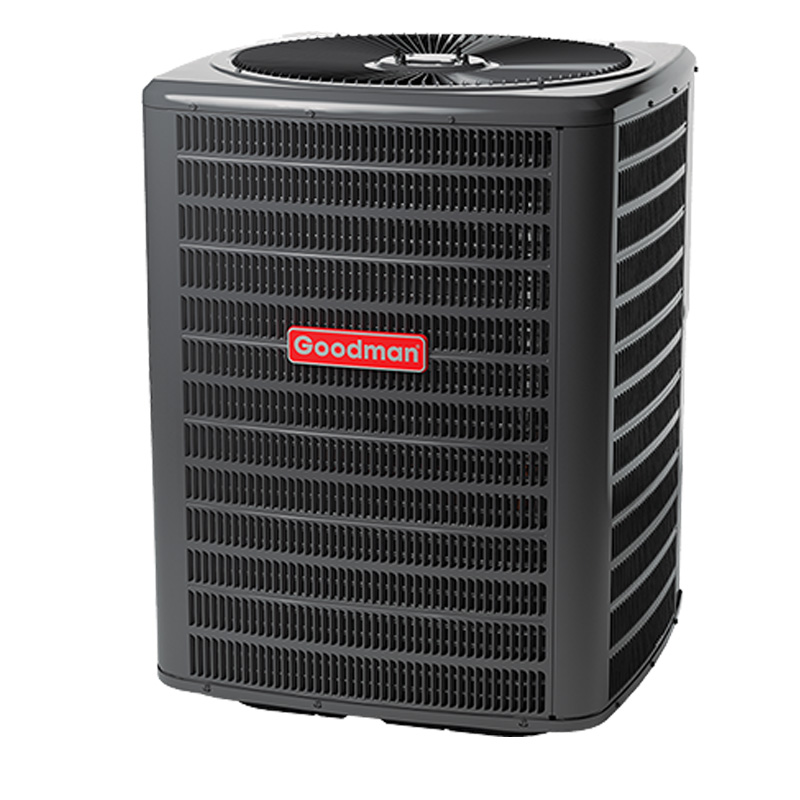
- 4-ton, 14.5 SEER2 air conditioner using R-32 refrigerant
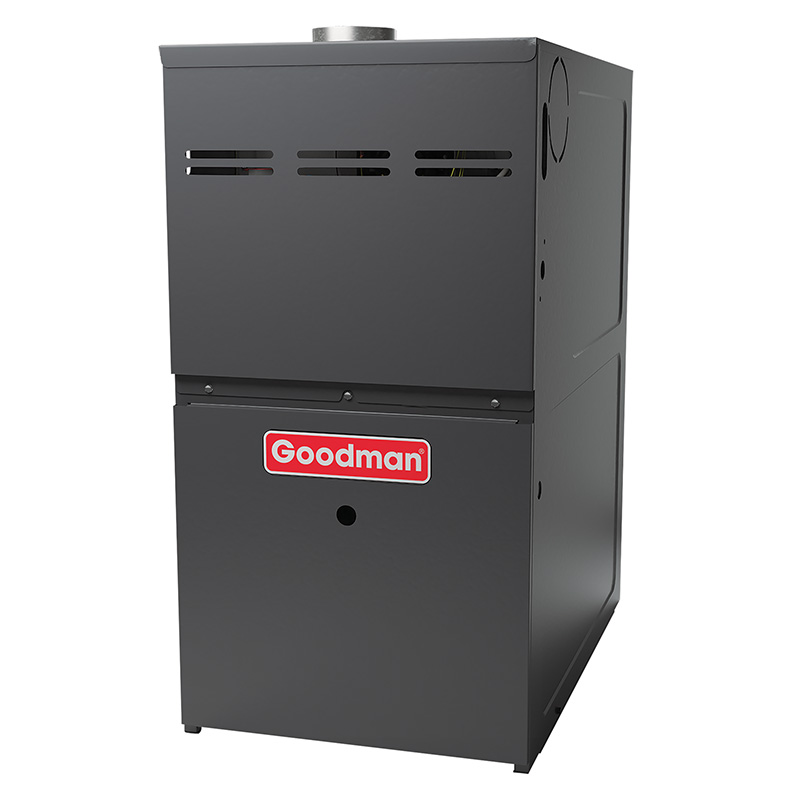
- 100,000 BTU output, 80% AFUE upflow gas furnace
- Multi-speed ECM blower motor for quieter, more energy-efficient airflow
- Low NOx burner design meets stricter air quality standards in California and similar regions
- Upflow cabinet configuration for basement or ground-level installations with overhead ductwork
- Sold as a matched system, simplifying equipment selection and warranty alignment
About this system
This Goodman bundle pairs a 4-ton, 14.5 SEER2 central air conditioner with a 100,000 BTU, 80% AFUE upflow gas furnace into a single-purchase system aimed at homes in the 2,000 to 2,800 square foot range, depending on climate zone and insulation. The 14.5 SEER2 rating sits right at the federal minimum efficiency tier for most northern regions and just clears the bar in several southern states, meaning you meet code without paying for efficiency you may not recover through utility savings. The furnace runs at 80% AFUE, so roughly 20 cents of every heating dollar exits through the flue rather than warming your living space. For homes in mild-to-moderate heating climates that are not natural gas candidates for a high-efficiency 90-plus-percent furnace, that trade-off is often acceptable.
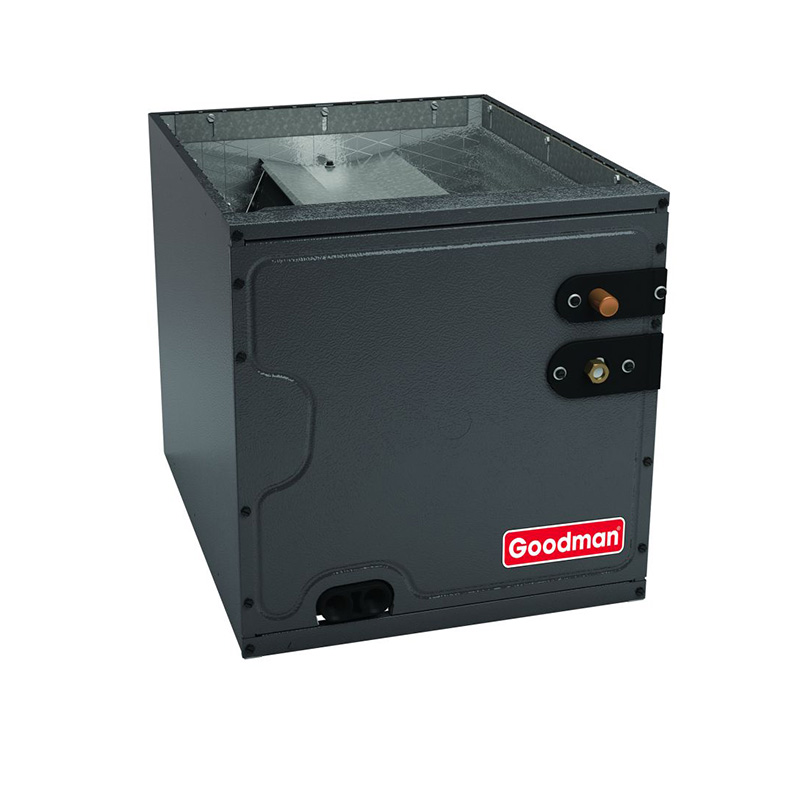
The furnace uses a multi-speed ECM blower motor, which draws significantly less electricity than a standard PSC motor and moves air more quietly at lower demand settings. The R-32 refrigerant in the AC side has a lower global warming potential than the R-410A it replaces and is increasingly standard across the industry. The upflow configuration means conditioned air exits the top of the air handler, which suits basement or ground-level mechanical rooms where ductwork runs up through the floors. If your existing duct layout is upflow, this system drops in without requiring a cabinet reorientation. Buyers looking for a straightforward, code-compliant replacement or new-install system at a budget-conscious price point will find the most value here.
This Goodman system delivers a code-compliant, functional heating and cooling package at a price that is noticeably lower than comparable Carrier, Trane, or Lennox equipment. The specs are modest rather than exceptional, and long-term costs depend heavily on how well it is installed and maintained. It is a reasonable choice for budget-focused buyers who understand what they are trading away in projected component longevity.
Overall score is the average of the five ratings above.
What we like
- Entry price is typically 15 to 25 percent below equivalent Trane, Lennox, and Carrier systems
- Multi-speed ECM motor reduces blower electricity draw compared to standard PSC motors
- R-32 refrigerant has lower environmental impact than the R-410A it replaces
- Matched system purchase simplifies compatibility concerns and consolidates warranty paperwork
- Low NOx furnace burner satisfies stricter emissions standards in California and similar jurisdictions
Trade-offs
- 80% AFUE means 20% of fuel is lost as exhaust, a real operating cost gap versus 96% AFUE alternatives in cold climates
- 14.5 SEER2 is minimum-tier efficiency, so utility savings over premium equipment will be limited
- Goodman compressors average 10 to 14 years in documented owner experience, shorter than the 15 to 20 years typically seen with premium brands
- Dual-run capacitors and evaporator coil leaks are the most commonly reported failure points, and repair costs tend to climb noticeably after year seven based on owner feedback
What homeowners and pros say about Goodman
Homeowners who have lived with a Goodman system share a pretty consistent experience: the price savings at purchase feel real, and for the first several years most units run without drama. Goodman scores roughly 3.8 out of 5 across Google dealer reviews, where the most repeated praise is straightforwardly about affordability. The ConsumerAffairs picture is less encouraging at around 2.5 out of 5, and the pattern in those complaints points to repair costs that start accumulating after about year seven. The two failure modes that show up most often in owner accounts are dual-run capacitor failures, which are a relatively low-cost fix in the 300 to 600 dollar range but frustrating when they recur, and evaporator coil leaks, which are more disruptive and expensive to address.
HVAC technicians who work on Goodman equipment regularly tend to have a pragmatic view: the equipment is serviceable, parts are widely available, and the brand is not unusually difficult to work on. Where they express more caution is around compressor longevity, which in documented owner experience averages 10 to 14 years for Goodman versus 15 to 20 years for premium brands. Technicians consistently emphasize that installation quality is the single largest variable in how long any Goodman system holds up, more so than with higher-end equipment that has more tolerance for marginal installs. A minority of owners also report refrigerant leaks in the first year, which technicians generally attribute to charging errors or connection issues at installation rather than a product defect. The bottom line from both groups: Goodman rewards buyers who invest in a careful installation and stick to annual maintenance, and it presents real long-term cost risk for those who treat it as a set-it-and-forget-it purchase.
Sources: ConsumerAffairs Goodman owner reviews, AHRI Directory of Certified Product Performance, U.S. DOE appliance and equipment efficiency standards, Goodman product specification sheets.
What it costs to run
At 14.5 SEER2, cooling this 4-ton system for a typical 1200-hour cooling season at the U.S. average electricity rate of $0.17/kWh works out to roughly $675 per year in cooling, about $56 less per year than a minimum-efficiency 13.4 SEER2 unit of the same size. Your real cost depends on your climate and local rate.
Method: (48,000 BTU/hr ÷ 14.5 SEER2) × 1200 hours ÷ 1000 × $0.17/kWh. Rate source: U.S. EIA average; cooling hours: moderate-climate estimate.
How it compares
| Brand | Comparable model | SEER2 | Stage | Price position |
|---|---|---|---|---|
| Goodman | 4-Ton 14.5 SEER2 AC / 100k BTU 80% AFUE Furnace Bundle | 14.5 | Single-stage | Value pick |
| Carrier | Comfort Series (24ACC6 AC / 58TP furnace) | 14.5–15 | Single-stage | Typically 15 to 25 percent more than Goodman |
| Trane | XR14 AC / S8B1 80% AFUE Furnace | 14.5 | Single-stage | Typically 15 to 25 percent more than Goodman |
| Lennox | Merit Series (ML14XC1 AC / ML180 Furnace) | 14.5 | Single-stage | Typically 15 to 25 percent more than Goodman |
Competitor rows are comparable single-stage units at similar efficiency; price is relative position, not a quote.
Questions about this system
Is 80% AFUE going to cost me significantly more to run than a high-efficiency furnace?
In mild climates with shorter heating seasons, the difference is modest enough that payback on a 96% AFUE upgrade can take many years. In cold northern climates with long heating seasons, the 15 to 16 percent efficiency gap translates to a meaningful annual fuel cost difference, so the higher-AFUE option becomes easier to justify over a 10-plus-year ownership window.
What does R-32 refrigerant mean for me as an owner, and is it hard to service?
R-32 has a lower global warming potential than R-410A and is becoming widely stocked by HVAC distributors, so service availability is not a practical concern in most markets. It does require technicians to follow mildly flammable refrigerant handling procedures, but any licensed HVAC contractor working on modern equipment will be equipped for this.
Goodman has mixed reviews online. How worried should I be about reliability?
Goodman scores around 2.5 out of 5 on ConsumerAffairs, a platform that skews toward complaints, with recurring mentions of rising repair costs after roughly year seven. Google dealer reviews average around 3.8 out of 5, where affordability is the most cited positive. The documented weak points are dual-run capacitor failures, evaporator coil leaks, and compressor lifespans that average shorter than premium brands. A strong installation and an annual maintenance contract do more to protect a Goodman system than nearly any other factor.
Will this furnace work with my existing upflow ductwork, or do I need modifications?
If your current system is upflow and your cabinet dimensions are compatible, this furnace is a direct configuration match and should not require duct reorientation. You should confirm the physical cabinet width and gas line connection locations with your installer before purchase, since not every existing rough-in is identical.
What does the warranty actually cover, and are there conditions I should know about?
Goodman's standard warranty on registered equipment typically includes a 10-year parts limited warranty, but registration must be completed within a set window after installation and the system must be installed by a licensed contractor. Failure to register usually drops coverage to five years on parts. The warranty covers component replacement but not labor, which is where out-of-pocket costs accumulate on any brand.
Specifications
| Cooling capacity | 4 Ton |
| Efficiency | 14.5 SEER2 |
| Furnace output | 100000 BTU |
| Furnace efficiency | 80% AFUE |
| Configuration | Upflow |
| Refrigerant | R-32 |